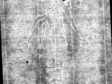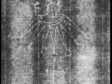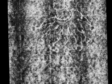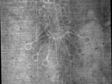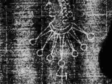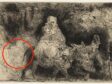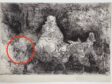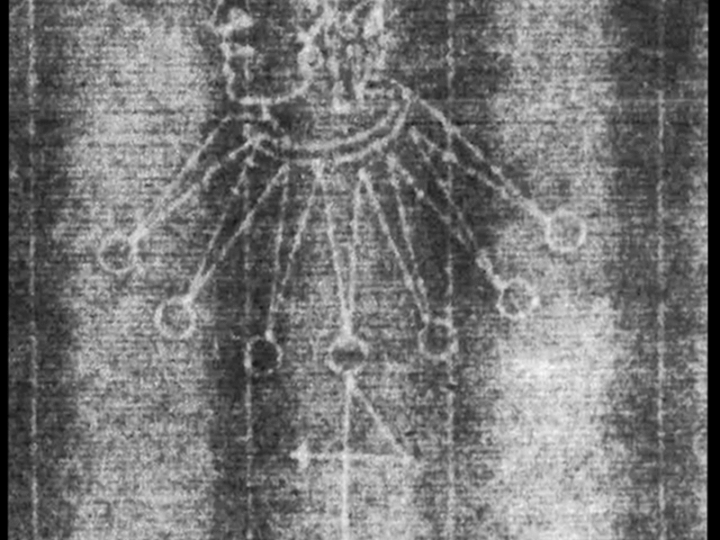
This article encourages the use of watermark matches between dated seventeenth-century Dutch documents and prints as an aid in dating print impressions, especially from states of the plate other than the one in which the date is originally inscribed. Foolscap watermarks in Rembrandt Harmenszoon van Rijn‘s (1606–1669) prints and in documents in the Zeeland Archives provide the image set examined. The analysis is facilitated by means of image-searchable watermark libraries for the discovery of potentially matching pairs and digital tools for the creation of overlays for precise watermark comparisons. Matches confirm the dates of some Rembrandt impressions, narrow the estimated printing dates of others, help assert lifetime or posthumous printings, and suggest dating for plate changes.
Introduction and Background
In the centuries following Rembrandt van Rijn’s death in 1669, rivers of ink have flowed in dedication to the line-by-line study of the more than three hundred etchings the artist created across his four decades of print production. Only much more recently, however, have researchers focused something approaching that level of scrutiny on the crucial evidence already present in the handmade European papers Rembrandt used: the coats of arms, animals, shapes, and letters of watermarks imparted to sheets of paper by the paper mold during manufacture. Through the pioneering efforts of Nancy Ash and Shelley Fletcher and the comprehensive research of Erik Hinterding, a clearer picture has emerged of Rembrandt’s printing practice, his peaks and valleys in production, and the nature of impressions made from his plates without his involvement—findings driven by paper data in concert with connoisseurship and primary-source research. In order to expand and refine this emerging picture, and informed by the lessons of innovative watermark scholarship as applied to other artistic and cultural questions, this article mines newly discovered and digitally confirmed matches between watermarks found on Rembrandt’s prints and those appearing on handwritten and dated documents from Dutch archives of the period. It thus adds one more tool for dating impressions from Rembrandt’s plates—and, ultimately, those of other artists. The early results show both a confirmation of some assumptions and a refinement of others, especially in cases where previously collected data are less conclusive as to precise paper use dates.
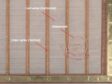
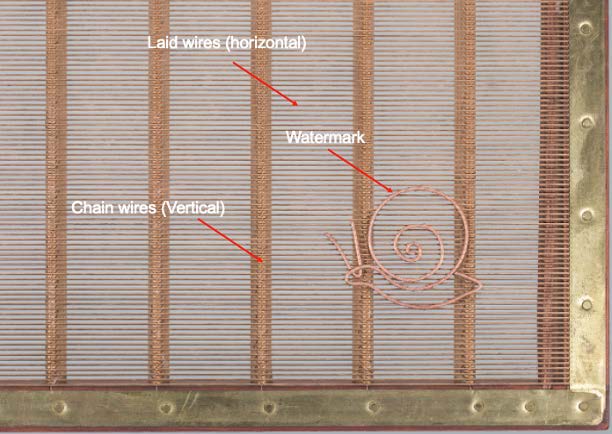
Papermaking began in China approximately two thousand years ago; during the intervening centuries, this technology spread to West Asia and then to North Africa. From there, papermaking became established in the Muslim-ruled territories of Iberia in the mid-twelfth century,1 and reached the Italian peninsula slightly later via trade with Syria and Egypt.2 By the mid-thirteenth century, the type of paper mold we associate with European laid papers had been perfected in Europe.3 Much like those early molds, those of Rembrandt’s time consisted of a rectangular wooden frame with a rigid wire grid mold cover, over which a second wooden frame, or deckle, was placed to confine the paper pulp to a consistent sheet size as the mold was dipped into the vat (fig. 1). The wire mold cover itself was composed of a grid of closely spaced, parallel laid wires running horizontally, bound by vertical rows of more broadly spaced chain wires (fig. 2).
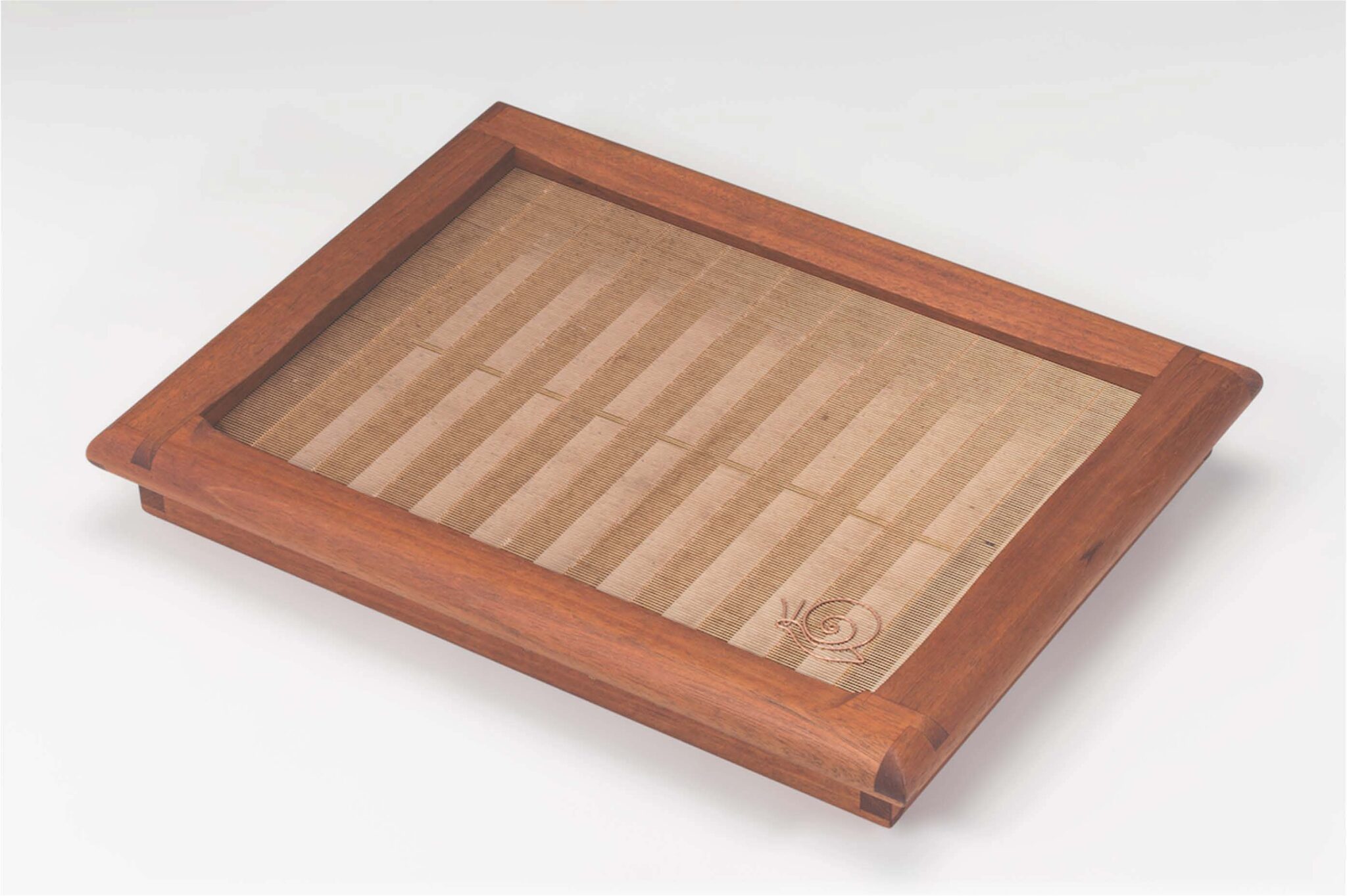
As early as the late thirteenth century, European papermakers began to affix designs or letters made of bent wire to wire paper mold covers (see fig. 2).4 Each sheet made from such a mold bears its exact pattern where the paper pulp settles more thinly over the wire profile. The laid and chain wires leave corresponding horizontal laid and vertical chain lines on the sheet, and the wire watermark design yields a distinctive watermark image. This handmade, regional, artisanal moldmaking process encodes in laid paper the unique characteristics—visible in the numerous radiographic images of historic papers in this article—necessary for determining matches and assigning paper dates.
As such, for well over a century, watermarks have been the primary physical feature used by bibliographers and historians to date culturally significant images or information drawn, printed, or written on sheets of laid paper. In 1907, Charles-Möise Briquet (1839–1918), the most prominent early proponent of the study of watermarks, published the watermark catalogue Les Filigranes—still among the most commonly referenced sources for the discovery of matching watermarks in European laid paper made before 1600.5 Briquet stated that an exact match between a watermark appearing on a sheet of interest and one observed on a dated sheet could validate assigning the latter’s date to the former.6 He also noted that the wires of a watermark only remained undamaged on its mold for a period of two years or so for popular paper sizes.7 This implies that the maximum gap in the dating of the manufacture of two sheets with identical watermarks is approximately two years. Briquet also pointed out that because two molds were used in rotation during the papermaking process, each paper batch would feature a pair of nearly identical watermarks—nearly, but not quite identical, because they were fashioned by hand.8 Such pairs are conventionally known as twinmarks. Briquet’s approach did have its shortcomings; his catalogue includes only hand tracings of watermarks, a process that compounds the inherent variability of watermarks and renders those tracings insufficiently accurate for visually assessing an exact match. Also, Briquet’s interest lay in the creation date of the paper itself, not the creation date of the information borne by it, which has been the central concern in various paper-related research endeavors during the twentieth century and is ours as well.
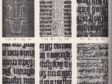
Six decades after Briquet’s publication, Allan Stevenson used watermark matches to help determine the printing date of an incunable, the Missale Speciale, under consideration as the first printed book.9 The principal difficulty Stevenson faced was that the watermarks found in the Missale Speciale exhibited what appeared to be modestly damaged variations of the same watermark. In addition to needing to find dated sheets with the same watermarks, Stevenson had to work with transmitted-light images of the sheets from the Missale Speciale, whose densely printed text often obscured watermark details (a sample of the watermarks from the leaves of the Missale Speciale appears in figure 3). Stevenson summarized his methodology as follows:
We have examined the four known copies of the Missale special. . . . During the long search we have discovered eleven other books, all of the 1470s, which contain paper made on the very moulds that supplied paper for the Missal. Through observing the variant states of their watermarks, as these deteriorate and slip leftwards between the chains, we have found it possible to arrange these states, and thus the books that contain them, in a rough time sequence. This paper order, correlated with evidence from colophon and rubrication dates, red printing and type states, and sometimes bindings has provided a series of dates varying from the approximate to the precise for the eleven books, and, with the further aid of liturgical clues, a good approximate date, and some would say a surprisingly precise date, for the Missal.
It is of course the approximate date that is of fundamental importance. For the abiding purpose has been to establish for certain whether the Missal is “early” or “late,” that is whether it was printed around 1450 or after 1470.10
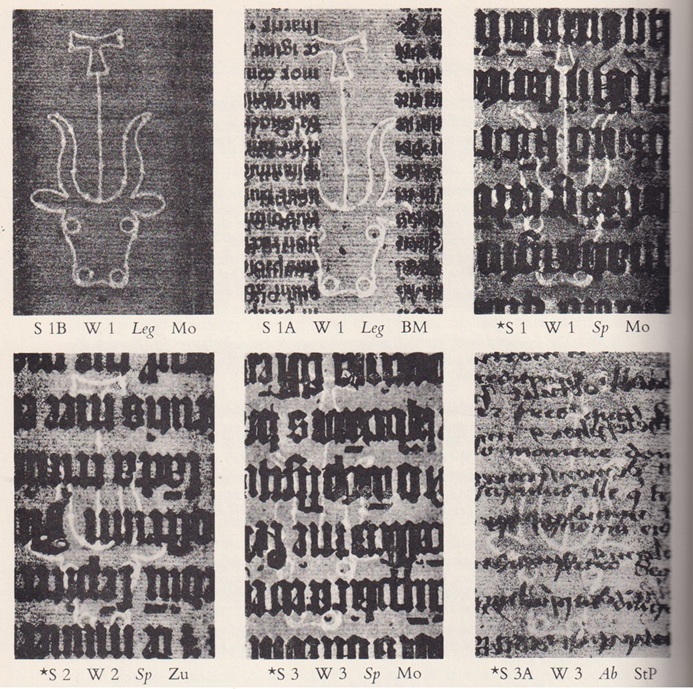
Stevenson deduced that the Missal was produced after 1470 after all, confirming the historical primacy of the famed Gutenberg Bible of 1455/56.
In the 1980s, British musicologist Alan Tyson used watermarks for a different aim: to address the date of creation for Mozart’s autograph musical scores, many of which at the time presented significant dating questions that obscured further research into Mozart’s developmental arc as a composer.11 Tyson’s task was complicated by the fact that, in many cases, the original composition on a score remained initially incomplete and was finished at a later date on paper with different watermarks. However, a fortunate circumstance arose: almost all of the papers used by Mozart included a watermark of three crescent moons.12 The pair of molds used to make this particular batch, rather than presenting the same watermark placement on each screen, were instead designed as mirror images to one another. Tyson irreverently termed his practice of measuring the relationship among these three crescents “Selenometry” after Selene, the ancient Greek goddess of the moon.
This mold characteristic thus serves as a quantitative identifier, as well as, from our computational viewpoint, the most intriguing aspect of Tyson’s methodology. Tyson discovered that he could often identify the paper type from just the selenometry value corresponding to different configurations of the three moons in these similar watermarks, and consequently he was quite successful in dating the creation of separate sheets in Mozart’s autograph scores. A review of his study praises it as
a mighty leap forward in the art of interpreting later eighteenth-century musical sources. What is important here is not merely the “hard facts”: the description of watermarks and their incidence in Mozart’s autographs. Rather it is the interpretation of these sources—the way in which they interact with other musical documents, letters, sketch studies and biography to generate an entirely new picture of Mozart and his music.13
In a similar fashion, we hope both to extend the real-world applicability of watermark research and to assert the ongoing necessity of allying it to a range of other watermark sources and investigations.
We now turn to the specific area of watermark research with which this article is concerned. During the 1990s and 2000s, Erik Hinterding identified groups of impressions of Rembrandt’s prints on laid paper with the same watermark to help construct a chronology of Rembrandt’s production as a printer (and, as we will see, re-printer) of copperplate etchings. Hinterding’s findings first appeared (in English) in 2006.14 He modeled his taxonomy of watermark types and nomenclature largely on the framework introduced by paper conservators Nancy Ash and Shelley Fletcher in 1998.15 Ash, Fletcher, and Hinterding all emphasized the need for an overlay comparison of two watermarks to assess the exactness of their match wire-by-wire.
Hinterding’s findings sprang from the labor-intensive collection of a representative sampling, via radiographic imaging, of the distinct watermarks found on the European laid-paper supports of Rembrandt’s prints.16 He then divided this dataset into groups of impressions all printed on paper with the exact same watermark. In the nomenclature Hinterding adapted from Ash and Fletcher for his broader Rembrandt watermark taxonomy, groups of typologically similar watermarks within a given category (Arms of Amsterdam, Basel Crosier, Foolscap, etc.) are labeled as belonging to the same variant; these receive a capital letter designation–A, B, C, and so on. Within these variants, nearly identical watermarks that suggest they belonged to the paired molds used in rotation in the papermaking process, receive a subvariant designation, lower-case a, b, c, etc. Each of the pair of so-called twinmarks within that subvariant batch is differentiated by a third lowercase letter. So, for example, the K variant of the Foolscap with Five-Pointed Collar watermark, comprised of papers K.a.a. and K.a.b., stands as a discrete paper batch made up of its two twinmarks. This twinmark status is further supported by the common appearance of both watermarks on multiple impressions of prints from the same plates, in the same state and printing condition, indicating membership of these impressions in an edition printed from the same paper batch.17 This taxonomy will be used comprehensively throughout the article, including for the labeling of watermark examples found outside Hinterding’s original dataset.
Hinterding’s method for dating sheets within this study corpus was predicated on the high degree of confidence that the date inscribed in the printing plate is the correct date for early impressions of the state in which that inscribed date first appears. Necessarily, this leaves open the possibility that the inscribed date is less accurate as a creation date for subsequent states. For example, if state iii of a given plate is an early impression dated with the inscribed plate date (e.g. 1642), then states i and ii could have been created in 1642 or earlier, but not later. Correspondingly, states iv and beyond could have been created in 1642 or later, but not earlier. Given this variability, further information is needed, beyond the list sorting prints into groups with the same watermark, to offer data-driven implications of the printing dates for impressions of states before and after the state in which the plate date is first inscribed.
Early Impressions, Later Reprints: Rembrandt’s Paper Use
Rembrandt often modified his plates over time, and he typically printed multiple impressions of a new state once he was satisfied with it. Further changes to a plate could follow closely—for example, within the same or the following year—or further apart. Moreover, when printing impressions from a batch of new or revised plates, Rembrandt often additionally printed some older plates that remained unchanged, resulting in impressions termed “reprints.” This means that a group of prints with the same watermark could include impressions both from earlier plates and from plates of the same date as the watermark. The most recently dated impressions in the group are printed from newly executed plates, a fact confirmed by the freshness of the printings, the occasional presence of trial proofs, and other factors indicative of the early impressions of a particular state. The state of the plate that receives the date inscription will normally be recognized as having impressions created in that year, because the inscribed plate date represents a moment when paper with the watermark of interest was demonstrably in Rembrandt’s studio. For first impressions of the plate with the most recent inscribed date, that date is also their creation date. For reprint impressions of older, unchanged plates on paper bearing the same watermark, that date is their reprint date. It also bears pointing out that, therefore, Rembrandt’s prints often appear on multiple paper batches, as identified by different watermarks, across the life of the plate, even though of course all the while the date originally etched into the plate by Rembrandt remains the same.
This dating method advanced by Hinterding revealed substantial insights into Rembrandt’s practice of print production. Hinterding observed that Rembrandt usually purchased common (i.e., smaller) paper sizes in small batches. There is no evidence to suggest that Rembrandt stored quantities of these sheets over long periods, implying his consistent, periodic purchase of modest amounts of paper. The repeated use of small paper batches also increases the likelihood that each distinct watermark found on the prints produced would derive from just one purchase (or a few such purchases spread over a short period of time).18 Tallying the approximate number of watermarks in Rembrandt impressions from his print-producing years (1626–1665) reveals that Rembrandt was likely purchasing, on average, one batch of paper every two months.19 Additionally, the pattern of Rembrandt’s paper buying (with respect to both paper size and purchase frequency) revealed by Hinterding’s research indicates that, instead of always seeking out papers made specifically for printing, Rembrandt often made his prints on papers also commonly used for written documents. As Frans Laurentius observed, “Rembrandt, who bought only small amounts from the vast stock of paper imported to Amsterdam, will not have had very specific demands. The similarities between drawings and prints with watermarks points to his use of a certain format or dimension of paper (in his case the most common size, 30 x 40 cm).”20
A valuable element of Hinterding’s catalogue—indeed, to us among the most valuable—is his Appendix 3, the “Chronological List of Rembrandt’s Papers,” which presents the 107 paper batches, identified by watermark type, to which Hinterding was able to most confidently assign a date for Rembrandt’s use of the paper.21 The key to dating the creation of a particular watermark match group is based on the date inscribed in those impressions showing a minimal degree of plate wear due to previous use. This allows the inscribed plate date of these newest impressions to be assigned as the creation date of all impressions with the exact same watermark. Thus, the creation dates of reprints from older plates with the same watermark can also be logically designated. A glance through Appendix 3 reveals impressions from plates of the same state that have appeared earlier in the chronological list with different watermarks, thereby confirming them as reprints.
Methodology
The methodology proposed in this article to estimate printing dates of Rembrandt impressions builds on elements of the approaches highlighted thus far but aims to augment the level of precision and confidence around matches in three ways. First, the potential gap in the use dates of sheets with exactly matching watermarks supporting works by two different authors or artists includes the accepted window of two years during which the watermark remained undamaged from repeated cleanings of the paper mold. Further, the time between the paper’s manufacture and its different uses, due to periods of storage and distribution, was also typically limited. For this reason, we also add a period (e.g. of four years) to account for possible time elapsed between manufacture and use due to varying time windows of shipping and storage for the two sheets.22 Second, an overlay is used to determine an exact watermark match. In contrast to previous, more cumbersome overlay methods, we rely on a digital procedure for overlay creation that accommodates watermark scans of differing physical sizes, images digitized at different resolutions, and watermarks appearing in different locations and axial rotations within their respective images. This digital computational procedure involves the rotation, scaling, and exact lining up of the two watermarks toward assessing a match.23 This process constitutes an elaboration of the calculation of ratios between the distances separating different pairs of end points utilized by Alan Tyson.
In order to learn more about the corpus of prints from Rembrandt’s etching plates, this article models the use of exact matches between a given watermark in a dated document and the same watermark in a print impression. We believe that this approach can then be applied to lessons learned from enlarging the pool of watermarks studied to include archived seventeenth-century Dutch documents featuring both watermarks and inscribed document creation dates. For this proof-of-concept discussion, the target is narrowed to Foolscap watermarks in Rembrandt’s prints and in contemporaneous Dutch documents.24 The latter come from the trove of radiographs painstakingly captured by Theo and Frans Laurentius in the Zeeland archives in Middelburg; the original documents in question include correspondence and other reports sent to that city from within the Dutch Republic (chiefly The Hague) but also from abroad—including, occasionally, from Dutch ships at sea—which were collected and archived annually.25 The benefit of such print-document watermark matches is the likely proximity of the creation year of the print impression to the year inscribed on the archival document, taken to be the paper use date. Carefully applied, this forensic approach could influence the estimate of the impression creation dates for prints pulled after the date inscribed on the plate itself—because, logically, the date of the archival document should confirm the approximate creation date of the print impression bearing the same watermark. Especially in the case of impressions from states other than the one that first received the inscribed date, bringing the matching document’s date to the analysis could influence the estimate of those other states’ creation dates.
For this study, the authors focused specifically on six papers bearing impressions of Rembrandt prints showing six different variants of Foolscap watermarks (H.b., N.a., AA.c., A.c., O.a., and K.a.) that in most cases exactly match watermarks from dated archival documents.26 Only one of these six variants is found on an impression that is in a state associated with Rembrandt’s inscribed plate date and has a watermark dated in Hinterding’s “Chronological List of Rembrandt’s Papers.”27 This assures that the plate date is the creation date of the state of that particular impression, but the majority of the studied group of Foolscap variants raises questions as to the actual printing date of the impressions themselves. The six plates implicated by these papers and thus studied here (B17, B55, B186, B188, B192, and B276) do all appear on at least one paper securely dated in Hinterding’s “Chronological List of Rembrandt’s Papers.”28 This provides confident creation dates for other impressions at some point in their printing history. To foreground these print/document watermark matches and their dating implications for Rembrandt impressions, we have chosen to illustrate print images only of those Rembrandt impressions that offer visual evidence of aspects (such as impression quality and plate wear) that directly support assertions about dating raised by the watermark matches. And as we will see, when seeking to date impressions of Rembrandt’s prints, it is important to recall that Rembrandt often reprinted unaltered plates years after their original completion and that many of Rembrandt’s plates survived him and were reprinted after his death in 1669. This article demonstrates that watermark matches between prints and dated archival documents can shed new light on various issues in the art-historical analysis of Rembrandt’s prints on European antique laid paper.
Watermark Overlay Exact Match Confirmation
Purpose-built digital tools for watermark matching add greatly to even the experienced paper researcher’s arsenal of approaches to quantifying similarities and discrepancies between watermarks. One visual procedure for discovering such watermark pairs is the decision tree approach utilized by the WIRE (Watermark Identification in Rembrandt’s Etchings) Project at Cornell University.29 Originally developed to greatly reduce the time needed to hunt through the hundreds of Rembrandt watermarks in Hinterding’s catalogue in search of a match for a watermark of interest in a Rembrandt print not recorded by Hinterding,30 the decision tree can also be used to check any watermark, including those in dated documents from the seventeenth century, for a potential match with a Rembrandt print.31 More recently developed digital tools are used in this article to construct an image-searchable watermark library that provides rapid match candidate identification and to then create watermark overlays that can allow scholars to confirm an exact match with confidence.
The WIRE decision tree process can ensure a feature-by-feature match between a specific watermark from the documents in the Zeeland Archives and a specific watermark catalogued by Hinterding. But close looking is required to confirm that all of the laid and chain lines in the two watermark images match exactly. The traditional litmus test for this confirmation is the construction of an overlay of the two watermark images being compared, which reveals whether all the lines left by wires line up completely. For a physical overlay, this requires access to two exact-size reproductions of the two watermarks. As in this article, when the two watermarks to be compared are derived from printed catalogue images or online catalogue digital entries, the available images are likely to require some scaling, as well as possible rotation and translation within the provided watermark image, to offer suitability for overlay comparison.
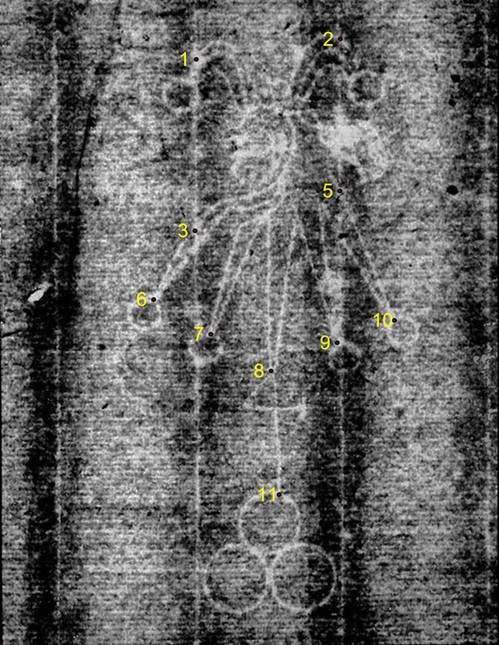
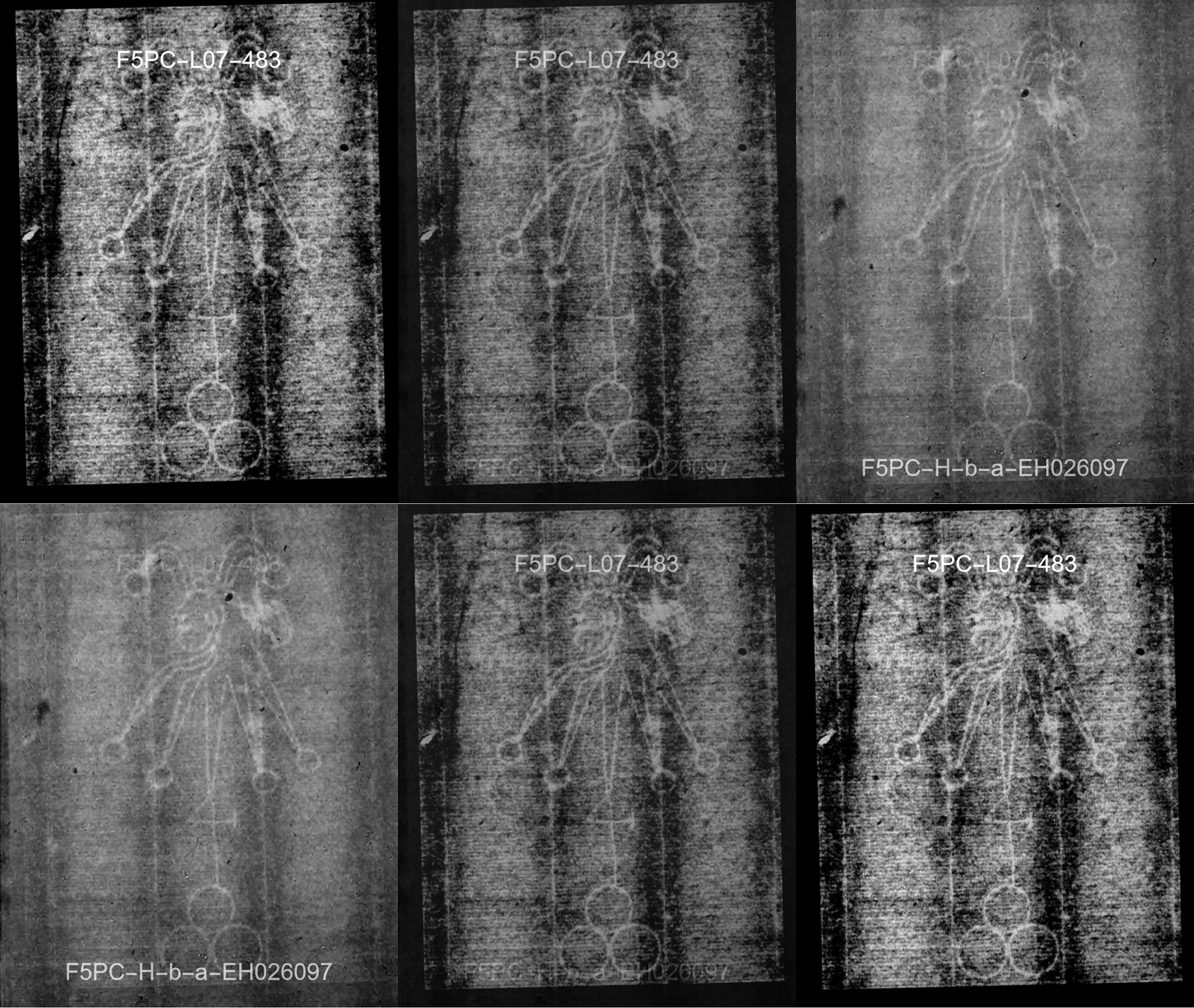
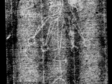
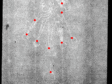
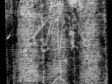
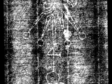
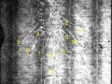
This preparation can be provided by digital manipulation of two digitized images using point-and-click marking of corresponding points in both images, followed by modest digital image processing. As the alignment of two digital images can be a tedious task with general-purpose image processing software such as Photoshop, open-source software was written especially for this purpose.32 To simplify the computing requirements, the user marks the same specific points on both watermark images (figure 4, for instance, illustrates the eleven points chosen for the Foolscap with Five-Pointed Collar for a watermark from the Zeeland Archive.).33 Marking the points in the same sequence at the same locations in the digital image of the Foolscap with Five-Pointed Collar variant labeled H.b.a. in Hinterding’s catalogue, and collecting their coordinates in pixels, is again accomplished by simple point-and-click operations. The files containing this data are then employed in the execution of the watermark overlay creation software, which produces the overlay video (GIF) like the one seen in figure 5. Any small differences in locating the points in the two watermark images via manual computer-assisted marking are mitigated by the optimization algorithm used in the software, which repositions, as a group, the pixels in one image to best match the other.34 The result is an overlay GIF that slowly fades back and forth between the two watermarks under comparison, allowing the researcher to assess whether there is any difference or deviation between them. All of the overlay GIFs for true matches between print and archival watermarks exhibit complete uniformity between the two watermarks.
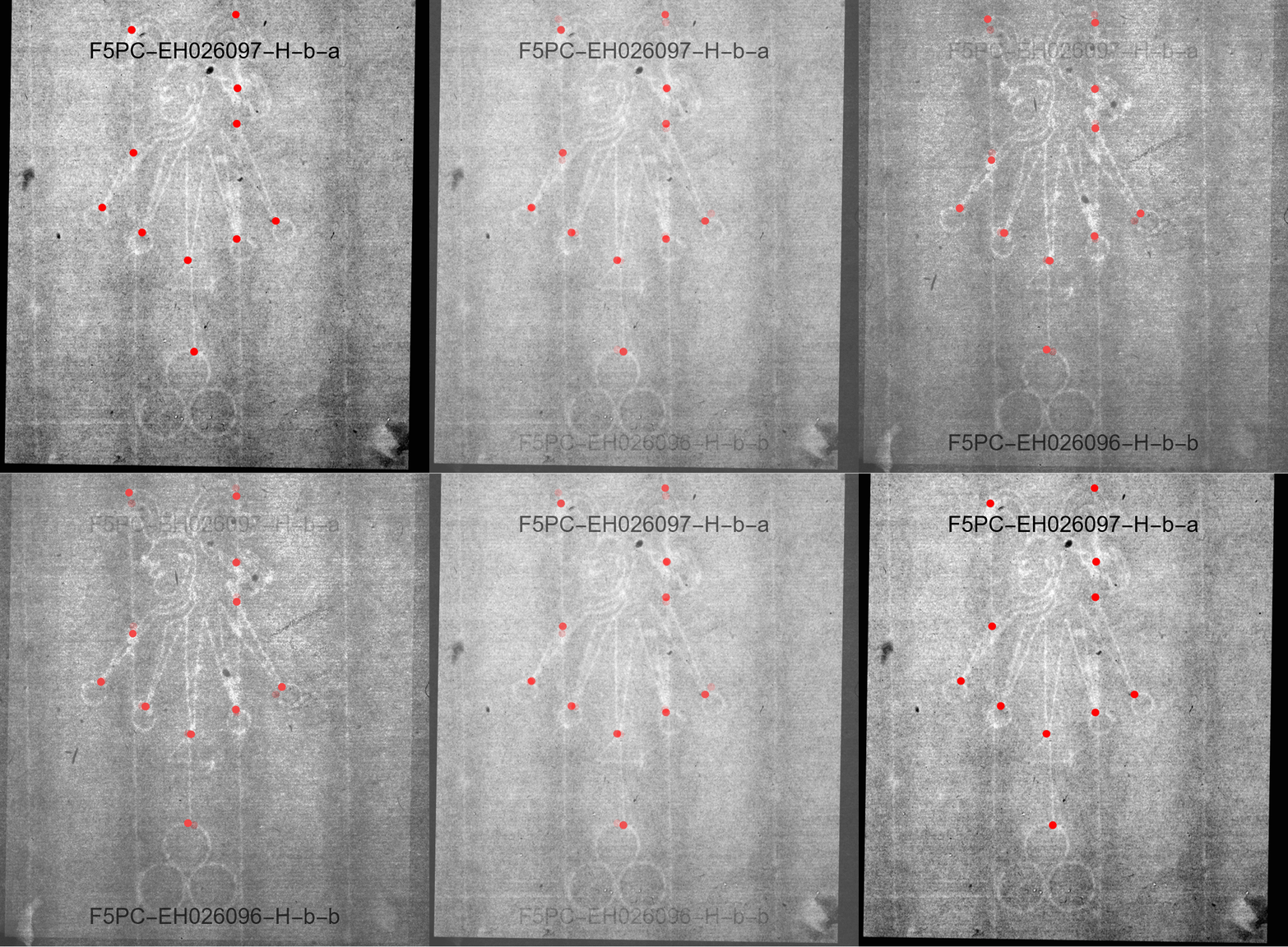
To illustrate an example of two watermarks that are nearly identical but not a match, we have crafted an overlay GIF (fig. 6) for the twinmarks of the Five-Pointed Collar H.b. paper addressed in figure 4. Although the differences are subtle, the shifts between the red marked points between Five-Pointed Collar H.b.a. and its twinmark H.b.b. clearly indicate a non-match. This is visible especially at the tip of the hindmost collar point and at the upper left and right, where the peaks of the cap worn by the fool cross vertical chain lines.
Image Searchable Foolscap Watermark Library
A further benefit of this point-marking and repositioning software is that it applies a numerical value to the degree of error in fit between the two aligned sets of marked points in the watermark pair. This fit metric can be used to compare the closeness of the match of one watermark against a whole library of similarly marked watermarks of the same type.35 The smaller the number of this fit metric, the closer the match between compared watermarks. A suitably small value provides quantifiable evidence for a visibly exact fit, the appearance of which must be tested with an overlay.
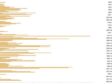
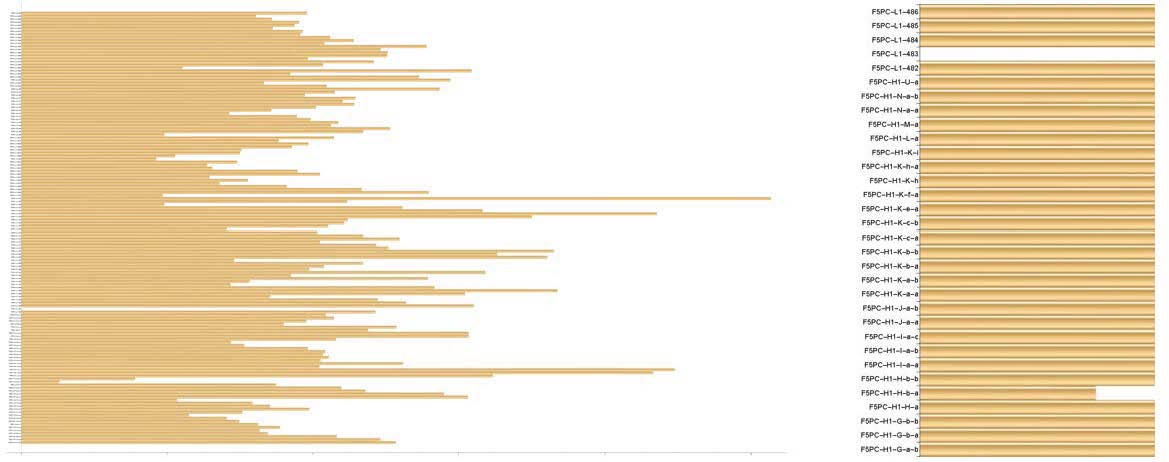
To find matches between watermarks in seventeenth-century Dutch documents and Rembrandt’s prints, the following approach was taken. Two marked libraries (one for Foolscaps with Five-Pointed Collar and the other for Foolscaps with Seven-Pointed Collar) of all the complete (i.e. not partial or fragmentary) Foolscaps in Hinterding’s catalogue and the two Laurentius catalogues were assembled. This allowed checking any watermark in a library against all other watermarks in the same library using the library searching software. The results of testing one watermark against all the others were recorded as a bar graph in which the length of each bar corresponds to the mismatch metric, with a longer bar indicating a worse fit. For the watermark in figure 4, the resulting bar graph appears in figure 7. The shortest nonzero bar corresponds to the match confirmed in figure 4. Because the library includes the watermark for which we are seeking a match, the match with itself will yield no error, as shown by the zero-length bar visible at the upper right of figure 7.
A Further Word about Date Ranges in Watermark Matching
We have already alluded to the need for prudence in assigning watermark date ranges based on the life of the paper mold and the time involved in transporting and storing paper stocks. However, in watermark studies of this type, the question is sometimes raised about whether batches or even single sheets of paper could also have been put into use at much later times, thus jeopardizing conclusions derived from watermark matches. On this score, Theo and Frans Laurentius are worth quoting at length, in response to a similar question often posed to English watermarks pioneer Edward Heawood:
This question was: say a pile of paper at some point falls behind a shelf and is only found again fifty years later. If that pile were subsequently used, would the dating surely not be wrong? He had to admit that the idea was correct in theory. He knew from experience, however, that such a situation rarely occurred in practice. Paper was an expensive and scarce product. Demand was always higher than supply. The general public generally purchase small amounts while other users, such as printers and government institutions, used one ream after the other. Paper did not get the chance to grow old there.36
The Laurentiuses’ research on correspondence sent out from The Hague—which, as the seat of government, used large quantities of paper—further reveals that reams (around five hundred sheets) of writing paper of the common size for letters were used up quickly, one after the other.37 On the Rembrandt side of the discussion, we will recall that Erik Hinterding’s study of Rembrandt’s printing papers (also mostly of the same standard sizes used for the documents held in the Zeeland archive) revealed that on average Rembrandt purchased a new batch of paper approximately six times a year.
Watermark Matches and Implications: Foolscaps with Five-Pointed Collar
The marked library of Foolscaps with Five-Pointed Collar used in this section to set up the search for matches includes ninety-nine usable entries from the Laurentius catalogues and forty-three usable entries from Hinterding’s catalogue. The relevant matches follow.
Variant H.b.
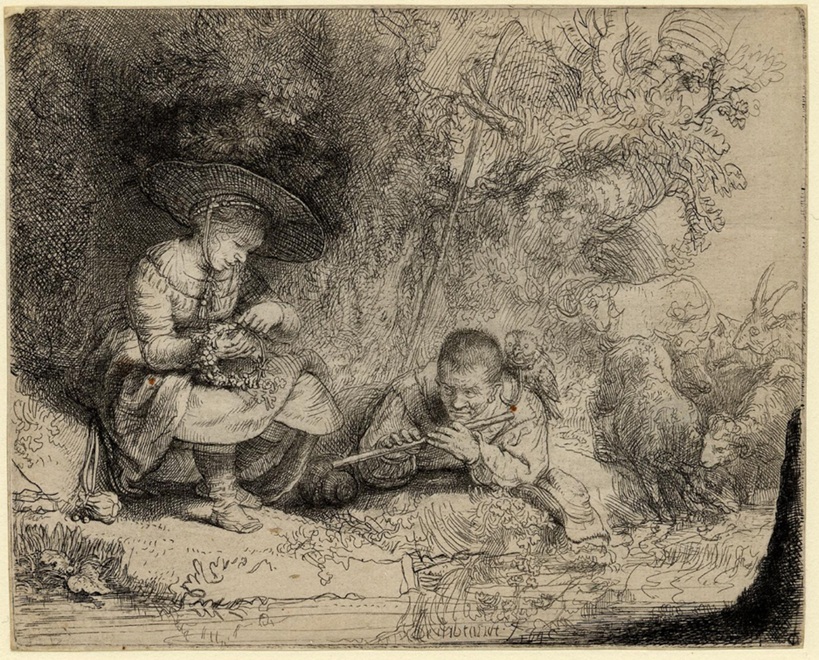
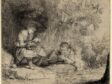
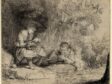
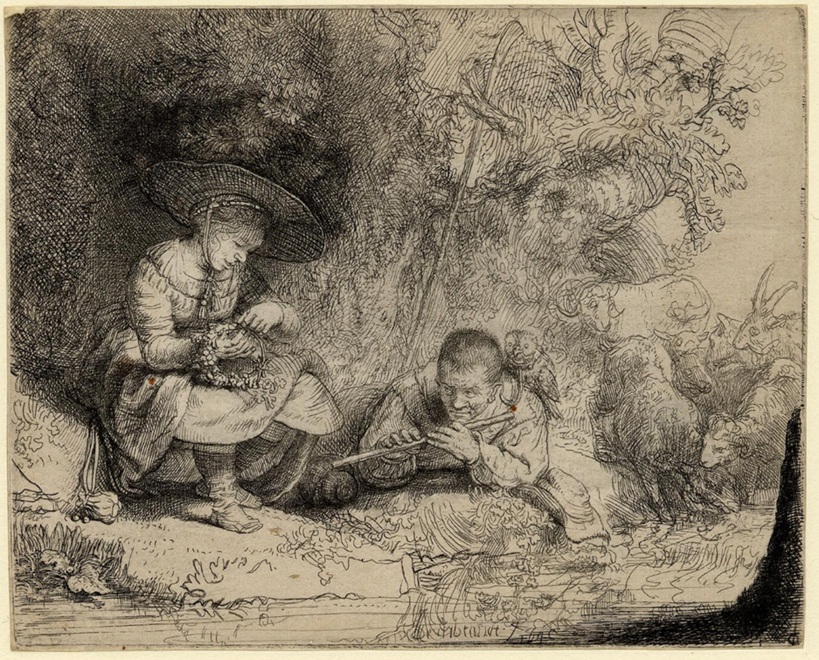
The Foolscaps with Five-Pointed Collar watermark variations labeled as H.b.a. and H.b.b. appear in impressions of the fourth state of Rembrandt’s print The Flute Player (B188 iv). The plate was signed and dated 1642 in the plate in state ii.38 For visual reference, an example printed on paper with the H.b.a. twinmark from this batch is held by the British Museum (fig. 8).
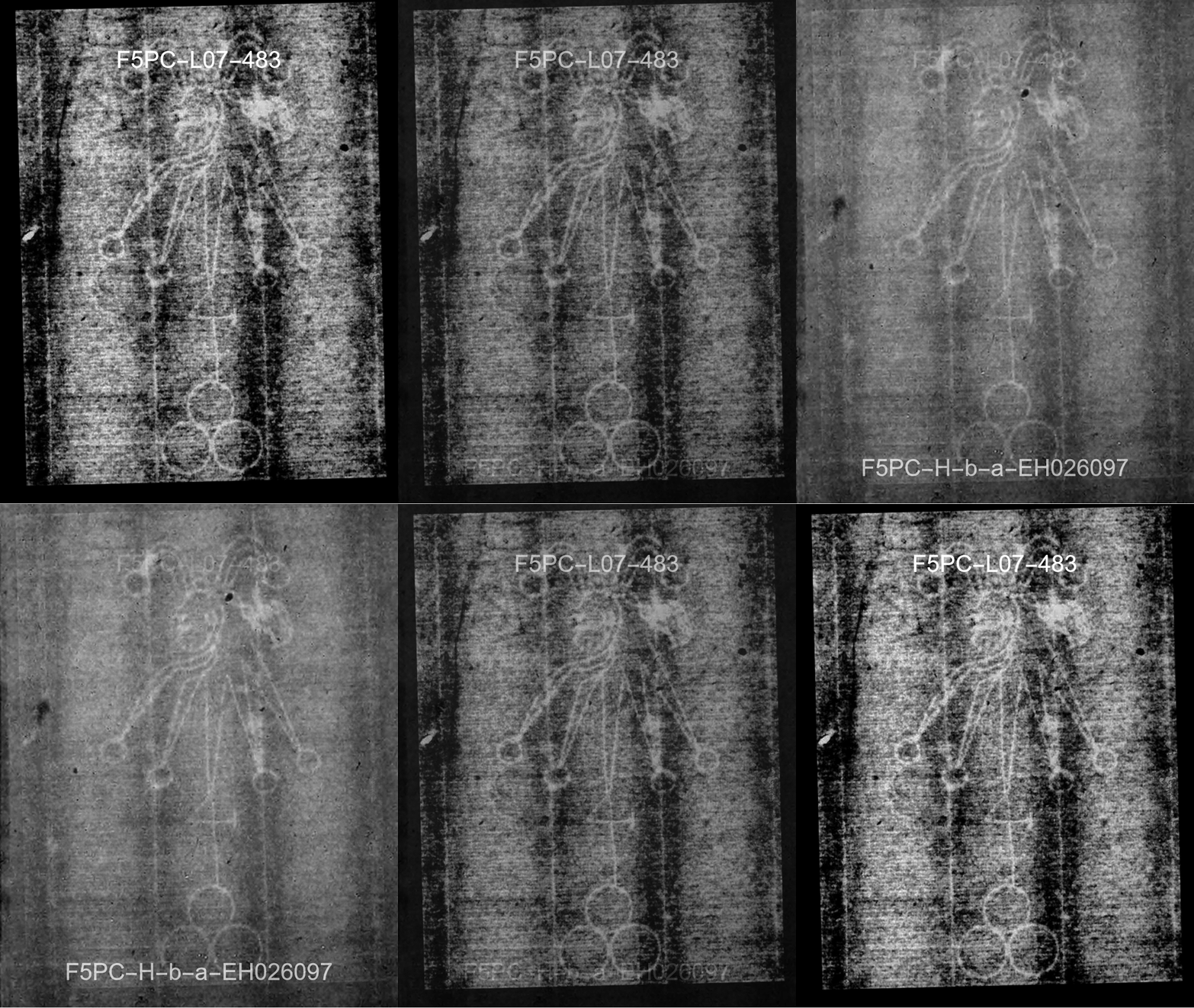
The H.b.a. watermark in the Hinterding catalogue, the type noted in the preceding section, is identical to entry 483 in the earlier Laurentius catalogue. It appears on document inv. no. 948-78 in the Zeeland Archive, dated 1642, which has a location of use in The Hague.39 The H.b.b. watermark in Hinterding’s catalogue is identical to entry 545 in the same Laurentius catalogue. It appears in document inv. no. 948–82 in the Zeeland Archive, dated 1642, also with a use location of The Hague.40 The inscribed date of 1642 in both documents matches the plate date inscribed in state ii of iv of The Flute Player. The overlay videos confirm the match of H.b.a. with entry 483 and H.b.b. with entry 545 (see fig. 5 and fig. 9).
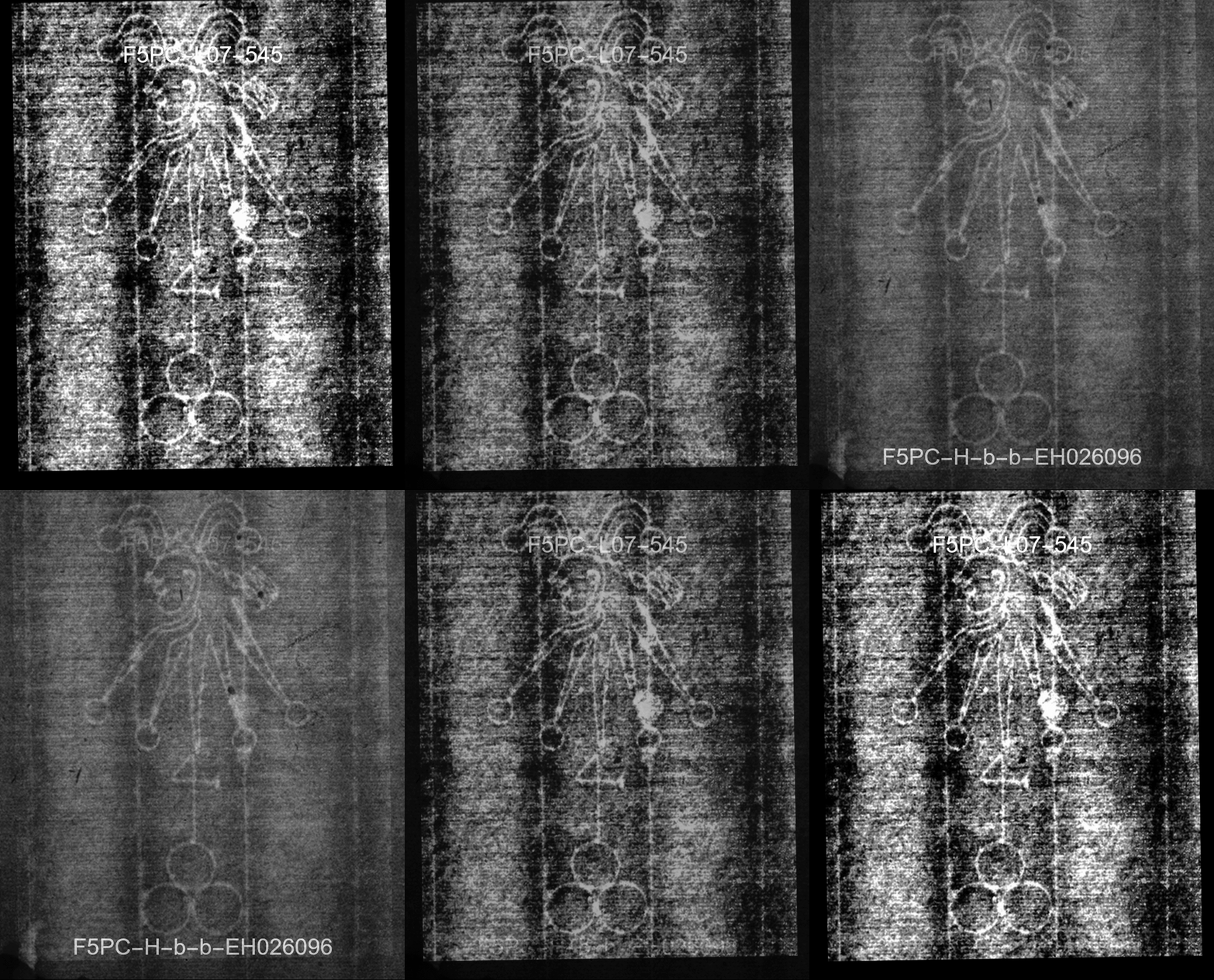
The entries in Hinterding’s “Concordance by Bartsch Number” note that states i to iii of The Flute Player all show Basel Crosier variant B’.a. watermarks—a watermark in the form of a shield surmounted by a crown, bearing the curling bishop’s staff of the Swiss Canton of Basel.41 This supports the claim that the impressions of these three states were made in the tight window of 1641–1642 assigned to Basel Crosier B’.a. in entry 54 in Hinterding’s “Chronological List of Rembrandt’s Papers.”42 The fact that the list of impressions of state iv, which is the final state, does not include any impressions on the Basel Crosier variant B’.a. paper raises the possibility that these might have been reprinted later.43 The matches with the watermarks in Laurentius’s 2007 catalogue of Foolscaps with Five-Pointed Collar variant H.b. watermarks support 1642 as their printing date. This is also corroborated by the 1643 dating of another impression of The Flute Player iv on paper watermarked with the Foolscap with Five-Pointed Collar variant A.a.44
Variant N.a.
The Foolscap with Five-Pointed Collar identified as variant N.a.b. appears in an impression of the first state of Rembrandt’s print Jan Lutma, Goldsmith (1584–1669) (B276 i).45 An impression of the second state of B276 has a watermark Hinterding describes as “nearly identical” and is therefore assigned to the same variant, N.a. Since the two watermarks are nearly but not completely identical, this watermark in a state ii impression is designated as a Foolscap with Five-Pointed Collar N.a.a, the twinmark of N.a.b., because impressions of B276 appear on both papers.46 No other print catalogued in Hinterding’s catalogue has either of these watermarks.
Since the watermarks are designated to be the same variant, they are dated the same as the plate date, 1656, inscribed in state ii, and Hinterding has included this N.a. paper in his “Chronological List of Rembrandt’s Papers” (those he feels confident dating to a particular year) as entry 94.47 The two watermarks display a number of readily visible differences, including noticeably more uneven heights of the cap peaks in N.a.b. than N.a.a. and different locations of the ball at the end of the braid relative to the nearest chain line. Further, the ball at the end of the fourth collar point from the left is on the right of the chain line in N.a.a. and on the left of it in N.a.b., and the roundels at the bottom of the watermark touch the chain lines to either side in N.a.a. and only on the right in N.a.b.48
The Foolscap with Five-Pointed Collar N.a.b. watermark matches the watermark from document inv. no. 961–135 in the Zeeland Archive, dated 1655, with a use location of The Hague.49 Confirmation of their match is provided by the overlay GIF in figure 10. The document date therefore precedes by one year the plate-inscribed date of 1656 on the portrait of Jan Lutma—in this case, reinforcing the plate date as the correct impression creation year for both states i and ii.
Watermark Matches and Implications: Foolscaps with Seven-Pointed Collar
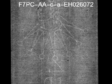
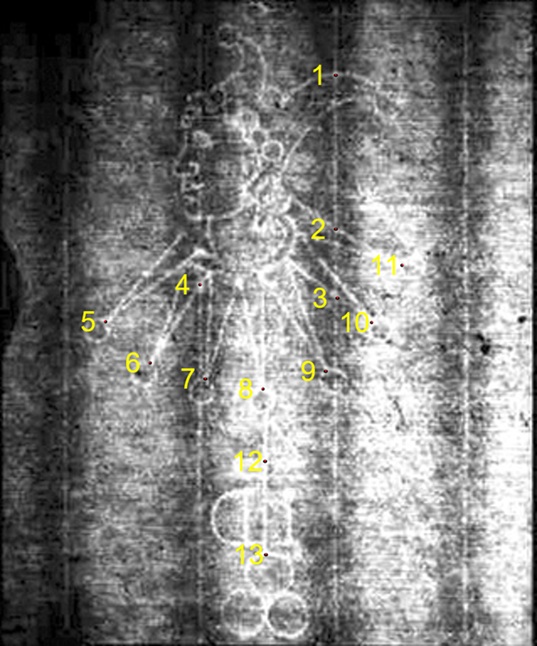
The marked library of Foolscaps with Seven-Pointed Collar used in this section to discover matches includes 190 usable entries from the 2008 Laurentius catalogue and thirty-seven usable entries from Hinterding’s catalogue. There are no Foolscaps with Seven-Pointed Collar watermarks in the 2007 Laurentius catalogue, which includes watermarks in documents dated from 1600 to 1650. A sample of a marked Foolscap with Seven-Pointed Collar and the thirteen points used in building a marked watermark library of the 227 images from the Hinterding and Laurentius catalogues appears in figure 11.
Variant AA.c.
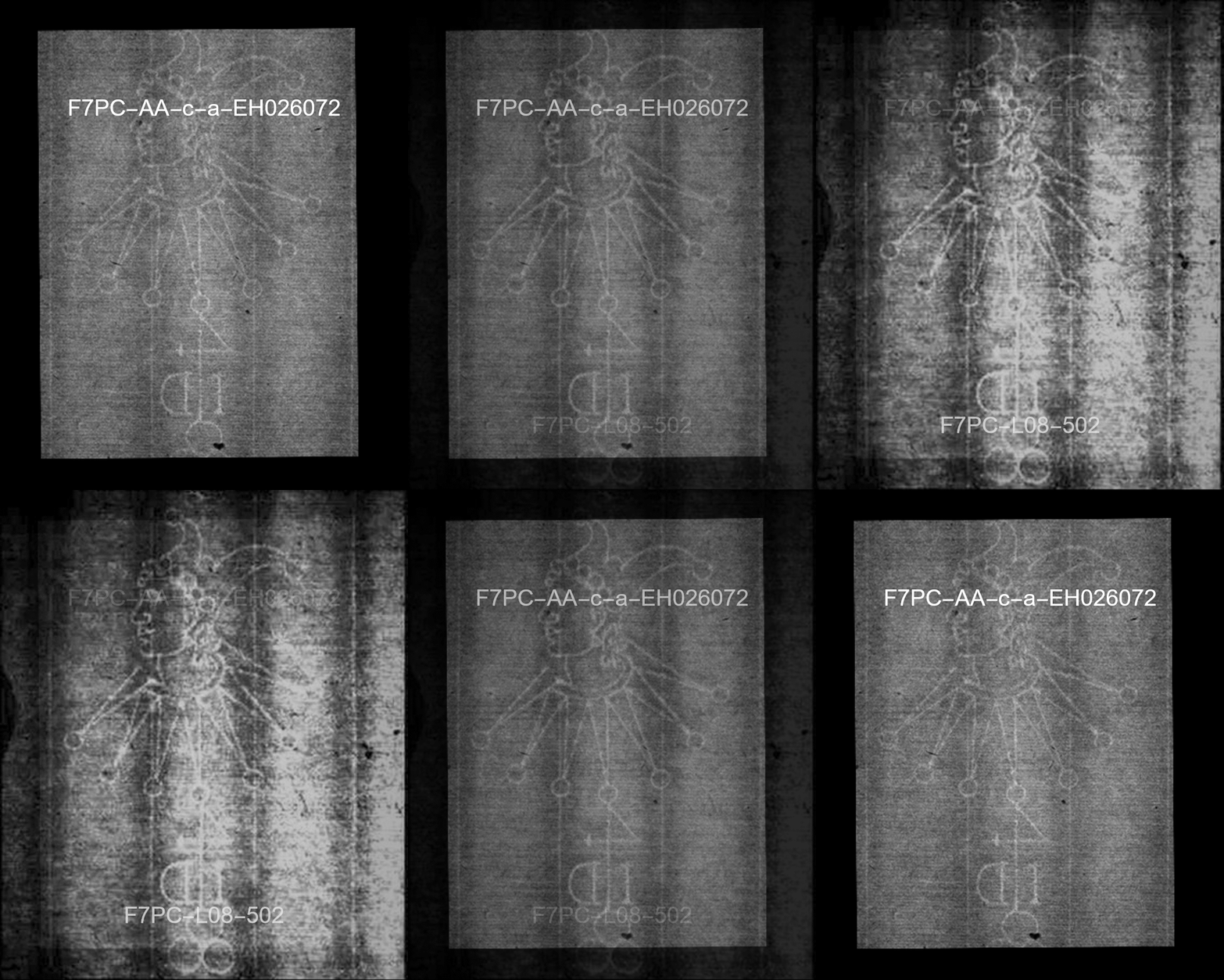
The Foolscap with Seven-Pointed Collar labeled as AA.c.a. appears in impressions from three different Rembrandt plates: the second (and presumably final) state of Joseph and Potiphar’s Wife (B39 ii), signed and dated 1634 in the plate; the fourth (and final) state of The Flute Player (B188 iv), signed and dated 1642 in state ii; and the second state of the signed but undated The Fourth Oriental Head (B289 ii).50 Only the Foolscap with Seven-Pointed Collar AA.c.a. watermark in The Flute Player exists as a full image.51 The watermark in Joseph and Potiphar’s Wife is a fragment retaining just the peaks of the Foolscap, as can be seen on the website of the British Museum.52 An image of the watermark in The Fourth Oriental Head, which is a fragment presenting just the roundels at the bottom of the watermark, is available in the archive of the Netherlands Interuniversity Institute for Art History (NIKI–Florence) as file EH011002. The Flute Player (B188 iv) appears in three entries in Hinterding’s “Chronological List of Rembrandt’s Papers”: 54 (with Basel Crosier B’.a.), 56 (with Foolscap with Five-Pointed Collar A.a.), and 72 (with Foolscap with Five-Pointed Collar I.a.). Hinterding asserts 1641, 1643, and 1648 as the respective dates for these papers.53
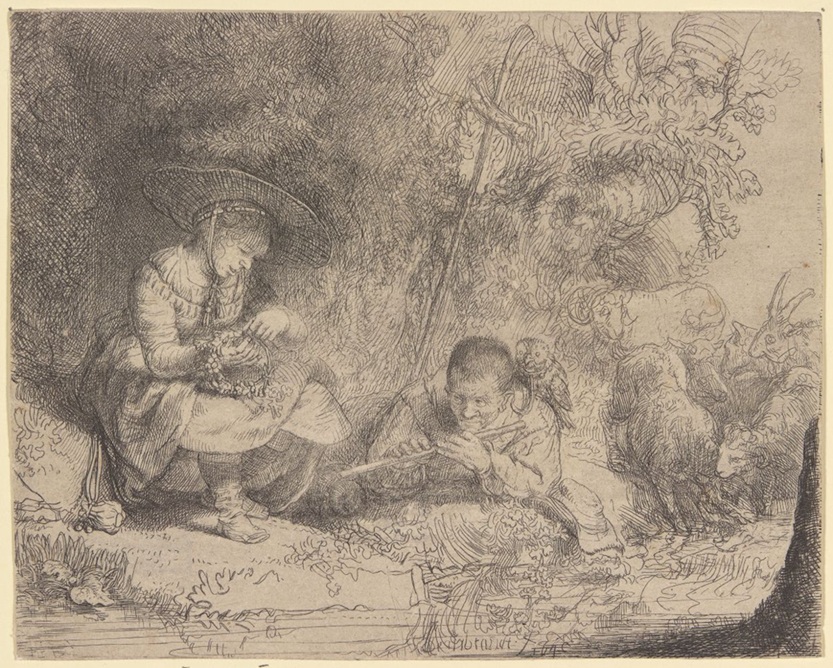
The AA.c.a. watermark is identical to entry 502 in the 2008 Laurentius catalogue, which appears in document inv. no. 959–174 in the Zeeland Archive, dated 1653, with a use location of The Hague.54 The overlay GIF in figure 12 reveals an exact match between the watermark AA.c.a. in state iv of The Flute Player and the watermark of the document. The date of the document is five years later than the latest printing date of 1648 assigned to any impression of The Flute Player in Appendix 3 of Hinterding’s catalogue.55 This encourages considering a printing date of closer to 1653 for the final state impression of The Flute Player on paper watermarked with the Foolscap with Seven-Pointed Collar AA.c.a.. For visual reference, an image of that impression, held by the Herzog Anton Ulrich Museum, Braunschweig, is reproduced in figure 13.
A comparison with the previously mentioned impression of The Flute Player state iv in the British Museum (fig. 8), shows that the Braunschweig impression is printed more faintly, consistent with the later print date, due to wear from repeated printing of this plate that features passages of drypoint. In this process, the artist uses a sharp stylus to scratch lines directly into the surface of the copper plate, raising shavings of metal called “burr.” When the plate is inked, drypoint burr prints as areas of rich black. However, this burr is fragile, and only a few passes through the press quickly wear it away. This difference from early to late impressions of The Flute Player is especially visible in the earthen bank at the lower right, which in the British Museum impression still shows the velvety black tone associated with drypoint burr, while in the Braunschweig impression it has almost completely worn away. Further, if we accept the watermark fragments in Joseph and Potiphar’s Wife and The Fourth Oriental Head as additional exact matches to the AA.c.a. watermark in the dated document, these, too, can be seen as later reprints from their plates, also around 1653.
Variant A.c.
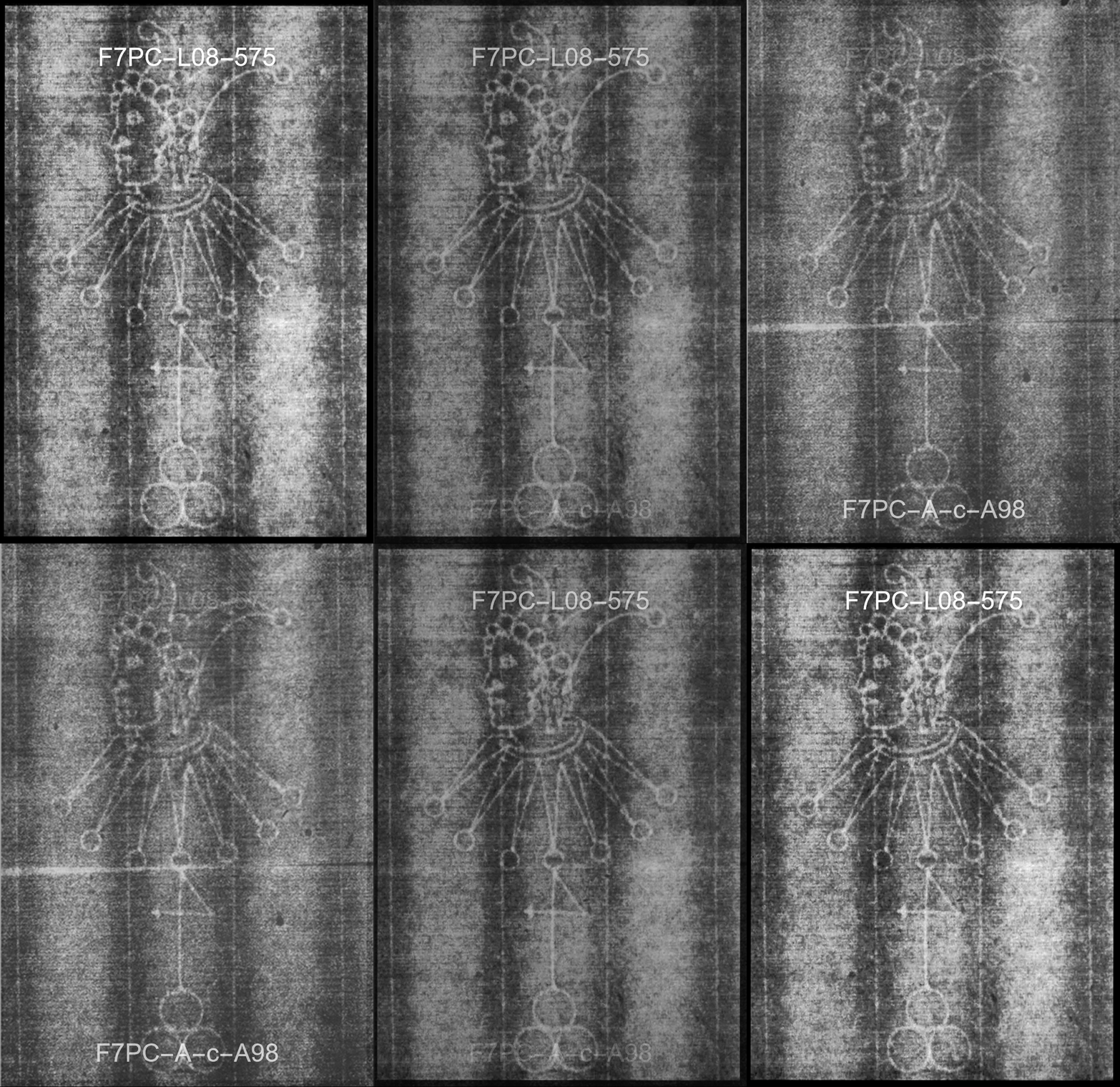
The Foolscap with Seven-Pointed Collar labeled A.c. appears on impressions of the second and final state of two plates: Self-Portrait in a Cap and Scarf with Face Dark: Bust (B17 ii), which is signed and dated 1633 in the plate in state ii, and The Artist Drawing from the Model (B192 ii), which does not have a plate date.56 The A.c. watermark is identical to entry 575 in the 2008 Laurentius catalogue: document inv. no. 958–13–11 in the Zeeland Archive, dated 1652, with a use location The Hague.57 The overlay providing confirmation of the match appears in figure 14.58
The document-print watermark match in this case seems to support a print date of circa 1652 for the later reprints with the Foolscap with Seven-Pointed Collar A.c. watermark. The date is further corroborated by other watermarks that appear in impressions of the final state of Self-Portrait in a Cap and Scarf with Face Dark: Bust (B17 ii) and The Artist Drawing from the Model (B192 ii). Impressions of the final state of B17 appear in entries 24, 25, 56, and 73 in Hinterding’s “Chronological List.” The date associated with entry 73 is 1650.59 Impressions of the final state of B192 appear in entries 47, 52, and 81 in the “Chronological List.” The date associated with entry 81 is 1652.60 The dates of these late impressions align with the document-print Foolscap with Seven-Pointed Collar A.c. match, indicating that their final states, printed on paper with the Foolscap with Seven-Pointed Collar A.c., are also late reprints dated circa 1652.
Variant O.a.
The Foolscap with Seven-Pointed Collar O.a. appears in only one print, The French Bed (Le lit à la française) (B186 iv), which is signed and dated 1646 in the plate.61 This print appears in Hinterding’s “Chronological List of Rembrandt’s Papers” in entries 73 (shared watermark: Foolscap with Five-Pointed Collar K.a.) and 81 (shared watermark: Strasbourg Lily E’.a.).62 The various impressions in these two entries are dated, respectively, 1650 and 1652.63 The O.a. watermark is identical to entry 408 in Laurentius’s 2008 catalogue, illustrated on p. 215. It appears in document inv. no. 969–105 in the Zeeland Archive, dated 1663, with a use location of The Hague. This match, illustrated by the overlay GIF in figure 15, suggests a much later printing of this impression of B186 iv than 1652.
Variant K.a.
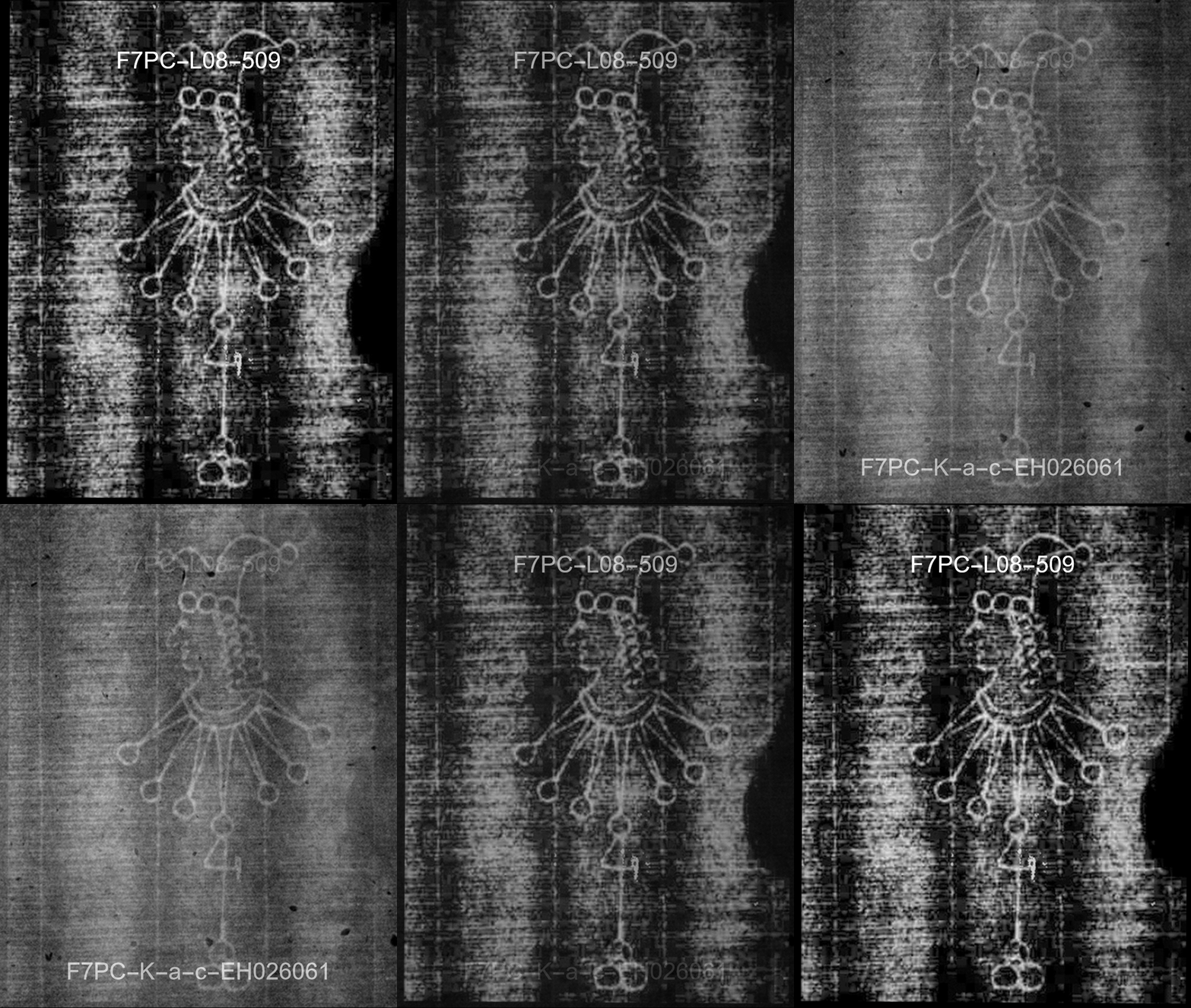
A comparison of the Foolscap with Seven-Pointed Collar K.a.b. and K.a.c. watermarks observed on Rembrandt’s prints and corresponding watermarks on archival documents from Laurentius’s study—identical in all but the minutest respects—raises the necessity for care required when asserting matches and drawing attendant conclusions from them. The Foolscap with Seven-Pointed Collar watermarks in K.a.b. and K.a.c. in Hinterding’s catalogue are themselves nearly identical.64 However, close looking and the overlay GIF in figure 16 suggest differences in the bridge of the fool’s nose and the jut of the chin, with K.a.b. presenting the straighter nose and a slightly more protruding chin. Foolscap with Seven-Pointed Collar K.a.b. appears in only one impression of the only state of The Flight into Egypt: Crossing a Brook (B55) in Hinterding’s catalogue.65 Foolscap with Seven-Pointed Collar K.a.c. appears in seven impressions of seven different plates, including The Flight into Egypt: Crossing a Brook (B55).66 The Flight into Egypt: Crossing a Brook is signed and dated 1654 in the plate, which is the latest date associated with the impressions on paper with the watermark Foolscap with Seven-Pointed Collar K.a.c. The Flight into Egypt: Crossing a Brook is listed as appearing in impressions bearing seven other watermarks in addition to K.a.b. and K.a.c.67 None is associated with a plate date after 1654. Two impressions of B55 with Foolscap with Five-Pointed Collar F.a. watermarks are dated 1654.68 Finally, the appearances of Foolscaps with Seven-Pointed Collar K.a.b. and K.a.c. are marked with an asterisk, indicating that “The copperplate was also reprinted after Rembrandt’s death [in 1669].”69
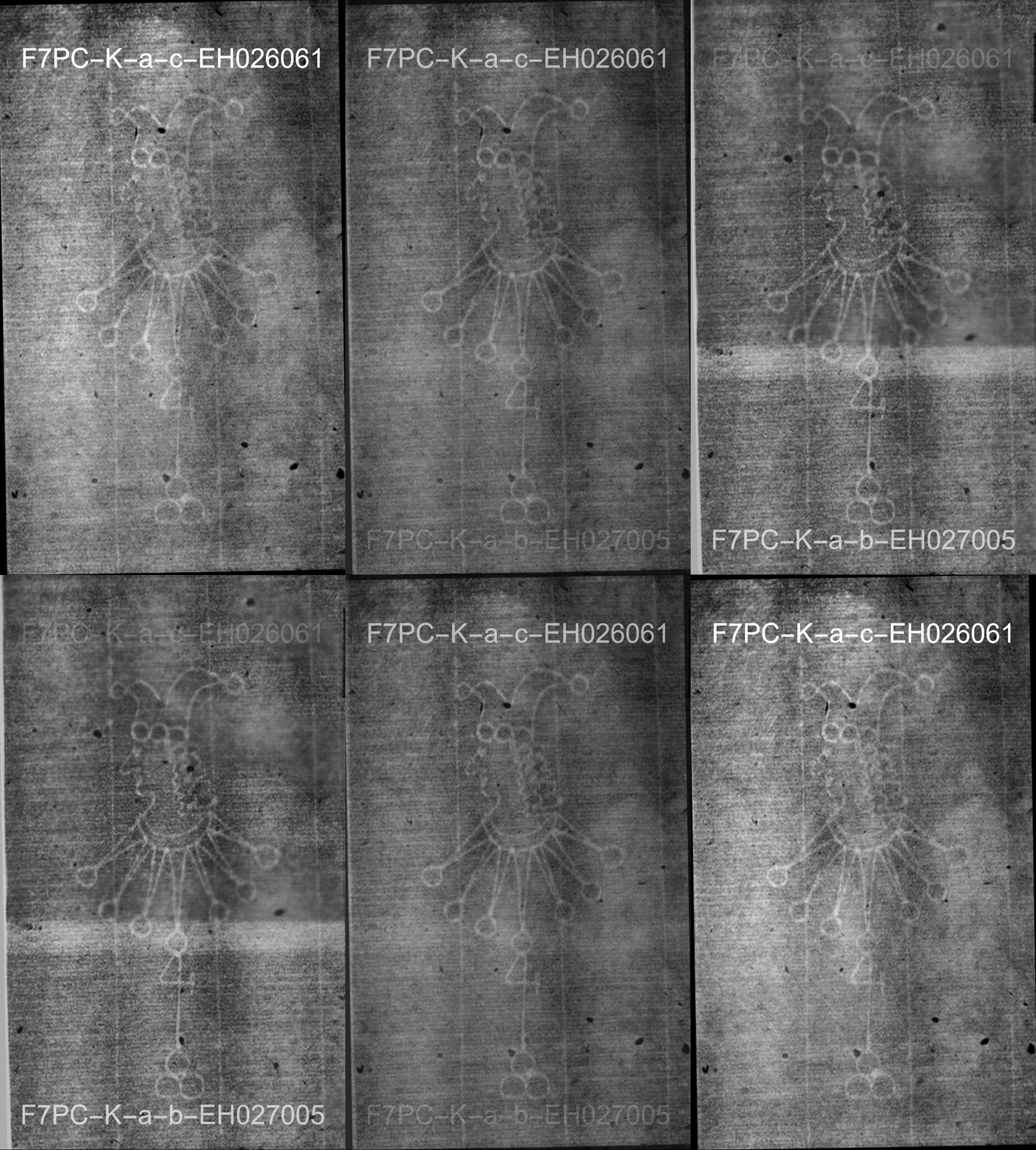
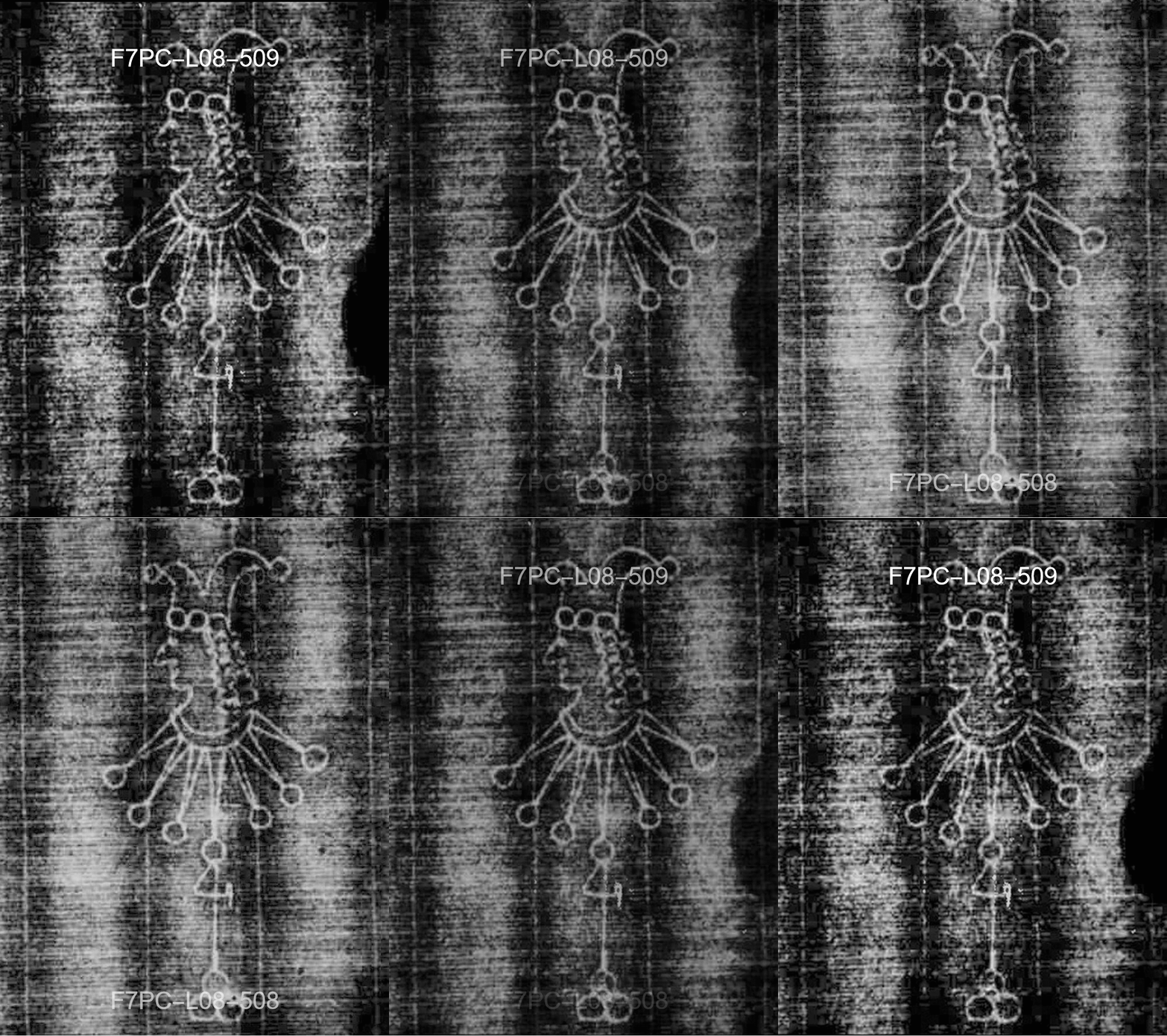
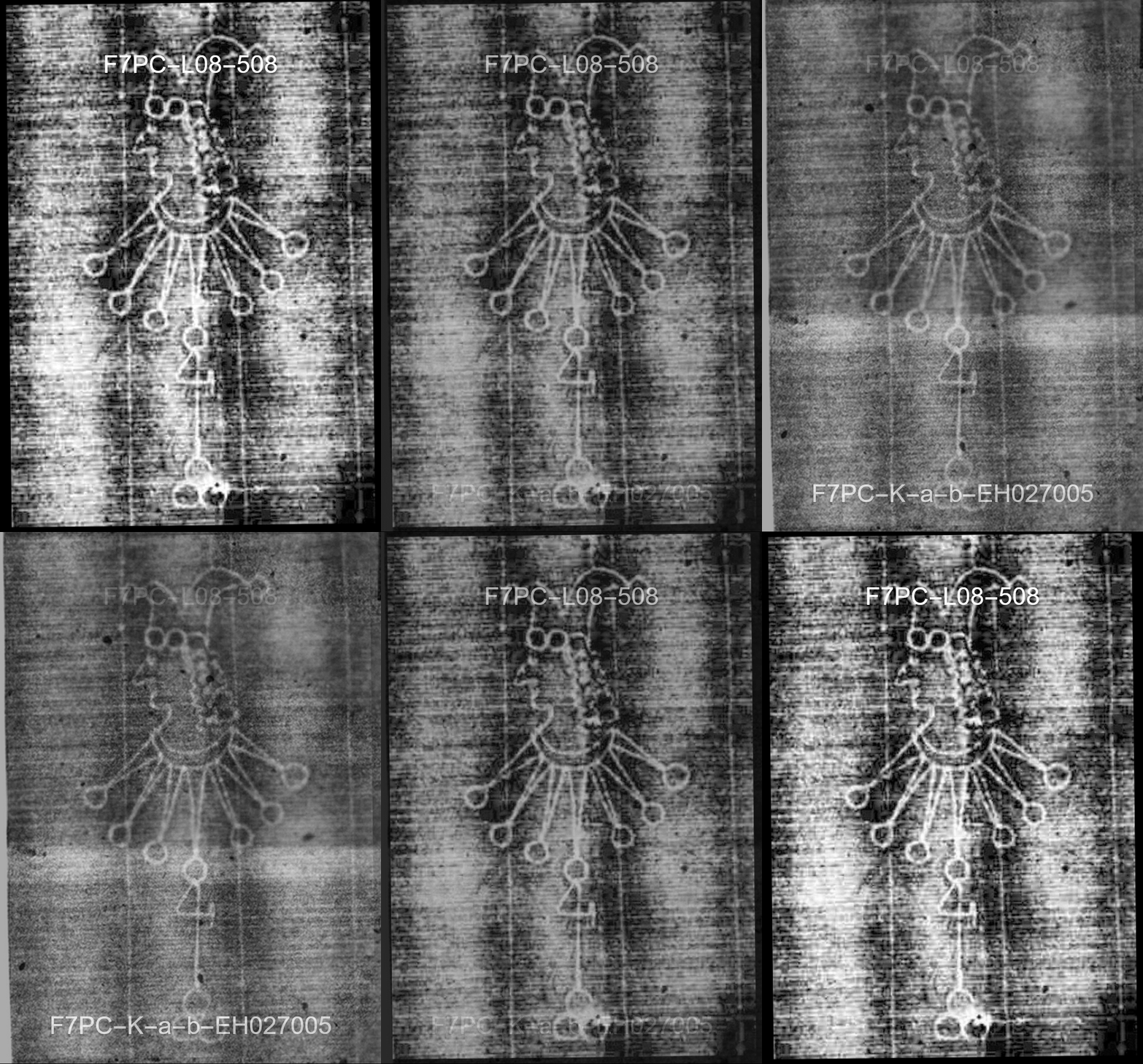
An equally indistinguishable pair of Foolscaps with Seven-Pointed Collar nearly identical to each other and to Foolscaps with Seven-Pointed Collar K.a.b. and K.a.c. are seen as entries 508 and 509 in the 2008 Laurentius catalogue.70 Curiously, 509 has a straighter nose bridge, but 509 has the less protruding chin (see the overlay GIF in figure 17). This complicates a one-to-one correspondence with K.a.b. and K.a.c. Entries 508 and 509 appear, respectively, in documents inv. nos. 996–9 and 998–25 in the Zeeland archive. Inv. no. 508 is dated 1691, and inv. no. 509 is dated 1693; both were used in The Hague.71
Figures 18–21 illustrate the four possible cross-use matches: K.a.b. and 508 (fig. 18), K.a.b. and 509 (fig. 19), K.a.c. and 508 (fig. 20), and K.a.c. and 509 (fig. 21). Not only are each of the watermark pairings nearly identical, but the spacing of their vertical chain lines, when overlaid, also matches, further suggesting the sheets came from the same pair of molds. This cross-match closeness, taken along with the slight but visible nose and chin deviations in the face of the fool noted above, make it difficult to fully assert whether a match is present or not. If we do assert a cross-match between one of K.a.b and K.a.c. with either 508 or 509, this suggests that the associated Rembrandt impressions were printed posthumously, since all of the watermarked documents postdate 1669. If we cannot assert a match, this group therefore offers evidence of the potential exceptional similarity of handmade watermarks—and their neighboring chain line patterns—over as long as four decades. This similarity indicates the caution required in using nearly identical watermarks alone as evidence of similar dating in a limited time window.
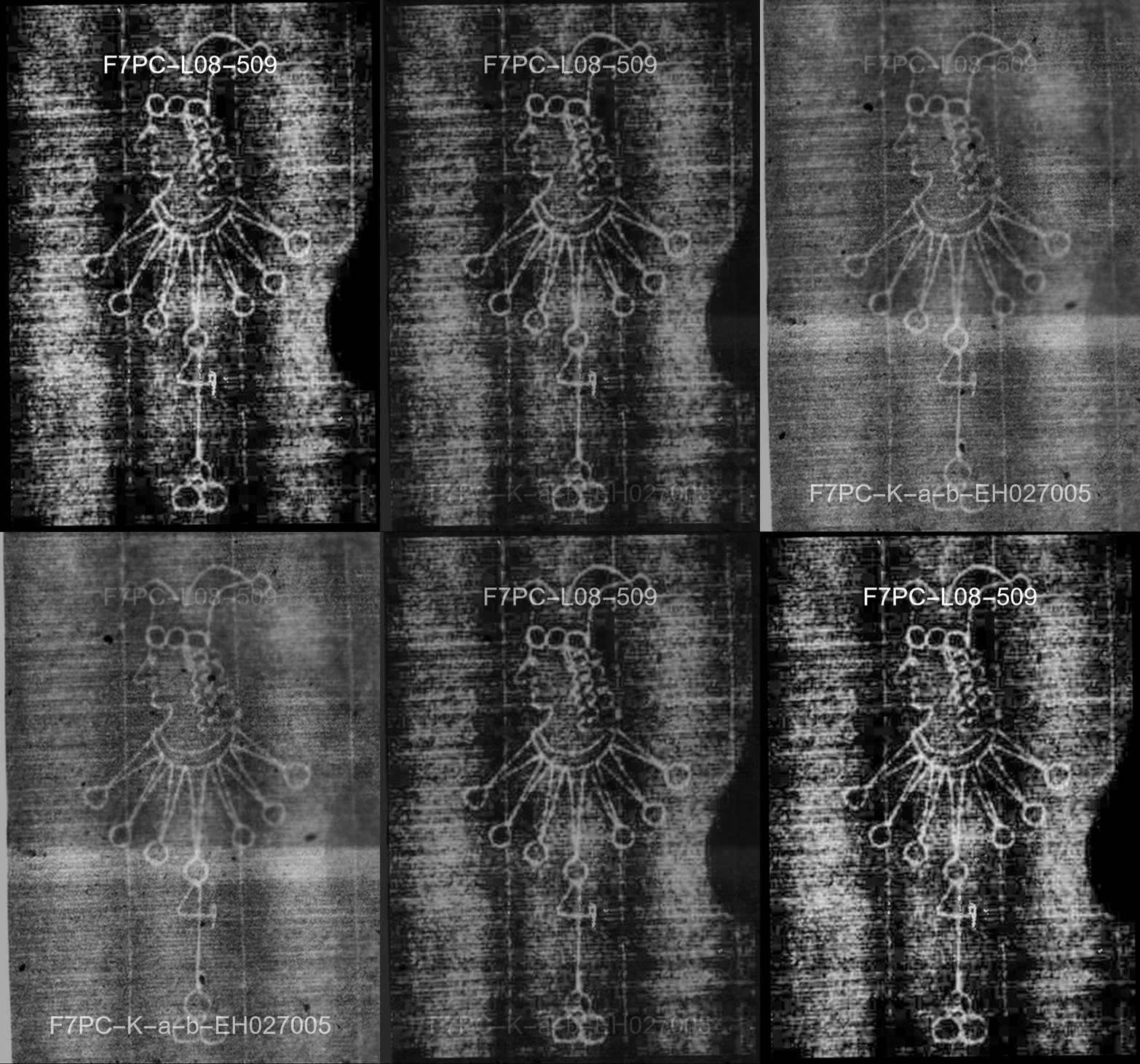
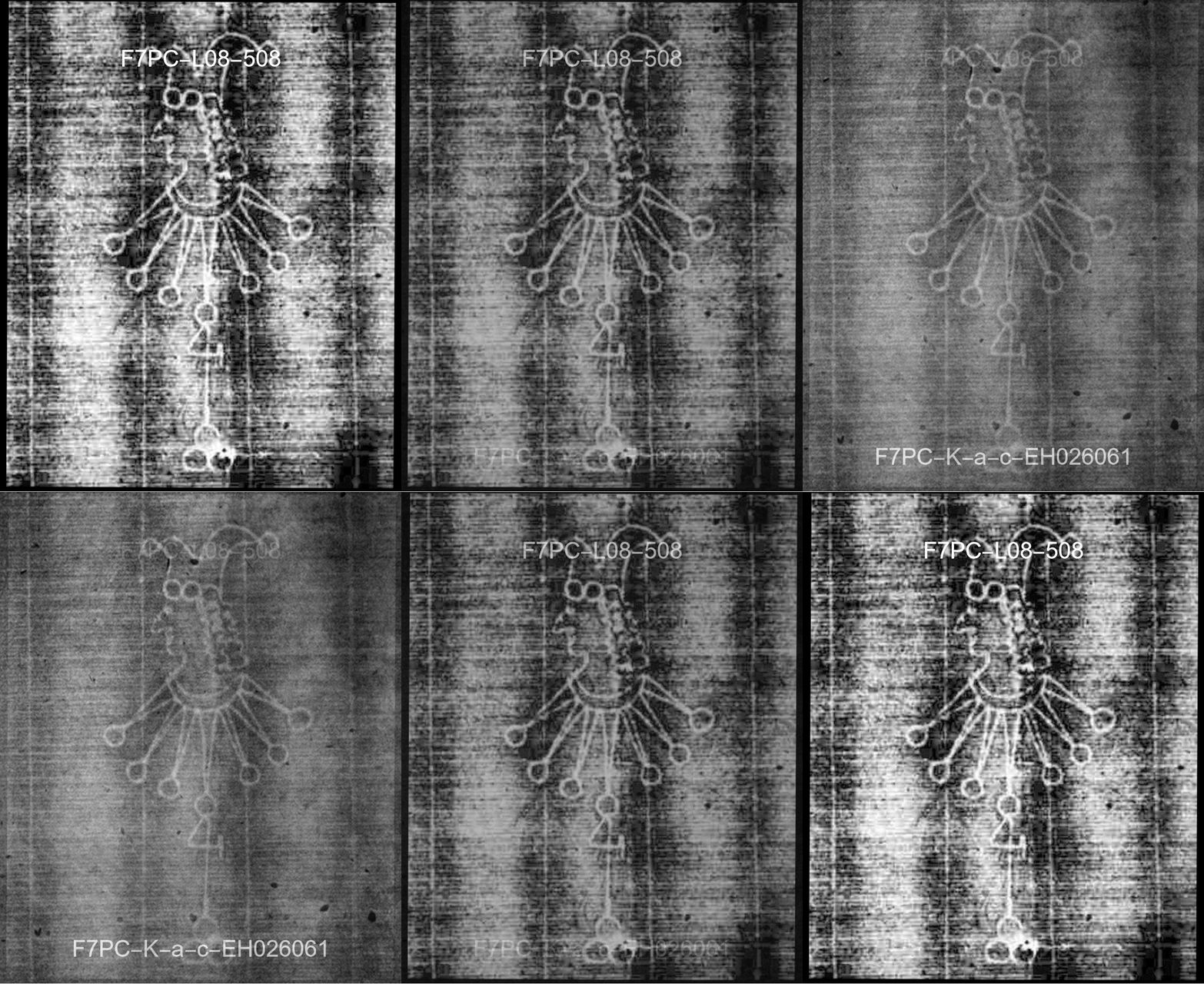
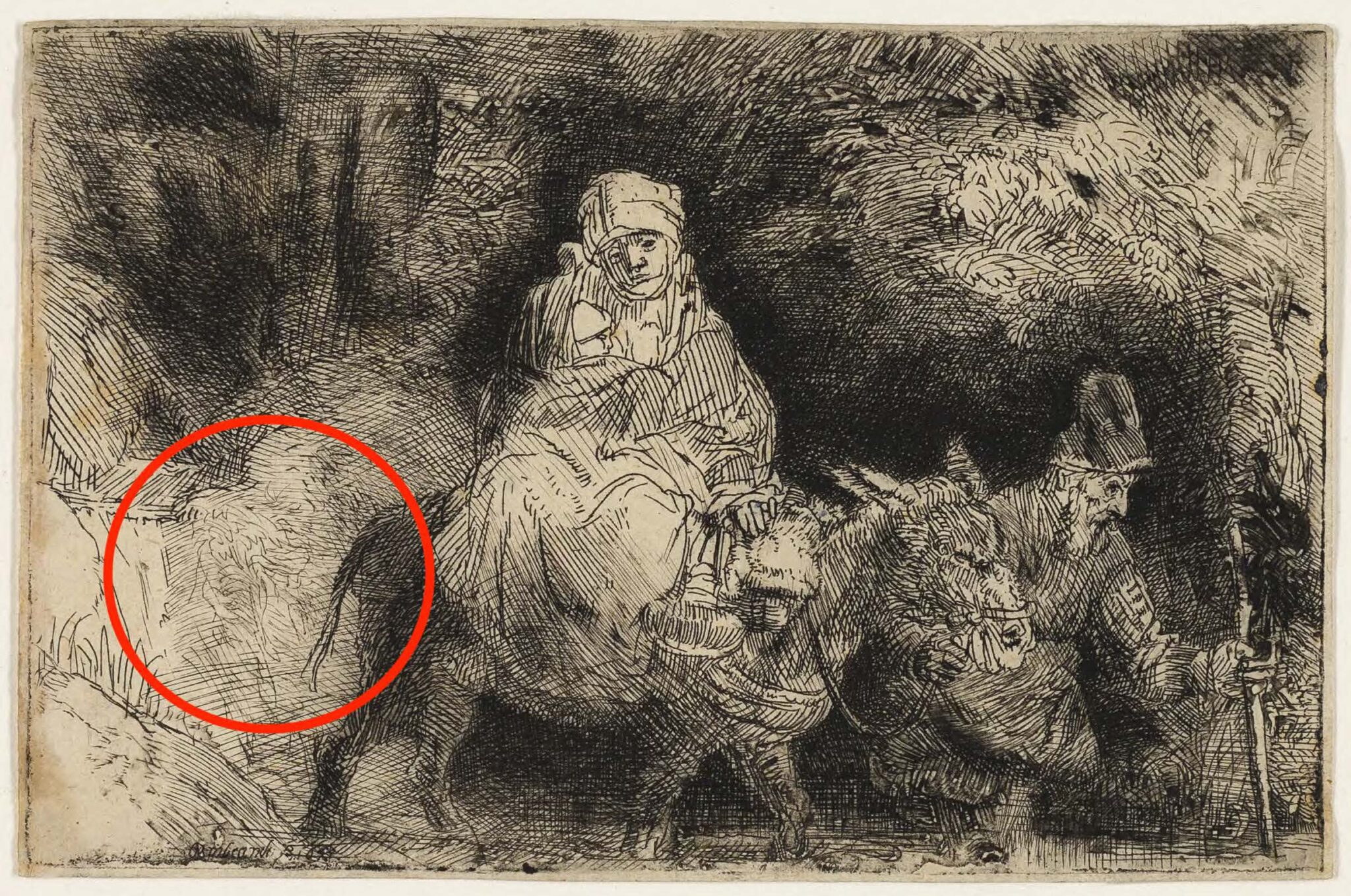
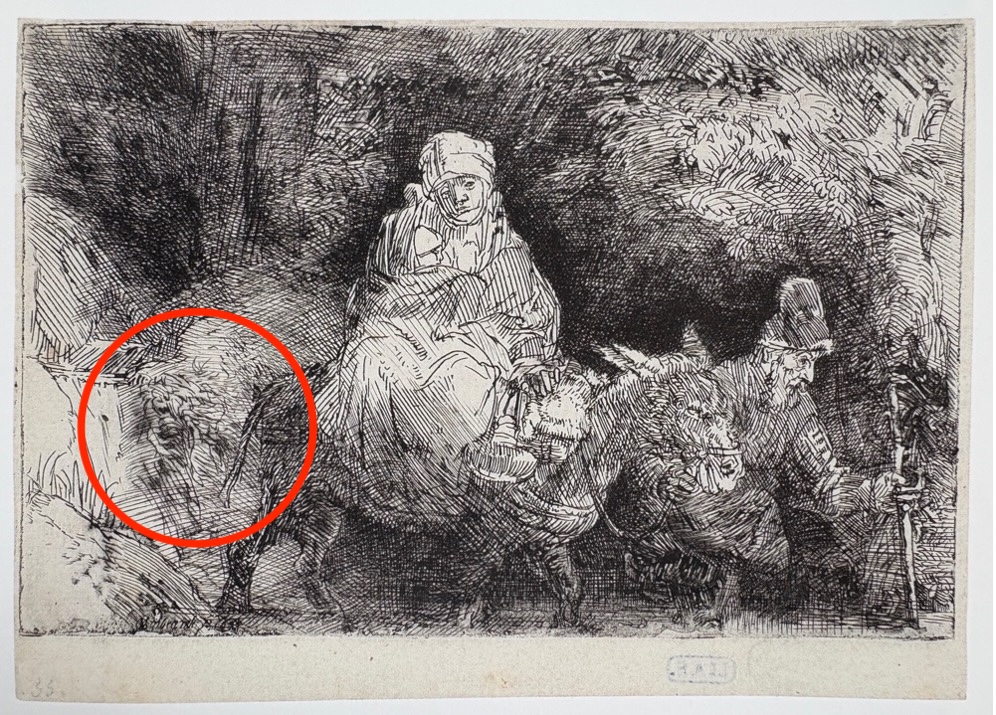
As such, a visual comparison of specific impression characteristics may shed some light on the paper question. We carefully compared the Art Institute of Chicago’s impression of The Flight into Egypt: Crossing a Brook (B55, only state) appearing on the Foolscap with Seven-Pointed Collar K.a.b. paper under consideration here (fig. 22) with an impression of the same print from the Frits Lugt Collection, Fondation Custodia, Paris (fig. 23), which appears on a Foolscap with Five-Pointed Collar F.a.b. paper confidently datable to the plate date of 1654.72 In the Paris impression, the drypoint burr from the lines of the landscape just to the left of the donkey’s tail still prints visibly, whereas in the Chicago impression, nearly all vestiges of drypoint burr in that area have gone, indicating a later printing. It therefore seems unlikely that the K.a.b. paper on which the Chicago impression appears could date from the same year the plate was made.
Additionally, at some point prior to the 1691 and 1693 dates inscribed on Laurentius documents 508 and 509, the plate for The Flight into Egypt: Crossing a Brook (which still survives) seems to have been owned by Amsterdam print publisher Clement de Jonghe (1624/25–1677), as it shows up in his posthumous inventory of 1679.73 There is no evidence that Clement de Jonghe sold the Rembrandt plates in his possession, as his sons carried on the print publishing business after his death in 1677.74 However, even if De Jonghe’s sons did sell the plate, its inclusion as lot 16 in the 1767 sale of the collection of Amsterdam merchant Pieter de Haan (1723–1766) is strong evidence that it remained in Amsterdam at least during the 1690s and may have been used to print impressions in that decade.75
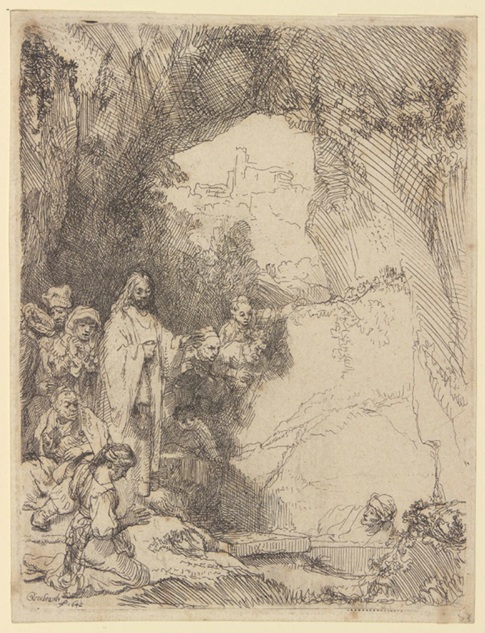
The print found on the K.a.c. paper is The Raising of Lazarus: Small Plate, B72 i/ii, a plate dating from 1642 (fig. 24). Since Rembrandt seems to have used little drypoint in this print, its visual characteristics provide less direct help in assessing the when this reprint was made. However, the B72 plate (now in the Museum of Fine Arts, Boston) may also have been owned by Clement de Jonghe and may thus have also been printed posthumously.76 Further, this plate also appears in the stock list of publisher Claes Claesz. Visscher III (1649–1702), recorded after 1682, offering yet another possible printer for this impression on the K.a.c. paper and linking its use to the early 1690s to synchronize with the 1691 and 1693 dates of the archival documents appearing on this same paper.77
Concluding Remarks
The print-document watermark matches discovered via this library search and overlay creation process present various implications for the dating of the prints appearing on these papers.
First, the printing dates of some impressions of the fourth state of The Flute Player (B188) are confirmed by Foolscap with Five-Pointed Collar H.b.a. and H.b.b. matches with dated documents as quite close to the date of 1642 inscribed in the plate in its second state. The printing dates of other impressions of the fourth (and final) state of The Flute Player with different watermarks appear throughout the 1640s. Impressions of B188 iv appear in entries 54, 56, and 72 of the “Chronological List of Rembrandt’s Papers” in Hinterding’s catalogue with the assigned paper dates of 1641, 1643, and 1648. For the impression of B188 iv with the Foolscap with Seven-Pointed Collar AA.c.a., a print-document watermark match suggests consideration of a printing date around 1653, which is later than any other presently suggested in Hinterding’s catalogue. This later printing date is supported by visual evidence presented by the impression characteristics.
Second, a print-document watermark match supports confirmation of the creation date for Jan Lutma, Goldsmith (1584–1669) (B276), bearing the Foolscap with Five-Pointed Collar N.a.b. watermark, as the plate date 1656 subsequently inscribed in state ii.
Third, the print-document watermark match for the Foolscap with Seven-Pointed Collar A.c. for the final state of Self-Portrait in a Cap and Scarf with Face Dark: Bust (B17 ii) and the final state of The Artist Drawing from the Model (B192 ii) suggests dating them to the same year (1652) as reprints of these two plates appearing on other papers.
Fourth, The French Bed (Le lit à la française) (B186) has impressions dated as late as 1652 in the “Chronological List of Rembrandt’s Papers” in volume 2 of Hinterding’s catalogue. A fourth (and final) state with the Foolscap with Seven-Pointed Collar O.a. watermark presents a match with a document with a significantly later paper use date of 1663. Since the French Bed plate does not survive (and is not among those plates in the 1674 inventory of Dutch print publisher and dealer Clement de Jonghe),78 it is reasonable to presume that this impression was pulled around 1663, before the plate disappeared.79
Fifth and finally, The Flight into Egypt: Crossing a Brook is signed and dated 1654 in the plate in its only state. One impression features a Foolscap with Seven-Pointed Collar K.a.b. watermark and a second shows a Foolscap with Seven-Pointed Collar K.a.c. These two watermarks are extremely similar to each other and to two watermarks in documents dated 1691 and 1693, which encourages a closer look at the prints as posthumous reprints. A posthumous creation is indeed likely based on visual comparison of securely dated early impressions of this print, and also since this plate was probably owned by Clement de Jonghe, and Pieter de Haan a century later (both of whom may have produced posthumous prints), and still survives today.80 It is also possible that Rembrandt may have intended this plate as part of a series of the youth of Christ, along with The Adoration of the Shepherds, with the Lamp (B45), The Circumcision in the Stable (B47), Christ and his Parents Returning from the Temple (B60), The Virgin and Child with the Cat and the Snake (B63), and Christ Disputing with the Doctors (B64).81
The implications of watermark matches between prints and documents illustrate the use of such matches in estimating the dates for printed impressions of various states of a given plate. Examples with Foolscaps with Five-Pointed Collar include print-document watermark matches that support both dating a state with the plate date inscribed in a later state and dating a state with the plate date inscribed in an earlier state. Four examples of Foolscap with Seven-Pointed Collar print-document watermark matches all suggest dates for impressions created after their associated plate dates. In one case, evidence lends support to a posthumous dating.
Further discoveries of print-document watermark matches from the creation of marked watermark libraries for other Rembrandt watermark types are likely to offer additional complementary insights into Erik Hinterding’s huge contributions toward understanding the production history of Rembrandt’s prints.82 The rich data trove derived from Rembrandt’s well-studied prints offers a robust platform for further investigation of print-document watermark correspondences, and there is more to be learned about his oeuvre. Of course, as further watermarks appearing on prints by Rembrandt’s artistic contemporaries are recorded, this technique could naturally be expanded to reveal further archival matches. In this way, the technique would expand beyond Rembrandt, to address lesser-known artists or prints—especially those undated in the plate—or to more closely follow the journey of plates repeatedly editioned by subsequent publishers. As such, the print-document match process constitutes a forensic instrument that should join the toolbox of methods for the multifaceted investigation of prints that includes print connoisseurship, stylistic analysis, and available primary sources.