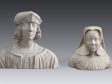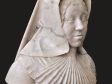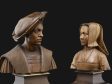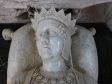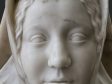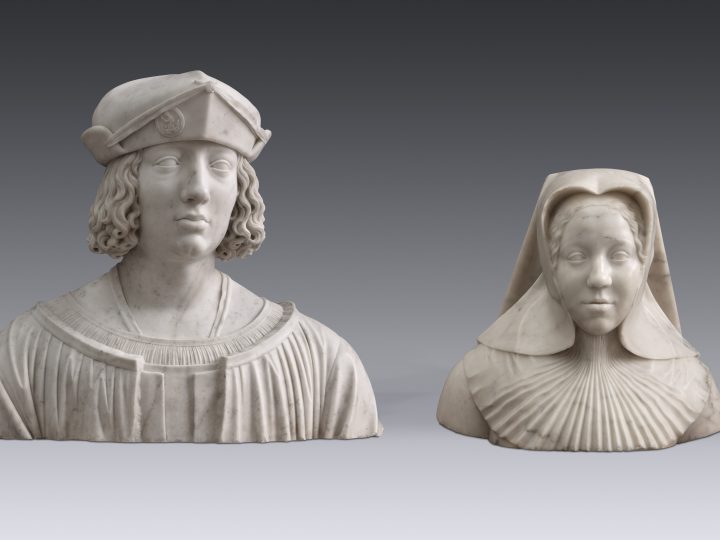
Two recently discovered life-size marble busts by Conrat Meit (ca. 1470/85–1550/51) are among Margaret of Austria’s (1480–1530) earliest commissions to her court sculptor. The attribution is established by stylistic analysis and by contextualizing the busts within extant archival sources. Discussion of the iconographic differences between both busts and their original setting in the library of Margaret’s Mechelen residence suggests the busts were a visual manifestation of Margaret’s self-fashioning as a powerful widow. As some of the first marble busts of the Northern Renaissance, the portraits testify to the modernity of the artist and of the Habsburg court.
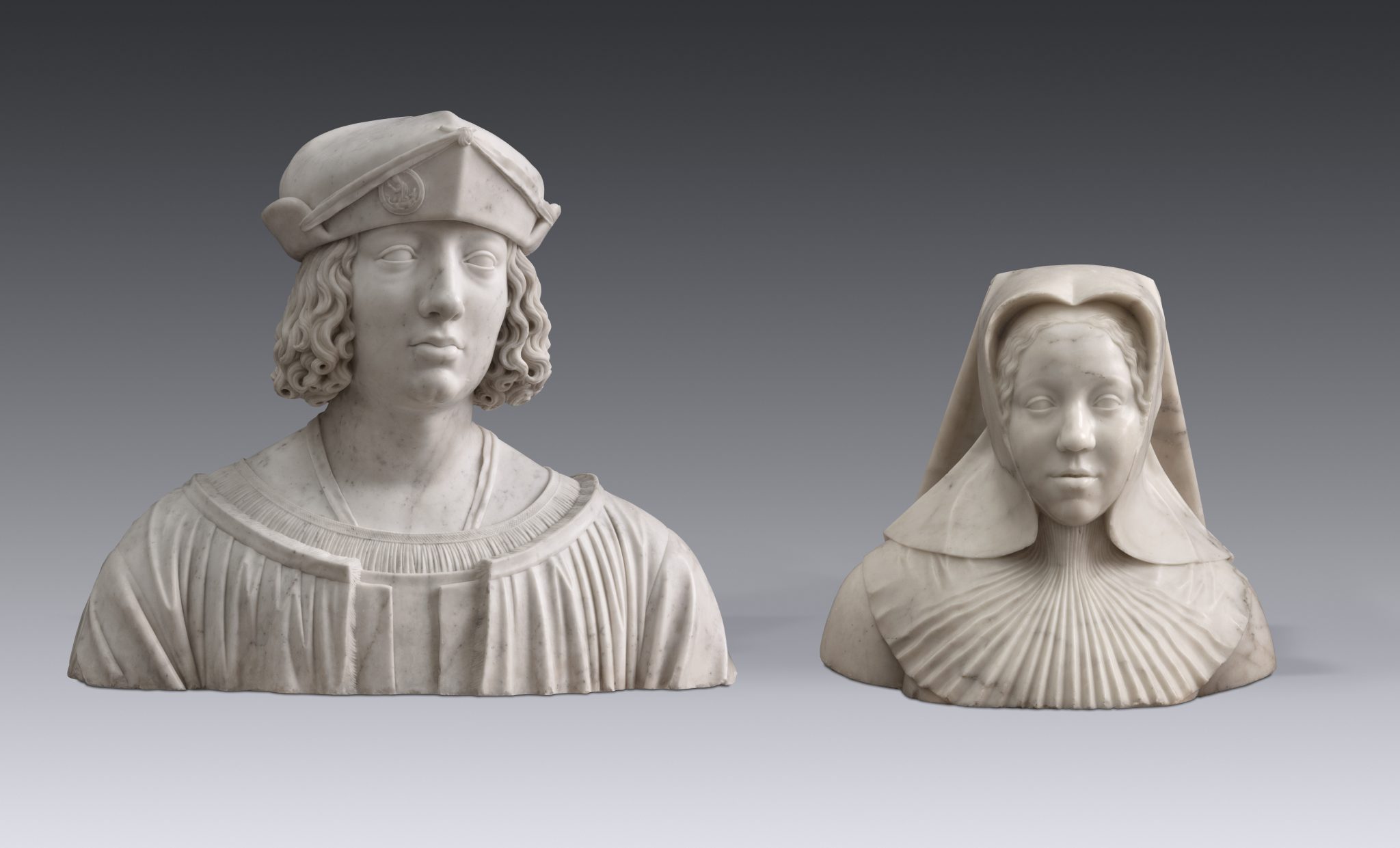
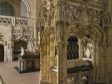
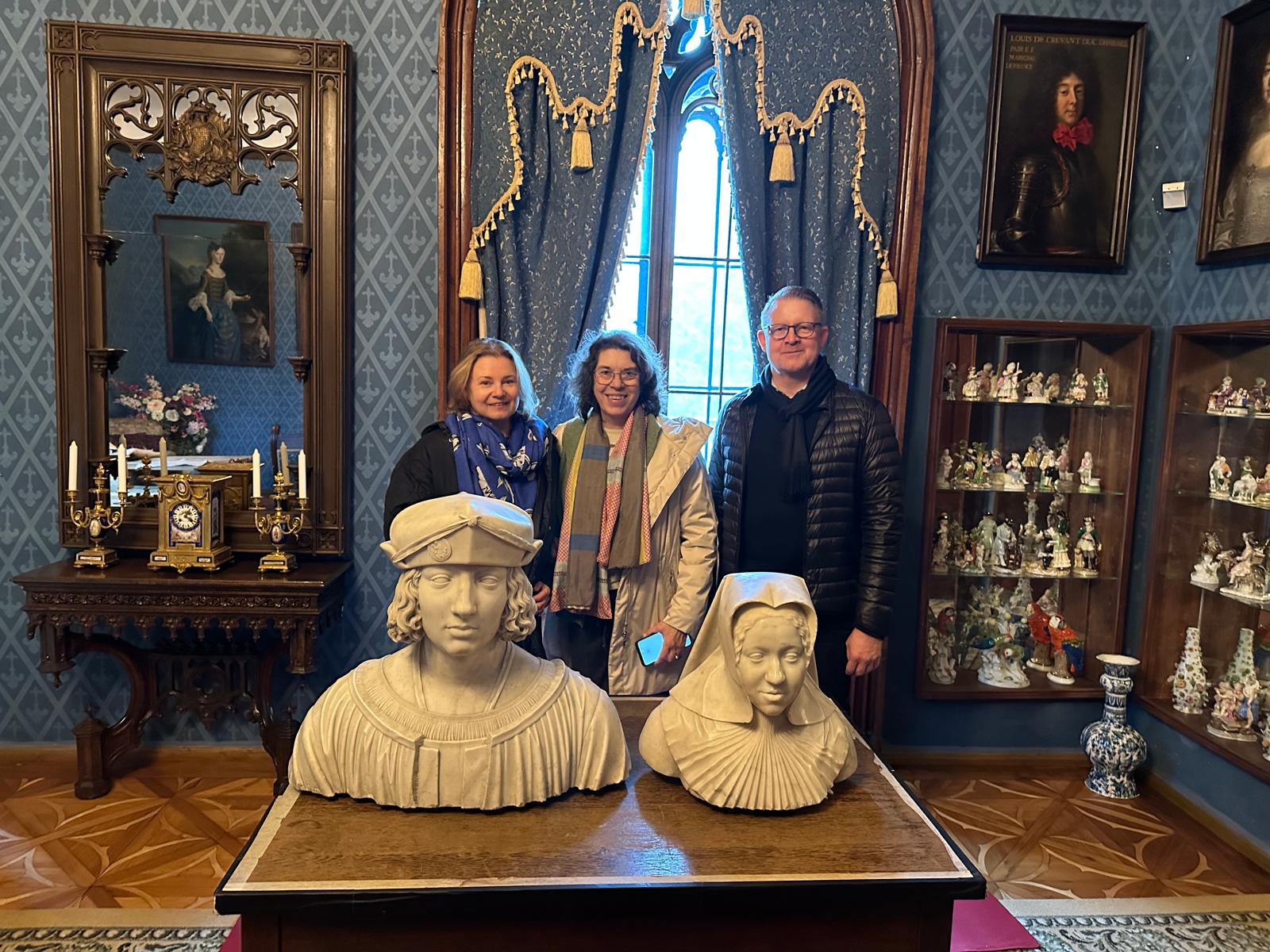
An extraordinary discovery made in the Czech Republic has brought to light a pair of early portrait busts depicting Margaret of Austria (1480–1530) and her husband, Duke Philibert II of Savoy (1480–1504). Four art historians from Heidelberg, Munich, and Prague have joined forces to study these two marble busts of exceptional quality that were kept in the state-owned Sychrov Castle, one hour north of Prague (fig. 1). Sychrov Castle, a former seat of the Rohan family that was rebuilt in nineteenth-century Gothic revival style, was not the original location of these sculptures. After World War II, Sychrov Castle was confiscated and subsequently designated a storage site for a vast number of works of art from other expropriated properties. At first, both busts were on display there, but their provenance and mutual connection were soon forgotten. Philibert’s bust was eventually put in storage for more than a decade.
In the 1980s, Margaret’s bust was correctly identified and dated to the sixteenth century by Miloš Kadlec, the castle’s castellan.1 It did not, however, attract any further attention until 2017, when it was displayed in a temporary exhibition at the National Gallery in Prague.2 The brief catalogue entry contained a conjectural comment regarding the potential authorship of Conrat Meit and mentioned the work’s close connection to a miniature wooden bust by Meit in the Bayerisches Nationalmuseum in Munich. At the time, Margaret’s marble bust caught the attention of Šárka Radostová, who later selected it for the research project Ad Unicum and published it in a 2023 collections handbook.3 In 2018, Dagmar Eichberger obtained a photograph of the bust from her colleague Annemarie Jordan Gschwend. She shared the photograph with Jens Ludwig Burk. In fall 2022, Eichberger contacted Radostová through one of her Czech students and requested information on the sculpture in the hope of exploring the bust in situ during her upcoming visit to Prague.
Before the trio began working together, Ad Unicum received a significant boost from archival work undertaken by Kristina Uhlíková, concerning records dating from 1948. These records revealed the existence of a hitherto missing second marble bust and clarified the provenance of both sculptures from Hejnice or Haindorf, near Sychrov and Frýdlant (Friedland). Further research confirmed that the last private owner of the bust was Sofie Auersperg, née Clam-Gallas. At this point, the German colleagues were invited to collaborate on the research for Ad Unicum and were informed about the existence of a second marble bust, a portrait of Duke Philibert II of Savoy, which was described in internal documents as “a man dressed in the Renaissance style, 19th century.”4 While they were enthusiastic about the possibility of the busts sharing a provenance and both being by Meit, they remained cautious at first, not having seen the original sculptures in person.
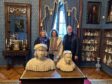
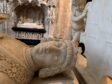
A joint inspection of the bust at Sychrov finally took place on November 9, 2022. The tension and excitement were palpable as the second bust was brought out of the storage room. Almost immediately, the team was convinced of the authenticity of the two busts. The so-called “man dressed in the Renaissance style” had to be the portrait of Margaret of Austria’s deceased husband, a marble bust she had commissioned but was until then only known from archival sources. The enthusiasm surrounding the discovery, coupled with admiration for the artistic quality and unexpected iconography of the two busts, is well documented in a photograph of the three art historians on that auspicious day: Jens Burk, Dagmar Eichberger, and Šárka Radostová (fig. 2). For all of us, a dream had come true; we were present when two famous works of art, which had disappeared from public sight for more than four centuries, were finally reunited. The subsequent collaboration made it possible to clear up incorrect attributions, misdating, and false hypotheses. It allowed us to contextualize the works properly, taking into account their creation and provenance. These new insights provided a better understanding of the strategy behind the commission, including the artistic concepts and collecting practices that likely factored into Margaret’s thinking. Our interpretation demonstrates how these sculptures crystallized Meit’s pioneering modernity and confirmed the role of the Habsburg court in adapting the Italian Renaissance portrait style to northern audiences.
Conrat Meit (ca. 1470/85–1550/51) stands at the pivot of Northern European sculpture’s shift from late Gothic traditions to Renaissance naturalism. A close associate of Albrecht Dürer and court sculptor to Margaret of Austria, Meit mastered wood, alabaster, bronze, terracotta, and, crucially, marble, introducing to the North both the autonomous statuette and the three-dimensional portrait bust. The recent rediscoveries of these two life-size marble busts of Margaret of Austria and Philibert II of Savoy transform our understanding of his oeuvre and of image-making at the Habsburg court. Long known only from archival references and presumed lost, these works are among the earliest marble portrait busts in the Northern Renaissance and foundational statements of dynastic memoria and political self-fashioning.
This essay attributes the busts to Conrat Meit through stylistic analysis aligned with documentary evidence, situating them within the artist’s practice and the visual program of Margaret’s court. The portraits do not form an original pair: Philibert’s youthful likeness appears to have been commissioned first, followed by Margaret’s self-consciously contemporary image in widow’s weeds—a visual brand that would go on to define her public identity as Imago Archiducissae across media. Formal and technical features—eyeballs without drilled pupils, sharply defined lacrimal glands, soft modeling of lips, and virtuoso curls carved a jour (in the round)—link the busts to Meit’s later effigies at the Church of St. Nicolas-de-Tolentin in Brou, France, while the choice of premium Carrara marble signals deliberate engagement with Italian models and emulation of the antique.
Before entering the court of Margaret of Austria, Conrat Meit was employed by Frederick the Wise (1463–1525), Prince-Elector of Saxony in Wittenberg from 1505/1506 until 1509/1510. In Mechelen, the Archduchess had established her court as regent and governess general of the Habsburg Netherlands after the premature deaths of her last husband, Duke Philibert II of Savoy, and of her brother, King Philip I of Castile (1478–1506).5 Her court developed into a major cultural center in the Netherlands that attracted artists, diplomats, and intellectuals alike.6
Conrat Meit’s Portrait Busts of Margaret and Philibert in Different Formats
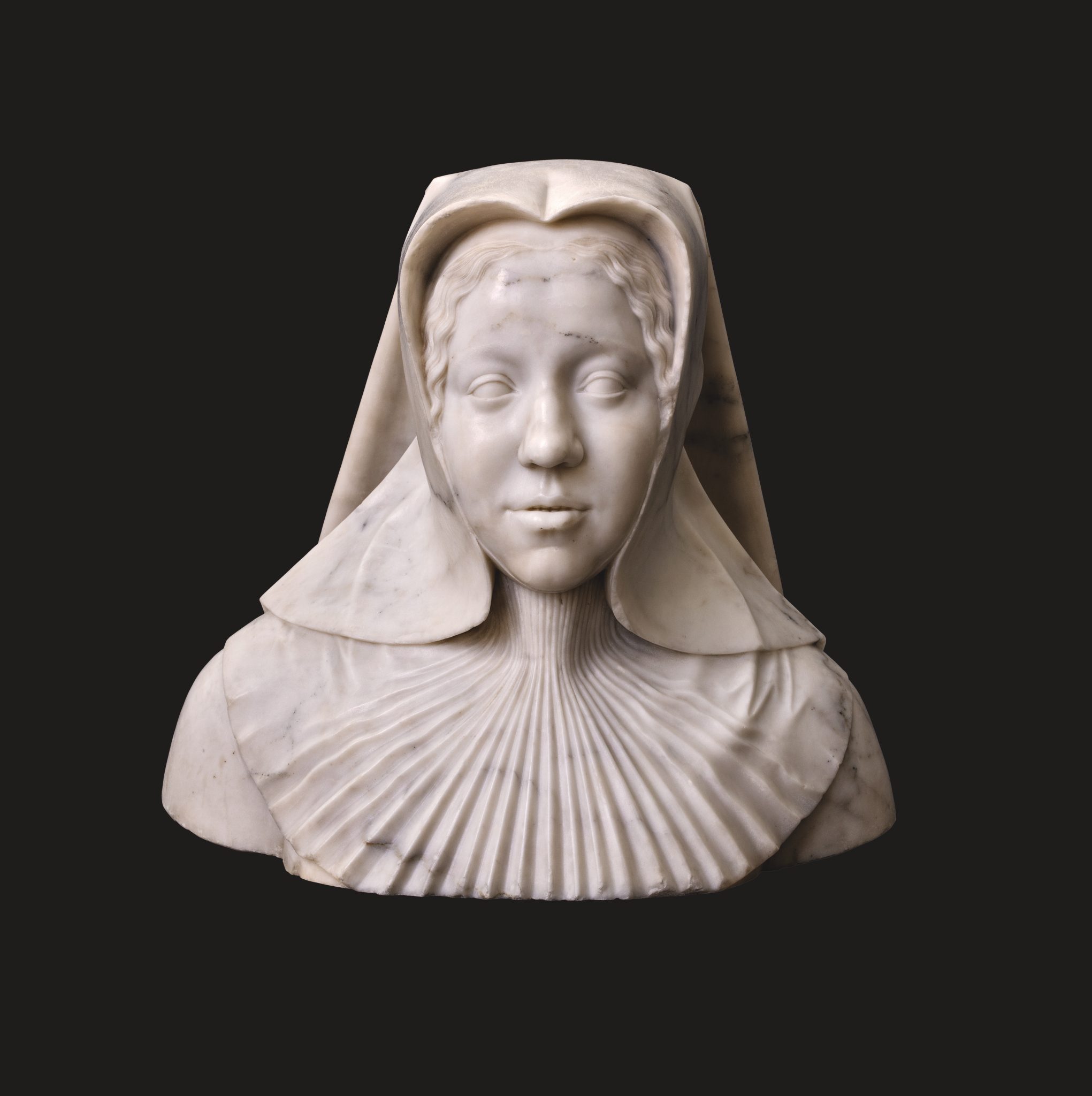
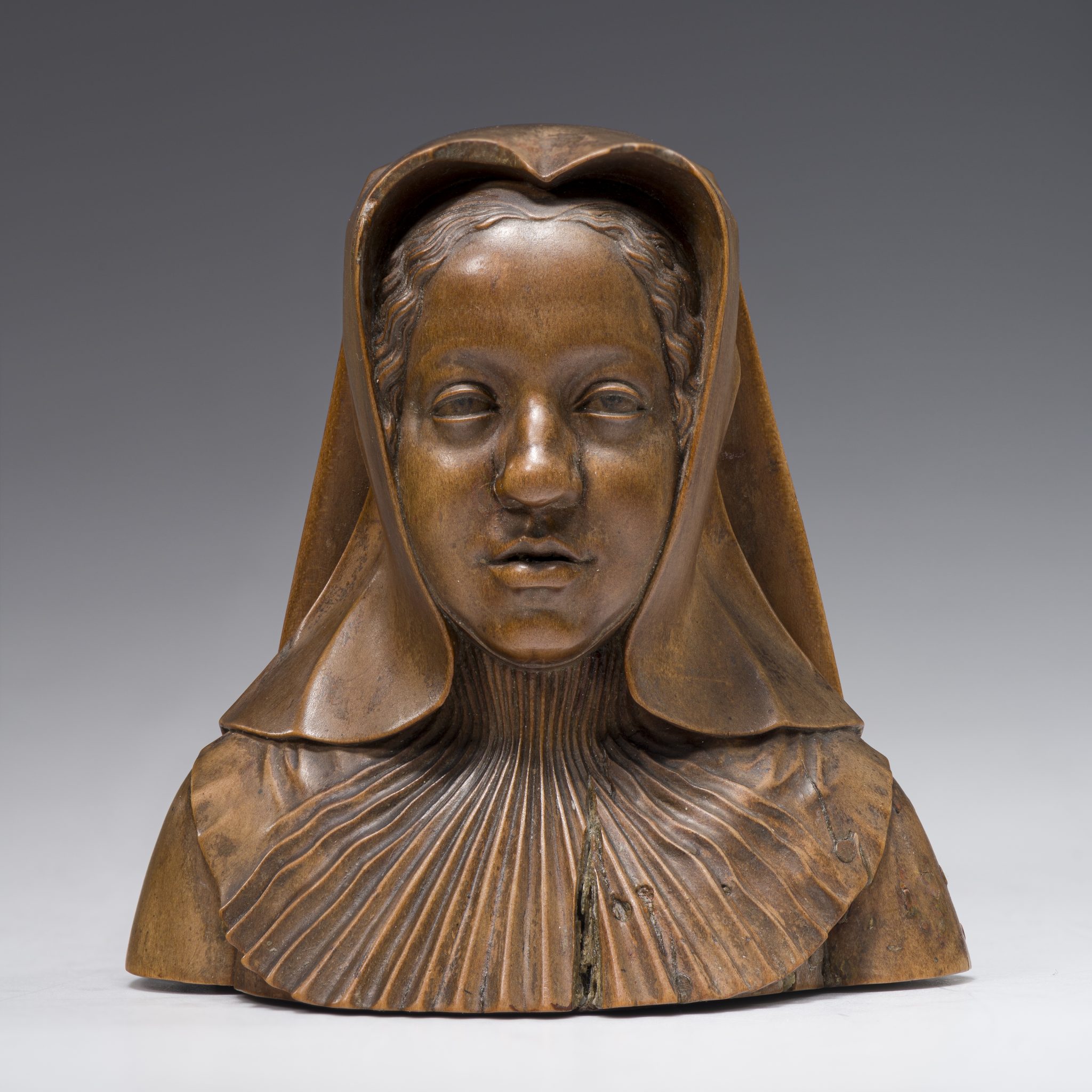
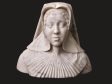
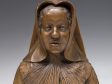
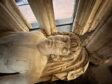
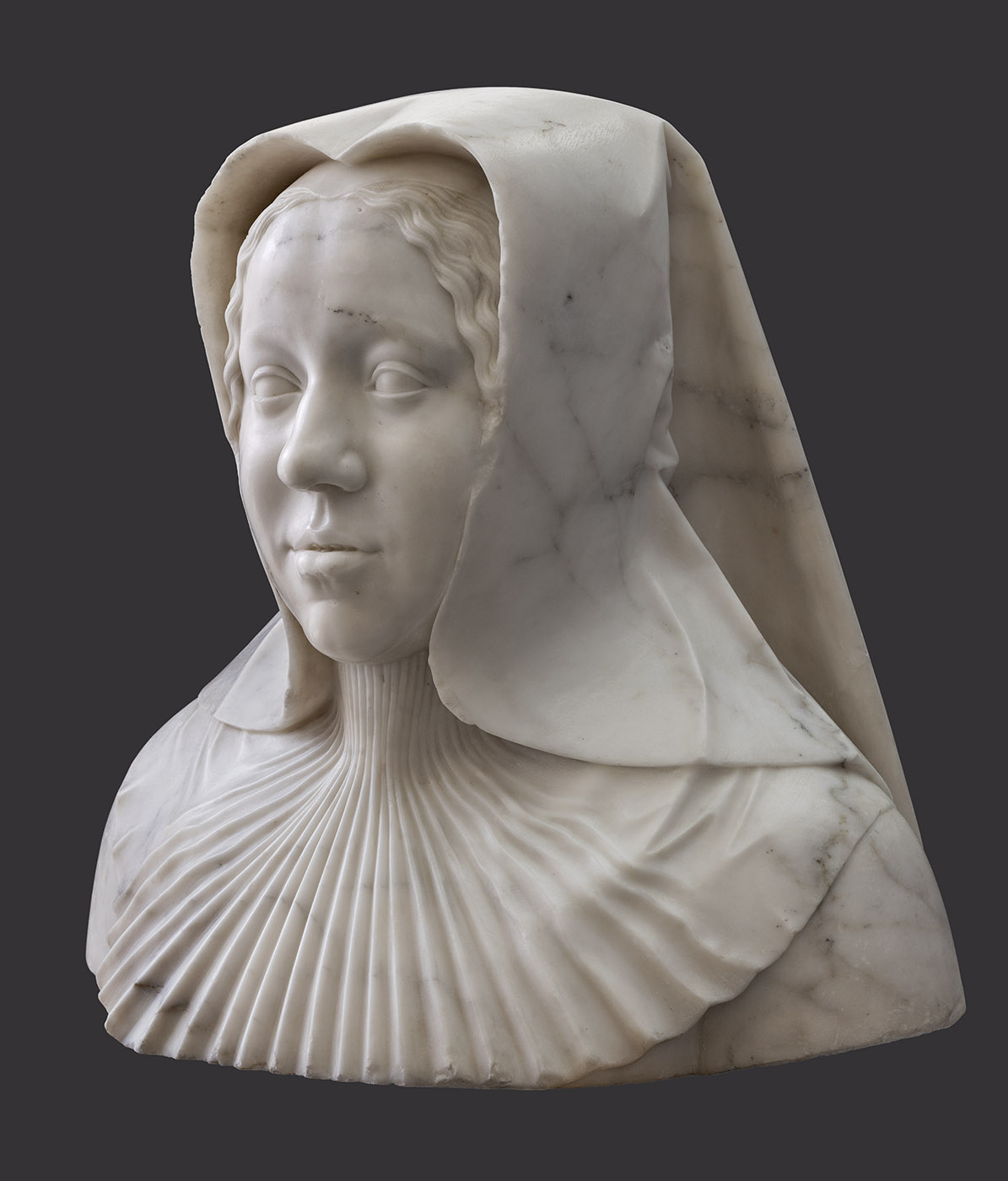
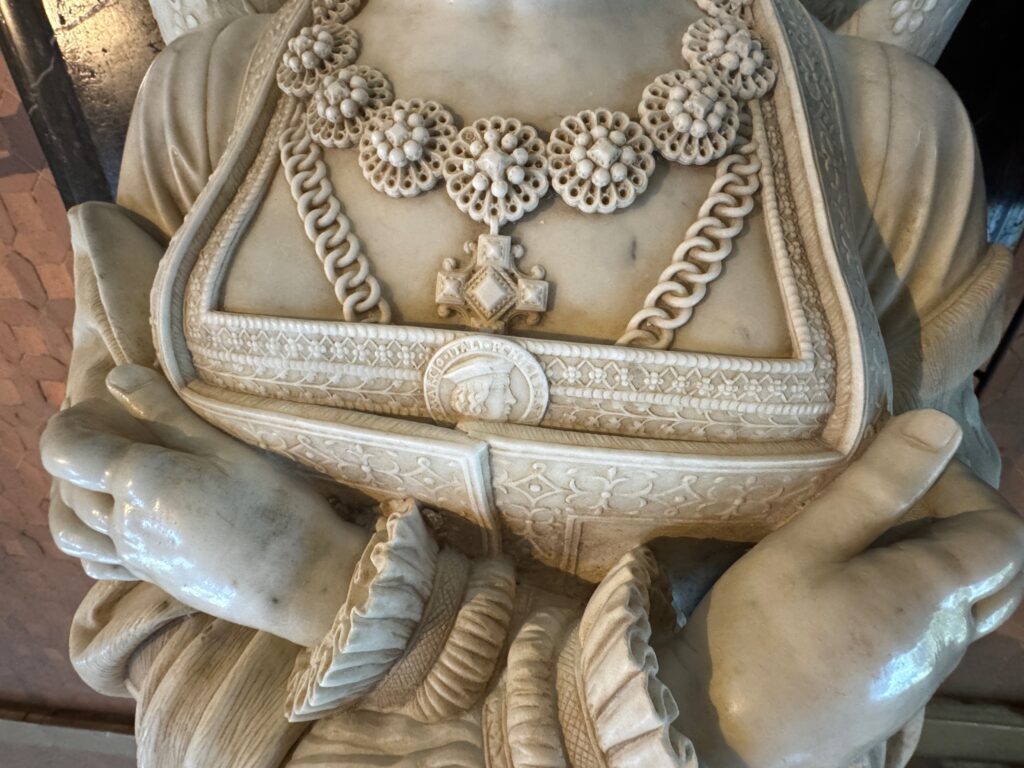
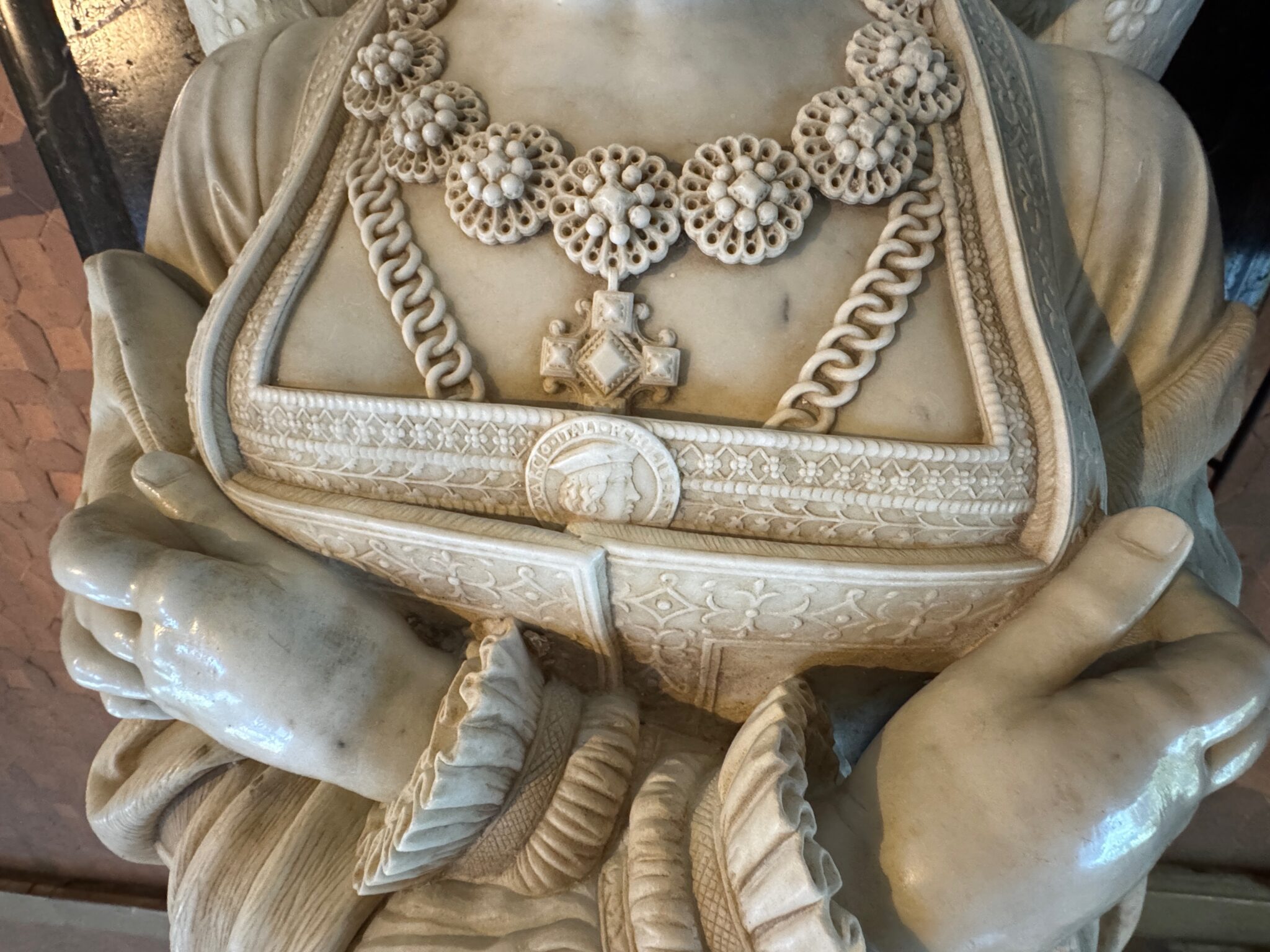
During his time as Margaret’s court sculptor, Meit created portrait busts of the duchess and her husband in different sizes, from different materials, and for different functions. The marble bust in Frýdlant, like the miniature wooden bust in Munich, depicts Margaret of Austria frontally as a widow (figs. 3, 4, 5 and 6). A radially pleated plastron, or bib, which is part of the widow’s weeds, dominates her high-necked garment. It is spread over the upper gown, its rounded hem defining the lower edge of the bust. Margaret’s face is framed by the widow’s coif sitting symmetrically on her head. She wears the coif over an under-bonnet that fits closely to the head and is tightly guided under the chin, enclosing the neck. The headwear conceals most of her hair, which is parted in the center, except for some curls at the sides. Margaret’s rounded features display a broad, slightly protruding forehead, small eyes, a dominant nose with a rounded tip, a mouth with an upturned upper lip, and a fleshy lower lip with a slightly protruding lower jaw. With her teeth visible between her open lips, her depiction appears deliberately animated. Aside from her open mouth, the hereditary malformation of the lower jaw—the so-called Habsburg progeny—is presented in a realistic way.
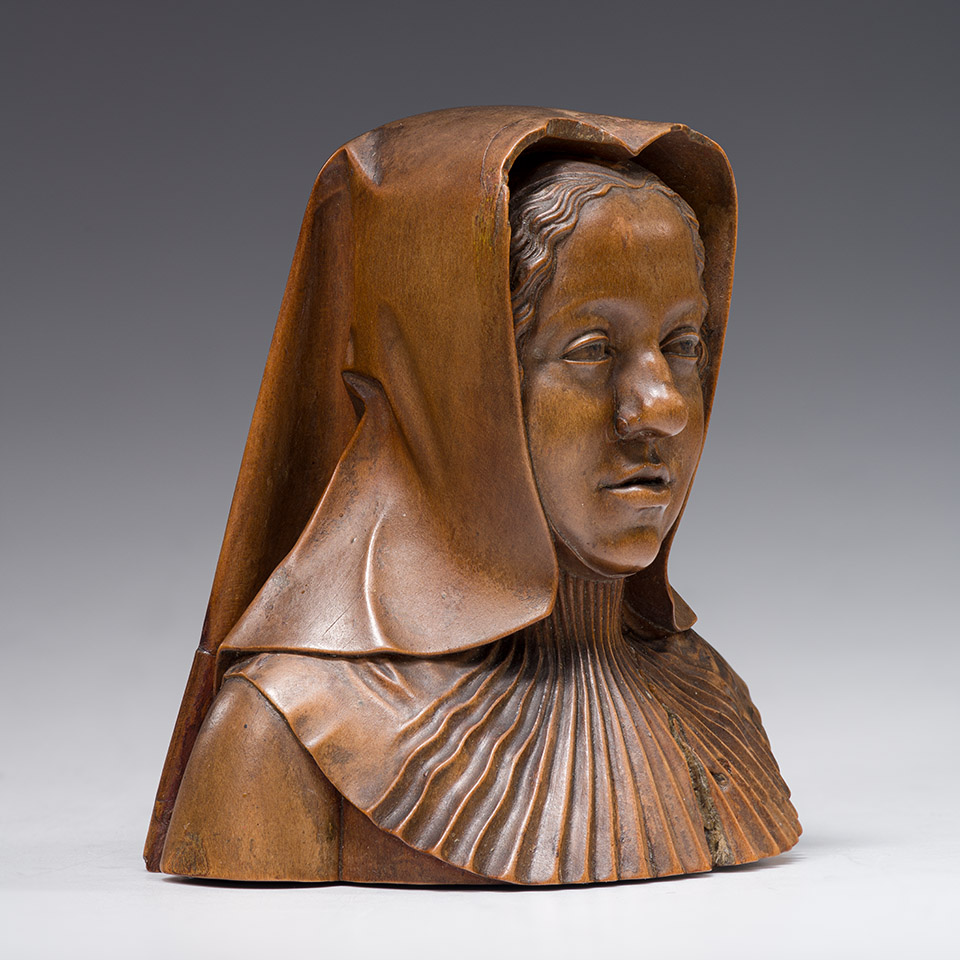
While at first glance her miniature bust in Munich is almost identical, a closer comparison reveals a number of differences in physiognomy and in the treatment of the folds of her coif.7 Completed sometime before the end of July 1517, the marble bust undoubtedly precedes the two wooden busts of Margaret of Austria, for which Conrat Meit was paid on January 5, 1518. (For more on this, see the discussion of the archival evidence below.) Consequently, the relationship between the marble bust and the Munich bust cannot be understood as that of a small wooden model and a later marble version. Instead, we propose a principal difference in function between the representative marble bust and the intimate cabinet piece in wood.
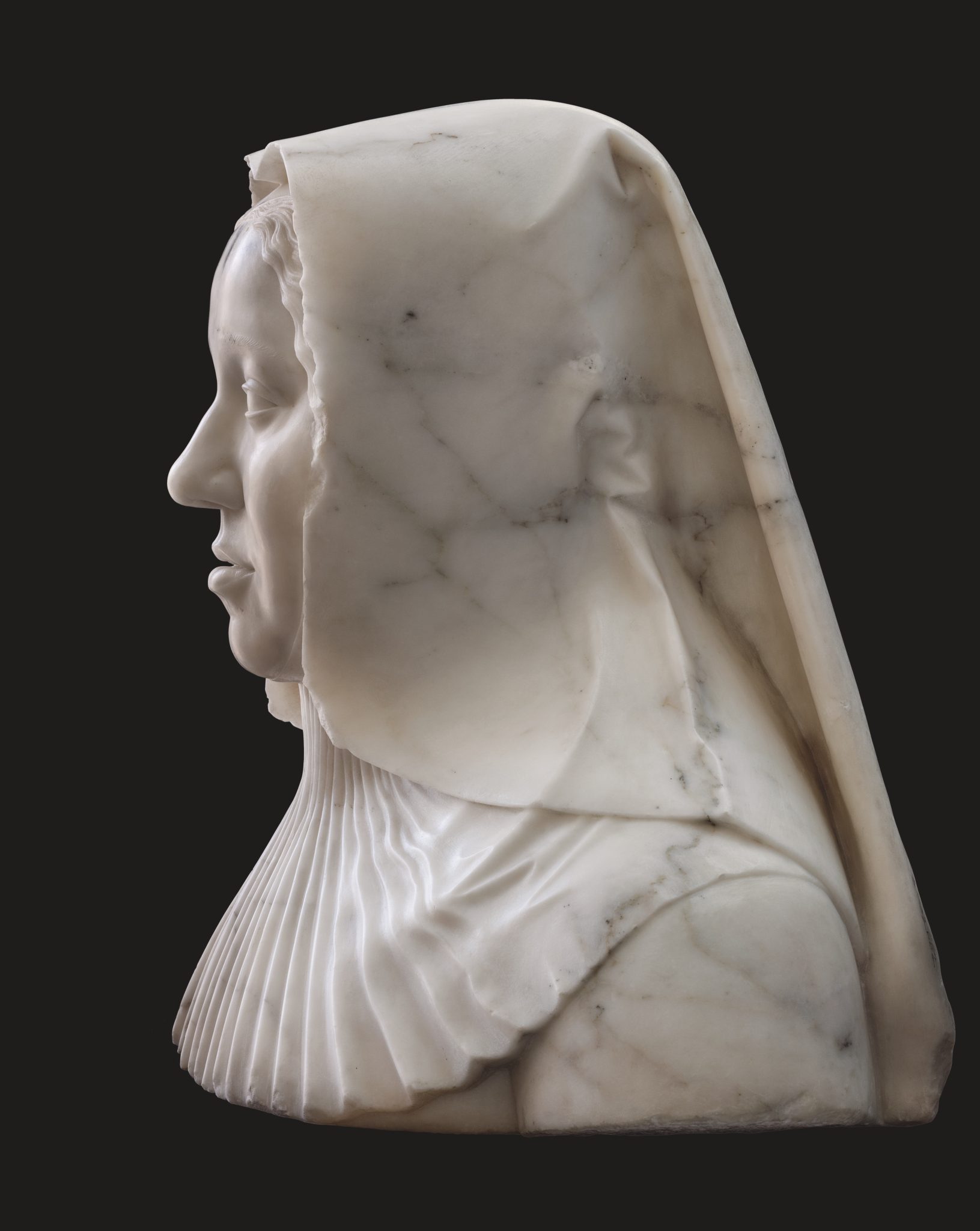
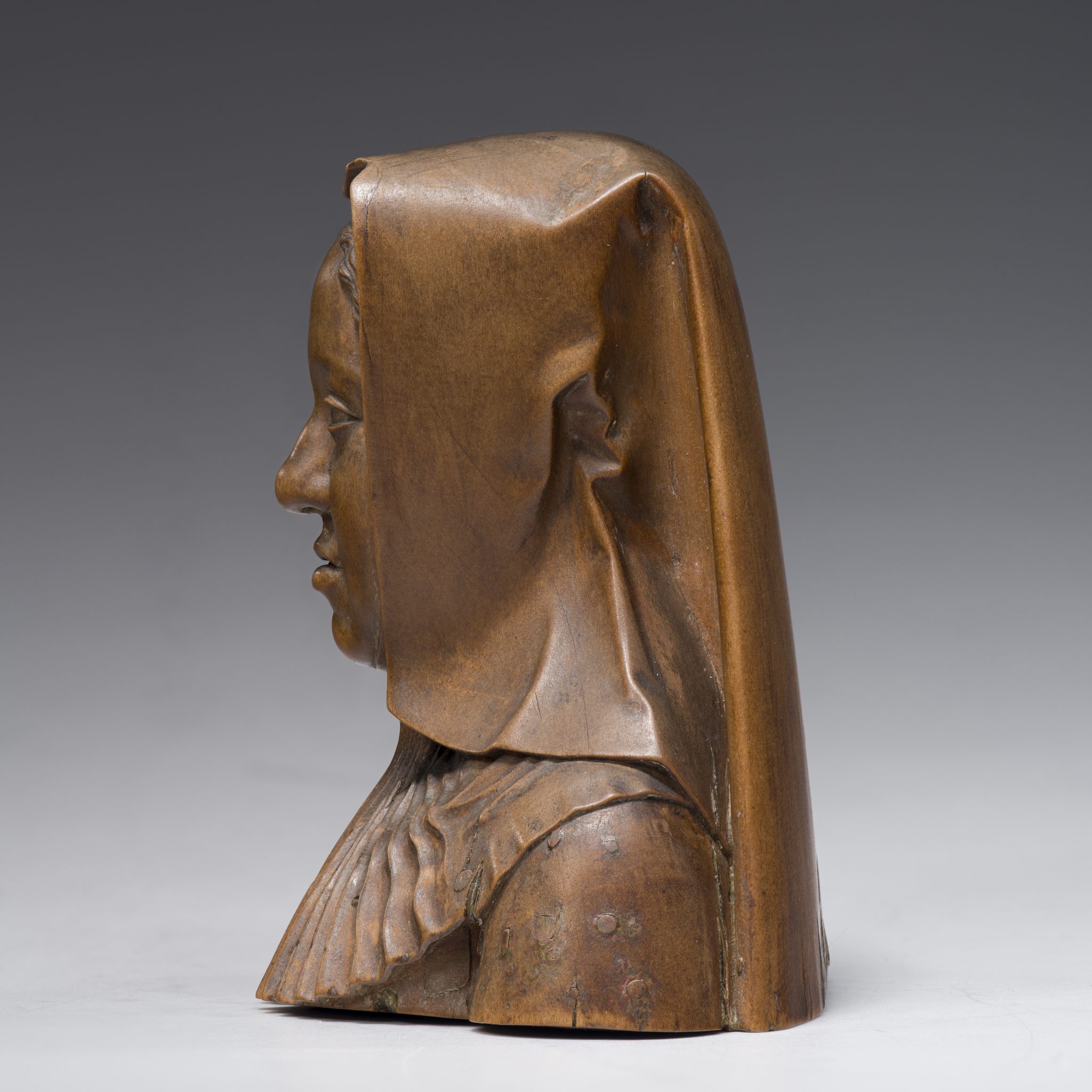
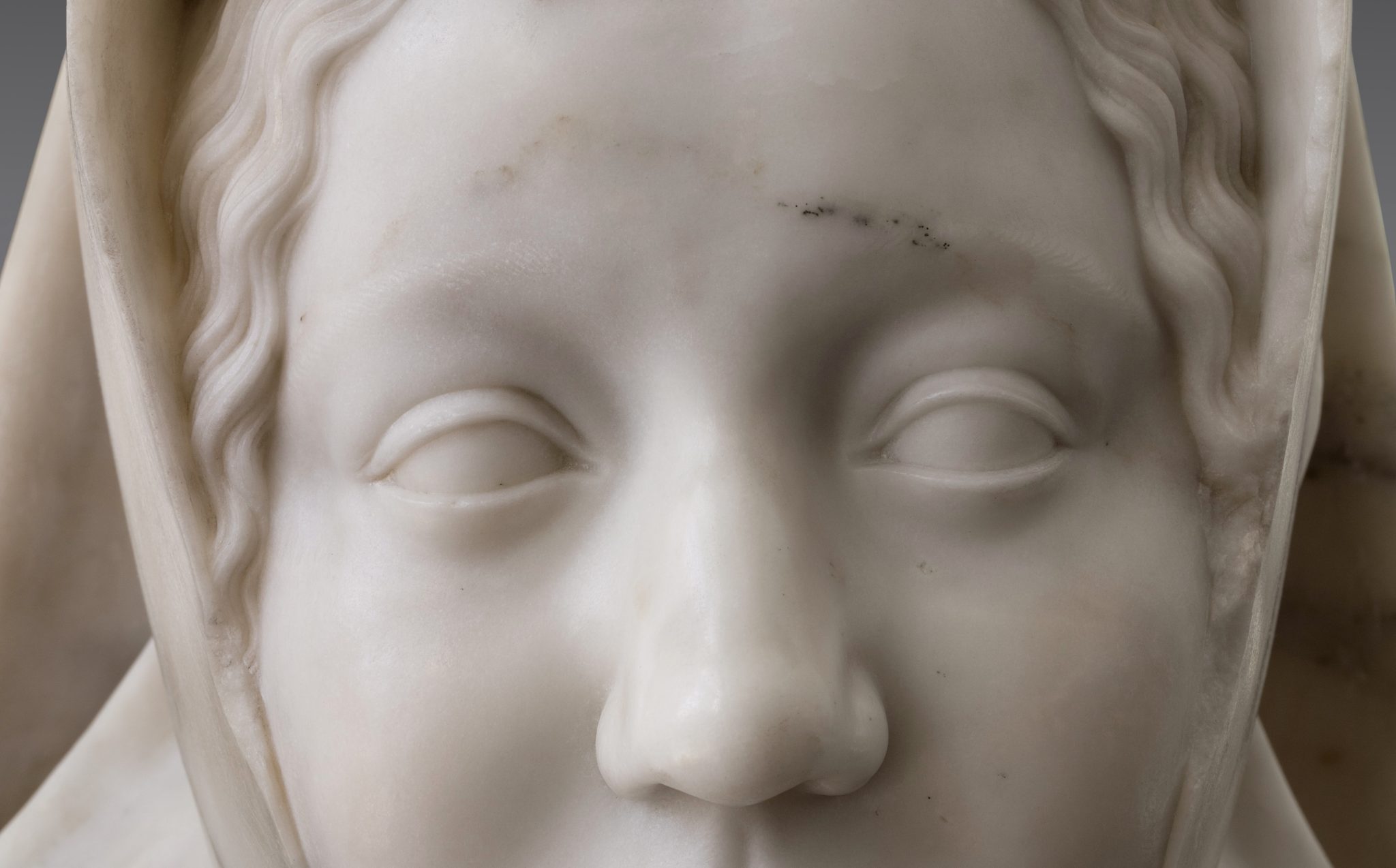
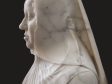
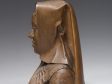
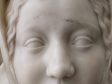
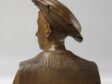
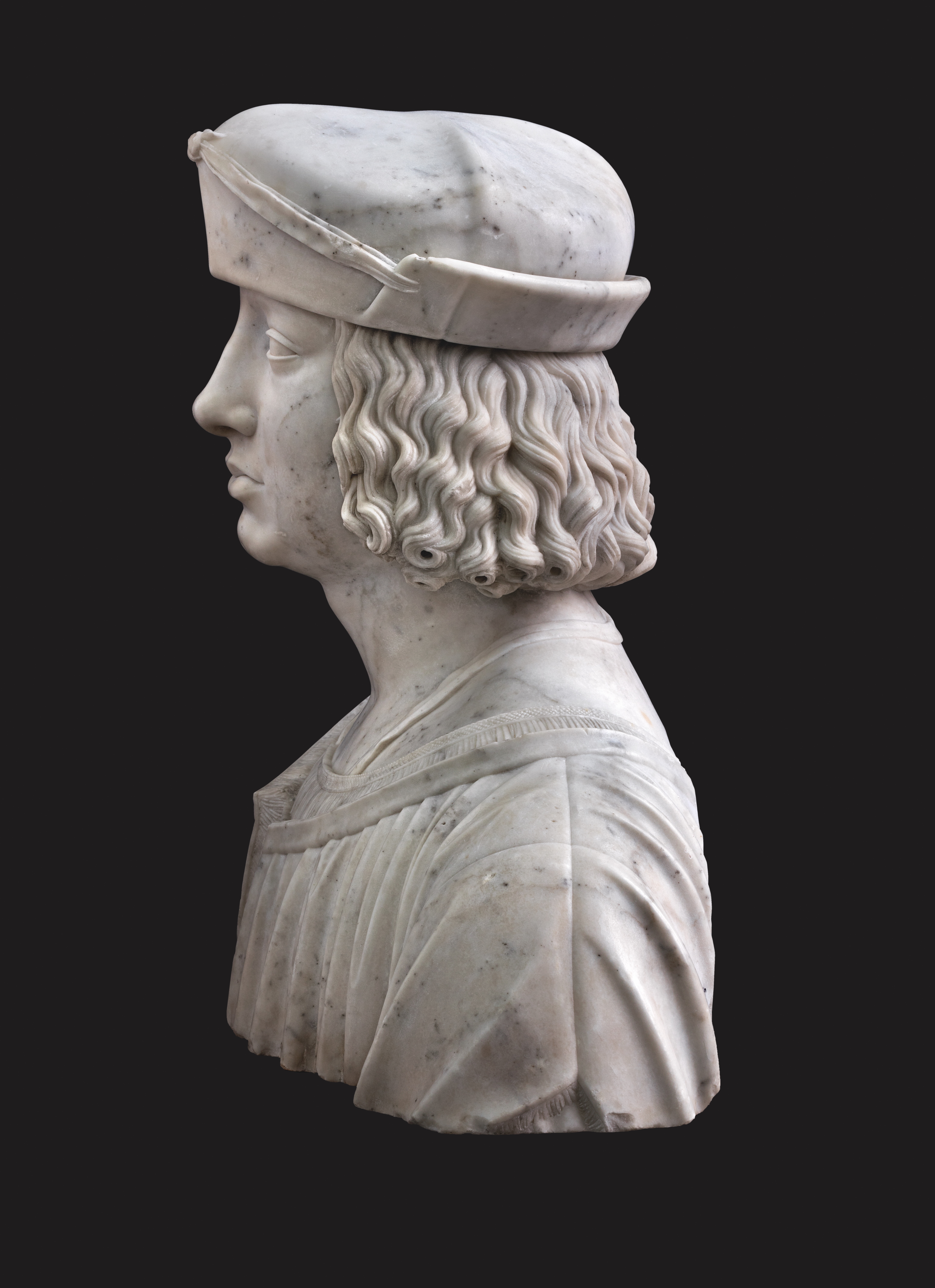
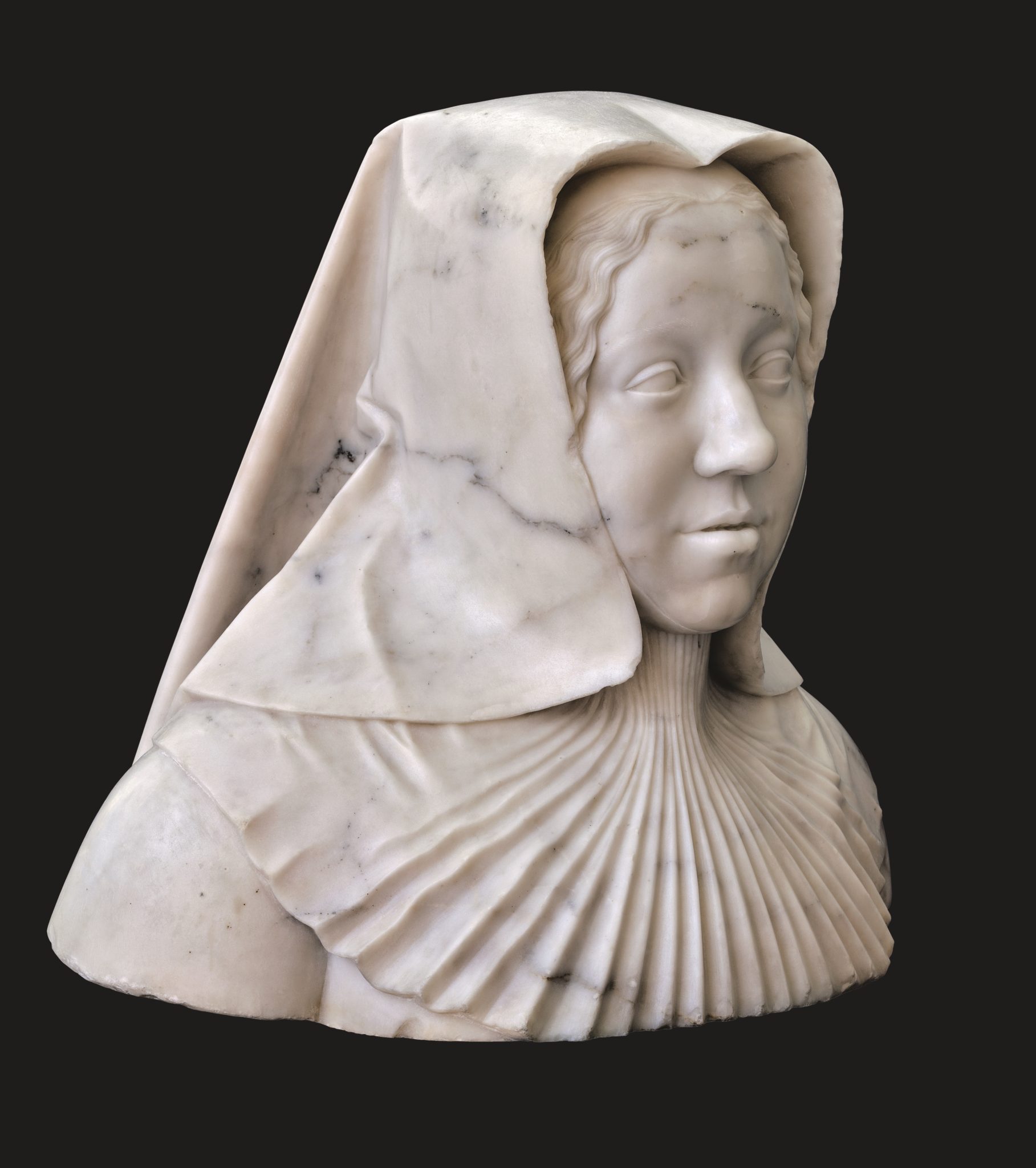
The Munich miniature bust can be identified as one of the two versions executed by Meit for Margaret before January 1518; the other one was probably presented as a gift to a now-unknown recipient.8 Although it is likely that models were made for the marble busts (as was common practice), none have survived, nor have archival records of any models. What, then, are we to make of the small bust in Munich? It was not a miniaturized version of the marble bust meant to be mechanically transferred into stone. Instead, we have determined that both sculptures were independent works, each with its own nuanced characteristics and different functions. Side views show that the marble bust differs from the miniature bust insofar as the head is extended further forward (figs. 7, 8). The marble also differs in the orientation of the cloth of the coif, which extends diagonally to the back rather than falling vertically, as it does in the miniature bust. Margaret’s eyes, nose, and mouth appear slightly smaller in the marble bust than in the miniature bust, and the tip of her nose is also less broad and rounded in the marble. Unlike the miniature bust, the marble bust has no painted pupils; indeed, both marbles are without any polychromy. Margaret’s face in the marble bust appears younger and less plump, her expression softer (fig. 9). The carefully incised eyebrows and lip wrinkles of the marble bust, which the miniature bust in Munich does not have, are also evident in two miniature wooden busts of Philibert and Margaret as a young couple now in London (fig. 10). There Margaret is depicted as being noticeably young, as she would have been during her marriage to Philibert; she was only twenty-four when he died in 1504.
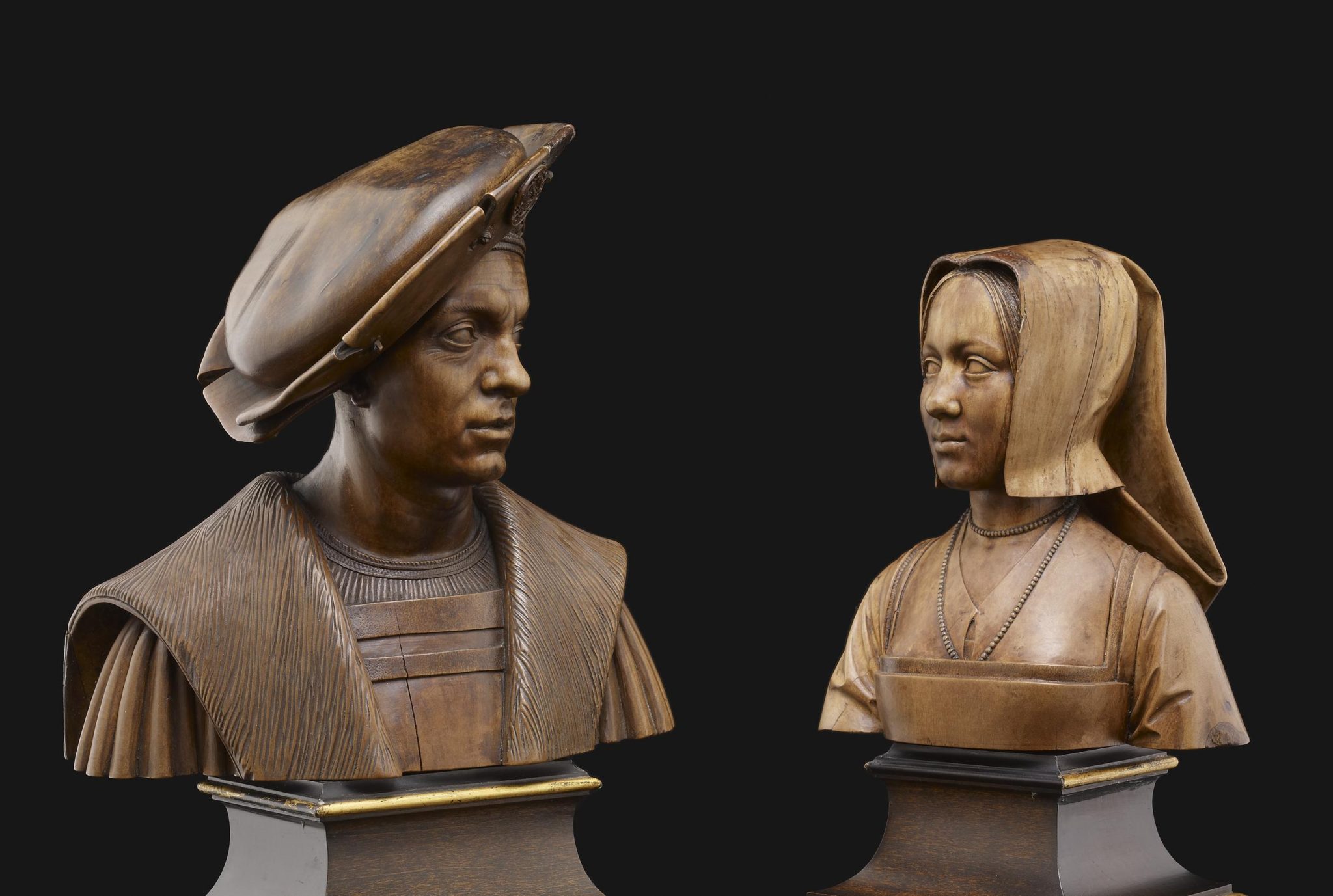
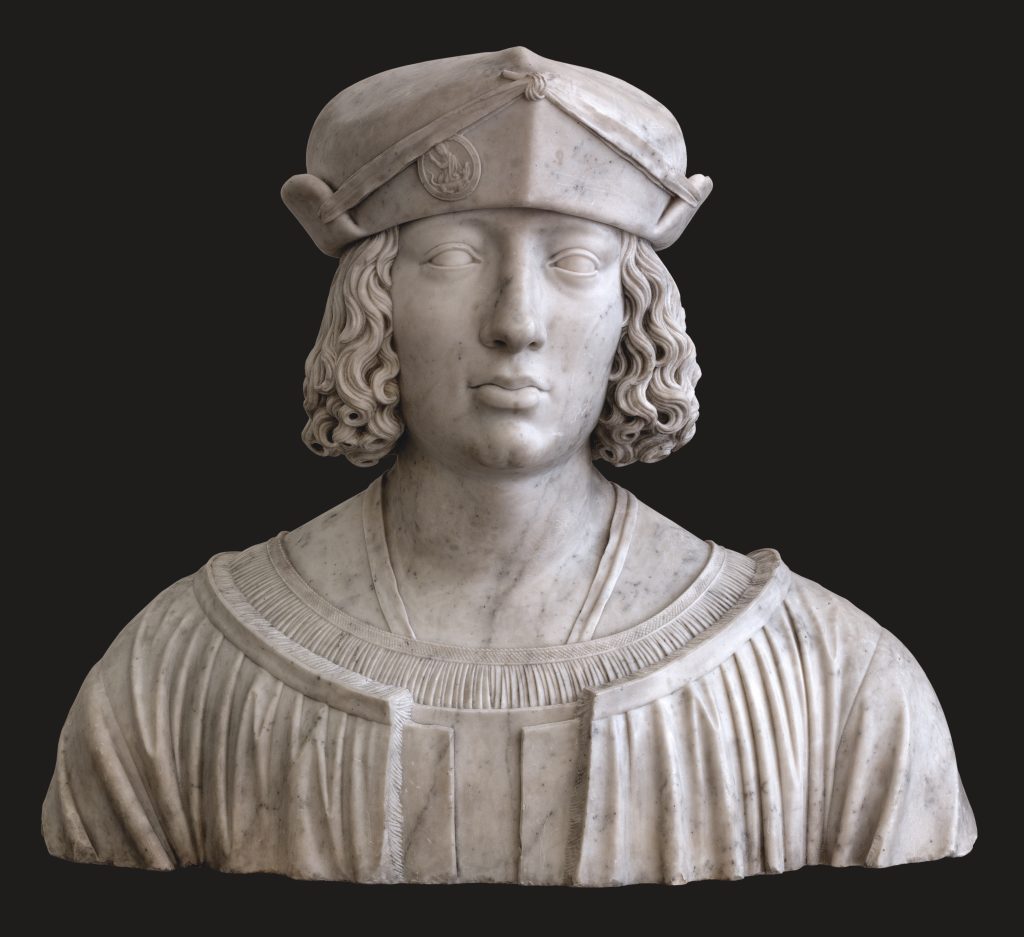
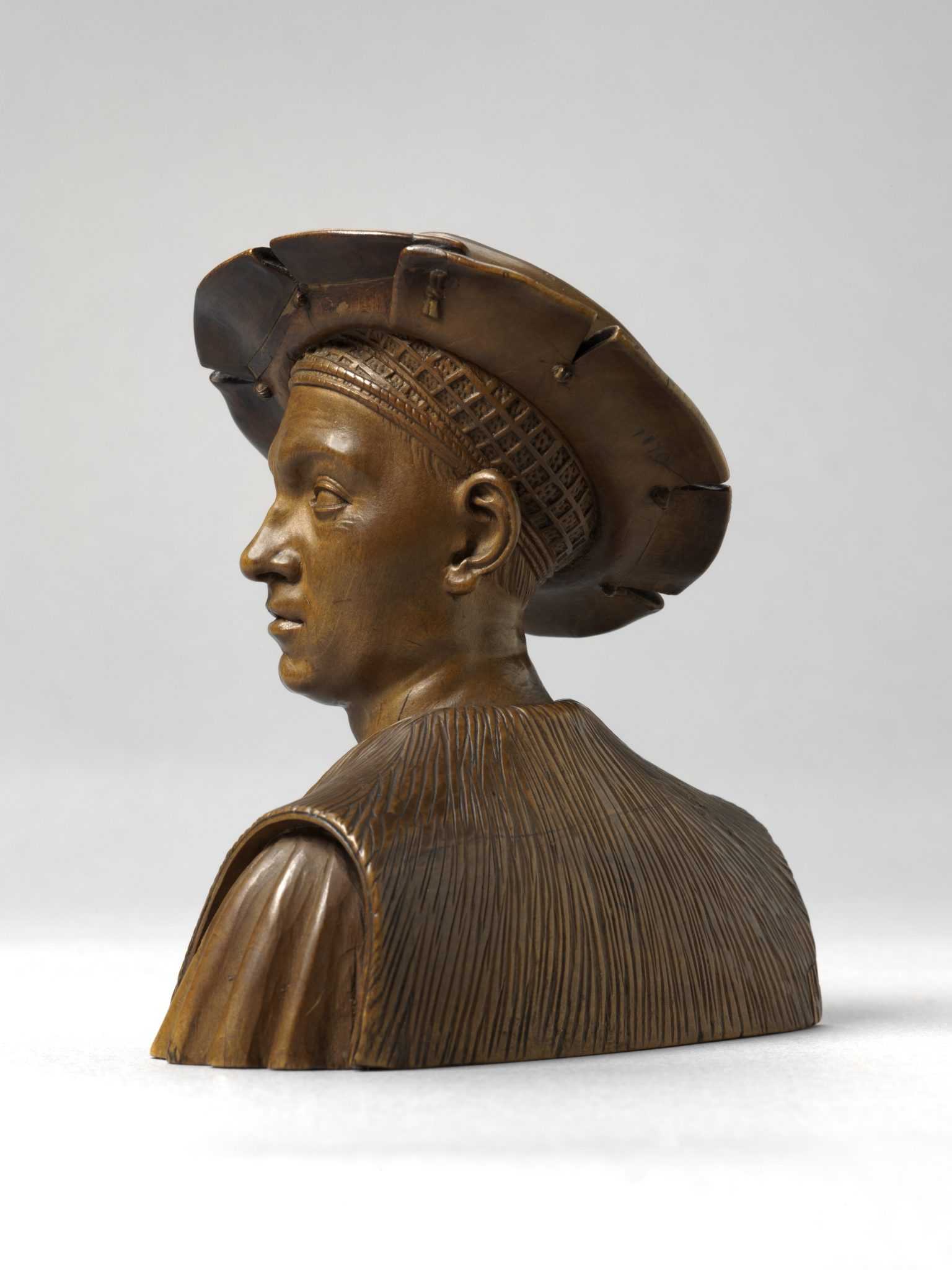
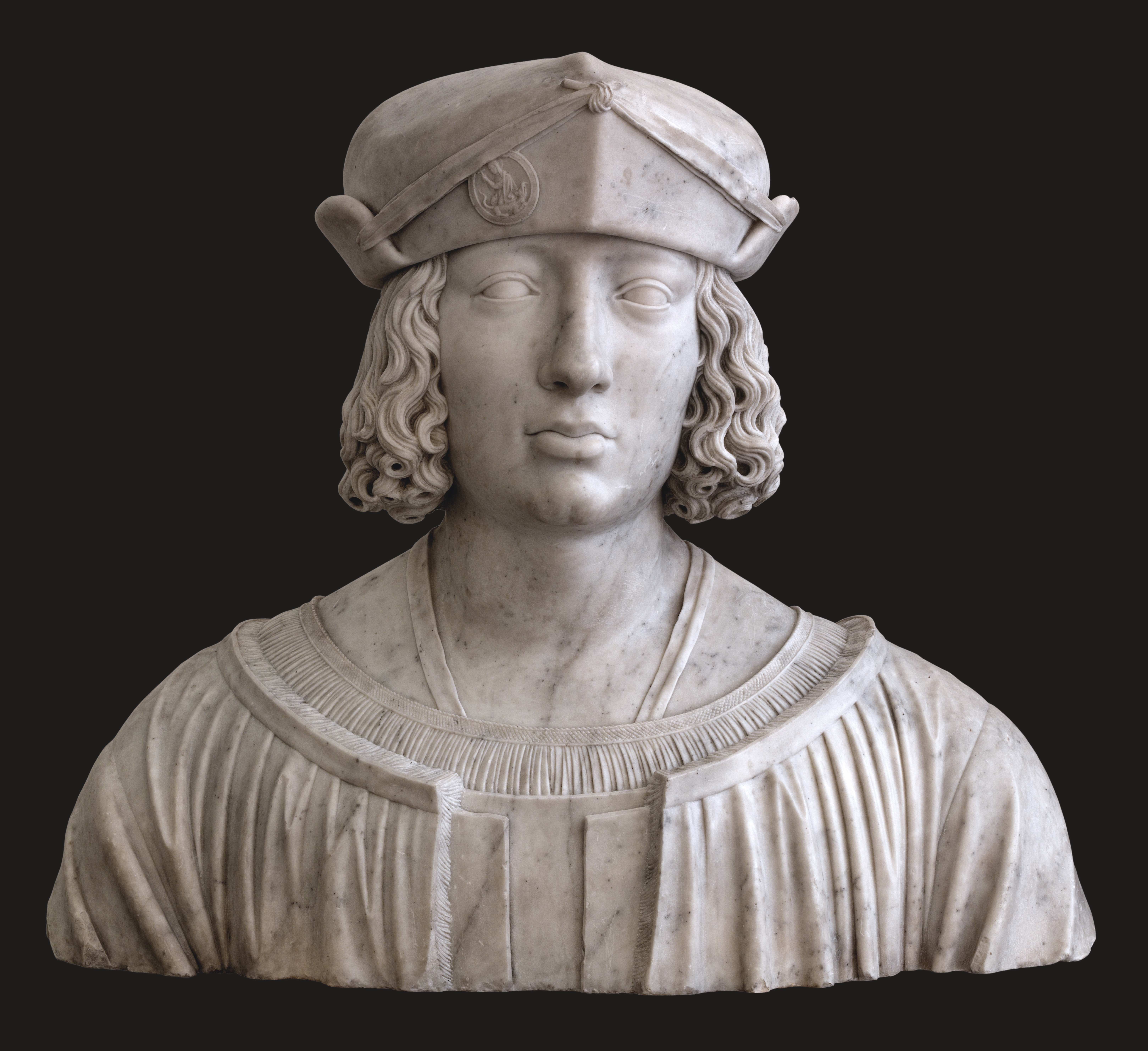
Fig. 11- Conrat Meit, Philibert II of Savoy, 1512–1517, marble, Frýdlant Castle, Czech Republic
 Fig. 11- Conrat Meit, Philibert II of Savoy, 1512–1517, marble, Frýdlant Castle, Czech Republic
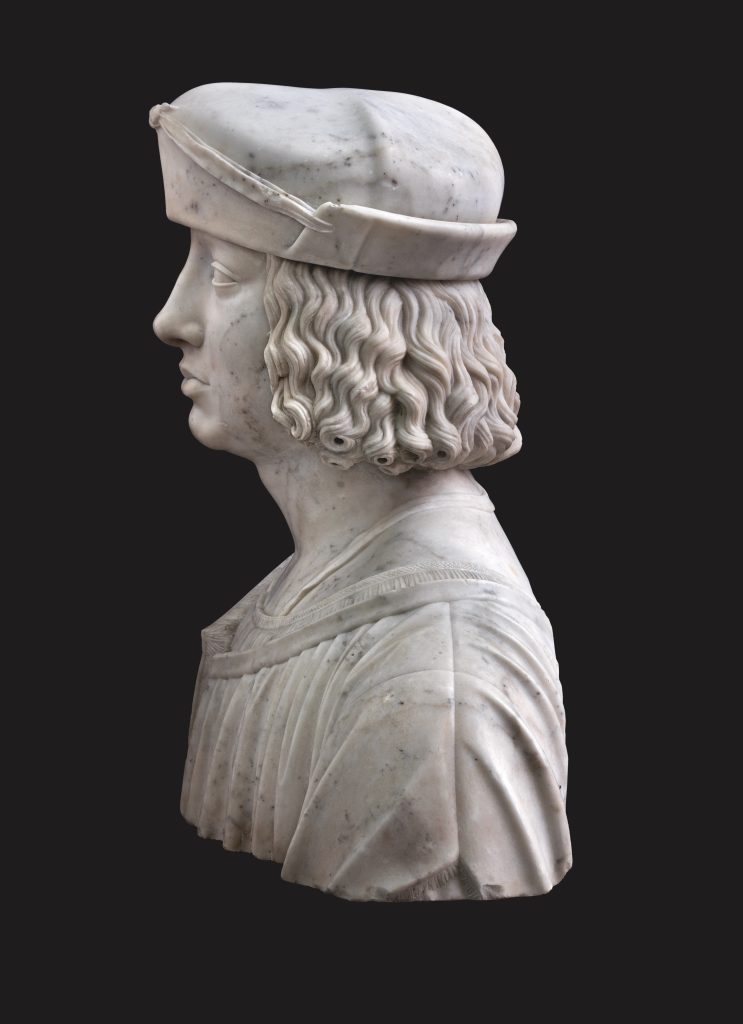
Fig. 11 Conrat Meit, Philibert II of Savoy, 1512–1517, marble, 64 x 56 x 29.5 cm. Frýdlant Castle, Czech Republic, inv. nos. S032630. Photograph: Prague, National Heritage Institute / Gabriela Čapková 2024 [side-by-side viewer]
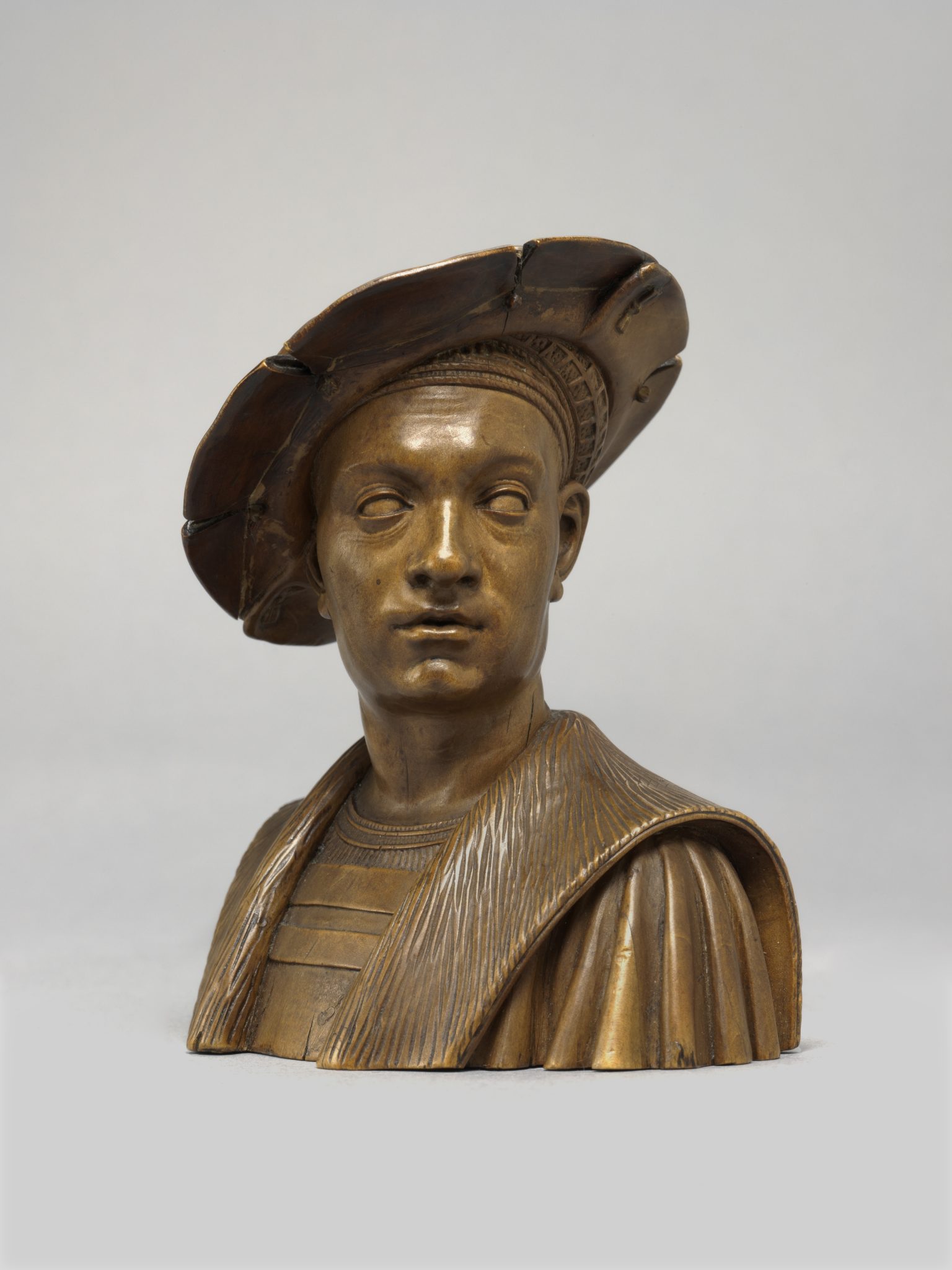
Fig. 12 - Conrat Meit, Philibert II of Savoy, before 1523, apple or pear wood, Staatliche Museen zu Berlin
 Fig. 12 - Conrat Meit, Philibert II of Savoy, before 1523, apple or pear wood, Staatliche Museen zu Berlin
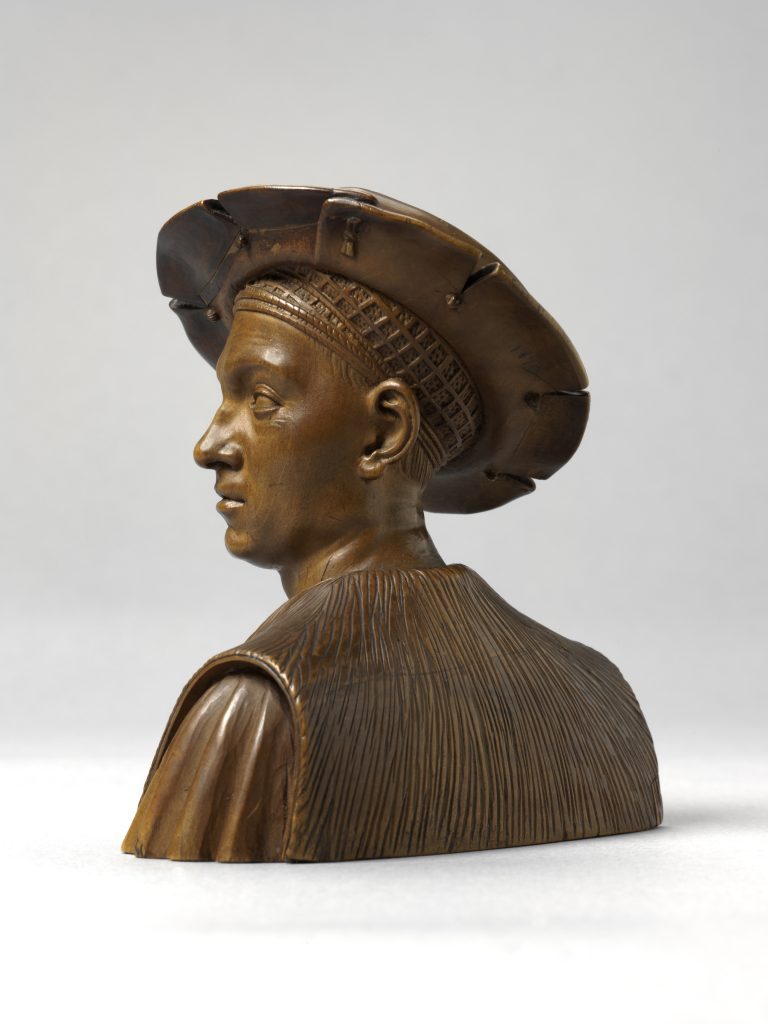
Fig. 12 Conrat Meit, Philibert II of Savoy, before 1523, apple or pear wood, 11.6 x 11.2 x 8.5 cm. Staatliche Museen zu Berlin, Skulpturensammlung und Museum für Byzantinische Kunst, inv. no. 818. Photograph: Skulpturensammlung und Museum für Byzantinische Kunst / Antje Voigt [side-by-side viewer]
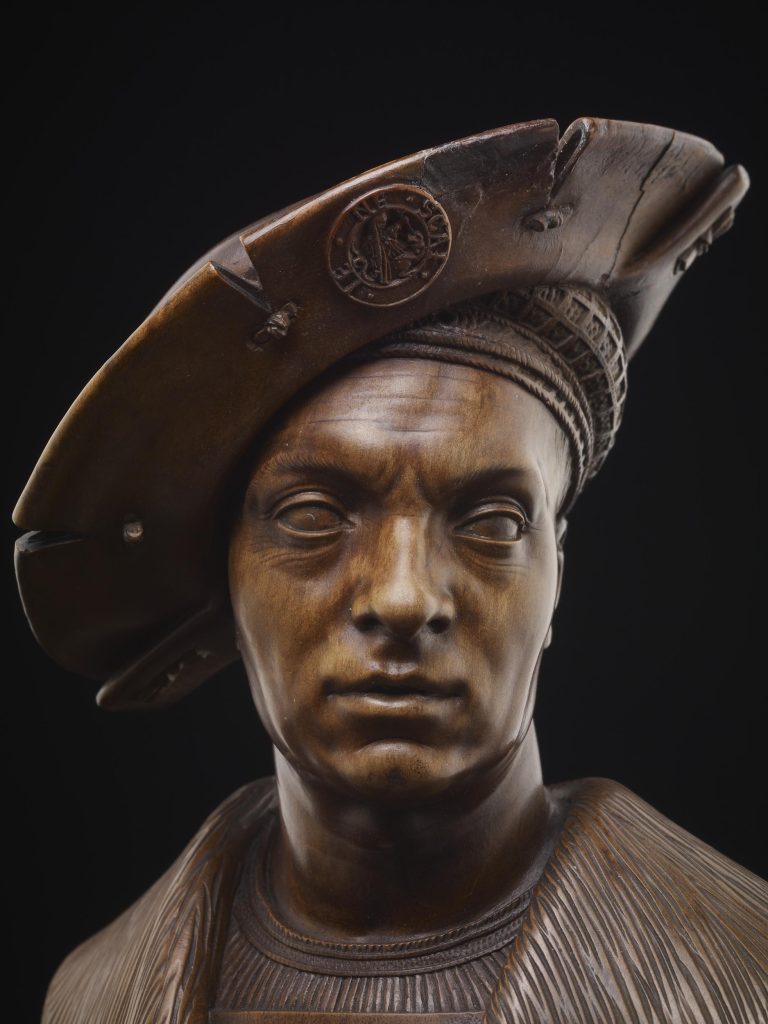
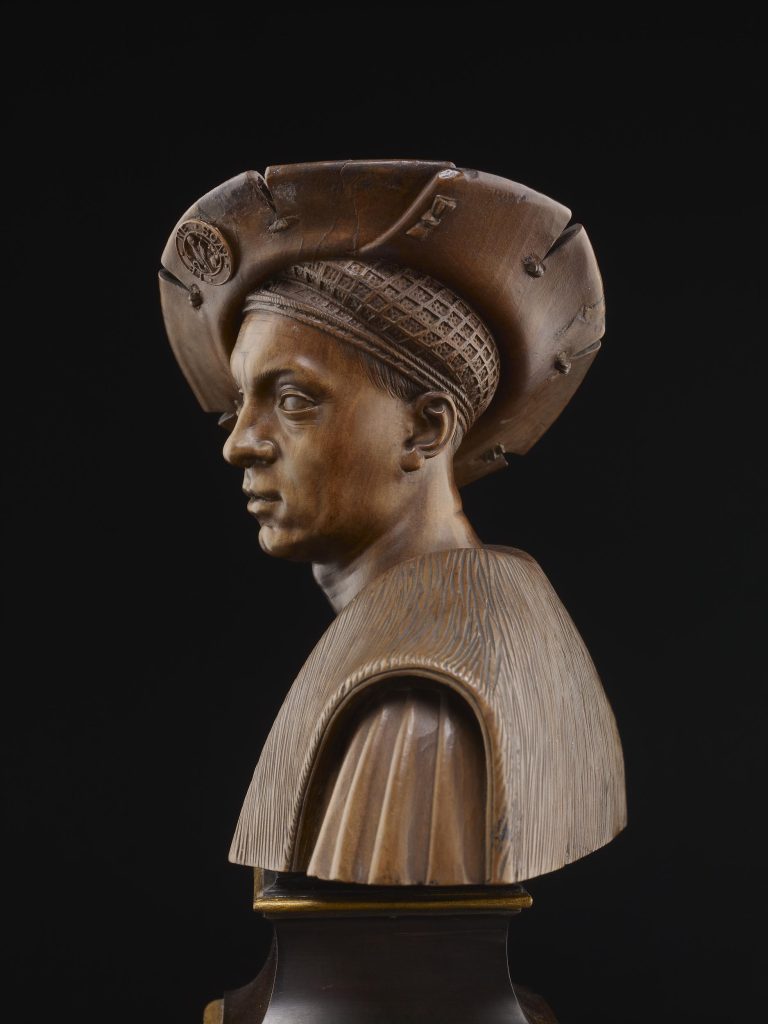
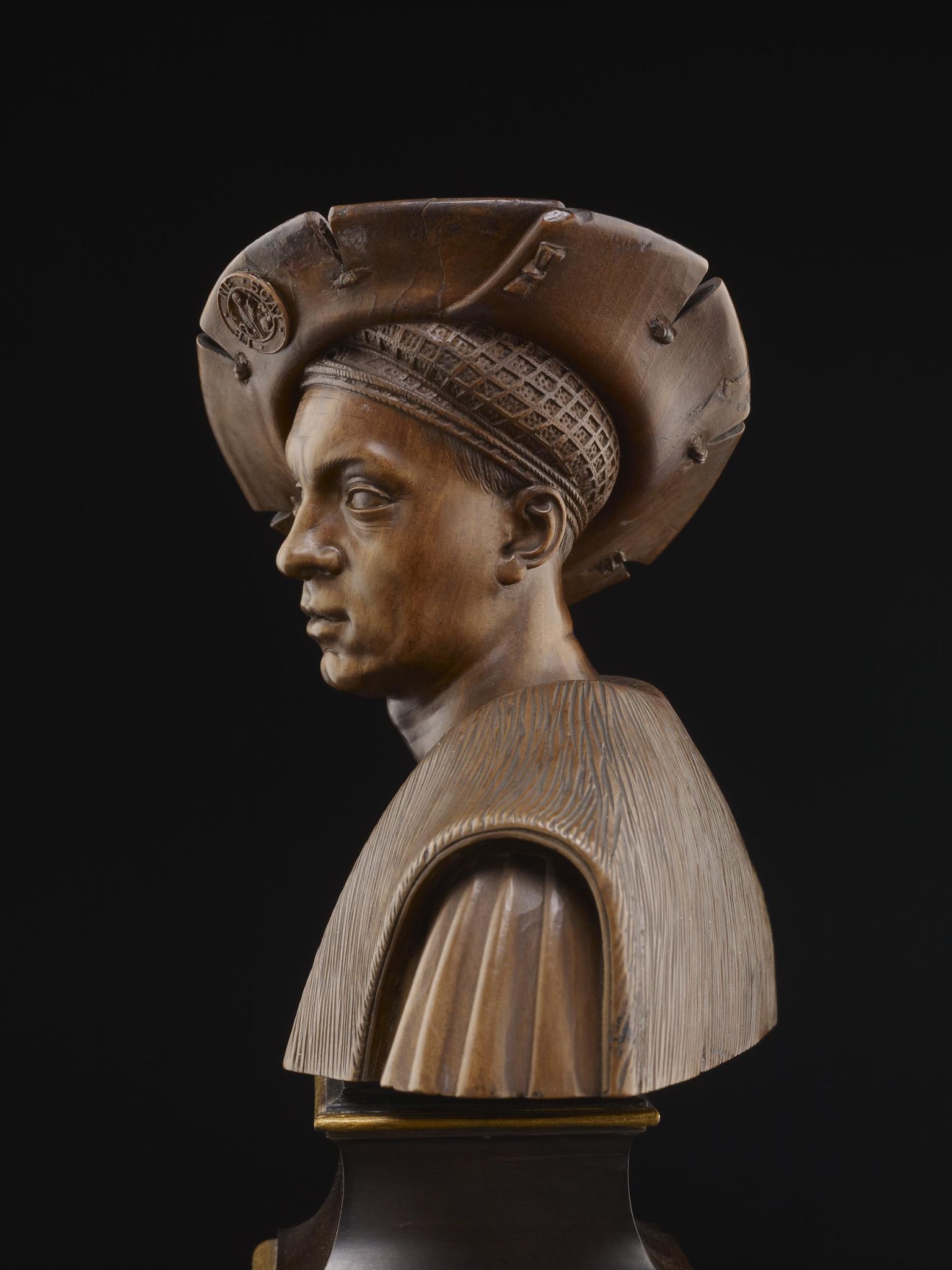
Fig. 13 - Meit, Philibert II of Savoy (fig. 10), detail of the face
 Fig. 13 - Meit, Philibert II of Savoy (fig. 10), detail of the face
Fig. 13 Meit, Philibert II of Savoy (fig. 10), detail of face. [side-by-side viewer]
Fig. 14 - Meit, Philibert II of Savoy (fig. 11), profile view
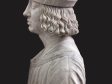 Fig. 14 - Meit, Philibert II of Savoy (fig. 11), profile view
Fig. 14 Meit, Philibert II of Savoy (fig. 11), profile view. Photograph: Prague, National Heritage Institute / Gabriela Čapková 2024 [side-by-side viewer]
Fig. 15 - Meit, Philibert II of Savoy (fig. 12), oblique view
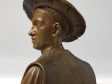 Fig. 15 - Meit, Philibert II of Savoy (fig. 12), oblique view
Fig. 15 Meit, Philibert II of Savoy (fig. 12), oblique view. Photograph: Skulpturensammlung und Museum für Byzantinische Kunst / Antje Voigt [side-by-side viewer]
Fig. 16 - Meit, Philibert II of Savoy (fig. 10), oblique view
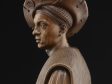 Fig. 16 - Meit, Philibert II of Savoy (fig. 10), oblique view
Fig. 16 Meit, Philibert II of Savoy (fig. 10), oblique view. [side-by-side viewer]
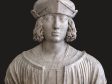
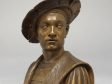
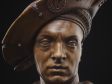
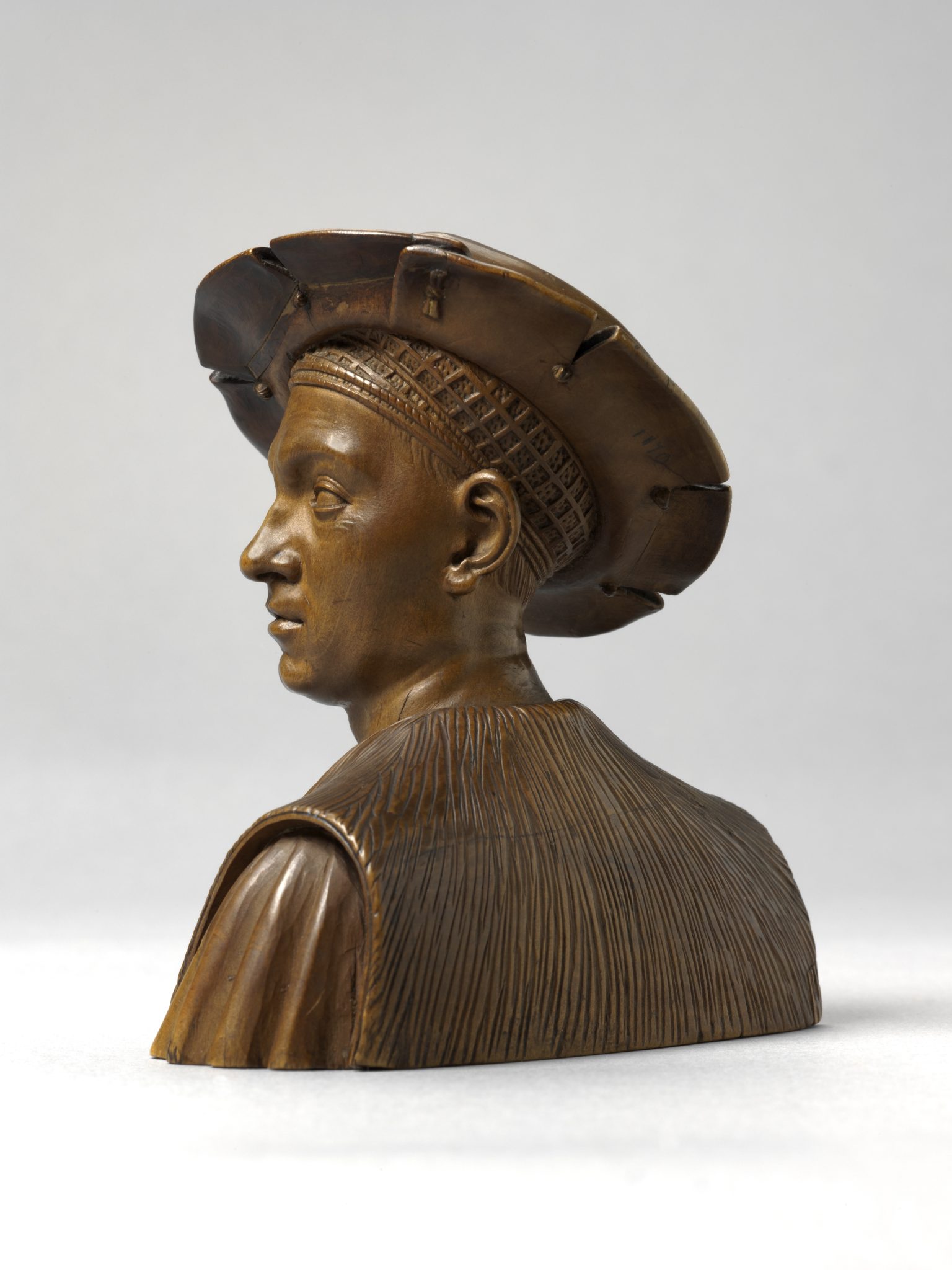
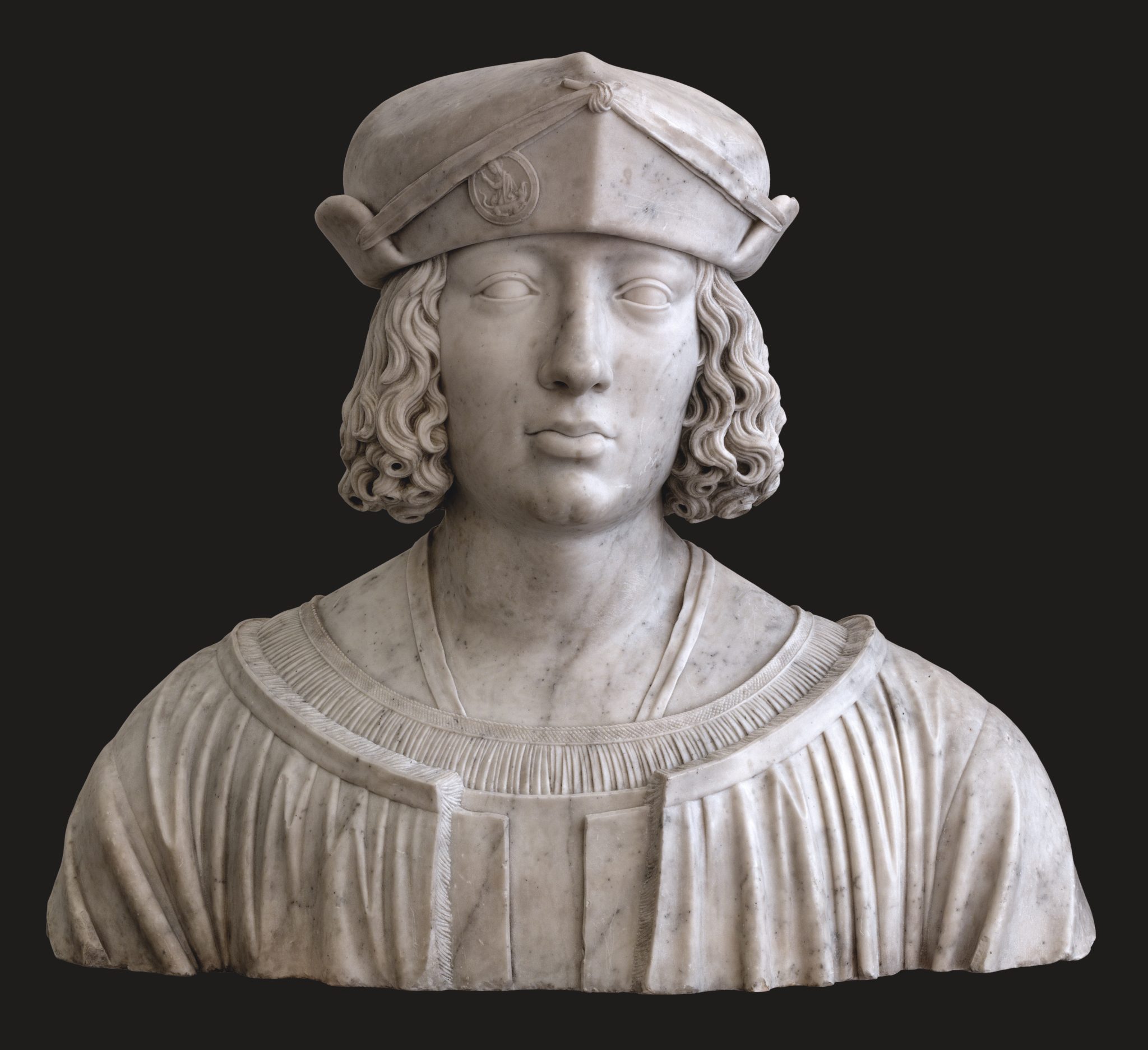
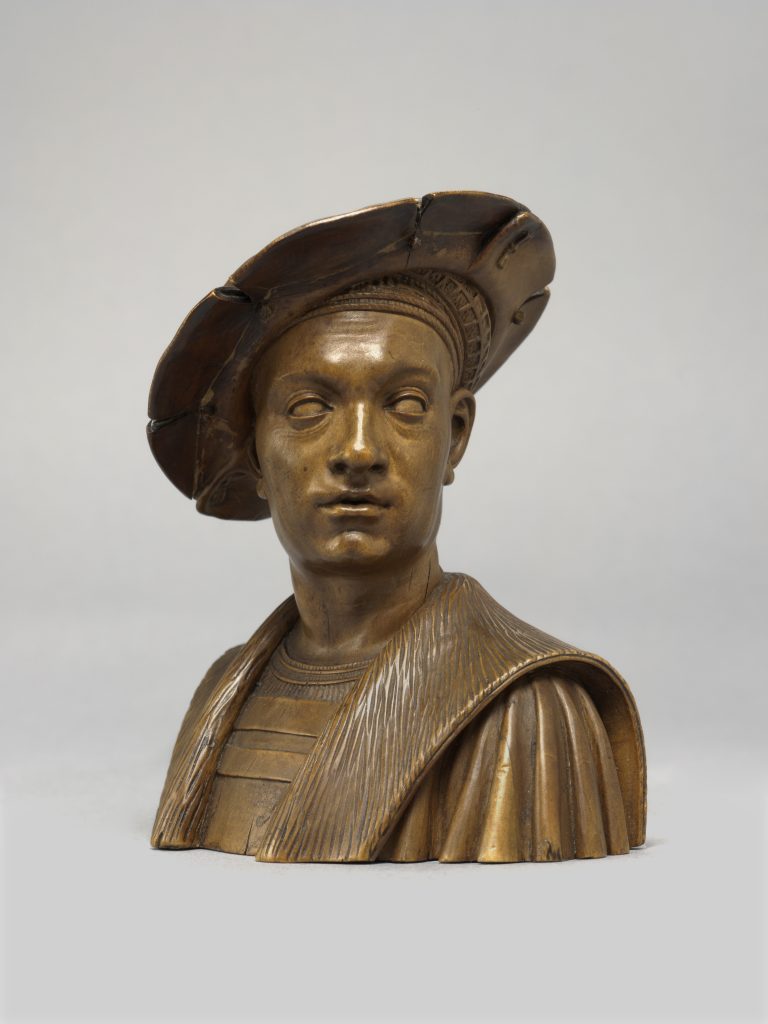
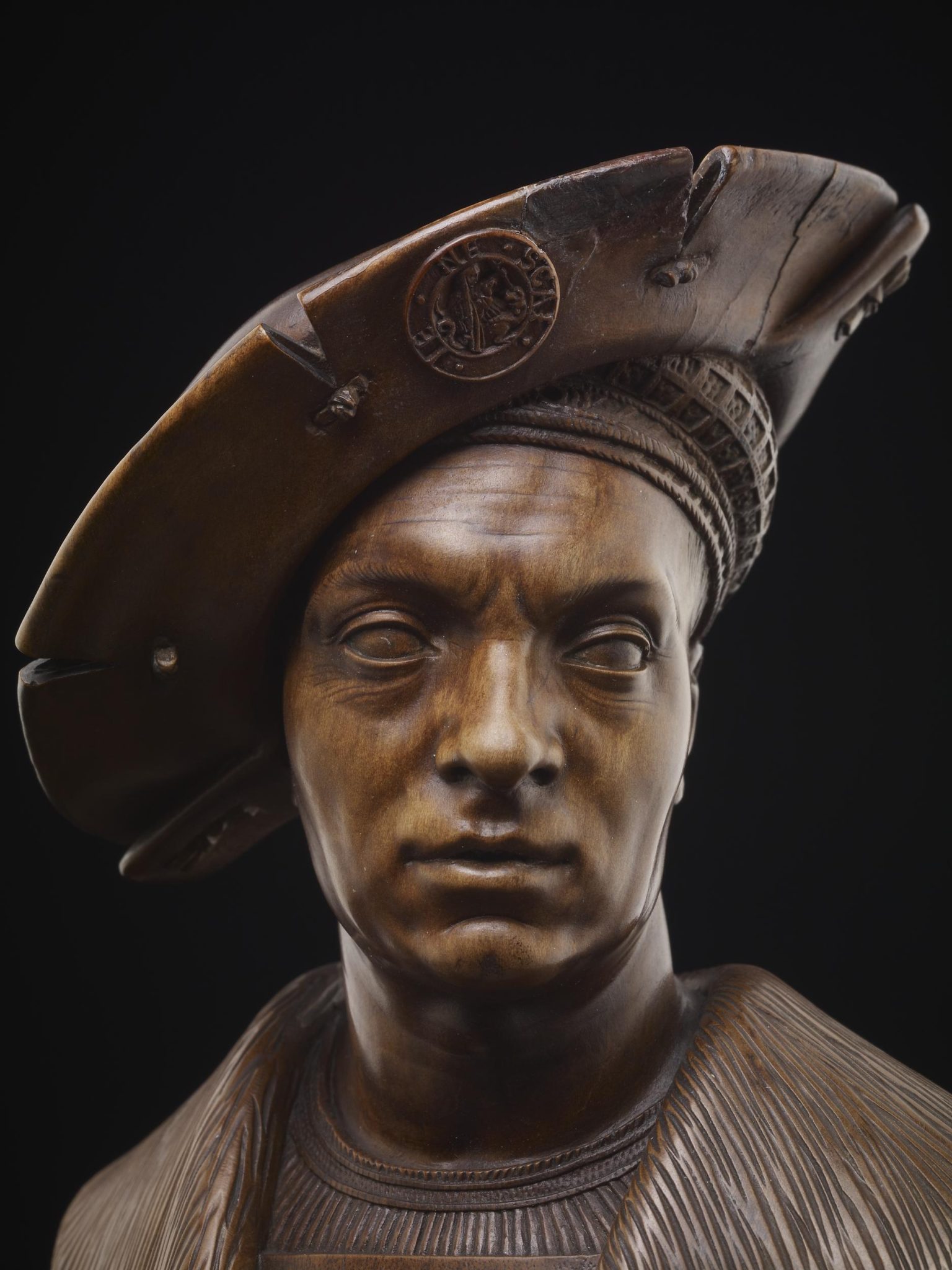
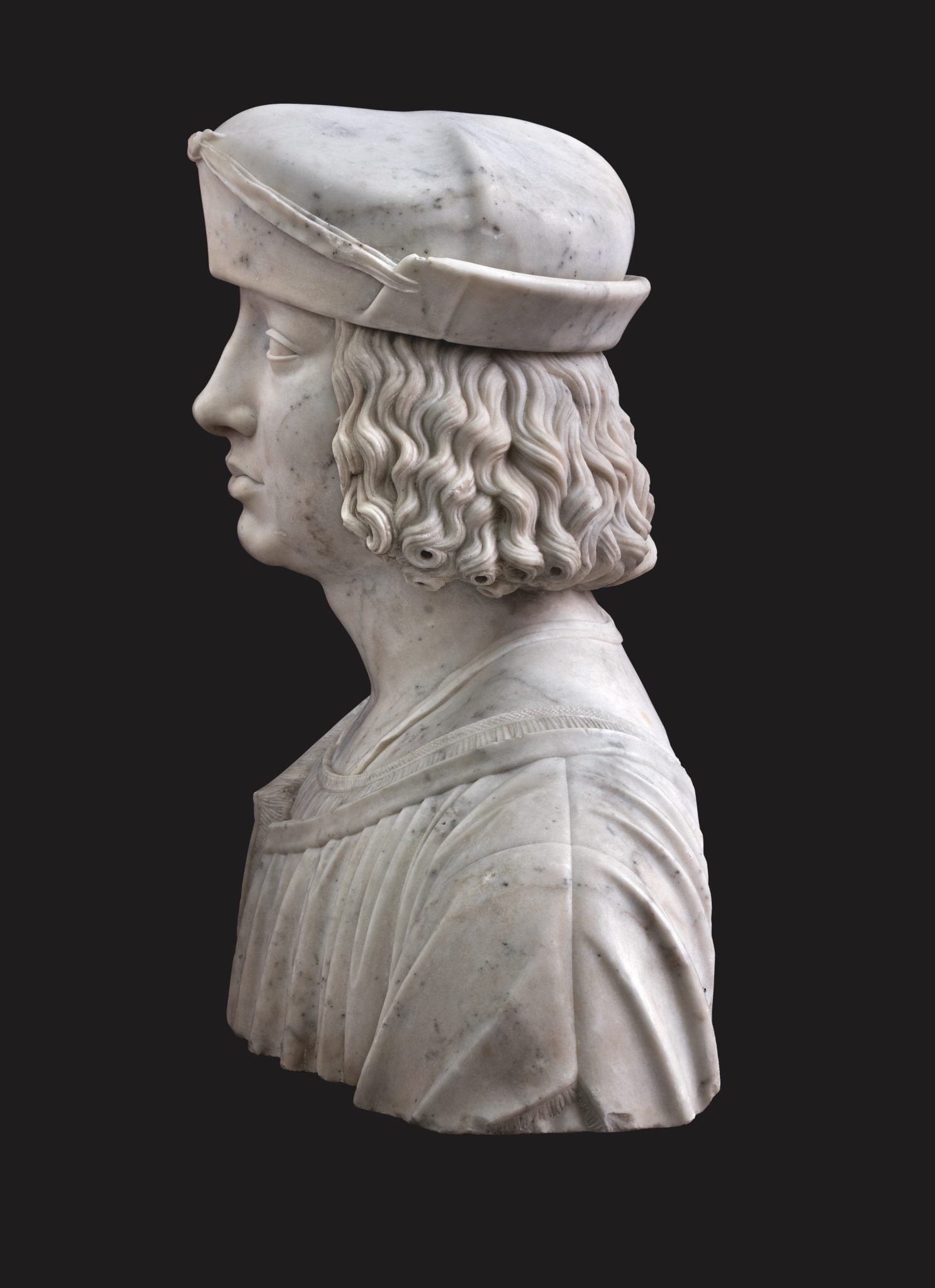
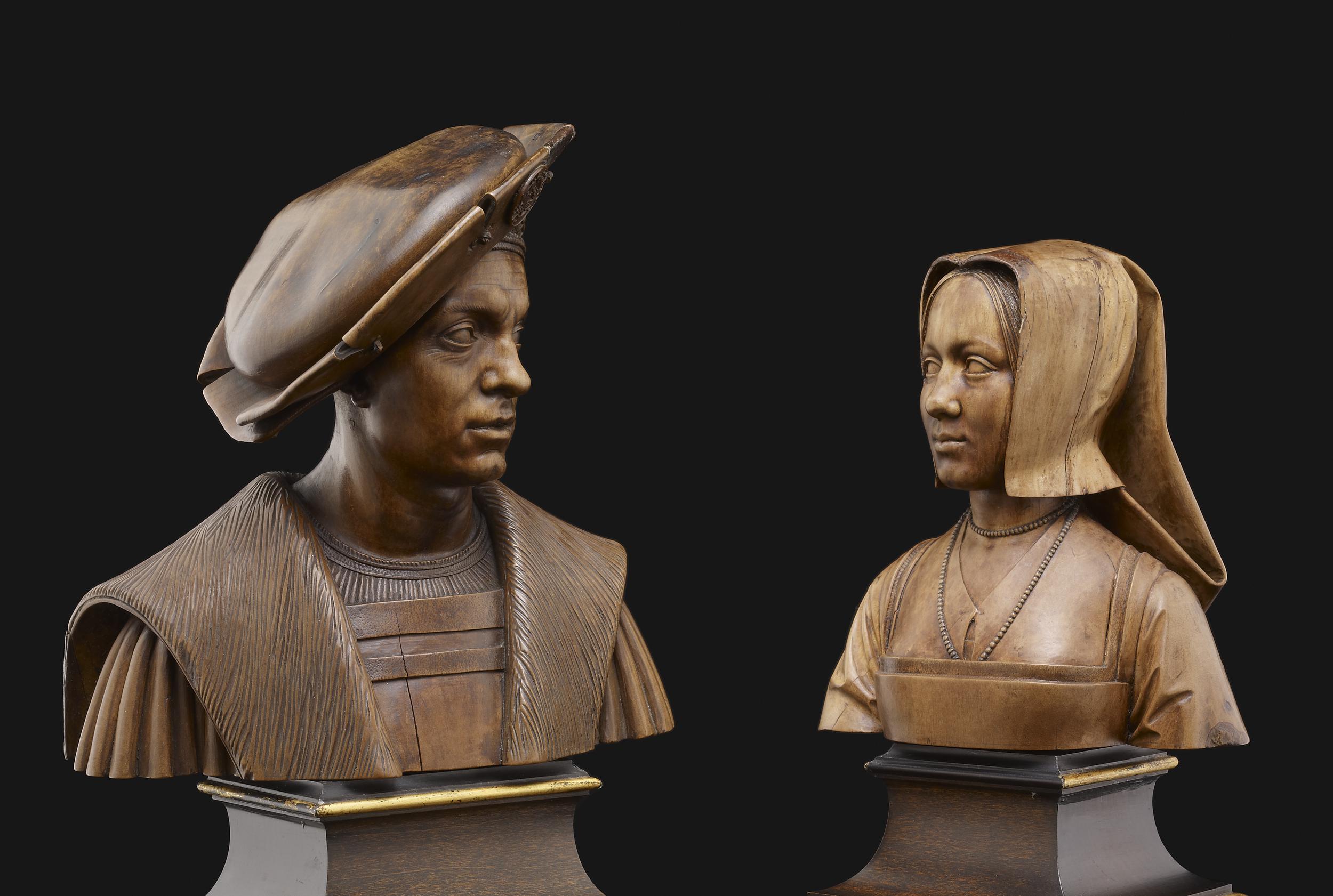
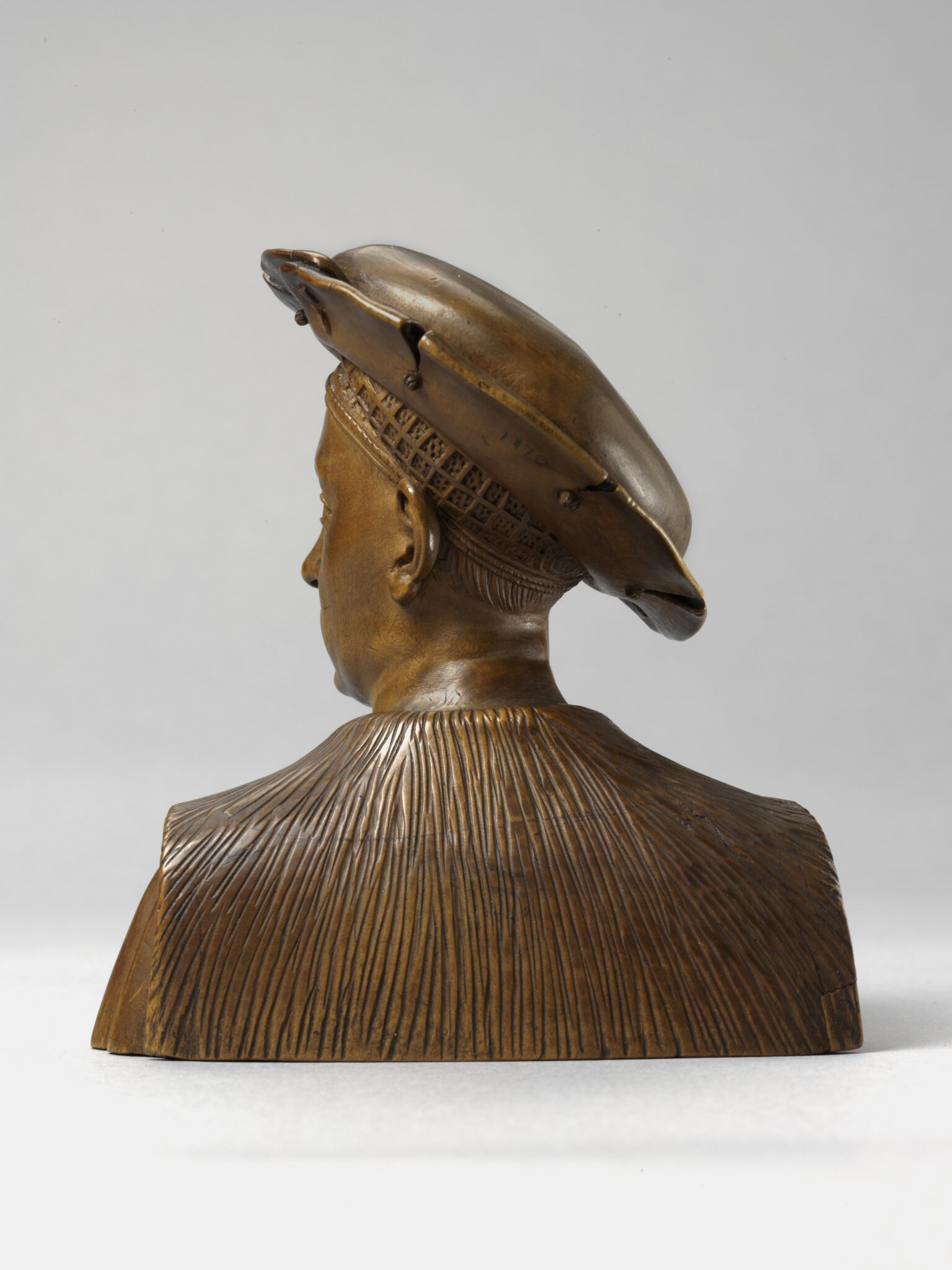
Whereas the differences between the marble and the wooden busts of Margaret are somewhat subtle, the dissimilarities are clear between the marble bust of Philibert (figs. 11, 14) and his wooden miniature busts in Berlin (figs. 12, 15) and London (figs. 13, 16). In both miniature busts, Philibert wears a beret with a wide brim, one that came into fashion only in the decade after his death, and his hair is concealed under a hairnet. Regardless, a closer look at the three different portraits reveals the same rectangular face with wide-set eyes, a large and slightly protruding nose with a broad bridge, full lips, and a prominent chin with cleft that asymmetrically projects more to Philibert’s right, shaping the duke’s leonine, possibly idealized features.9
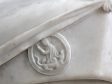
The marble bust of Philibert is also conceived frontally, but with a slight twist to his left (see fig. 11). This bust depicts the sitter as a young man, beardless and with a beret on his head, one that in this case corresponds to contemporaneous fashion. The brim of the beret is tied high and knotted with two strings above a vertical fold at the front. On the right side of the beret we see an enseigne (hat medallion) depicting Saint Margaret of Antioch holding a cross in her hands as she fends off the dragon writhing beneath her. Philibert’s voluminous curls spill out from beneath the beret. At the sides, his hair reaches the level of his chin, while in the back it extends almost to his shoulders. A ribbon worn around his neck lies on the skin, and his generously cut, finely pleated shirt conceals its pendant. The duke’s outer clothing consists of a breast cloth attached over the shirt and a doublet open at the front. Over the doublet, he wears a wide and richly pleated overcoat, likewise open, with fur-lined edging and side slits on the upper arms.
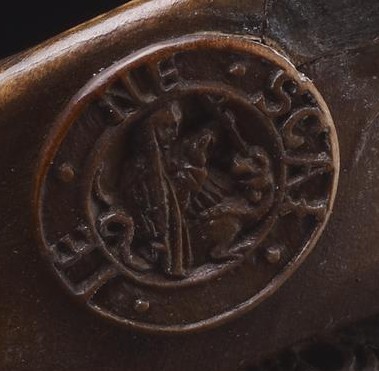
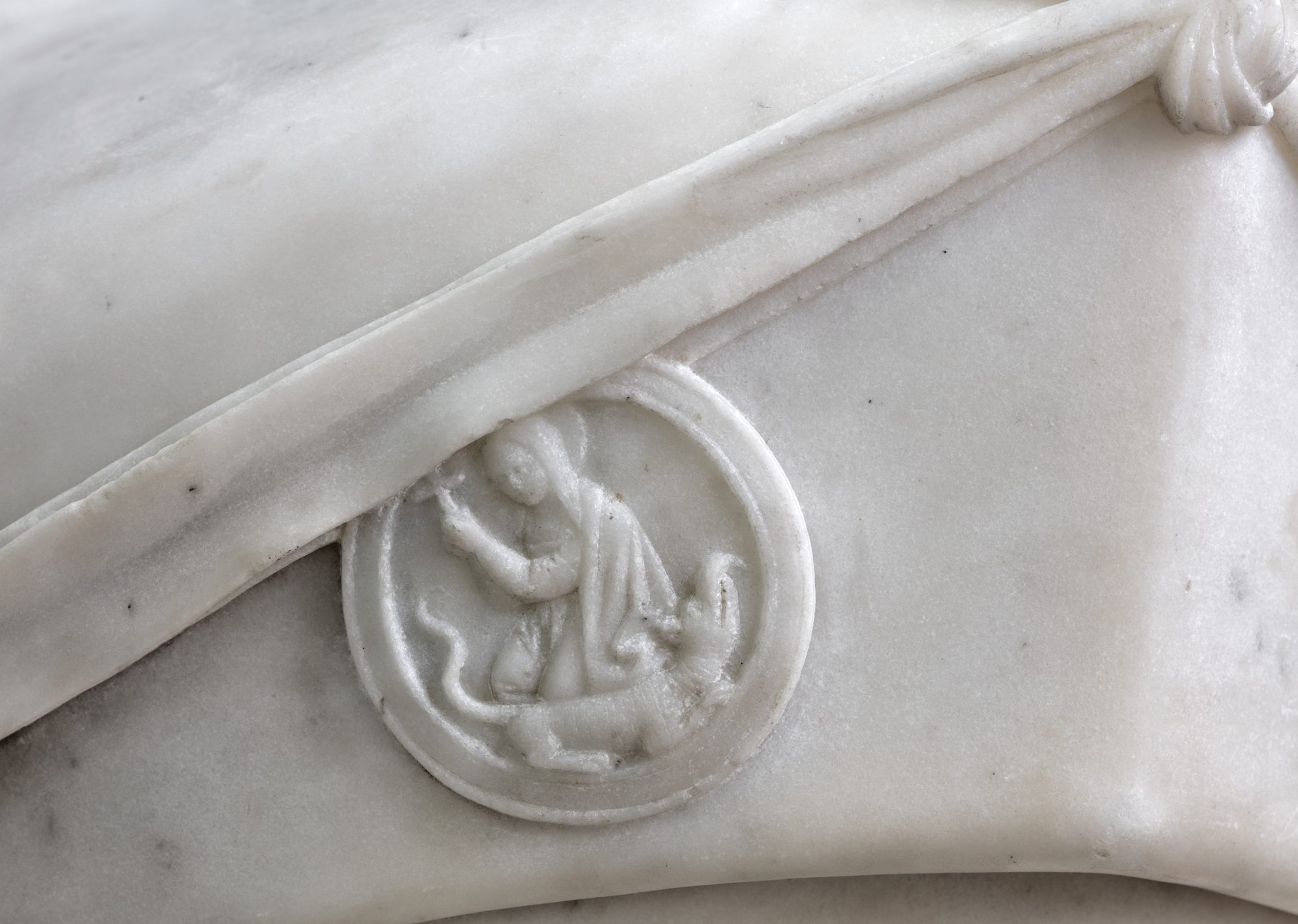
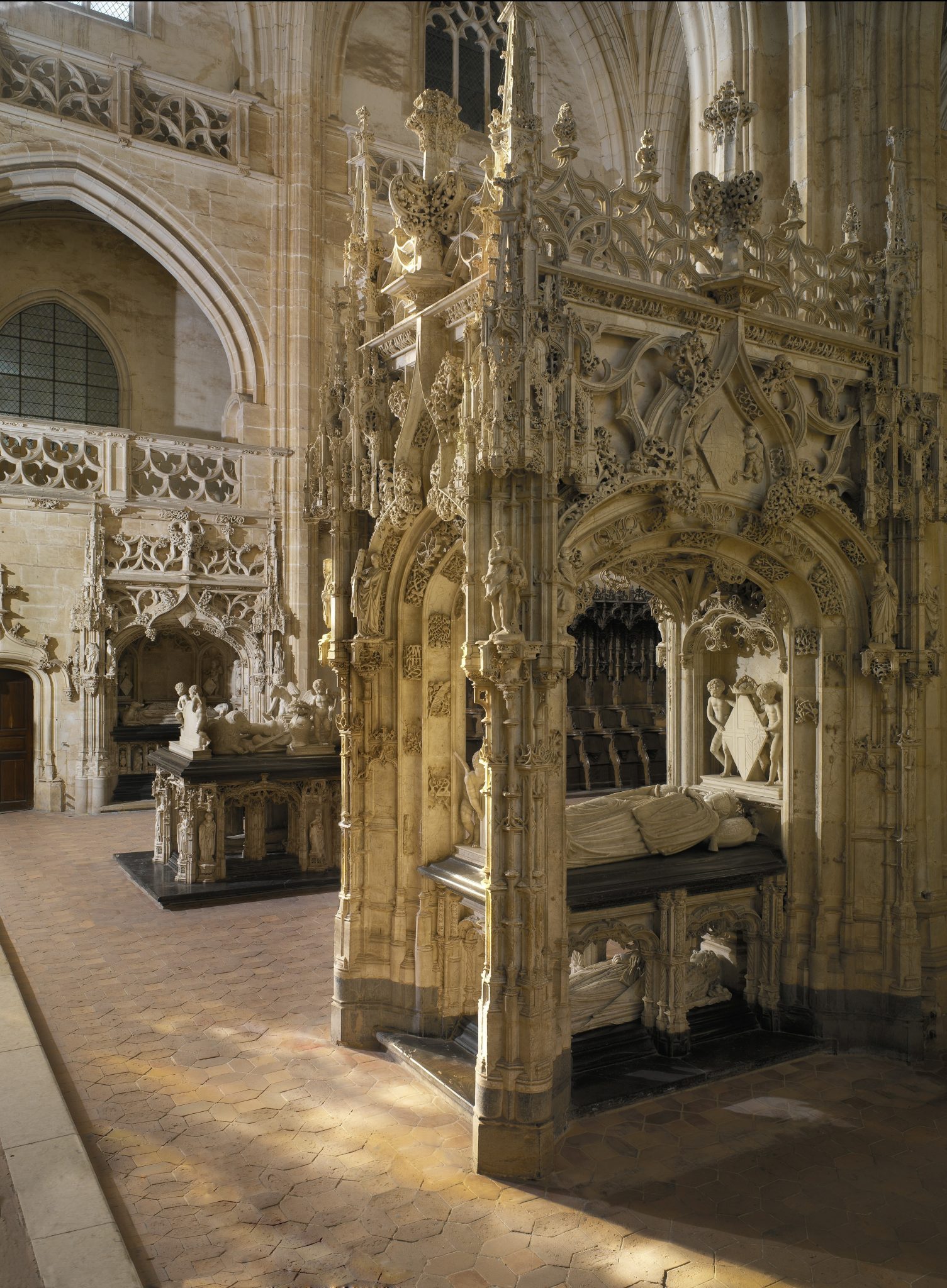
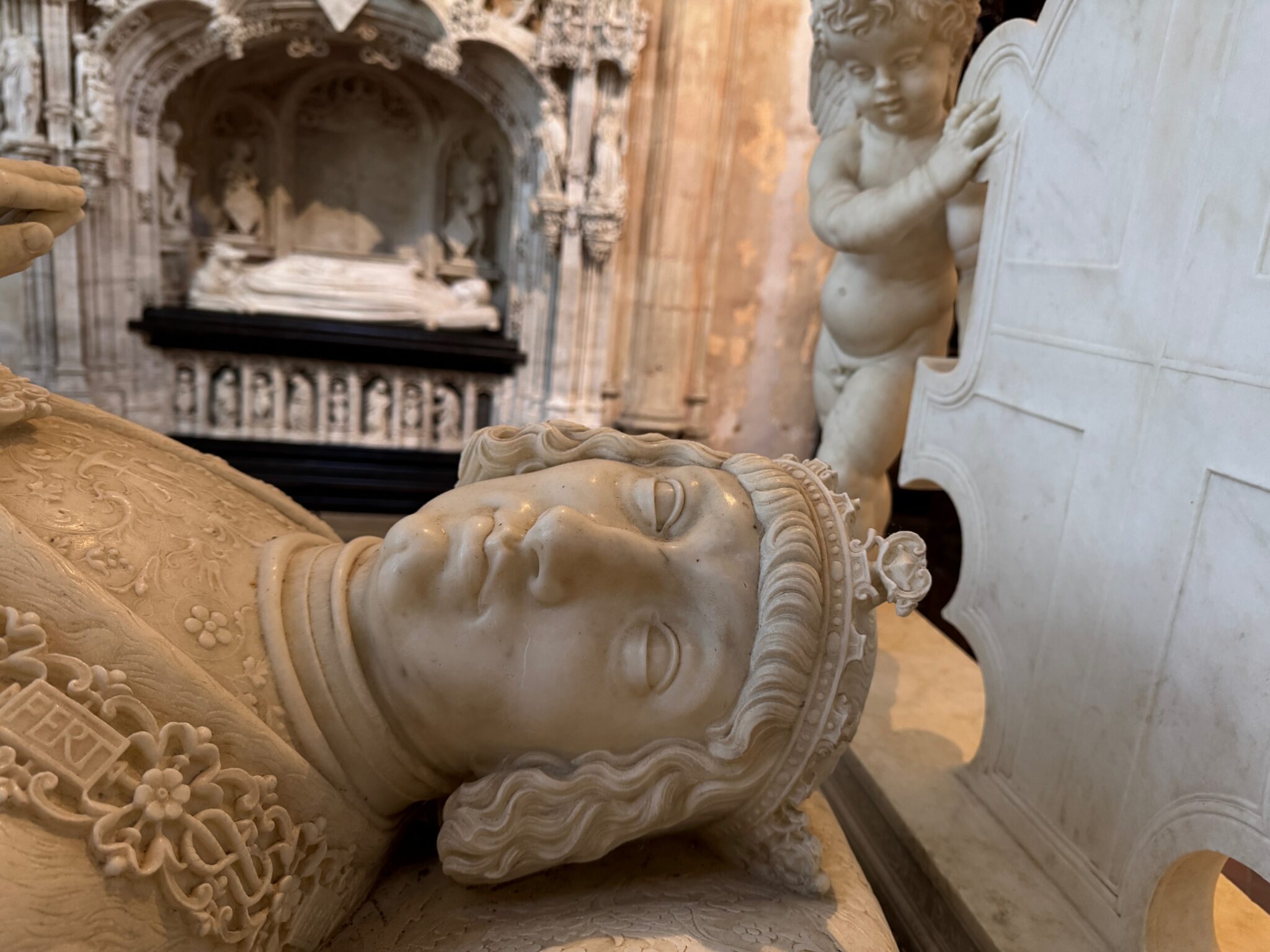
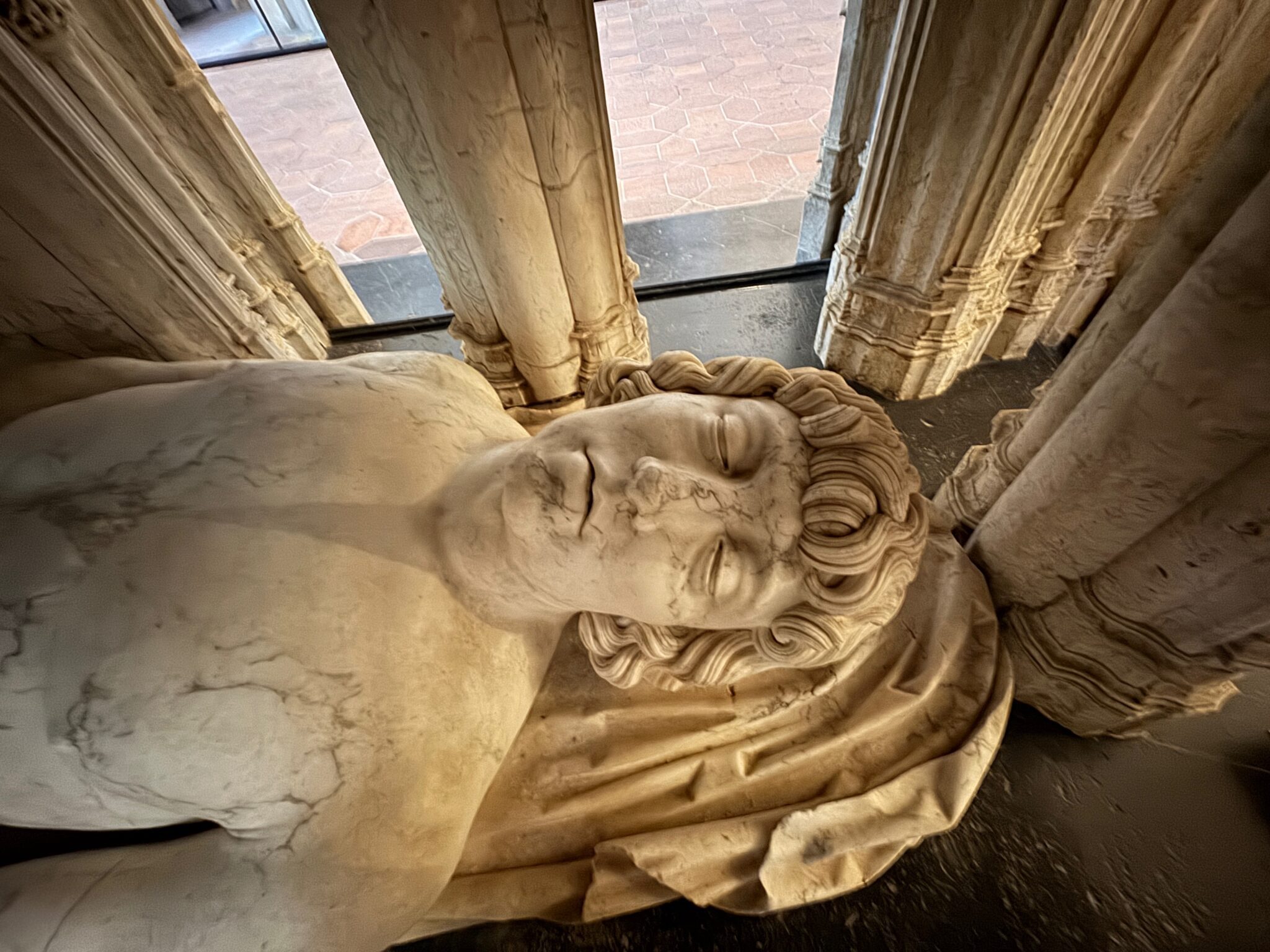
Philibert’s miniature bust in London also sports a hat medallion comparable to the one adorning his marble bust, with Saint Margaret shown on the opposite side, above the dragon (figs. 17, 18). (In the small bust, the medallion is enhanced by the inscription “· JE · NE · SCAI ·” [I don’t know].)10 A painted portrait of the duke attributed to Jan Mostaert (c. 1475–1552/1553) reproduces the same badge with the partially concealed inscription “SANCTA MARGARITA ORA PRO NOBIS” (Pray for us Saint Margaret).”11 Mostaert’s portrait was owned by Margaret of Austria and, like the marble busts and a miniature bust of Philibert of Savoy, was inherited by her niece Mary of Hungary (1505–1558).12 It is noteworthy that the painting depends directly on the marble bust for details of the clothing, though Mostaert represented the young duke with slightly wavy long hair rather than curls.13 His portrait does not achieve the powerful, lively and individual characterization of Meit’s portraits of Philibert. This group of portraits also includes the sculptures that Meit executed between 1526 and 1531 for the tombs of Margaret, Philibert, and Philibert’s mother, Margaret of Bourbon (1438–1483) in the Church of St. Nicolas-de-Tolentin in Brou near Bourg-en-Bresse (figs. 19, 20). Margaret of Austria’s most extensive commission to her court sculptor was intended to be the crowning achievement of her decades-long, ambitious project to build a monastery and a church as a burial place for herself, her last husband, and his mother (fig. 21).
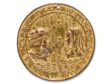
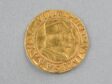
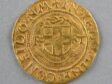
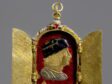
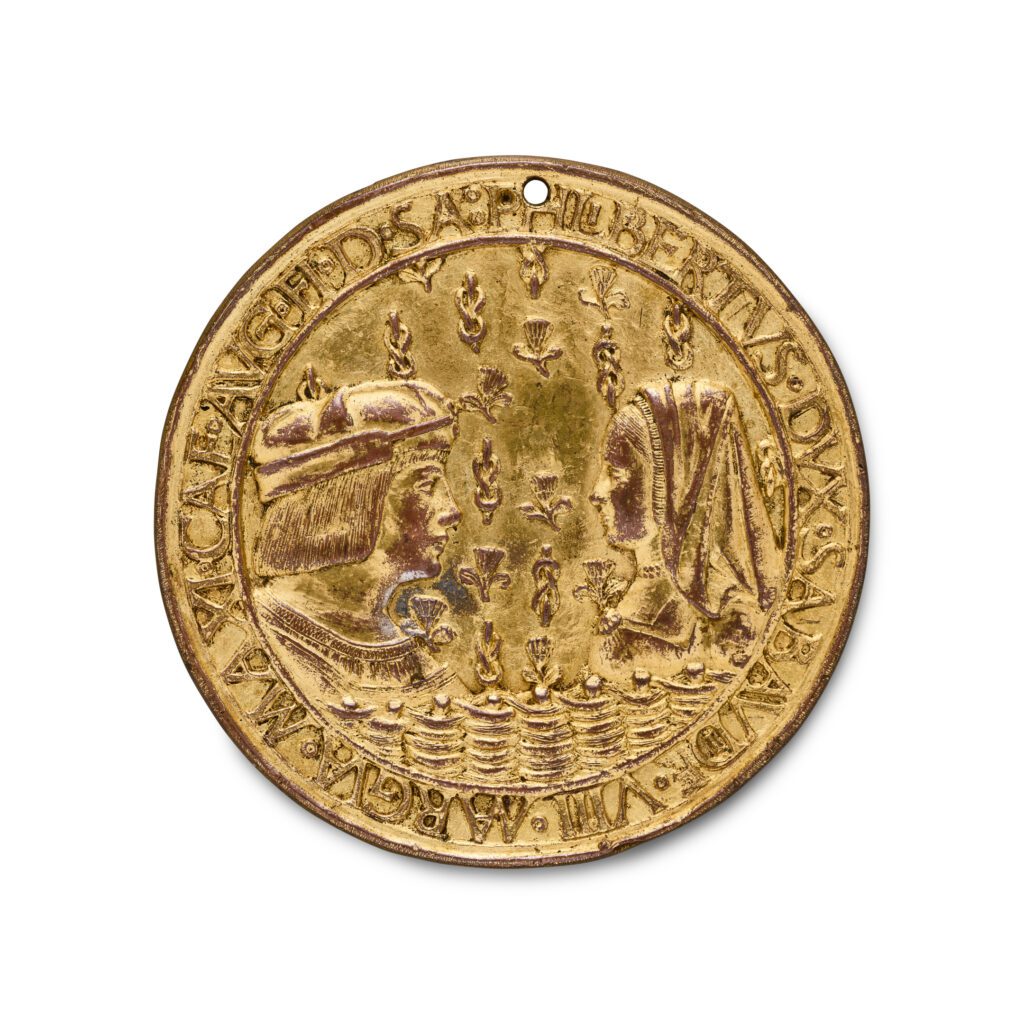
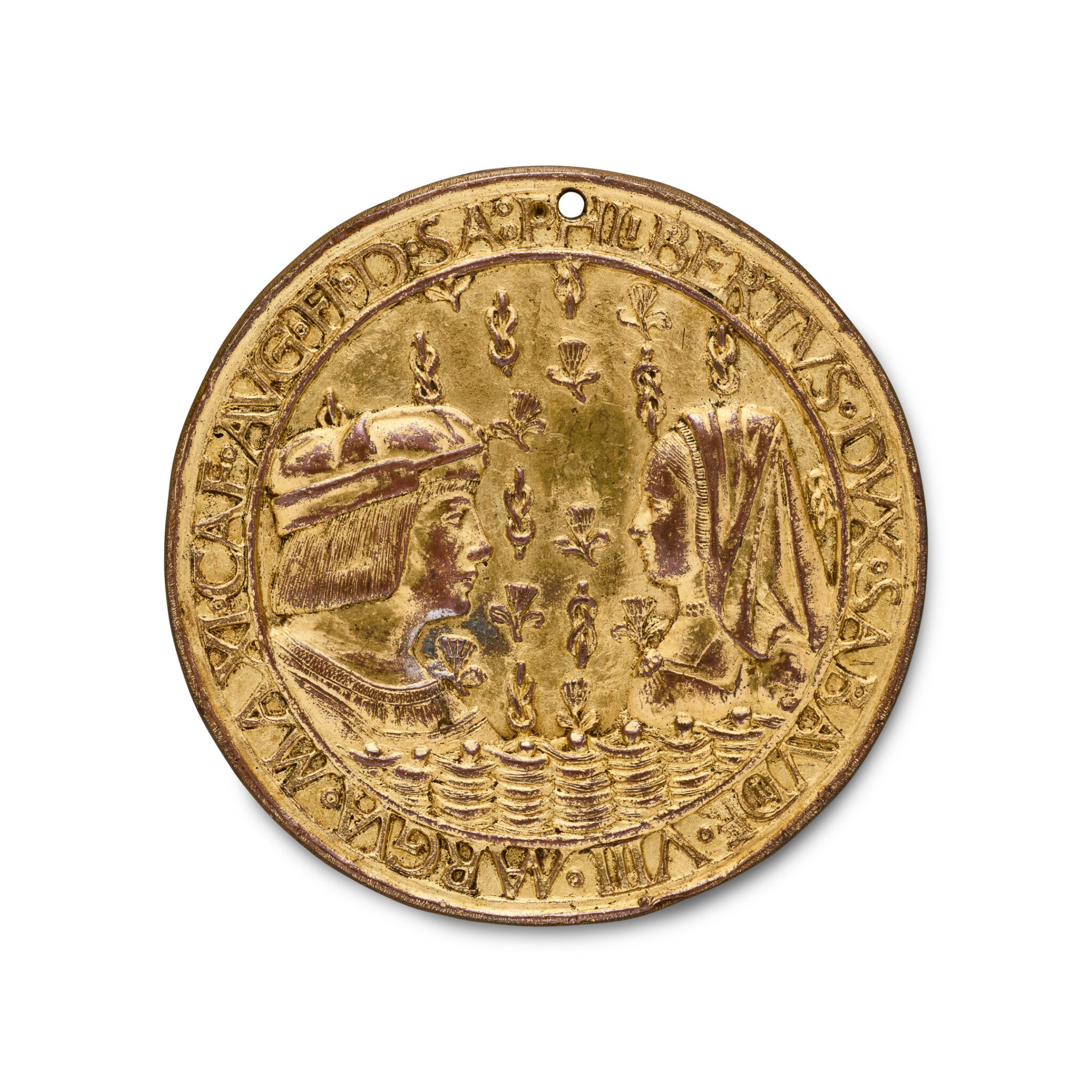
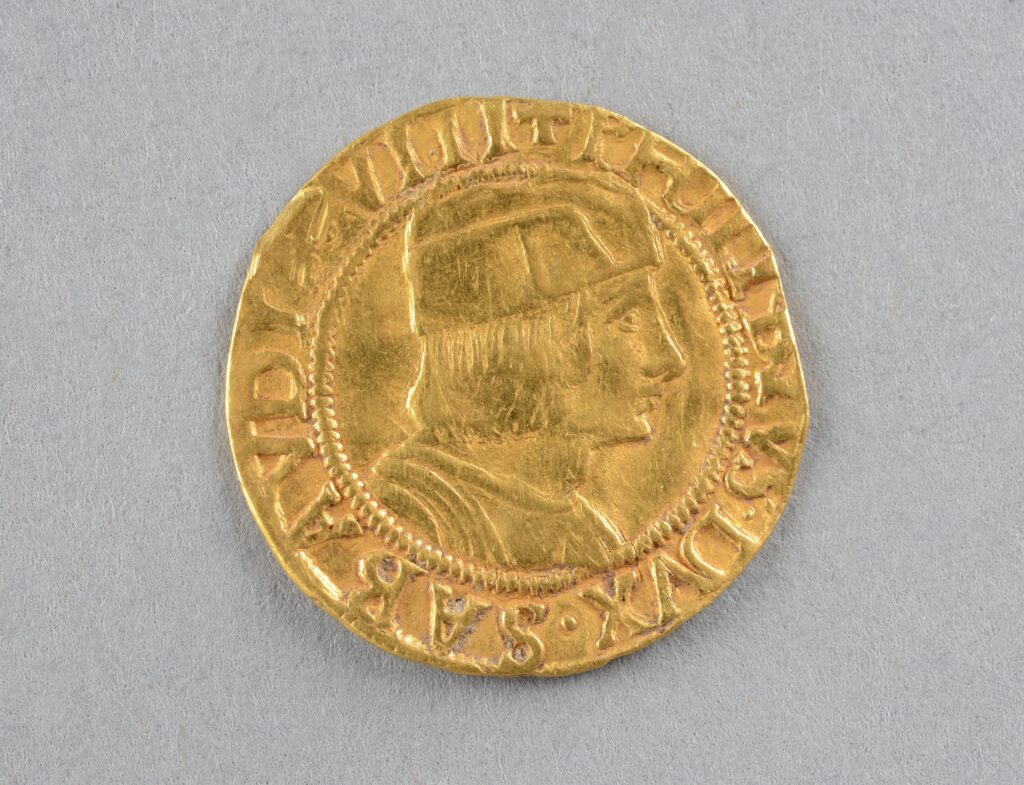
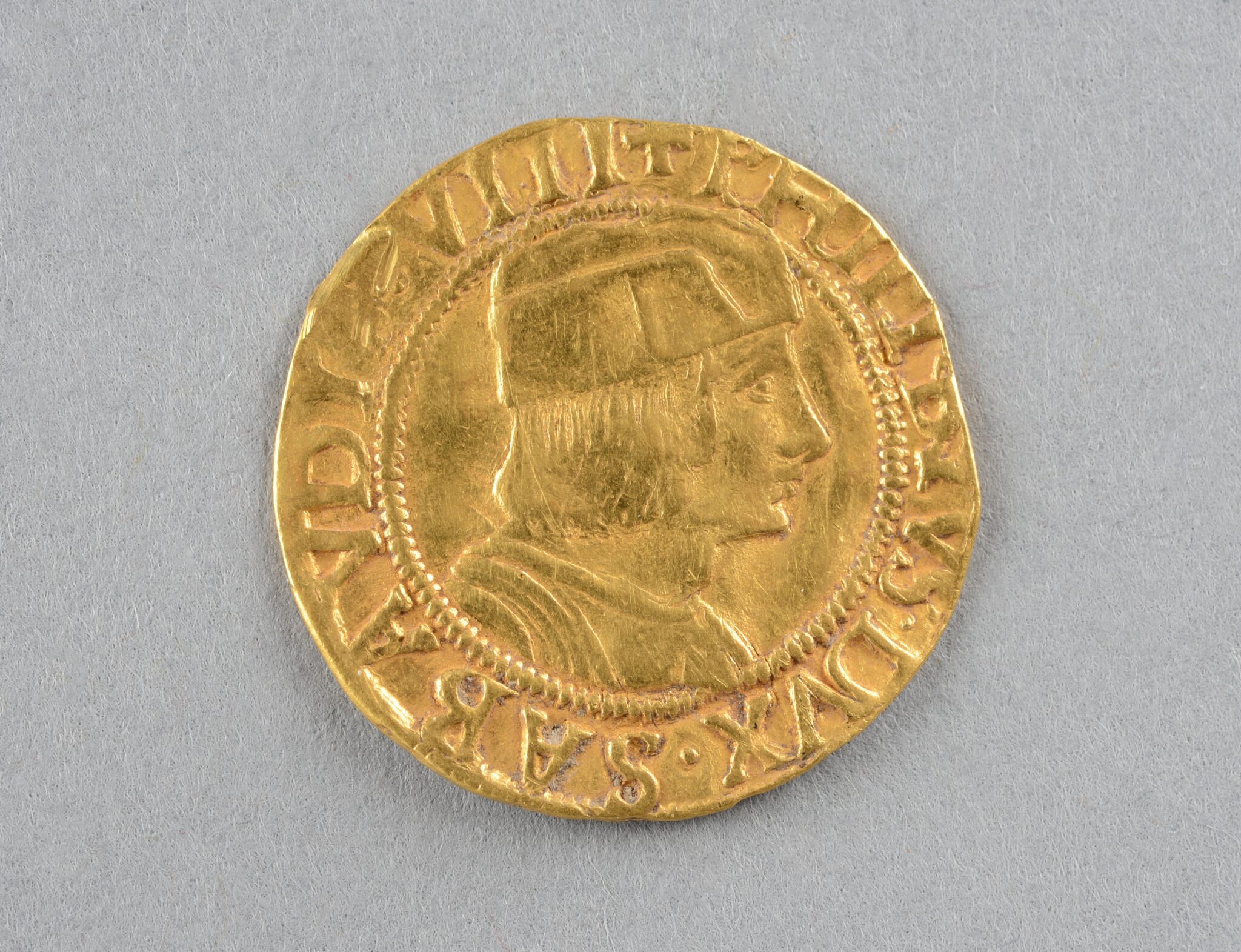
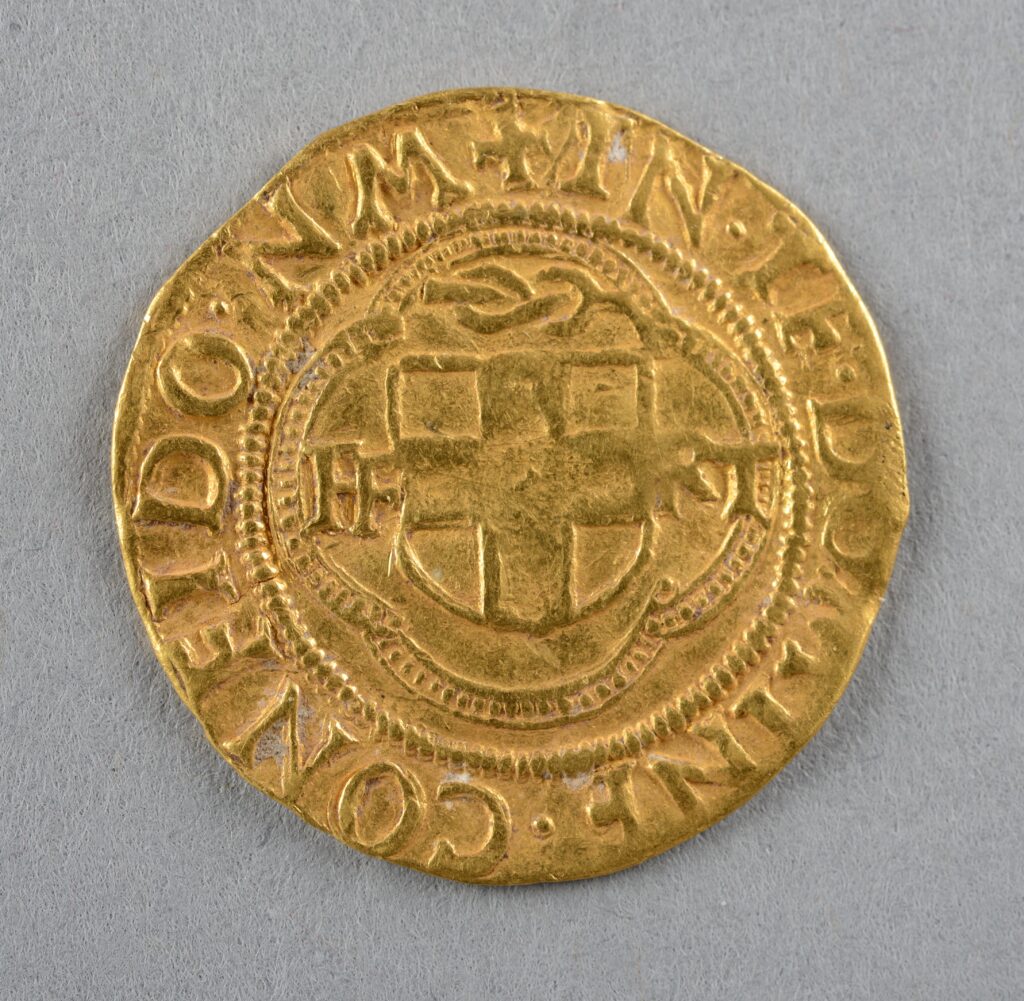
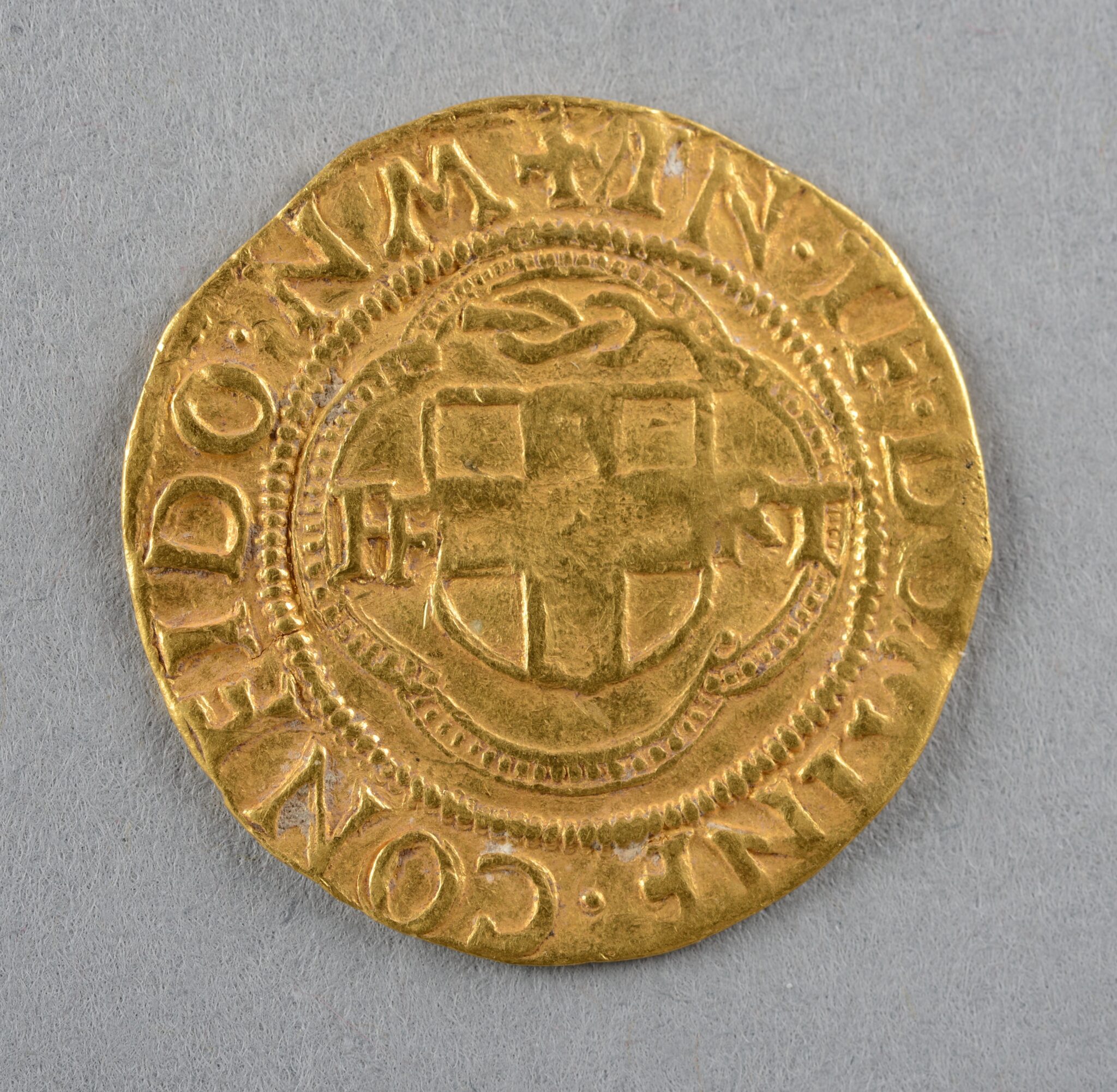
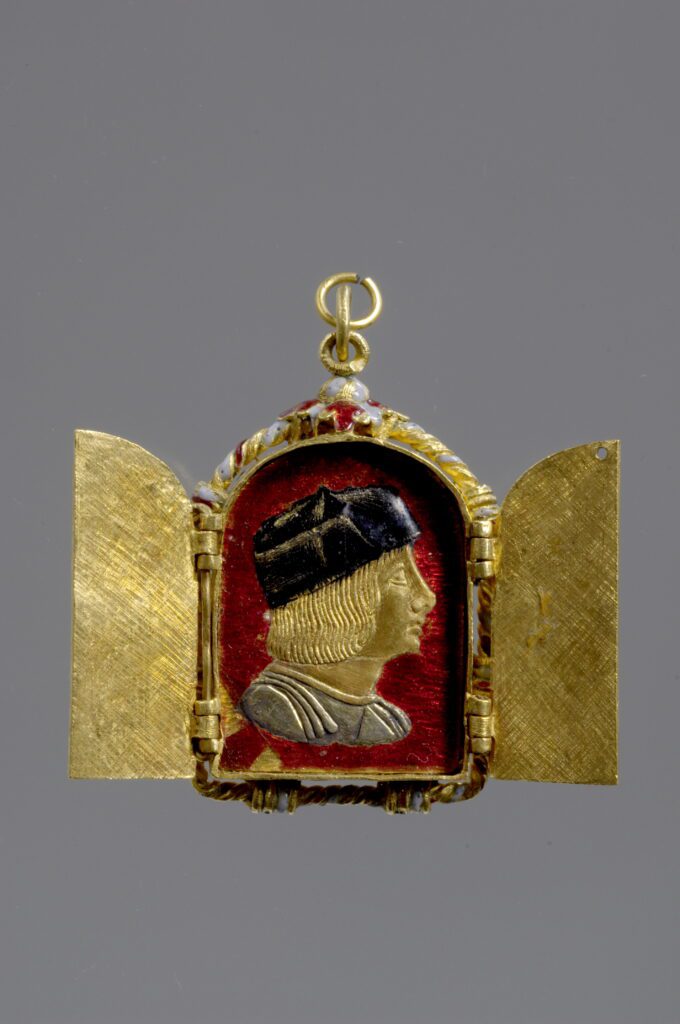
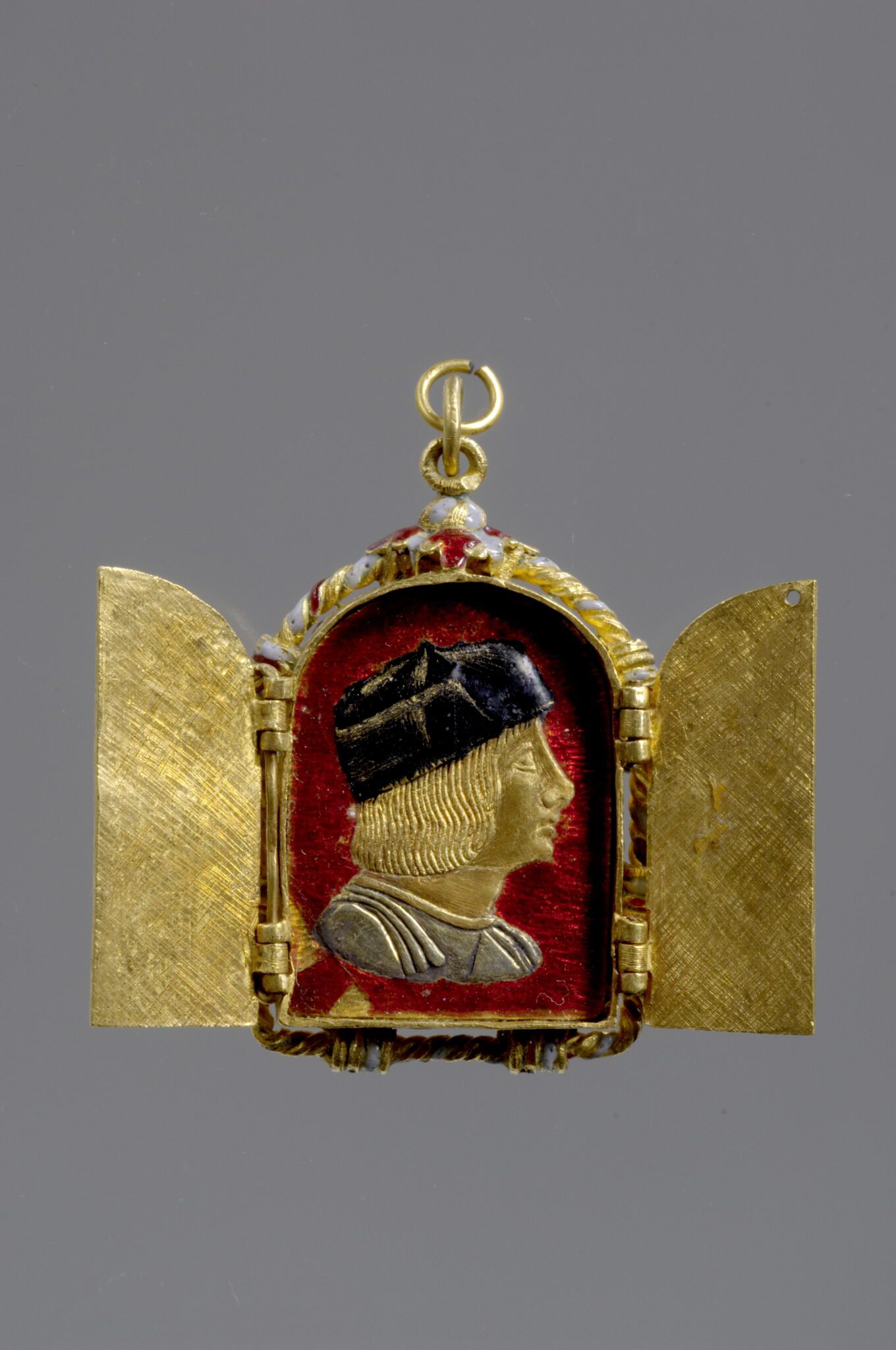
Meit’s rendition of Philibert of Savoy was probably based on information provided to him by Margaret, as well as on medals and coins from Philibert’s lifetime. A medal by Jean Marende (active 1502/1504), dated 1502, depicts the young couple facing each other in profile, with Philibert wearing the same cap as in the marble bust (fig. 22).14 This cap also appears in coins with Philibert’s portrait in profile as well as in an enameled golden portrait pendant that belonged to Margaret (figs. 23 (recto), 24 (verso), and 25).15 Meit also added a coin with Philibert’s profile portrait to the upper marble effigy of Margaret of Austria’s tomb in Brou, where it is placed between her robes (fig. 26).
Fig. 22 - Jean Marende, Medal with Philibert II of Savoy and Margaret of Austria, 1502, gilded bronze, The Princely Collections, Vaduz-Vienna, Liechtenstein
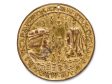 Fig. 22 - Jean Marende, Medal with Philibert II of Savoy and Margaret of Austria, 1502, gilded bronze, The Princely Collections, Vaduz-Vienna, Liechtenstein
Fig. 22 Jean Marende, Medal with Philibert II of Savoy and Margaret of Austria, 1502, gilded bronze, 10.3 cm diam. The Princely Collections, Vaduz-Vienna, Liechtenstein, no. ME 135. Photograph: © LIECHTENSTEIN. The Princely Collections, Vaduz–Vienna [side-by-side viewer]
Fig. 23 - Coin depicting Philibert II of Savoy (obverse), gold, Musée Savoisien, Chambéry
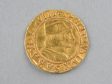 Fig. 23 - Coin depicting Philibert II of Savoy (obverse), gold, Musée Savoisien, Chambéry
Fig. 23 Coin depicting Philibert II of Savoy (obverse), gold, 2.4 cm diam. Musée Savoisien, Chambéry, Département de la Savoie, inv. no. 2013.9.487. © Musée Savoisien [side-by-side viewer]
Fig. 24 - Coin depicting Coat of Arms of Savoy (reverse), gold, Musée Savoisien, Chambéry
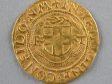 Fig. 24 - Coin depicting Coat of Arms of Savoy (reverse), gold, Musée Savoisien, Chambéry
Fig. 24 Coin depicting Coat of Arms of Savoy (reverse), gold, 2.4 cm diam. Musée Savoisien, Chambéry, Département de la Savoie, inv. no. 2013.9.487. © Musée Savoisien [side-by-side viewer]
Fig. 25 - Maker unidentified, Pendant in the shape of a triptych depicting Philibert II of Savoy in profile, ca. 1501–1504, enameled gold, Kunsthistorisches Museum, Vienna
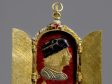 Fig. 25 - Maker unidentified, Pendant in the shape of a triptych depicting Philibert II of Savoy in profile, ca. 1501–1504, enameled gold, Kunsthistorisches Museum, Vienna
Fig. 25 Maker unidentified, Pendant in the shape of a triptych depicting Philibert II of Savoy in profile, ca. 1501–1504, enameled gold, 3.3 x 2.3 cm (closed). Kunsthistorisches Museum, Vienna, Kunstkammer, inv. no. 1591. Photograph: Kunsthistorisches Museum © KHM-Museumsverband [side-by-side viewer]
Fig. 26 - Detail of pendant from the Upper Effigy from the Tomb of Margaret of Austria, 1526–1528, marble, Monastère royal de Brou, Bourg-en-Bresse
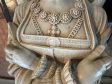 Fig. 26 - Detail of pendant from the Upper Effigy from the Tomb of Margaret of Austria, 1526–1528, marble, Monastère royal de Brou, Bourg-en-Bresse
Fig. 26 Upper Effigy from the Tomb of Margaret of Austria in the Church of Saint Nicolas-de-Tolentin en Brou, 1526–1528, marble, 190 x 60 x 45 cm (complete figure). Monastère royal de Brou, Bourg-en-Bresse (Photograph: Šárka Radostová 2025). Detail of pendant shown with a detail of the gold coin of Philibert II of Savoy (fig. 23) [side-by-side viewer]
The Marble Busts in the Context of Meit’s Oeuvre
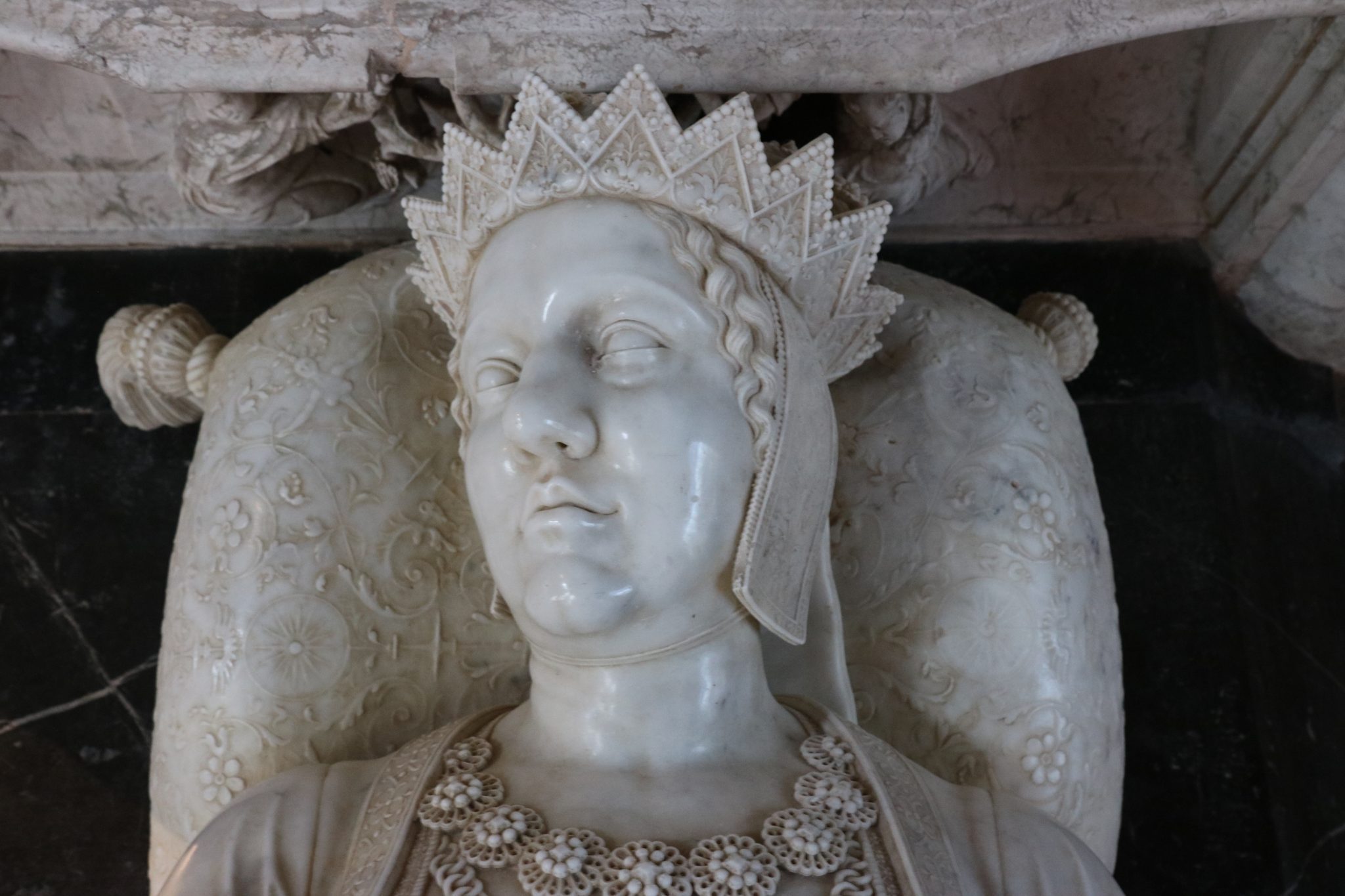
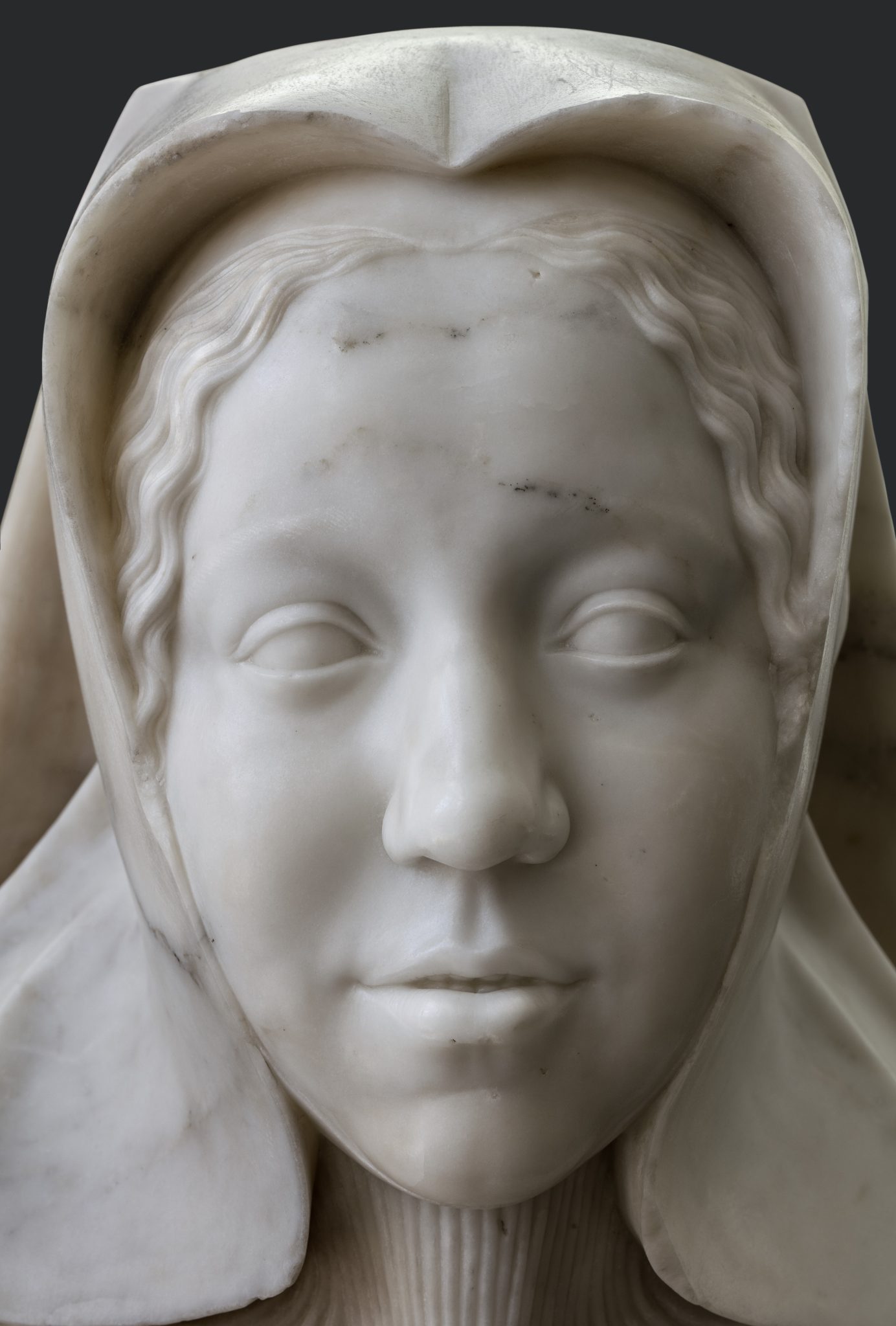
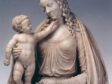
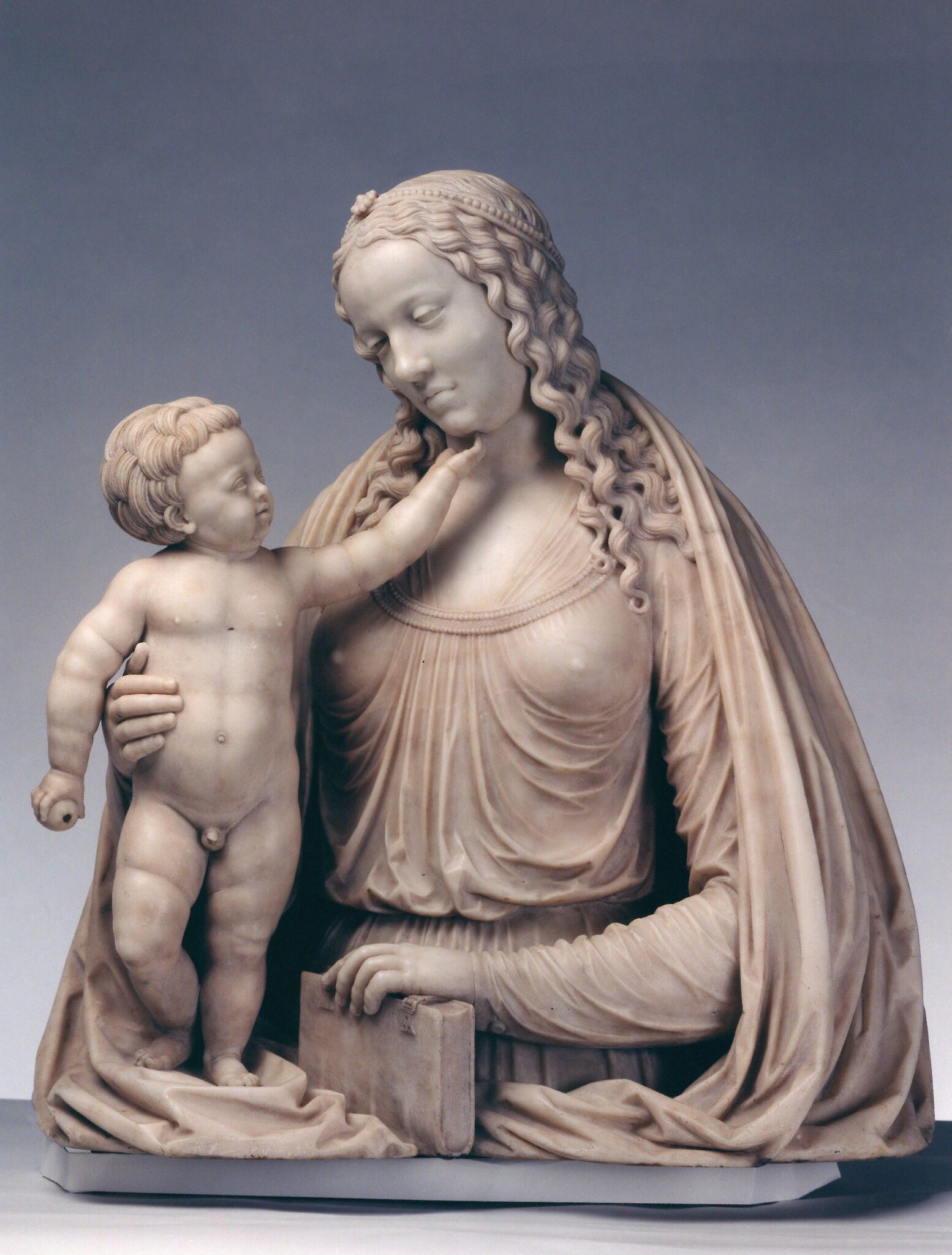
Comparing the marble bust of Margaret (fig. 27) with the head of her upper effigy in her tomb in Brou, also executed in marble, Meit’s idiosyncratic style becomes immediately recognizable, despite the fact that the funerary portrait depicts the archduchess at an advanced age (fig. 28).16 Like Meit’s funerary effigies and other sculptural portraits, the marble busts of Margaret and Philibert are characterized by a virtuoso rendering of physical qualities. The detailed depiction of facial features exemplifies what we might consider signature elements of Meit’s style. These include the shaping of the eyes with sharply cut edges of the eyelids, eyeballs without drilled pupil holes, and precisely defined lacrimal glands; the combination is virtually a hallmark of Meit’s individual style. The same could be said about the softly rounded corners of the mouth and the specific rendition of the voluminous curls worked a jour. In their formal conception and execution, Philibert’s curls (see figs. 11 and 14) are almost identical to the curls of the lower alabaster effigies of the archduchess and the duke of Savoy in Brou (figs. 29, 30 ).17 They are also comparable to the abundant curls of Meit’s Madonna and Child (fig. 31).18
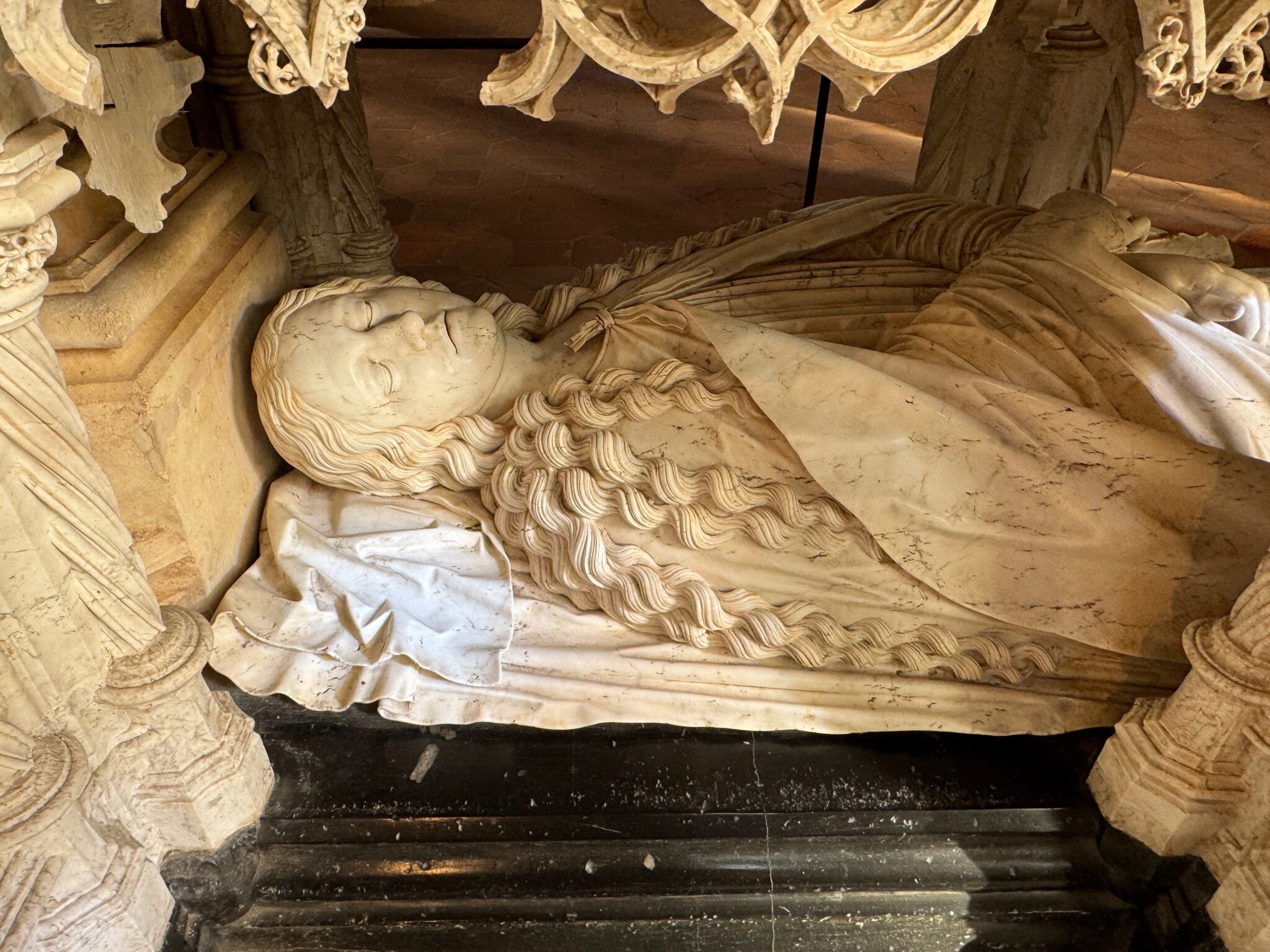
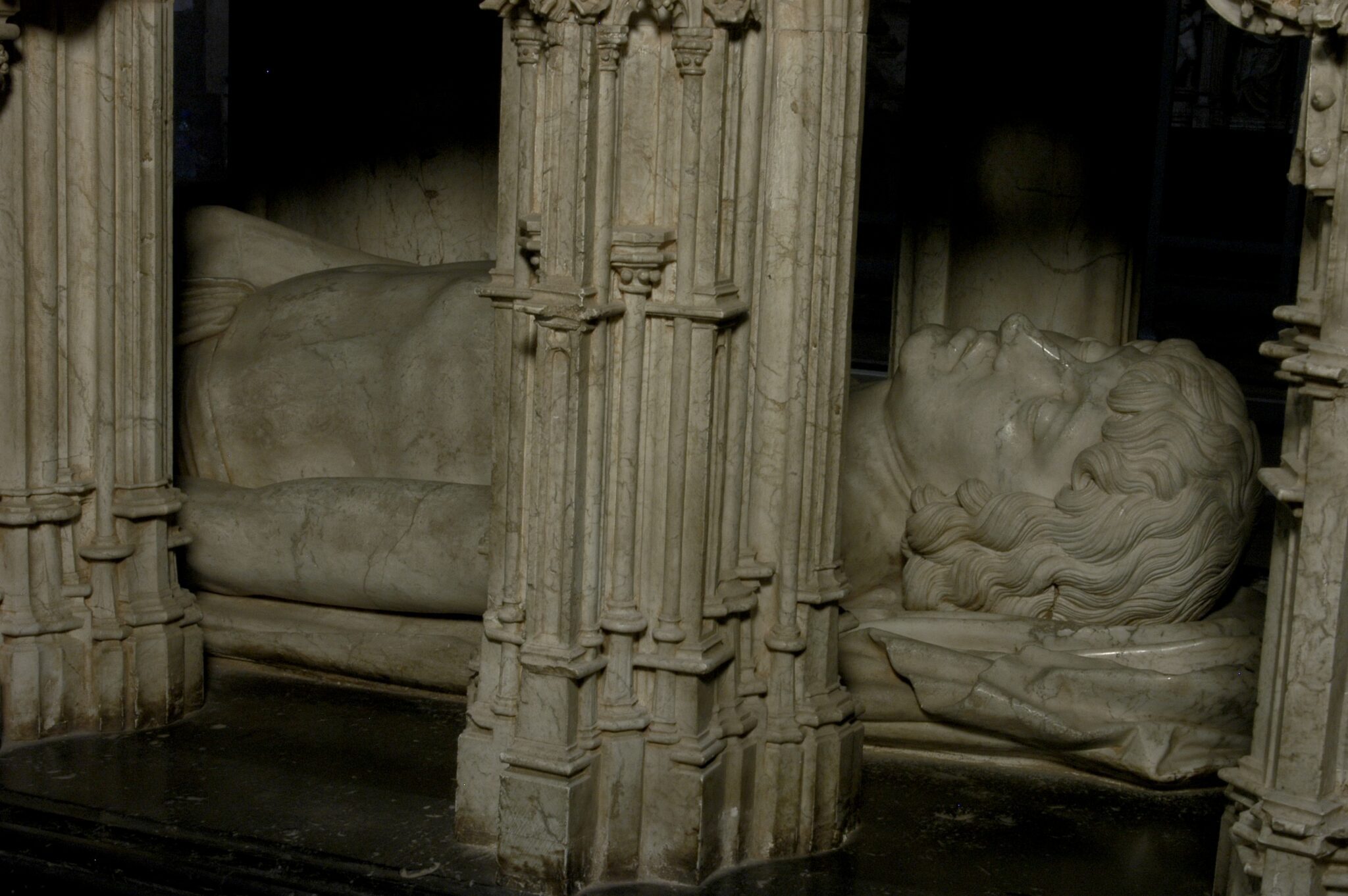
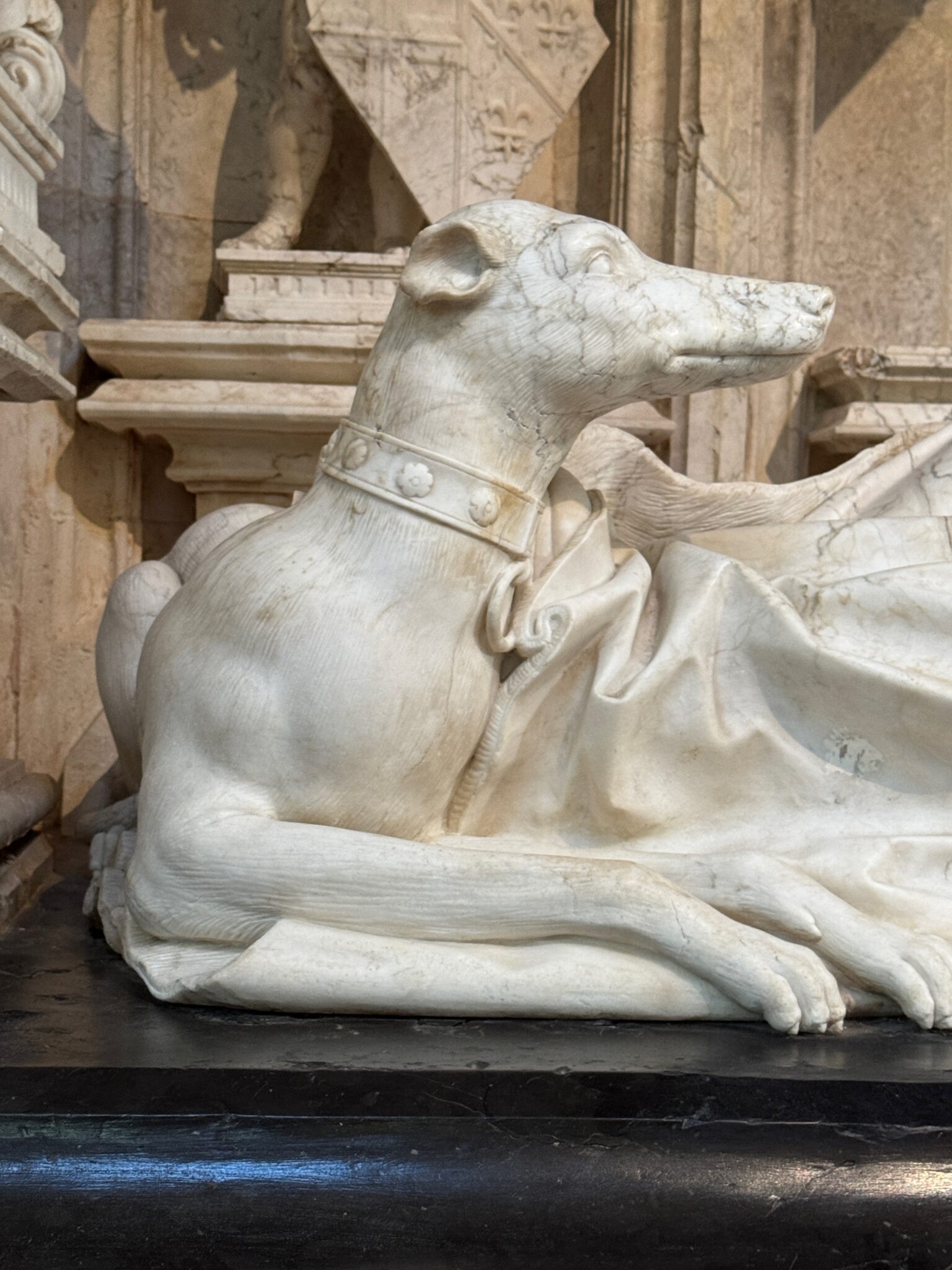
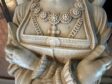
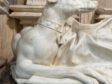
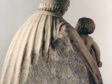
The Frýdlant marble bust of the young duke, like that of the archduchess, has a sleek silhouette and a clear structure. The tubular folds of his doublet, widening as they descend, recall the ones in the miniature wooden bust in Berlin. Below the fur-lined trim of the cloak, the partly Y-shaped folds, very characteristic of Meit’s individual drapery style, can be observed in Meit’s reclining effigies in Brou and in the Brussels Madonna (figs. 31, 32, and 33 ).19 The fur with which Philibert’s cloak is lined is directly comparable to the fur-lined cloak of the alabaster effigy of Philibert’s mother, Margaret of Bourbon, in Brou (see figs. 11 and 33). In the latter, the cloak is piled up in folds next to the greyhound at her feet.20 The lavish folds of fabric cascading over and around the dog bear witness to courtly splendor and, in the way they almost caress the animal, imply reciprocal loyalty, thereby underscoring the social and political values associated with the distinctive naturalism of Meit’s style.21 The newly discovered busts demonstrate Meit’s virtuosity in the realistic rendition of soft, swelling skin with underlying tissue and bones as well as the vivacious curls of hair. They also testify to his masterful ability to imitate different materials, such as textiles, leather, fur, and metal.
The Choice of Material: Marble in the Northern Renaissance
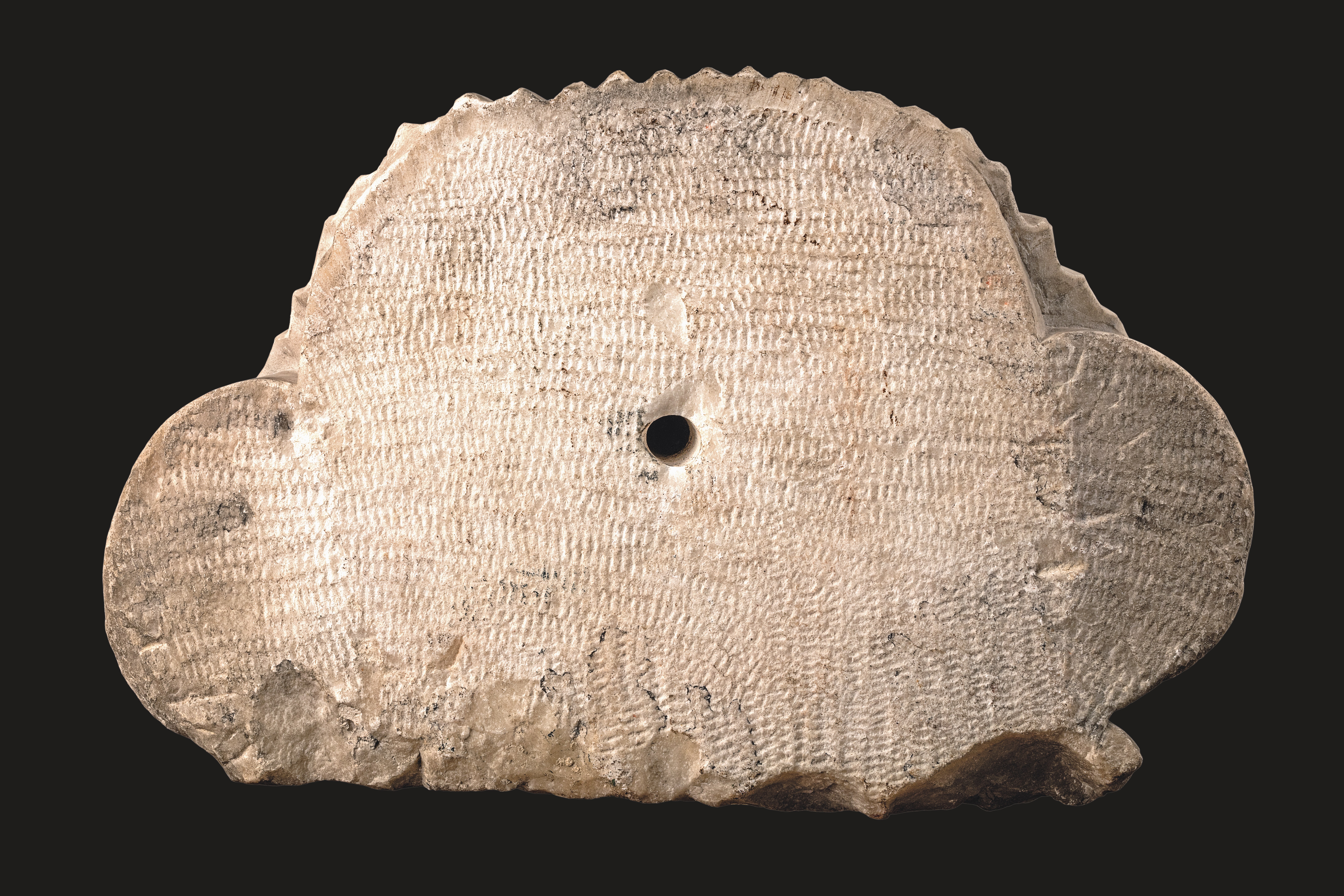
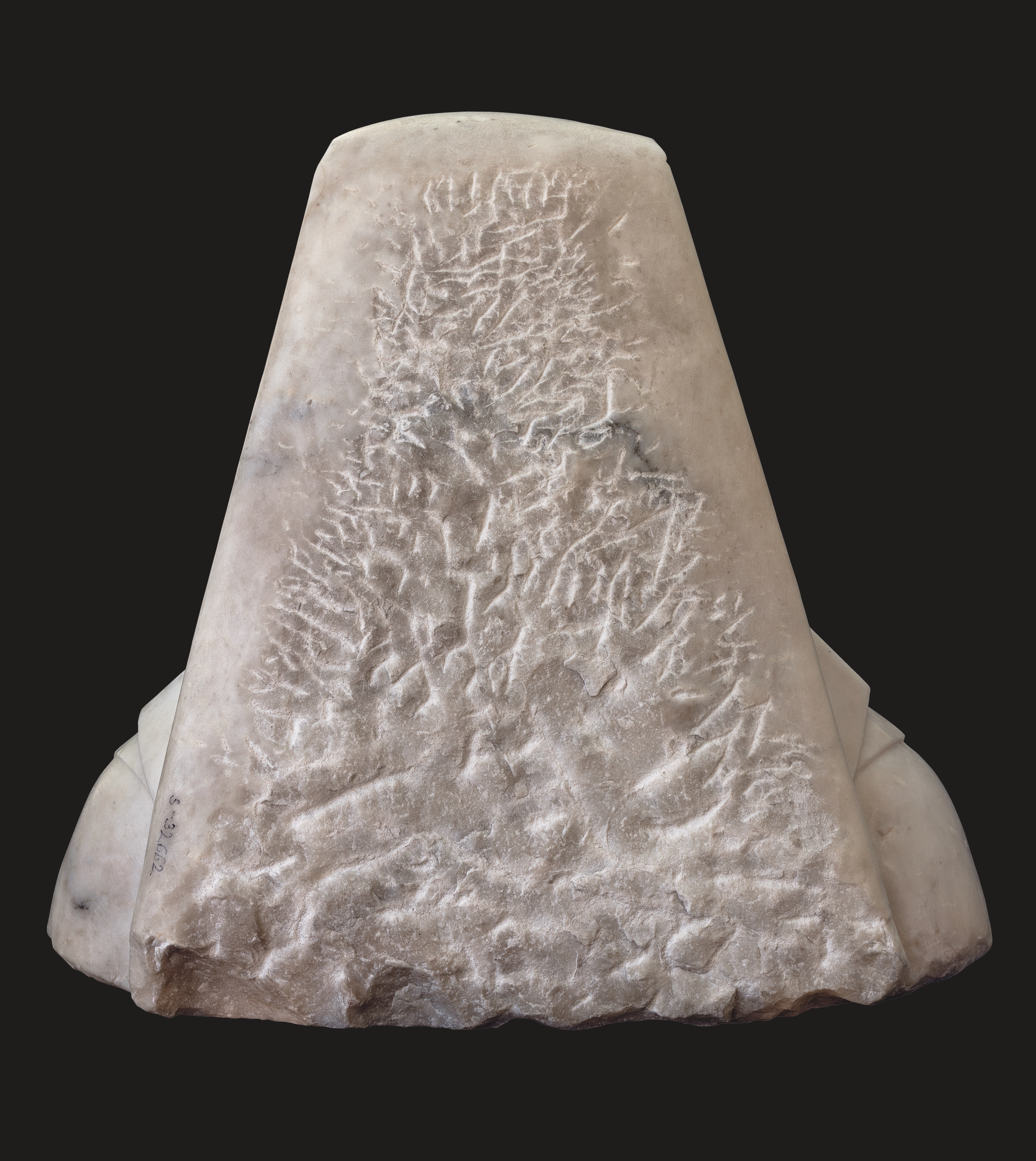
The busts are made of marble with a white base tone, interspersed in places with varying subtle gray-brown veining. This assessment is based on an examination of the polished surfaces and the crystalline structure of the stone, the latter visible in the damaged areas on the hem of the widow’s coif and on the lower edges of both busts, as well as on their roughly hewn backs (figs. 34, 35). Conservation revealed that the sculptor used the best quality of Carrara marble for the bust of Margaret of Austria, a category of marble called bianco statuario, transparente con macchio (white statuary, transparent with veins). The bust of Philibert was also made from Carrara marble of the highest quality.22 Unlike the later project in Brou, no records have come to light for Meit’s purchase of the marble for the two busts.
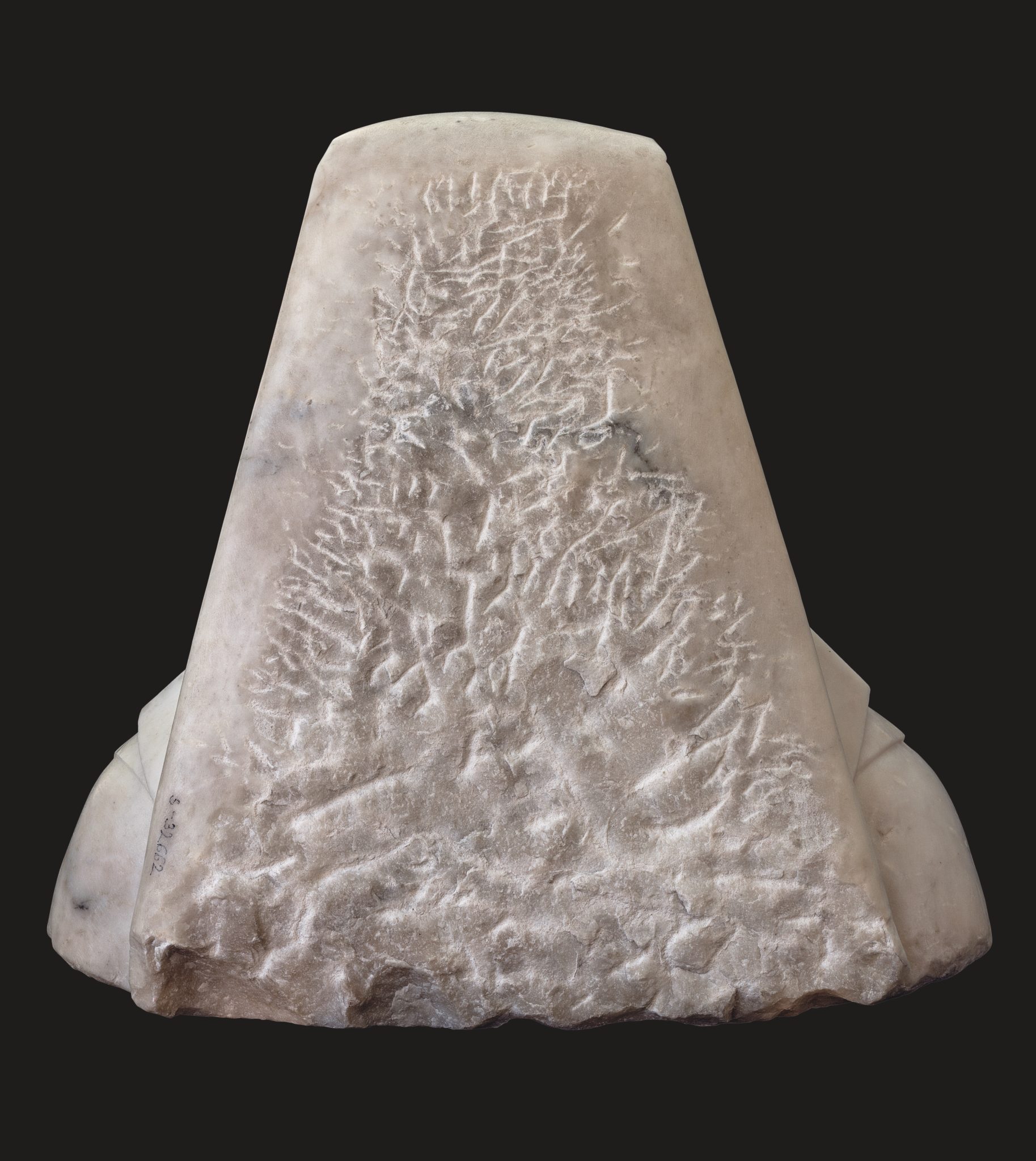
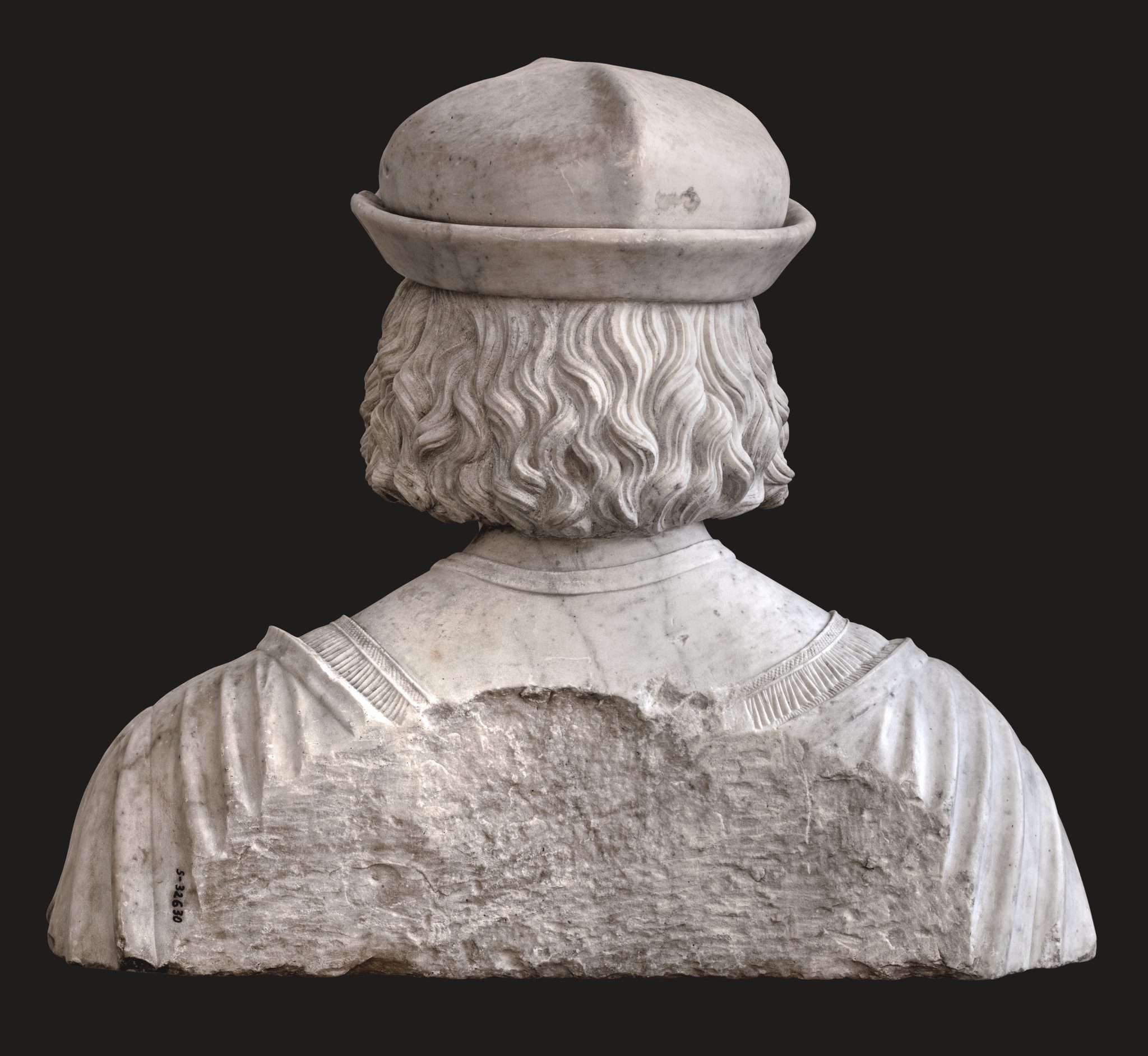
Carrara marble was the preferred choice of Meit’s leading contemporaries for significant sculptural commissions. Michelangelo Buonarotti (1475–1564) used Carrara marble for the Pietà in St. Peter’s in Rome and also for the Bruges Madonna and Child, which arrived in the Netherlands as early as in 1506 and with which Meit was likely familiar. Furthermore, the so-called statuario venato (veined statuary marble) from Carrara had been exported to France and Flanders as a raw material since the end of the fifteenth century. Early examples of the use of Carrara marble in Renaissance sculpture north of the Alps include the tomb of the sons of King Charles VIII of France (1470–1498) and Anne de Bretagne (1477–1514), commissioned by Anne in 1499 and installed in 1507 in the collegiate church Saint-Martin in Tours, today the Cathedral of Saint-Gatien. This tomb is attributed to Michel Colombe (ca. 1430–ca. 1512), Guillaume Regnault (ca. 1450–1532), and Jérôme Pacherot (1463–1540). The trio also executed the tomb of Anne’s parents, Duke Francis II of Brittany (1433–1488) and his wife, Margaret of Foix (ca. 1449–1486), also commissioned by Anne de Bretagne in 1499 after a design by Jean Perréal (ca. 1460–1530). Completed in 1502, the latter commission, also of Carrara marble, was installed in 1507 in the church of the Carmelite convent in Nantes, today the Cathedral of Saints Peter and Paul.23
Meit’s busts of Philibert of Savoy and Margaret of Austria mark a shift in the choice of sculptural material within the archduchess’s patronage. We find corroboration for that shift in sources from an earlier design for the Brou funerary monuments, referred to as the “French Project,” which began in 1509 and was abandoned in 1512. The team for this project consisted of Margaret’s court historiographer, the poet Jean Lemaire de Belges; the French court painter Jean Perréal; and the aging sculptor Michel Colombe from Tours. The French project was designed exclusively around alabaster, while the realized project—entrusted to the Flemish architect Lodewijk van Boghem (ca. 1470–1540) and to Meit as sculptor of the funerary statuary—encompasses marble from Carrara as well as alabaster.24 The primary objects under consideration in this article can be regarded as among the first life-size marble portrait busts of the early Renaissance in Northern Europe. They also prove to be pioneering commissions in terms of the archduchess’s material choice, opting for prestigious sculptural Carrara marble for the first time, a decision that also laid the groundwork for Meit’s participation in Margaret’s major artistic achievement, St. Nicholas-de-Tolentin in Brou.
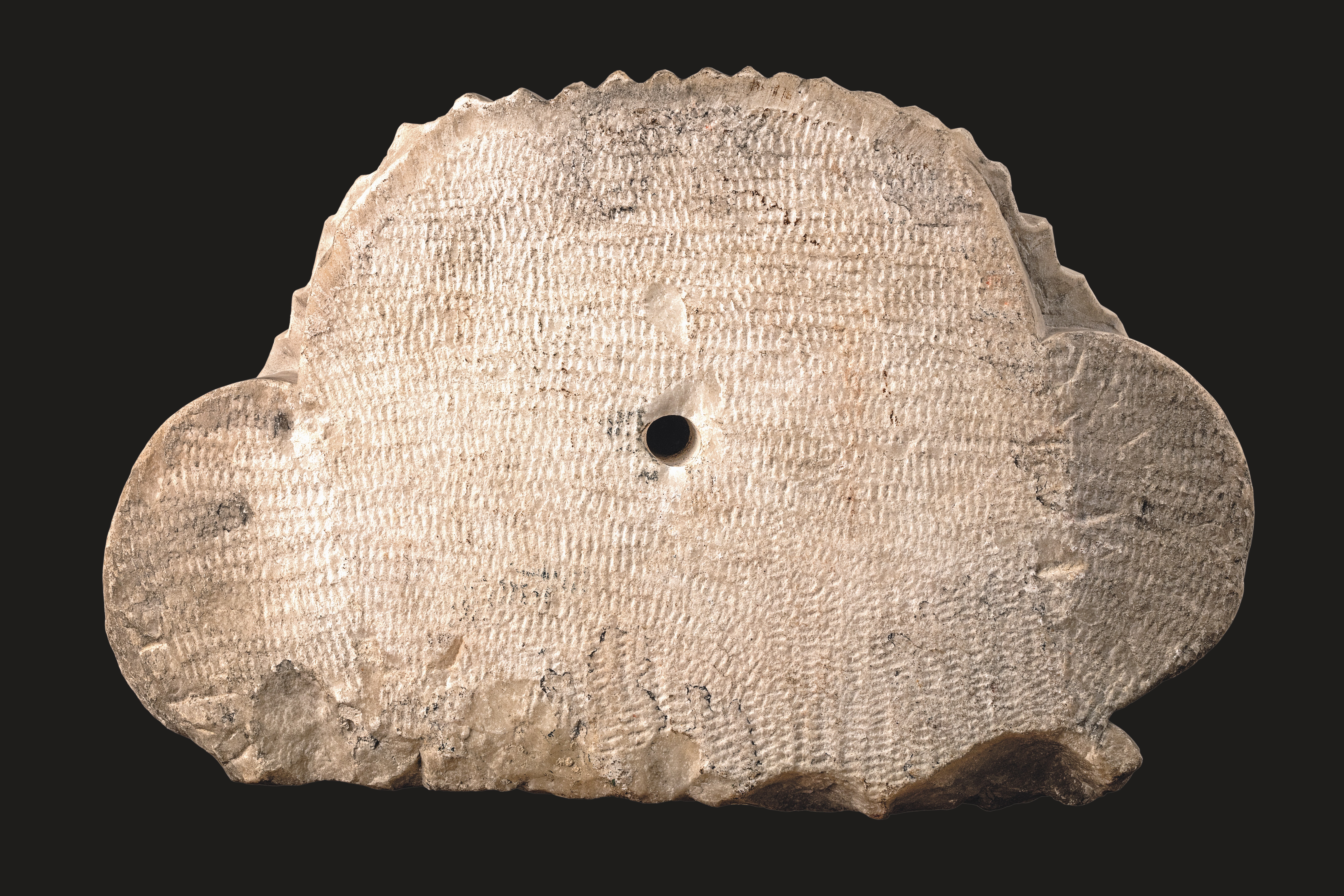
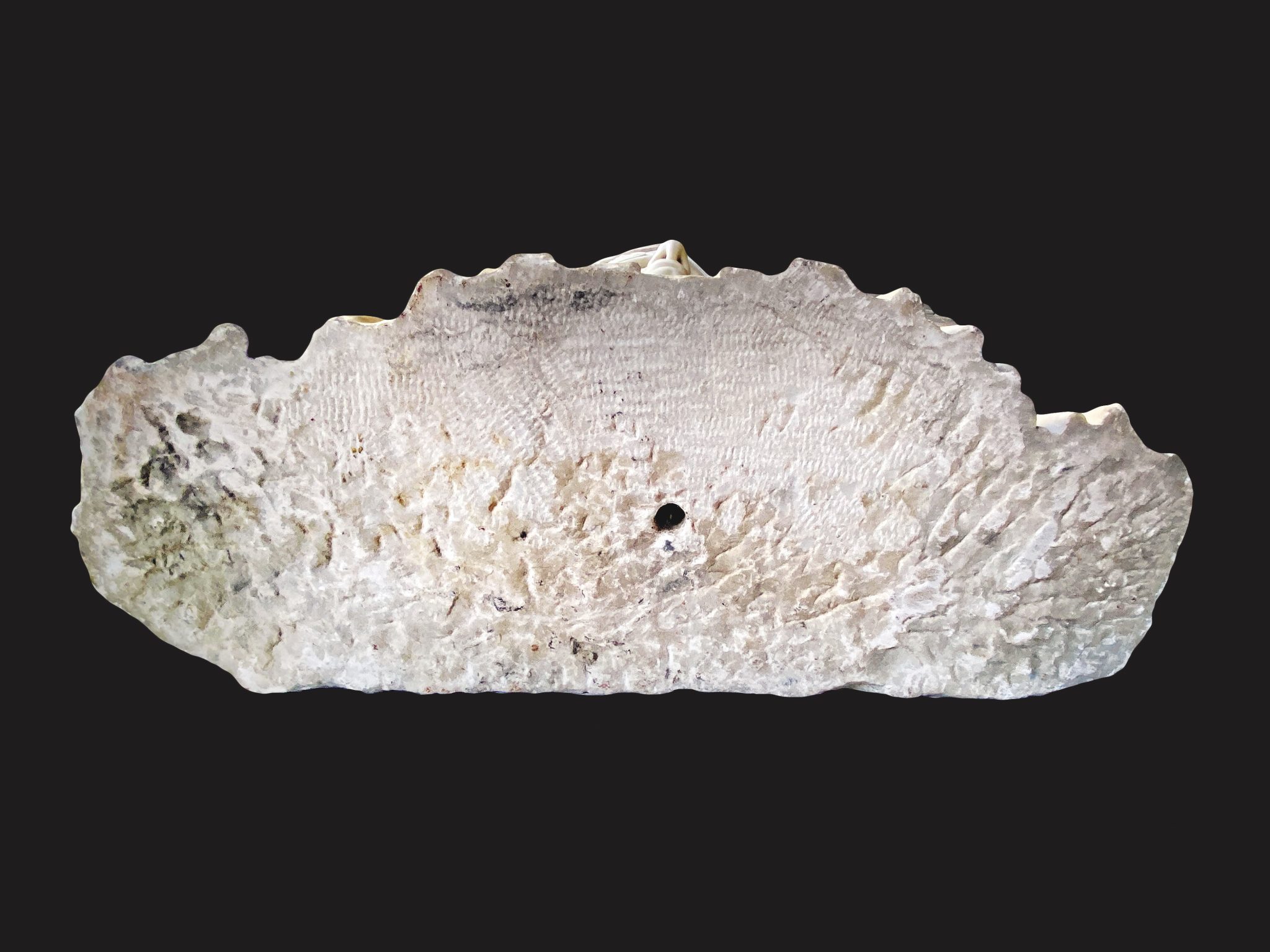
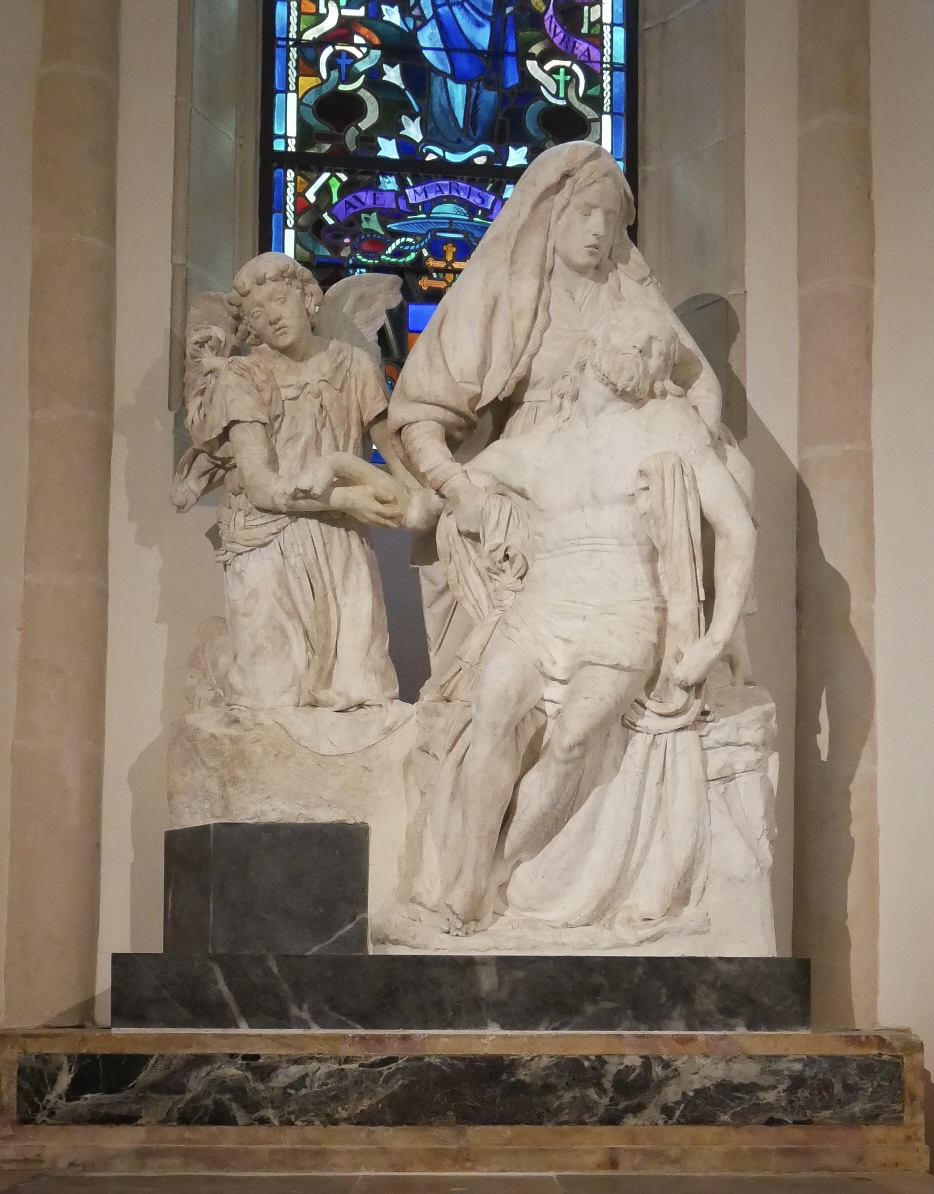
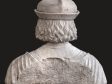
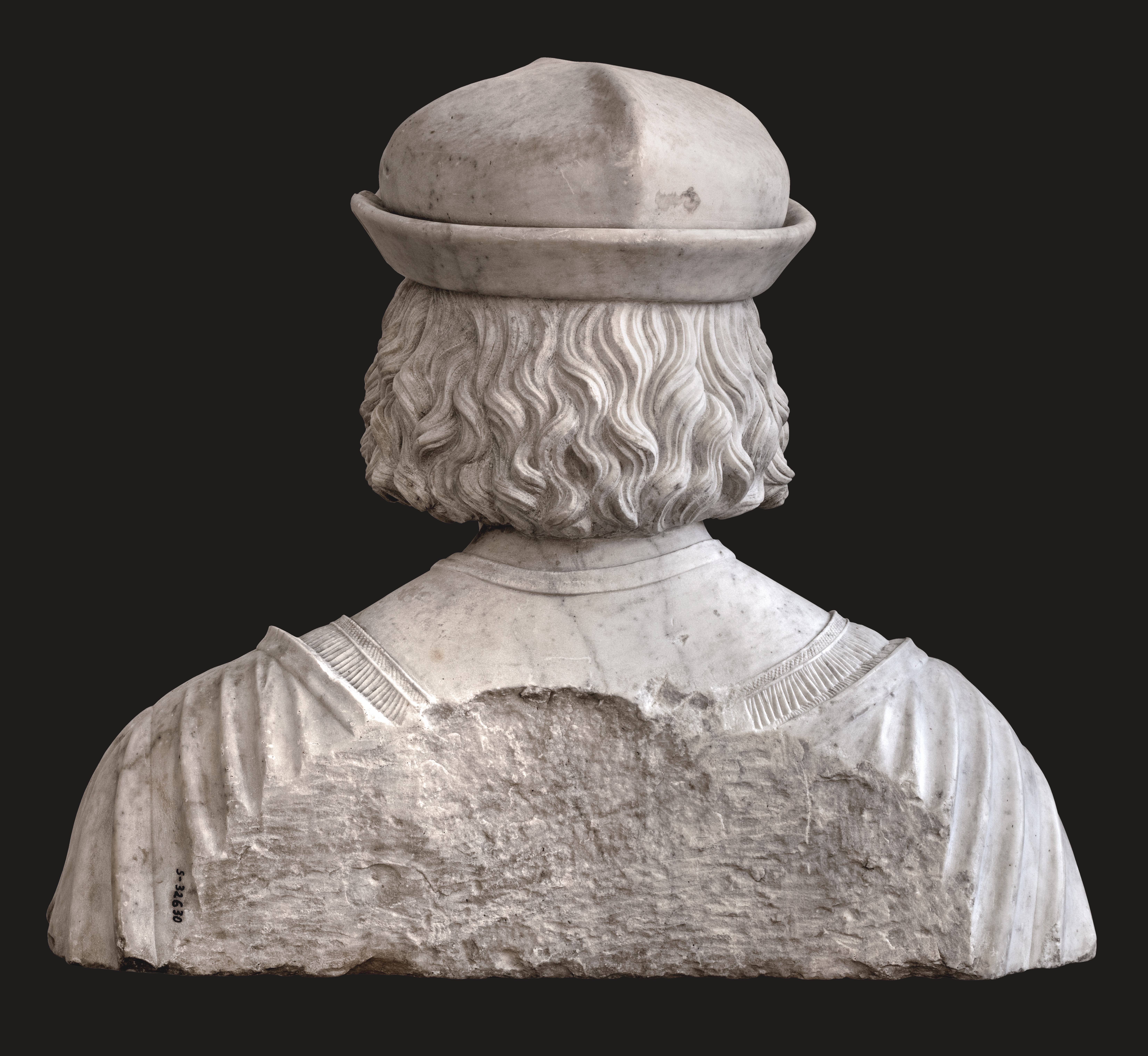
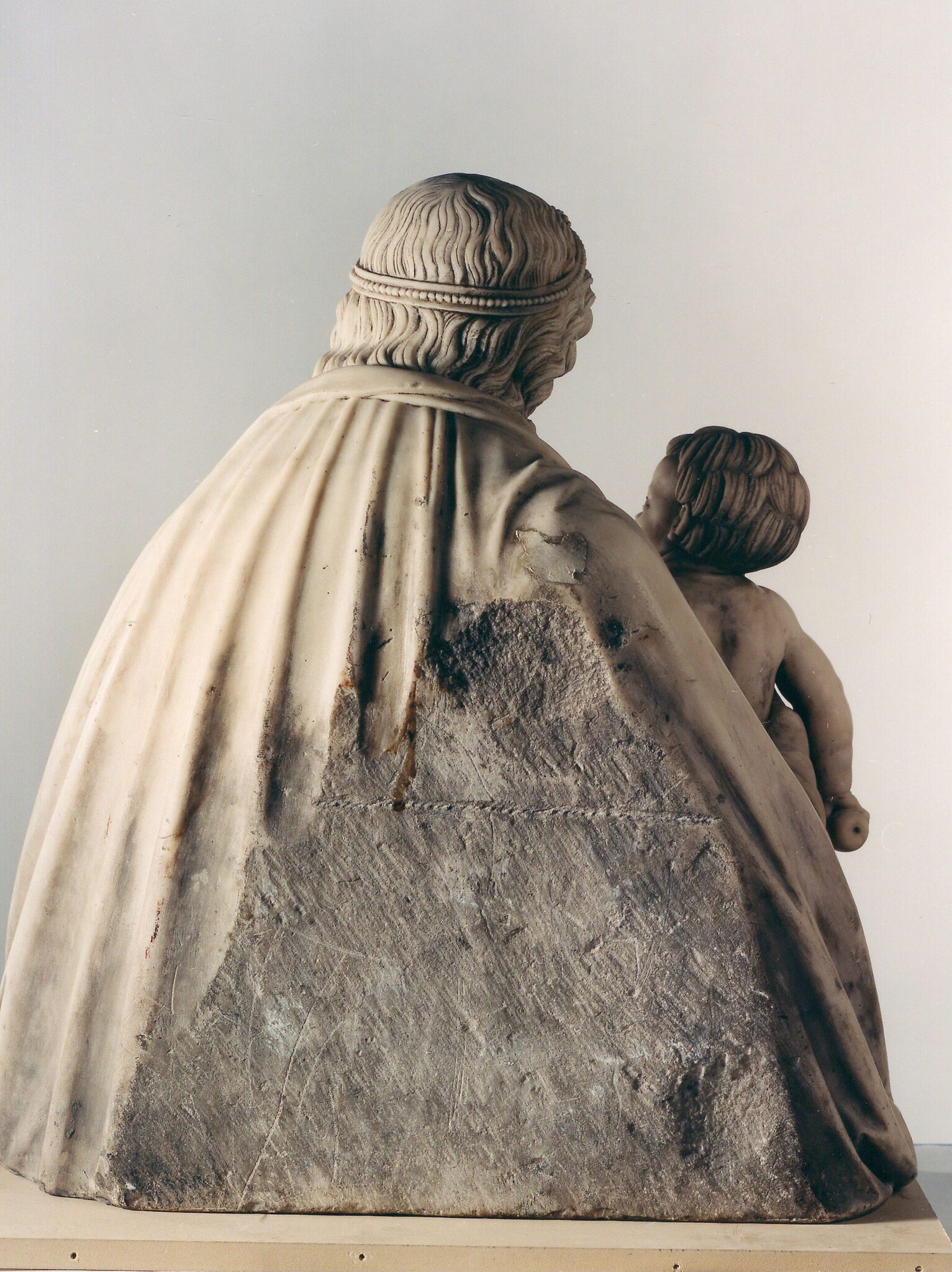
The extent to which the two marble busts are intentionally completed on only three sides also deserves closer examination in comparison with contemporaneous portrait busts and Meit’s small-format wooden busts. Unlike the majority of marble portrait busts from the Italian Renaissance, the versos show visible traces of workmanship (see figs. 34 and 35). While the undersides display the expected tool marks from straightening the base (figs. 36, 37), the roughly finished backs identify both sculptures as intentionally unfinished. Consequently, we can conclude that the busts were created to be displayed with their backs concealed, corresponding to the recorded place of presentation in Margaret’s library (see figs. 40 and 41). The Brussels Madonna is also finished at the front and sides, while the back remains unfinished in exactly the same way, suggesting an intended installation in front of a wall (see figs. 31 and 32). Finally, Meit’s Pietà in Besançon, which despite its unfinished state is worked out frontally and at the sides, was also conceived for an installation in front of a wall, in this case atop an altar (fig. 38).25 In contrast, the wooden miniature busts in Munich, Berlin (fig. 39), and London are worked out in the round, designed to be taken in one’s hand and viewed from all sides.
The unfinished versos of Meit’s two marble busts correspond to extant terracotta busts by the Italian sculptor Pietro Torrigiani (1472–1528), who is recorded in the service of Margaret of Austria prior to Meit’s employment as her court sculptor. The backs of Torrigiani’s busts were deliberately left unfinished, evidently also designed to be placed against a wall. This applies to the likeness of King Henry VII of England (1457–1509); the bust of John Fisher, bishop of Rochester (1469–1535); and a portrait of an unknown man.26 Torrigiani was one of the first Italian Renaissance sculptors to work in England, France, Spain, and the Netherlands,27 where he was instrumental in popularizing highly realistic polychromed terracotta busts with a straight horizontal edge, recalling the shape of reliquary busts.28
A payment by the governess to Torrigiani dated April 26, 1510, records the repair of a bust depicting Mary of England (1496–1533), sister of King Henry VIII (1491–1547), initially kept in Brussels.29 Mary Tudor had been betrothed to Margaret’s nephew, the future king and emperor Charles V (1500–1558), on December 21, 1507.30 Since Torrigiani probably first traveled to England as early as 1507 or 1508, it is likely that he himself made the bust of the English princess. It was probably sent to Margaret of Austria’s court (in lieu of a painted portrait) during marriage negotiations, as was customary at the time. Consequently, it can be inferred that Meit knew this terracotta bust.
Surpassing Torrigiani’s work in terracotta, Meit’s use of marble as sculptural material signals the artist’s aspiration to emulate classical antiquity. During a visit to Rome in 1508–1509, Philip of Burgundy (1464–1524) received two classical busts of Roman emperors from Pope Julius II (1443–1513). In light of the well-documented personal acquaintance between Conrat Meit and the painter Jan Gossaert (ca. 1478–1532), who accompanied Philip of Burgundy to Rome, we can assume that Meit would have known these important examples of antique portraiture. If, as some speculate, Meit himself visited Italy after leaving Wittenburg in 1510, before taking up his position with Margaret of Austria, there are a number of other considerations to bear in mind. Even though the two busts from Rome are now lost, the emulation of classical portraiture should be understood as an underlying motivation for the choice of material for the busts of Margaret of Austria and Philibert of Savoy. Interestingly, all other comparable portrait busts created in the Netherlands in the second and third decades of the sixteenth century prove to be works in terracotta and limestone and can be dated only after Meit’s original commission from the governess for the marble busts.31 The virtuoso skills in stone sculpture demonstrated by Meit’s marble busts suggest that his training as a sculptor in his native city of Worms, and in the region of the Middle Rhine at the end of the fifteenth century, encompassed both wood and stone—a common practice in the fifteenth and early sixteenth centuries. Meit’s earliest sculptures, from his engagement at the court of Frederick the Wise from 1505/1506 until 1509, both extant and recorded, were carved in wood. It is only for Margaret of Austria’s commission of the two marble busts that he is known to first have worked in stone. It is worth noting that Margaret, while living at the court of Savoy, traveled to northern Italy repeatedly and would have encountered Italian Renaissance art in Turin and elsewhere.
The Provenance of Meit’s Marble Busts in the Sixteenth century
Few Renaissance sculptures are as well documented as Meit’s marble busts, to the extent that we can even pinpoint their original location with precision. They are first mentioned in the travel diary of Antonio de Beatis, the secretary of Cardinal Luigi dʼAragona (1474–1519), who undertook an extensive journey to Switzerland, Germany, the Low Countries, and France from April 1517 to March 1518. On the occasion of his visit to the residence in Mechelen on July 29, 1517, De Beatis particularly praised the liveliness and beauty of the two busts:
And there are also the marble busts of the Duke of Savoy, her husband of blessed memory, which show him to have been a most handsome young man, as they say he was, and of her illustrious ladyship, when she was young, done with great skill and in a most lifelike manner.32
This source is all the more noteworthy because he mentioned no other works of art from his time in Mechelen, and on other occasions he referred only to a few widely recognized monuments, such as the Ghent Altarpiece by Jan van Eyck (ca. 1390–1441). Next, two inventories from Margaret of Austria’s palace in Mechelen—one from 1523–1524, now in Paris, and one from 1524–1531, in Vienna—record the busts, name Meit as their maker, and specify their placement in the library. 33 In the Vienna inventory, the description is supplemented by the mention of an armoire in which the duke’s armor was displayed.34
After the archduchess’s death in December 1530, the busts came into the possession of her niece and successor as governess general of the Netherlands, Queen Mary of Hungary. In 1556, both busts were inventoried in Turnhout Castle, where Mary kept artworks from her aunt’s estate.35 When the late queen’s possessions were inventoried in 1558, the busts were registered on behalf of her nephew, King Philip II of Spain (1527–1598).36 On the orders of Duchess Margaret of Parma (1522–1586), the busts were transported from Turnhout to Brussels in 1560 and entrusted to the care of Pierre Damant (d. 1568), the treasurer or garde joyaux of Philip II.37 They thus found their way into the royal collections, where they are recorded for the last time in 1569, on the occasion of a review of the 1560 inventory.38 Thus, the Coudenberg Palace in Brussels is the last documented early modern place where the busts from the Mechelen library were kept before their trail is lost.39 The dispersal of the contents and treasures at Coudenberg took place during the Calvinist rule over Brussels from 1578 to 1585. The moveable objects were auctioned off in a public sale lasting several weeks, from the end of 1580 to the beginning of 1581.40 This was the decisive event when the provenance of the busts became untraceable.
Identifying and Dating the Busts
The identification of the marble busts with those inventoried in the library of the governess general in Mechelen can be substantiated by detailed archival information concerning their size and appearance. In the 1569 review of the Brussels inventory, the bust of Philibert of Savoy is described as “faict dès le milieu de l’estomach en hault” (made from the middle of the stomach upward). This additional information is missing from the description of the bust of Margaret of Austria.41 This difference turns out to be crucial when comparing the two marble busts. Philibert’s bust indeed extends further down than that of his wife. Margaret’s bust measures 43 by 41 by 26.5 centimeters, while Philibert’s bust is 56 by 64 by 29.5 centimeters. The difference in the overall size and proportion—also visible in Meit’s miniature busts of Margaret and Philibert in London (see fig. 10)—is likely the reason for the expanded description of Philibert’s bust in the 1569 inventory. Historical evidence confirms that the marble busts accurately reflect the actual differences in the individual heights of the two individuals, Philibert being a person of considerable stature, measuring more than two meters in height.42
Keeping in mind these archival records that speak of differences between the two busts, the material evidence of the discovered marble busts also refutes the earlier scholarly literature on Meit, which assumed that the two busts depict Margaret and Philibert as a couple—a judgment based on the entries in the 1523–1524 inventory.43 In the light of the rediscovered busts, it becomes obvious that Margaret chose to be portrayed as a devout widow, with diagonally cut upper arm sections. Philibert’s bust differs conceptually from her bust by opting for a horizontal cutting line, which is reminiscent of medieval reliquary busts.44
The bust of Philibert of Savoy can be looked at as the earliest surviving work Meit executed for Margaret of Austria. The Archduchess was actively looking for a sculptor at the end of September 1512. In a letter directed to an unnamed patron of the early Renaissance in the Netherlands, she asked to borrow this “bon maistre tailleur alleman” (good German master sculptor) to execute a stone portrait. The text expresses her interest in securing “la portraicture au vifz de feu Monseigneur et mary, cuy Dieu absoille, en pierre” (a lifelike portrait in stone of the late lord and husband, may God rest his soul)—i.e., Philibert of Savoy.45 Shortly after the date of the letter, Meit moved to Margaret’s court in Mechelen and was appointed court sculptor.46 He was already referred to by that designation when Margaret of Austria paid him a sum of money on May 7, 1514, for his impending marriage as well as for services already rendered to her.47
Margaret’s letter and the description by De Beatis narrow down the dating of the two marble busts to the first years of Meit’s appointment as court sculptor. The written evidence suggests that the portrait of Philibert was created first. Margaret’s letter mentions only the plan to commission a bust of Philibert. Although a number of different written sources describe and locate the two marble busts in tandem, this should not be taken to mean that they derive from a shared initiative. They were in fact conceived separately, each governed by a different concept. Tellingly, neither De Beatis’s description nor any subsequent inventory entries explicitly refer to the two busts as a pair. Thus, the combination of written records and the rediscovered sculptures strongly indicate that the busts were created in two stages—the bust of the late duke of Savoy first, followed by the bust of the archduchess represented as a young widow—and then subsequently grouped together by being placed in close proximity in Margaret’s Mechelen library.
Installation of the Marble Busts, ca. 1516–1524
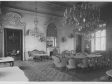
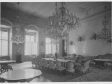
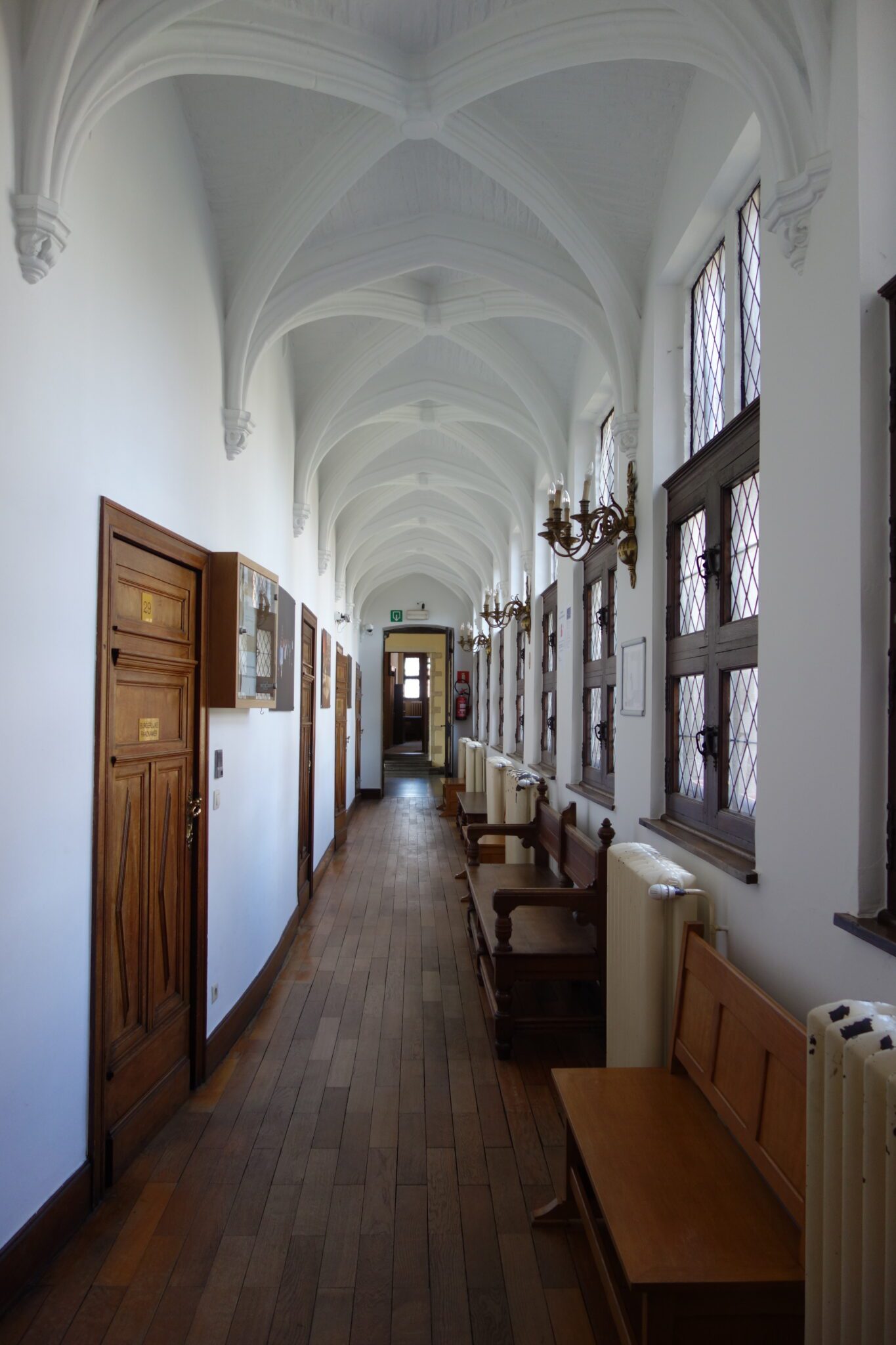
As noted above, contemporary sources report that the portraits were on display in Margaret of Austria’s library, located in the southern wing of her residence, which could be reached via a narrow, gallery-like corridor with a cross vault (fig. 40). This large, hall-like space was semipublic and was accessible to many people: members of the court and diplomatic visitors as well as scholars and artists such as Erasmus of Rotterdam and Albrecht Dürer, both of whom are known to have visited the residence. The library could also be used on more formal occasions, such as a reception for Charles V and his large entourage sometime before July 1528.48
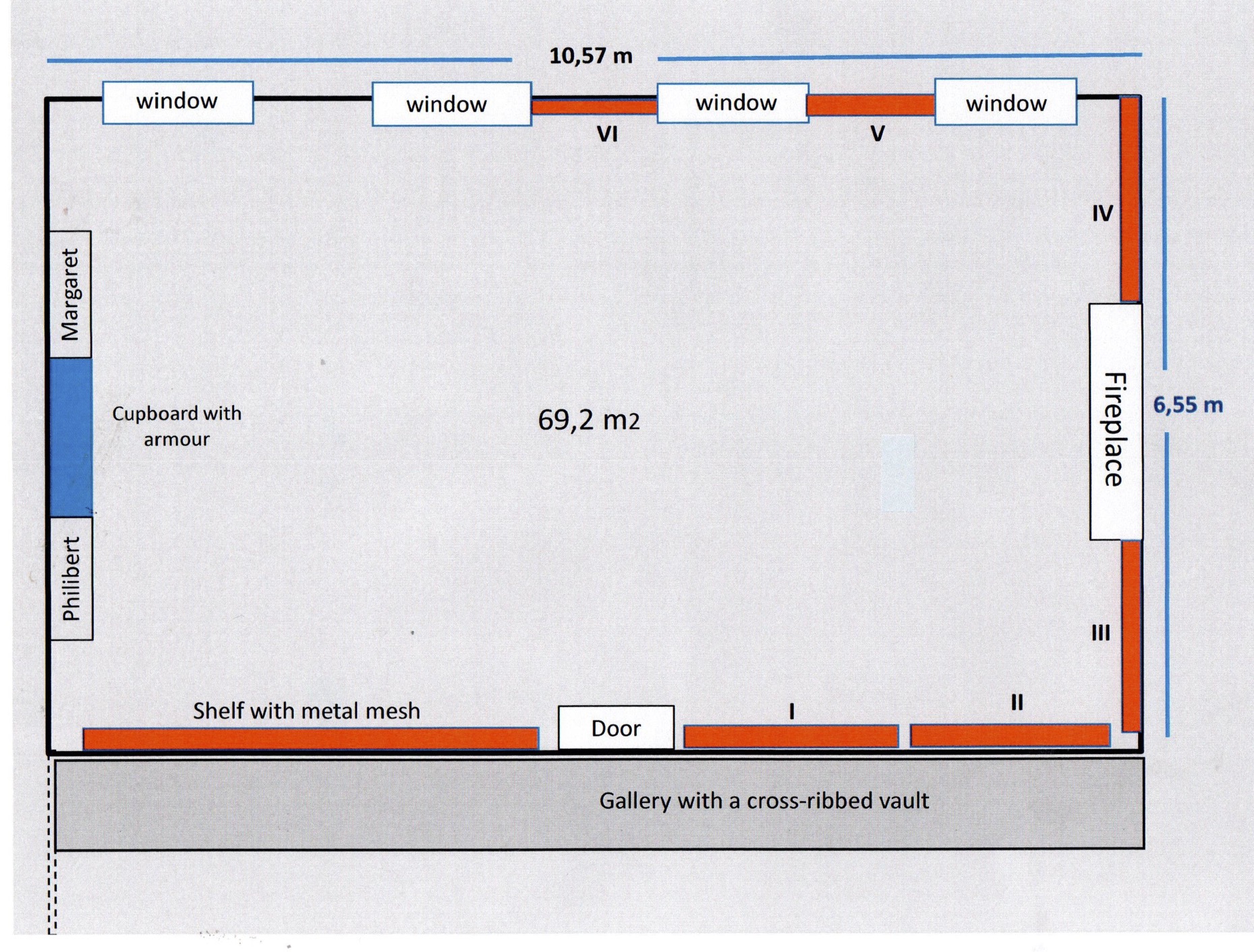
This richly furnished room measured approximately sixty-nine square meters and was used both for study and for storing some 360 manuscripts, printed books, and genealogies 49 The contents of Margaret’s library can be gauged from inventories and stock lists that were drawn up between 1516 and 1524.50 Additional information about the furnishing of this part of the building has been preserved in the annual civic accounts of the city of Mechelen dating from 1509 to 1517.51 These accounts make reference to twelve wooden reading desks that were put up in the library. They also record payments for the metal stands employed to support the wooden bookshelves.
The large space had a length of 10.57 meters and a width of 6.55 meters; the height of the room measured approximately 5.80 meters (fig. 41).52 The 1523–1524 inventory mentions four big windows and a large fireplace as reference points for the placement of the six shelves, each consisting of an upper and a lower part.53 In addition, the account books of the city of Mechelen inform us that ironwork was carried out on three of the windows in 1512–1513. The blacksmith Daneel Verhoeven was paid for supplying unspecified iron parts for the windows, as well as chains, double locks and iron bolts for the door to the library. 54 In the evenings, the spacious room was lit by numerous torches in iron holders. The construction of the library appears to have been completed in 1516. Given the high value of the library’s contents and the accessibility of this part of the residence, measures were taken to protect against burglars. (The inventory also records that Margaret’s bedroom was fitted with barred windows.) The city painter Jan van Battel (1477–1557) was called in to repaint one of the damaged windows with gold paint.55
The 1523–1524 inventory lists the books and manuscripts stored in this space and indicates their exact locations within the system of shelves. Many of the books had signatures inside to maintain proper order when they were returned to the library. The shelves were distributed along the walls, between the fireplace and the windows. In addition to the open shelves, there was a latticework cabinet that could be locked to secure twenty-eight books and manuscripts.56 The inventory also mentions additional objects such as a table, paintings, glassware, and a few sculptures—including the two marble busts by Meit—as well as the terracotta bust of Mary Tudor. From August 20, 1523, onward, the room was used to display a large number of items of clothing and jewelry that came from the newly conquered territories in Central America.
The Archduchess’s Political Aspirations: Memoria and Self-Fashioning
The marble busts likely helped link the sheer intellectual and aesthetic richness of the library to a larger political project. Indeed, several objects in the library refer directly to Philibert II of Savoy and his family. There was a painted portrait of Margaret’s late husband on the mantelpiece of the large fireplace, described in the inventory as “the portrait of the said deceased Lord of Savoy.”57 An earlier stock list dating from 1516 mentions an epitaph to the duke on a small wooden panel.58 Furthermore, a genealogy of the House of Savoy on parchment was kept in the library.59
Margaret attached great importance to the memory of her second husband, which she demonstrated by erecting the large monastery and church Saint-Nicolas-de-Tolentin, with three funerary monuments, in Brou, near Bourg-en-Bresse. In Mechelen, the most impressive expression of her desire to memorialize her husband may have been the juxtaposition of Philibert of Savoy’s naturalistic marble bust with his original armor. These items made the virtual presence of Margaret’s deceased husband even more tangible than the painted portrait at the other end of the room. In 1522–1523, a tin-plated iron stand was made to support the duke’s armor. Shortly thereafter, the armor and stand were placed within a dedicated display case.60 (A “large cabinet” is mentioned in the Vienna inventory of mobile possessions kept by Etienne Lullier, the assistant to Margaret’s keeper of treasures.) 61
Although De Beatis makes no mention of the fact that Conrat Meit portrayed Margaret dressed as a widow in the Netherlandish style, he observes that the marble portraits were done with a high level of craftsmanship and in a lifelike manner. In the case of Philibert, De Beatis had to rely on what people had said about the attractive appearance of the late duke of Savoy (“a beautiful young man, as they say he was”).62 On the other hand, De Beatis could state with conviction that Meit had captured Margaret’s appearance well. On July 12, 1517—only eighteen days earlier—De Beatis had met Margaret in person in Zeeland. In his diary, he comments on her dignified, almost imperial aura. He successfully estimated her age at thirty-five. (She was thirty-seven at that time.)63
Until the two marble busts from the Czech Republic were rediscovered, one could only speculate as to what the life-size portrait busts of Philibert and Margaret might have looked like. Based on the boxwood miniature busts in London (fig. 10a), two authors of this present essay assumed that they must have been retrospective depictions of the newlyweds.64 In the London miniature bust, Margaret is depicted as a young married woman in Netherlandish costume. Although the marble bust confirms that Meit depicted Margaret as a younger woman, her high-necked clothing, tight-fitting under-bonnet, and coif clearly identify her as a widow.
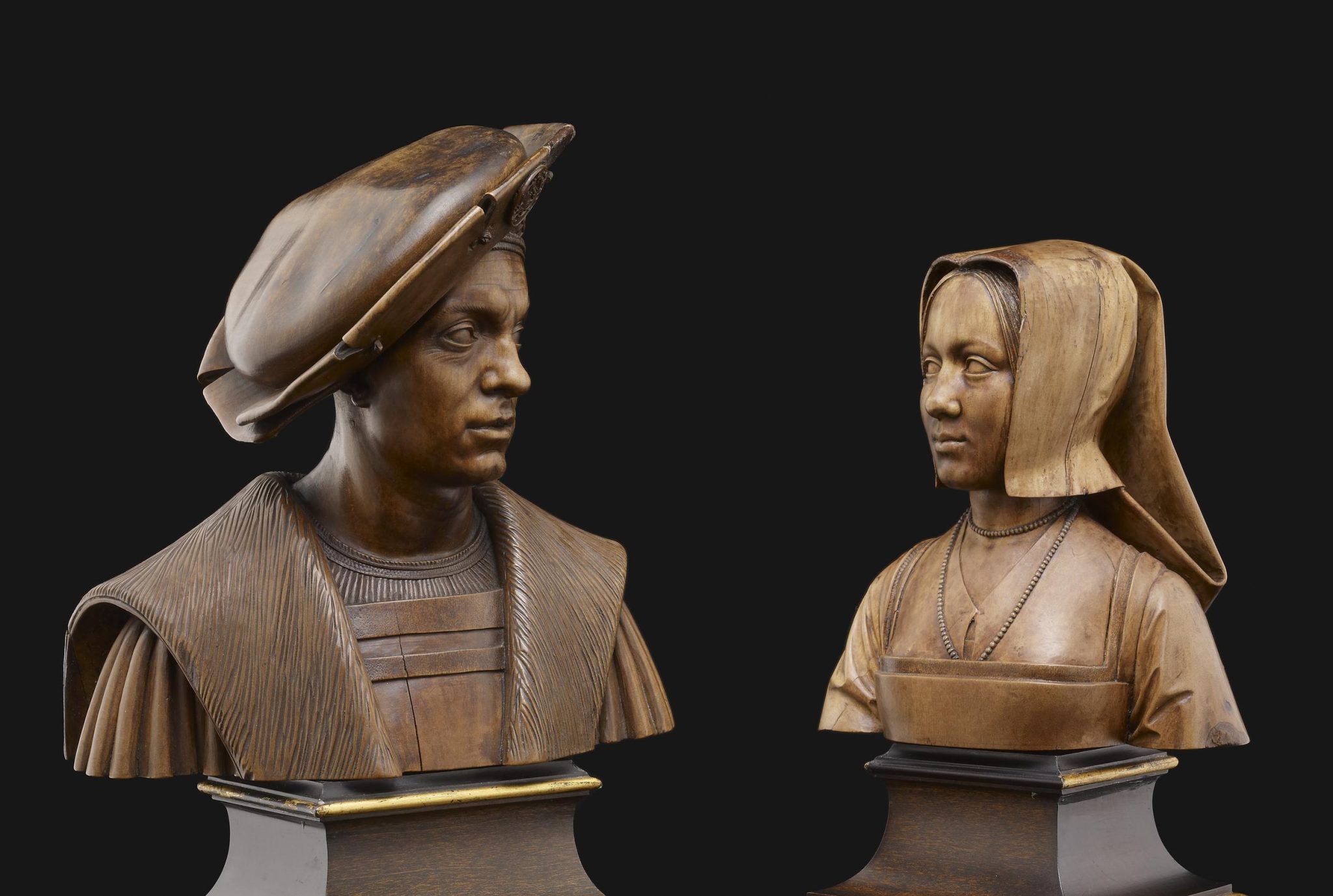
This circumstance makes it necessary to reassess the iconography of the two marble busts, which were placed on display together within the Mechelen residence despite having almost certainly been executed at different points in time. It is now evident that Margaret commissioned a current portrait of herself for display in the official residence of the Habsburg dynasty. This portrait thus stands on its own and is not part of a retrospective double portrait of the young couple when they were living together in Savoy. It is evident from De Beatis’s comments that Margaret’s likeness was also executed sometime before July 1517.
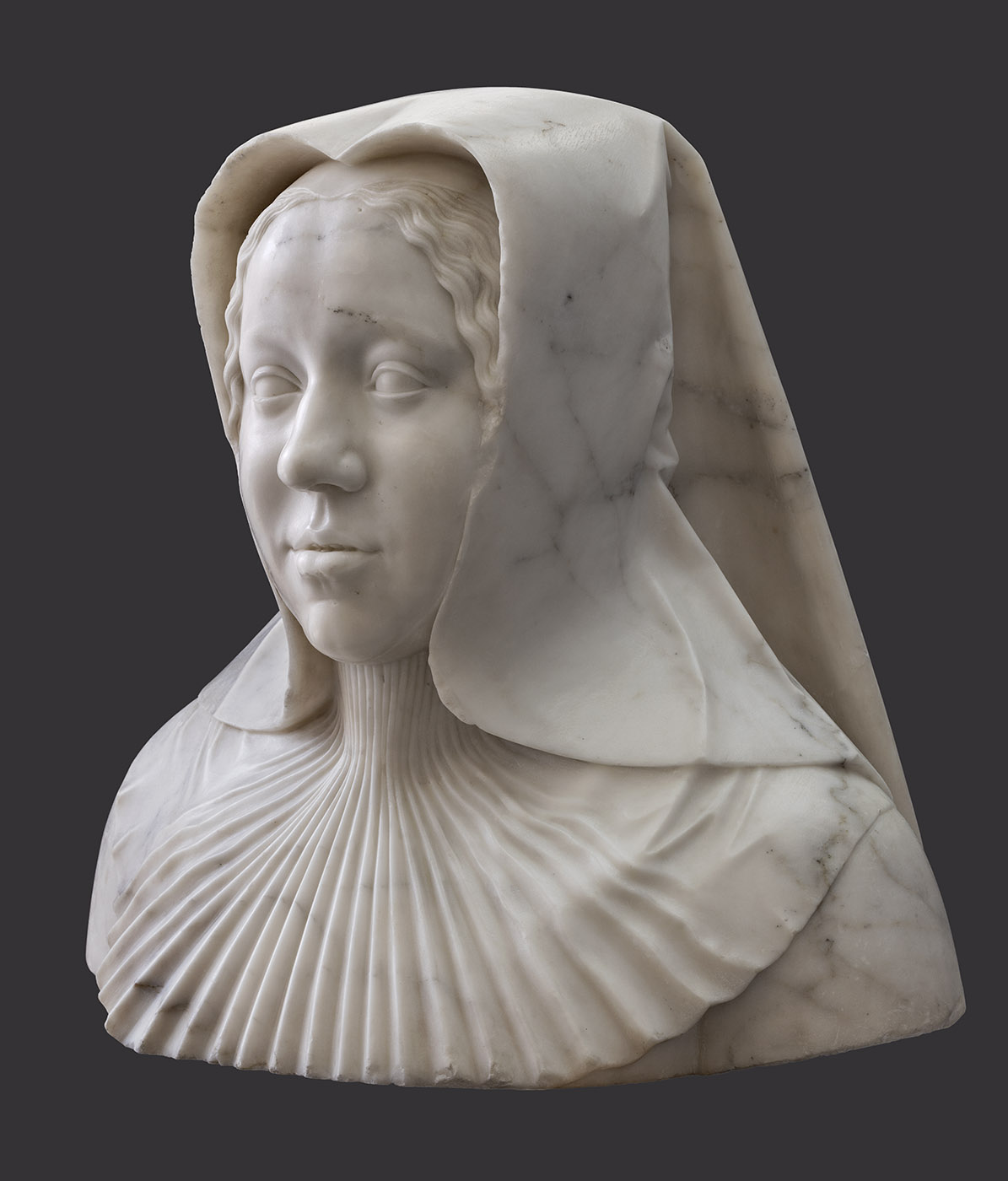
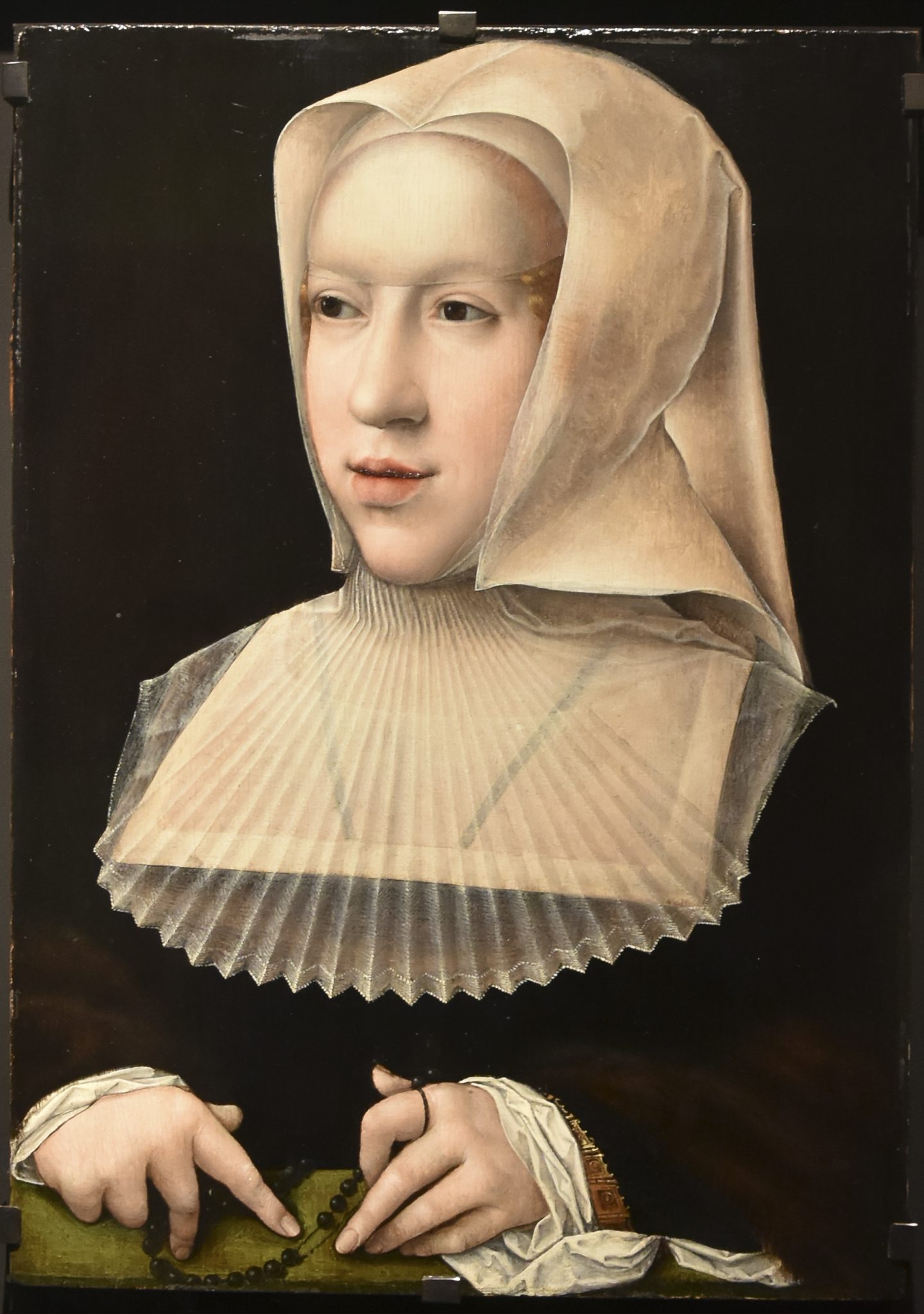
Sometime after the commission of Philibert’s bust, Margaret asked Meit to create a portrait of herself that realistically depicted her status as a widow (fig. 42).65 As has been discussed elsewhere, this can been seen as an effort in “branding” that resulted in a portrait with high recognition value.66 The same portrait formula would henceforth be used in various other media, such as panel painting, book illumination, tapestries, stained-glass windows and prints. Margaret’s desire to present herself in Mechelen as a widow created a certain temporal disjunction with the marble bust of Duke Philibert, who died in 1504. Margaret thus opted for a different, more complex solution regarding the display of her public self in the library. She endeavored to assert herself as regent of the Netherlands and aimed to bolster respect at court by placing her contemporaneous likeness in the library. To achieve this, she needed a visual identity that made her appear autonomous and assertive, a mighty member of the Habsburg family. It is important to note that there were no other portraits of the regent on public display in her residence, whether in the library, the dynastic portrait gallery, or her stately bedroom.67 The famous painted portrait by Bernard van Orley (1491/1492–1542), dated after 1518, of which numerous replicas still exist, cannot be traced to her collection (fig. 43). Such official portrait paintings were generally given away as gifts to dignitaries, rulers, and relatives.68
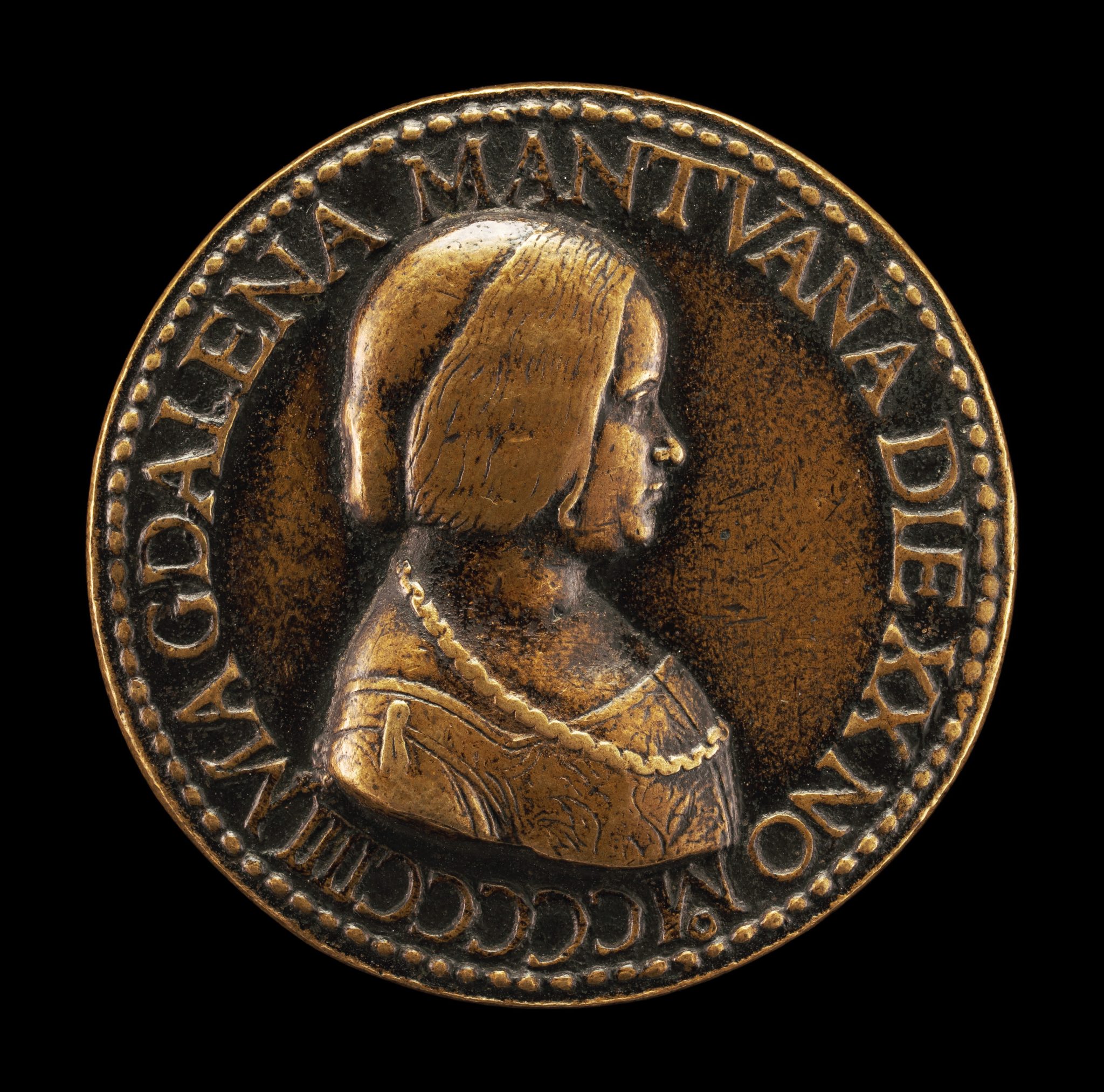
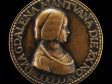
The marble bust of Margaret has a smaller footprint than that of Philibert due to the slightly beveled upper arms. While the portrait of Philibert can be described as a shoulder-length portrait in the tradition of reliquary busts, Margaret’s likeness seems to refer to a different pictorial tradition better known from portrait medals. Working from antique models, Italian medalists such as Pisanello (1395–1455) and Matteo de’ Pasti (1412–1468) developed this genre in the fifteenth century. The portrait medal of Maddalena Mantuana (1504), attributed to Galeazzo Mondella (alias Moderno, 1467–1528), is a good example of this trend in Italy (fig. 44).69 In the second half of the fifteenth century, Italian sculptors such as Francesco Laurana (1430–1502) applied this approach to marble busts of women, as was the case with the so-called portrait of “Laura.”70
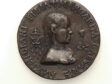
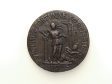
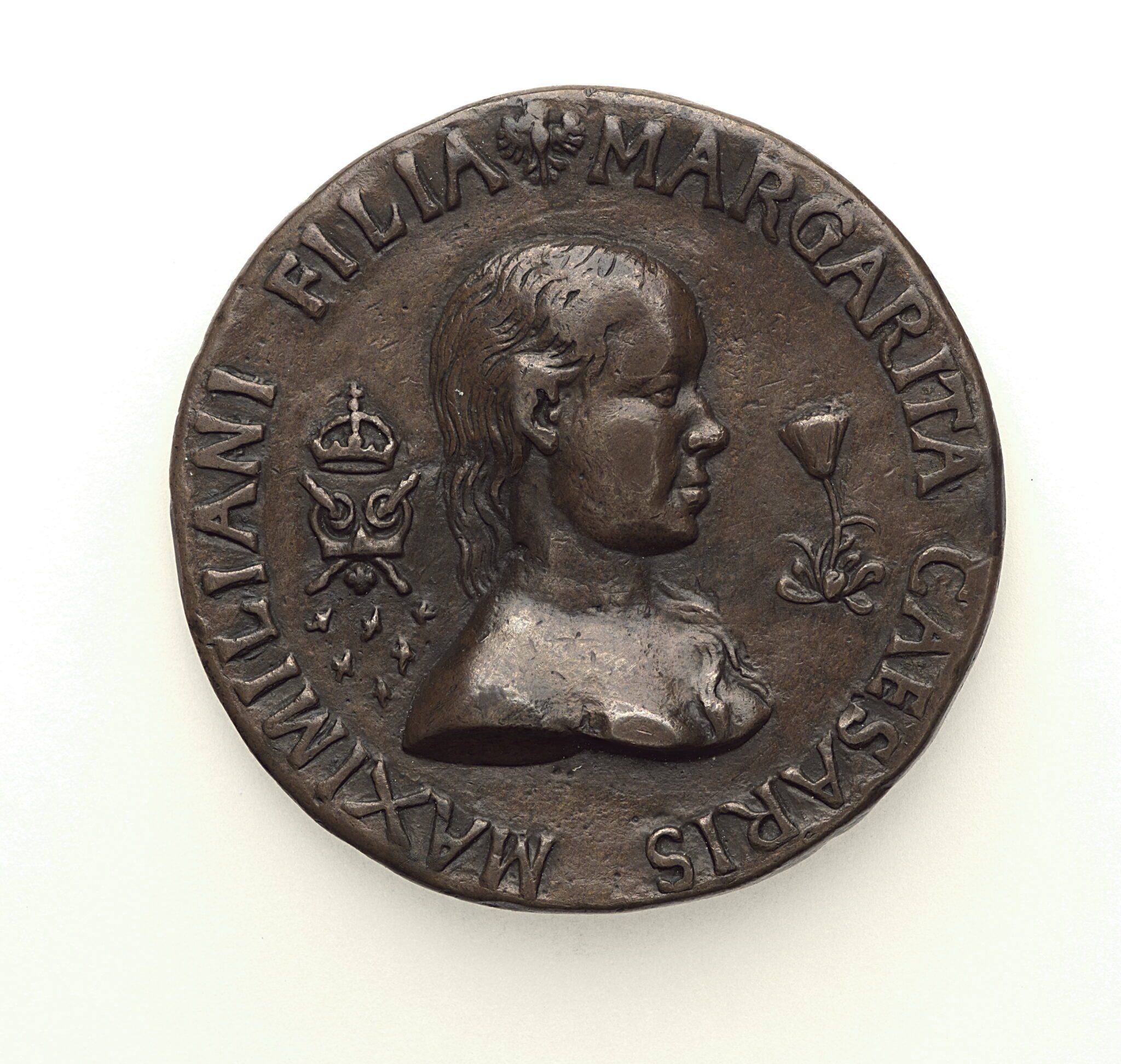
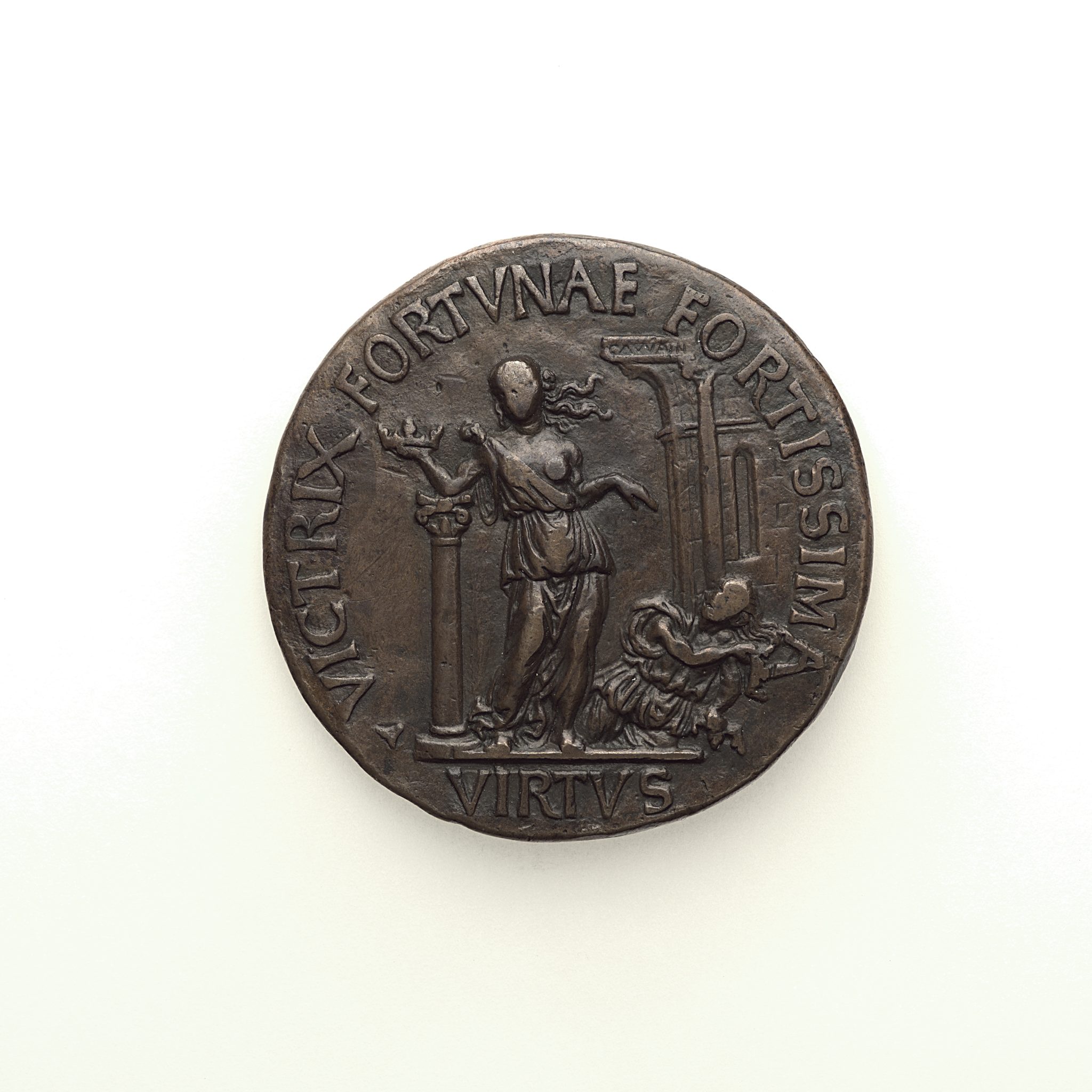
In this context, it is important to discuss a portrait medal that was designed by the northern French medalist, Jacques Gauvain (act. 1501–1547), for Margaret of Austria, probably before the death of her second husband (fig. 45 and 46).71 The archduchess kept two copies of this medal, both made from gilded silver, in her study.72 Margaret is depicted unclothed, her long hair flowing over her left shoulder. Her head is portrayed in profile, her body in three-quarter view. The chest and shoulder are cut off to fit the round shape of the medal. Very little is known about the circumstances under which this medal was produced. The message conveyed on its reverse, “VICTRIX FORTUNAE FORTISSIMA VIRTUS” (The strongest virtue is victorious over fortune), points to a humanist context and corresponds closely to the contemporary writings of Margaret’s historiographer, Jean Lemaire de Belges.73 (For instance, he lavishly praises her virtue and steadfastness in his treatise La Couronne Margaritique.) 74 It seems likely that Margaret was proud to have received the crown of the duchy of Savoy, after having previously lost the royal crowns of France and Castile.
Philibert’s representation was part of a clever strategy devised by Margaret and by Meit from 1512 onward. By erecting a powerful hybrid monument to her husband in the library of the court of Savoy (marble bust, portrait, epitaph, and armor), the archduchess was able to present herself as a widow of moral integrity. By giving that monument a place of honor, she clearly expressed the Habsburgs’ claim to those territories in the duchy of Savoy that formed part of her dowry. For Margaret’s likeness in marble, Meit developed the iconic image of the archduchess dressed in widow’s weeds. She was appointed by Emperor Maximilian I (1459–1519) to hold a position of power as governess general and regent of the Netherlands.
The newly rediscovered marble busts by Meit can now be safely described as two independent images that speak for themselves and point to a two-stage development of an iconographic program. They can be considered the earliest portraits that Margaret of Austria commissioned after establishing herself in the city of Mechelen. Meit can now be identified as the artist who coined the iconic image of Margaret as Imago Archiducissae in the Netherlands.75 The marble busts became the model for many later portraits produced by Meit himself, as well as by Bernhard van Orley and others.76 As among the first marble portrait busts of the Northern Renaissance, the rediscovered sculptures are a testimony to the modernity of Meit and show that Margaret and her court were receptive to the latest developments in art.
A Second Life: The Later Provenance of the Marble Busts from Mechelen
As documented above, the last indisputable early modern location of the busts was the royal collection in Brussels, where they were recorded in 1569. Another firmly established destination is Bohemia, approximately 260 years later. We do not know how or when the two sculptures arrived there, but it is likely that their Netherlandish trail ends at the time when the Emperor Rudolf II (1552–1612) was building up his Prague collection. He could have sought to acquire portraits of his Habsburg ancestors, just as he owned, for instance, Meit’s miniature busts of the ducal couple, now in London (see fig. 10).
However, ongoing targeted archival research in the inventory lists of the Prague Castle collections has so far only indirectly suggested that the busts were part of the Prague collection.77 Over the course of two centuries, marble busts (or heads) were regularly inventoried and described in varying degrees of detail. As our work progressed, we looked specifically for mention of life-size busts or heads made of white marble or alabaster. No clear evidence came to light regarding locations for the marble busts of Philibert and Margaret, but tantalizing clues do emerge.
It is tempting to link Meit’s busts with some of the more descriptive records. Consider, for example, one dating from 1650: “1 Mariae, königin in Ungarn, brustbild von marmelstain” (Mary, Queen of Hungary, bust of marble). We believe a portrait of Margaret could have been mistaken easily for one of Mary of Hungary due to her widow’s dress and Habsburg facial features. At the same time, there is no evidence of the existence of any other marble bust of Mary of Hungary apart from the sculpture by Leone (1509–1590) and Pompeo Leoni (ca. 1530–1608) now at the Prado, which traveled directly from the Netherlands to Spain. Similarly, it seems that Philibert might be identified with the following record: “1 des schönen könig in Böheimb brustbild von marmelstain” (1. the beautiful King of Bohemia’s bust from marble).78 The resemblance between Philibert’s beret and a princely crown, a motif familiar from the local cult of Saint Wenceslas, may explain this confusion in attribution. Wenceslaus’s vera effigies, or “true likenesses,” share with Philibert a youthful appearance and shoulder-length wavy hair. Unambiguous identification of these marble sculptures is complicated by the varying descriptions in the Prague inventories, most of which were compiled by administrators rather than specialists in fine arts. Erroneous attributions and misidentifications are therefore common.
Key inventories relating to the later history of the Prague collections are the 1782 sales lists pertaining to the Rudolphine collection, which describe a pair of marble busts in rather vague terms.79 This sale took place as part of an auction held at Prague Castle at the behest of Emperor Joseph II (1741–1790). Among the auctioned items were no. 63, “Bruststück von weisen marmel eines weibsbilds in lebensgrözse in alter tracht” (life-sized portrait bust from white marble of a woman in historic costume), and no. 62, “Brust eines manns, lebensgrözse, von weisen marmel” (life-sized portrait bust of a man in white marble).80 The buyers were mostly well-known Prague individuals. Nonetheless, with a few exceptions, the further fate of the works sold at auction is unknown.81
One possibility is that the marble busts were acquired from a Prague estate by the Czech nobleman Christian Christoph Count Clam-Gallas (1771–1838), who purchased four marble busts sometime before 1832.82 Christian Christoph was a principal figure in the cultural world of Bohemia during the first third of the nineteenth century. Apart from his diplomatic service, which took him frequently to Vienna, he mainly stayed in Prague and on his estates in Liberec and Frýdlant. He was a member of a group of nobles who were involved in the founding of the predecessor of the current National Gallery of Prague, when they first established the aptly named Society of Patriotic Friends of the Arts in 1796. The society was founded to, among other things, prevent the export of works of art from the Bohemian crown lands, which were part of the Austrian empire at the time. The society mainly purchased paintings from domestic collections and exhibited them in Prague. Christian Christoph and his father opened their family collections at Frýdlant (Friedland) to the public in 1801, making it the first museum of its kind in Bohemia.
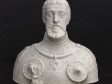
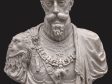
According to a popular travelogue, four marble busts were put on display at Frýdlant Castle in 1832. This date represents the earliest record of the busts in connection with the Clam-Gallas family’s estate in Frýdlant, where all the busts are well documented over the course of the following century. Among these were the two busts by Meit, although information about their authorship or the identity of the two individuals portrayed had been lost by that time. The other two busts depicted Emperor Charles V (fig. 47) and Duke William V of Bavaria (fig. 48), which probably also passed through the Prague castle collections.83 Around 1900, all four busts were displayed together at the Clam-Gallas residence in Prague (figs. 49, 50).
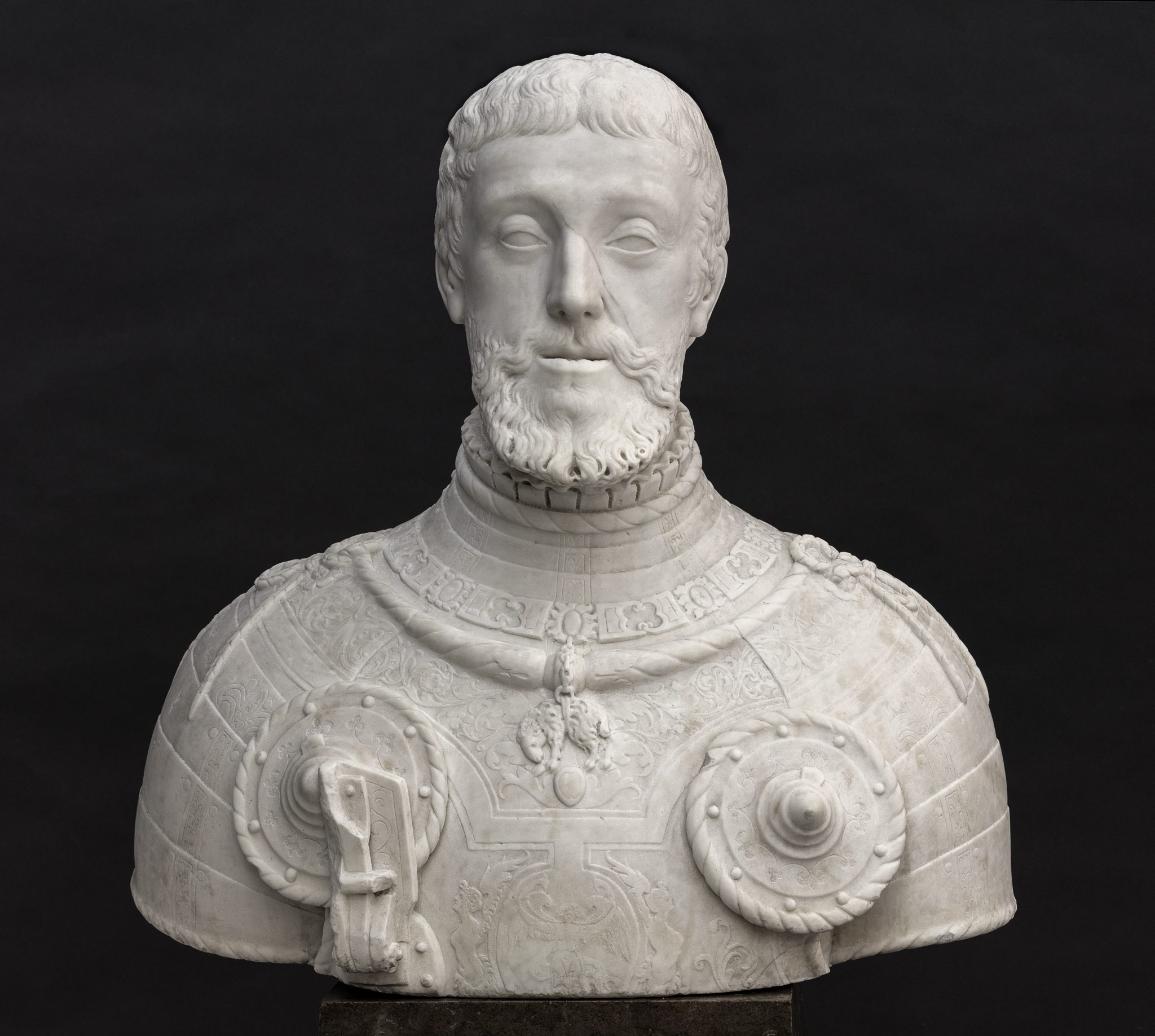
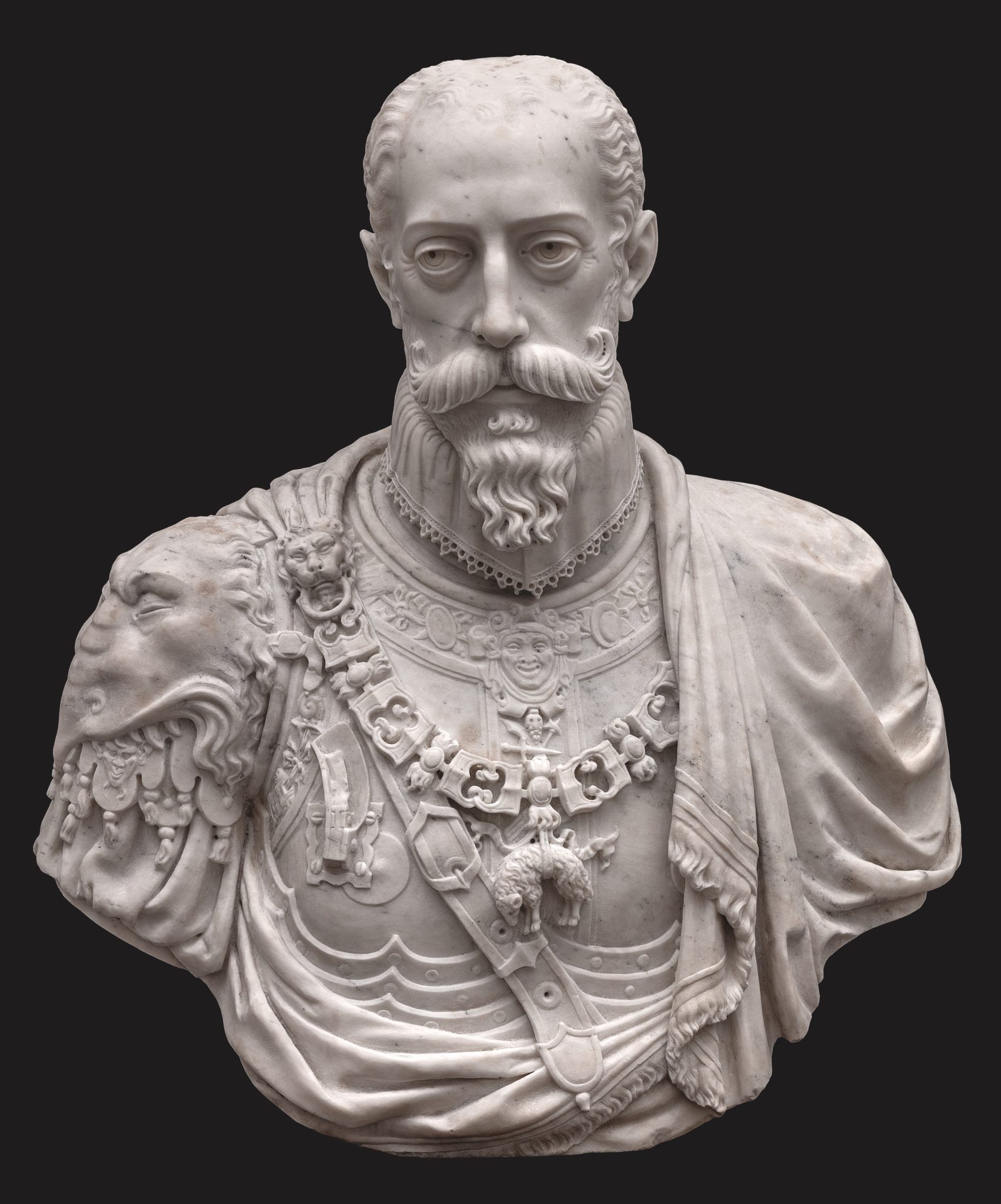
The second life of Meit’s pair of busts in Bohemia is characterized by regularly changing misidentifications of the subjects. In the 1832 travelogue, the identification of the entire quartet was described as follows: “Büssten . . . des kaiser Maxmilian I. und seiner erste Gemahlinn, Carl V. und Rudolph II” (busts . . . of the emperor Maximilian I and his first wife, Charles V and Rudolph II).84 A few years later, the same busts were described as Margaret Maultasch, Torquato Tasso, Charles V, and Gustav Adolph.85 Subsequently, the portrait bust of Margaret of Austria was also misidentified as Petrarch’s Laura, as “an unknown Renaissance woman,” and as “a bust of a young woman in a medieval veil.” Philibert of Savoy was similarly given many different names. Most frequently he was called “the handsome Czech king,” “Phillip IV der Schöne, König von Frankreich” (Philip IV, the Fair, King of France), Petrarch, or simply “a Renaissance man.”86
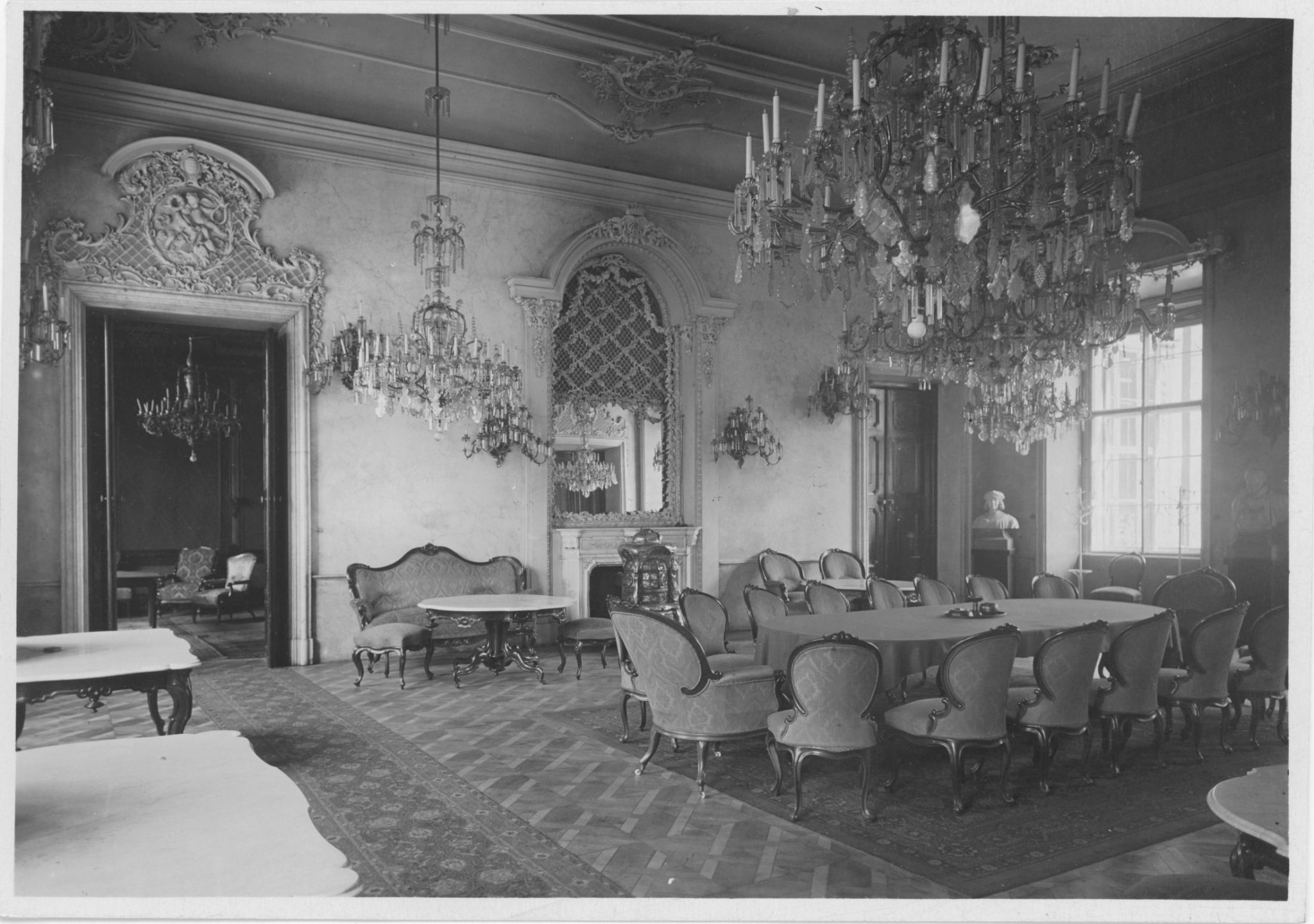
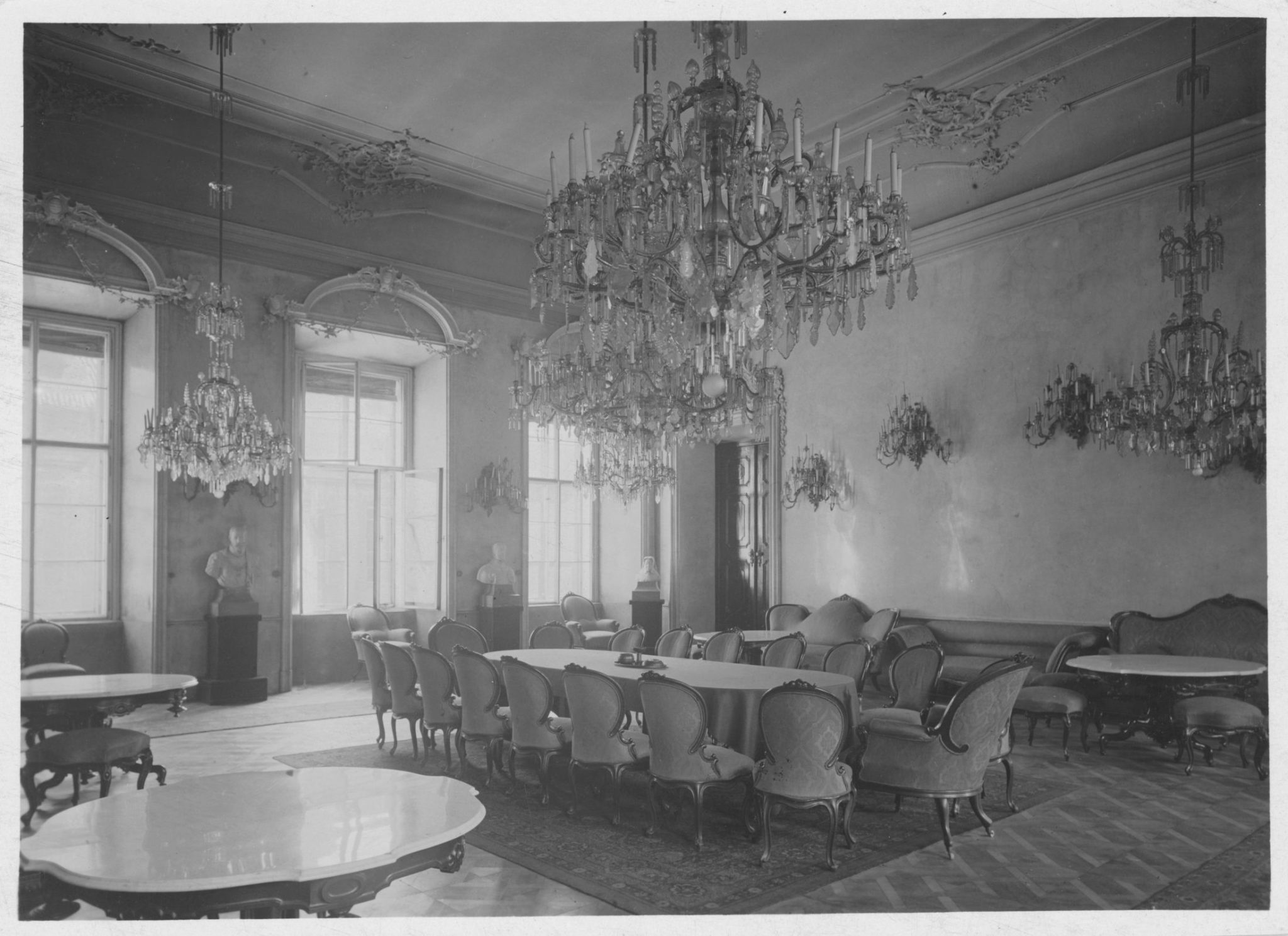
The modern fate of the busts was significantly affected by the division of the Clam-Gallas estate after the death of the last male descendant of the family, Franz Count Clam-Gallas (1854–1930), in 1930. At that point the four busts were divided among his two daughters. Even more detrimental for our knowledge about this group of four marble busts was the confiscation of German property in Czechoslovakia after World War II, when a large number of abandoned artworks were taken to state-designated locations for safe storage.87 Errors in the records subsequently led to the assumption that all four busts originated from the Bohemian estate of the princely Rohan family. At that time, the two marble busts by Meit were no longer thought to belong together and were separated from one another in Sychrov Castle.88
Conclusions
This article provides essential archival evidence for attributing two rediscovered life-size marble busts to the German Renaissance artist Conrat Meit and identifying them with the lost marble busts from Margaret of Austria’s library in Mechelen. The early production period of the sculptures contributes to a better understanding of Meit’s oeuvre as court sculptor to Margaret of Austria. Extensive research into the early and later provenance of the two busts has enabled us to trace the long history of these important monuments.
In studying that history, it has become evident that the two busts were not conceived as a pair. The portrait of Duke Philibert II of Savoy as a young man was commissioned first. The later portrait of Margaret of Austria reflects her status at the time as a middle-aged, widowed regent. Such was the success of the latter that Meit’s portrait bust became the model for all later images of the Habsburg princess. The display of the two marble busts in the easily accessible library of Margaret’s residence in Mechelen ensured that the portraits were seen by as many people as possible.
In addition, we claim that the two busts are early examples of the influence of ancient statuary and Italian Renaissance portrait sculpture in Northern Europe, based on portrait busts in both marble and terracotta and on Renaissance portrait medals made from bronze or silver. The marble busts underscore the leading role of the Habsburg family, and Margaret of Austria in particular, in the transmission and adaptation of Italian Renaissance styles. Meit’s exquisite portrait busts, made from the finest Carrara marble, are further visual arguments for the transformative role he played in the development of Northern Renaissance sculptural portraiture.