Prepared and Proffered: The Role of Professional Primers in the Spread of Colored Grounds

Map of known (red) and proposed (orange) cities with professional primers. Author map based on John Lodge [I] and John Lodge [II], The Seven Provinces of the Netherlands, ca. 1780, hand-colored engraving, Rijksmuseum, Amsterdam

Although evidence shows that pre-primed canvases were used extensively during the seventeenth century, little is known about the purveyors of those supports. This paper offers a review of the currently known sources on professional primers, combined with technical analysis and archival and art market research to explore their role in the spread of colored grounds. A new method is proposed to establish the presence of a professional primer when no archival material is available, based on clusters identified in the Down to the Ground database of Netherlandish colored grounds. Using paintings and their grounds as primary sources illuminates how the relationship between artist and supplier contributed to the rapid spread of colored grounds, and how professional primers impacted local artistic practice.

DOI: 10.5092/jhna.2025.17.2.4

Acknowledgements

I would like to thank the Down to the Ground team and museum partners, particularly my supervisors. I am grateful for the generosity with which Anne Haack Christensen (Statens Museum for Kunst), Marika Spring (National Gallery London), Liesbeth Helmus (Centraal Museum Utrecht), Margreet Wolters (RKD), and Angela Jager (RKD) shared their knowledge and data with me. The new research of Utrecht cross-sections taken by professor J. R. J. van Asperen de Boer was made possible by the RKD – Netherlands Institute for Art History and the Rijksmuseum, Amsterdam (particularly the Migelien Gerritzen Fellowship). I would also like to thank Paul van Laar for his work on the DttG database and his support throughout this project.

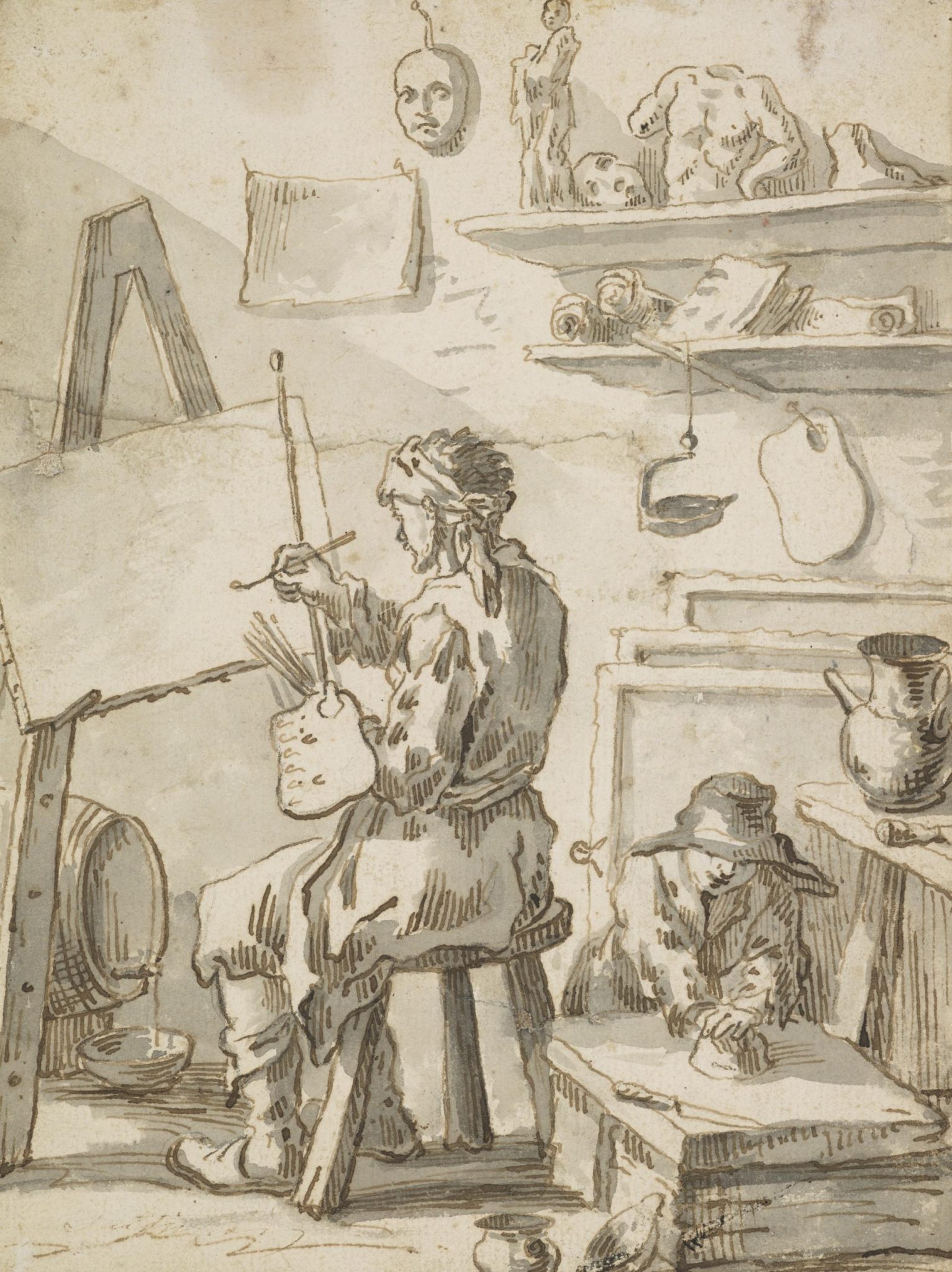
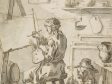
Andries Both, A Painter and His Assistant in the Studio, ca. 1640. Pen, brown ink and gray wash on paper, Scottish National Gallery of Modern Art (Modern Two), Edinburgh, inv. No. D 4846
Fig. 1 Andries Both, A Painter and His Assistant in the Studio, ca. 1640. Pen, brown ink and gray wash on paper, 22.1 x 16.5 cm. Scottish National Gallery of Modern Art (Modern Two), Edinburgh, inv. No. D 4846 [side-by-side viewer]
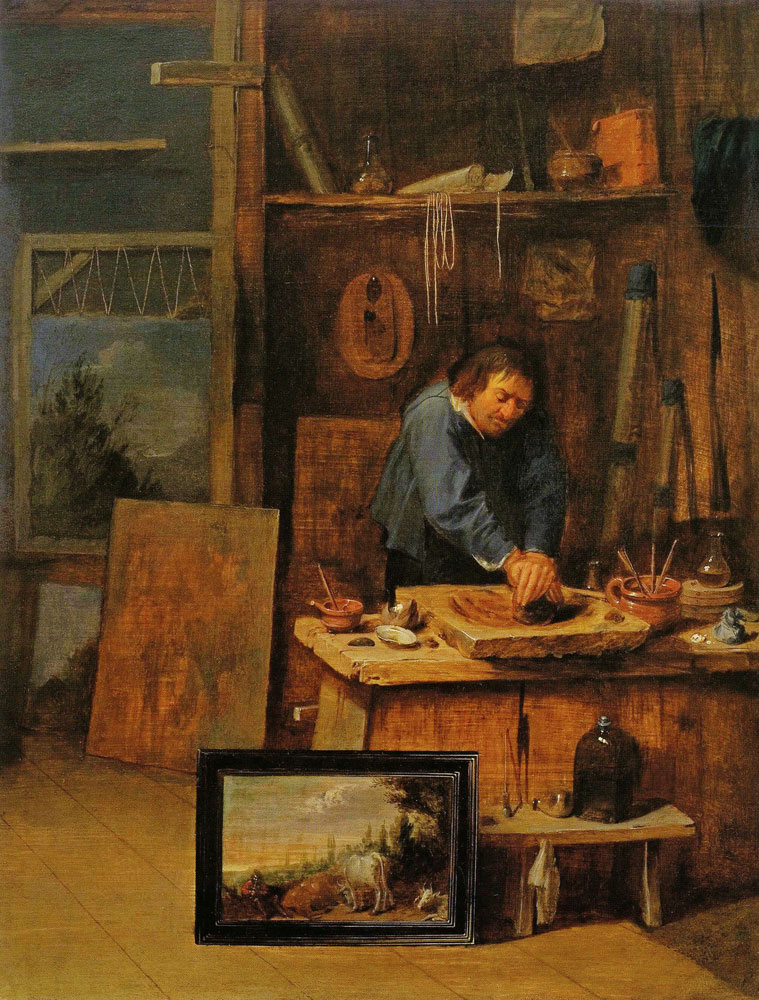
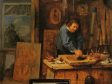
David Ryckaert III, Paint Making in a Painter’s Studio, ca. 1635–1638, oil on panel, Stadtgeschichtliches Museum, Wismar
Fig. 2 David Ryckaert III, Paint Making in a Painter’s Studio, ca. 1635–1638, oil on panel, 42.8 x 31.7 cm, Stadtgeschichtliches Museum, Wismar [side-by-side viewer]
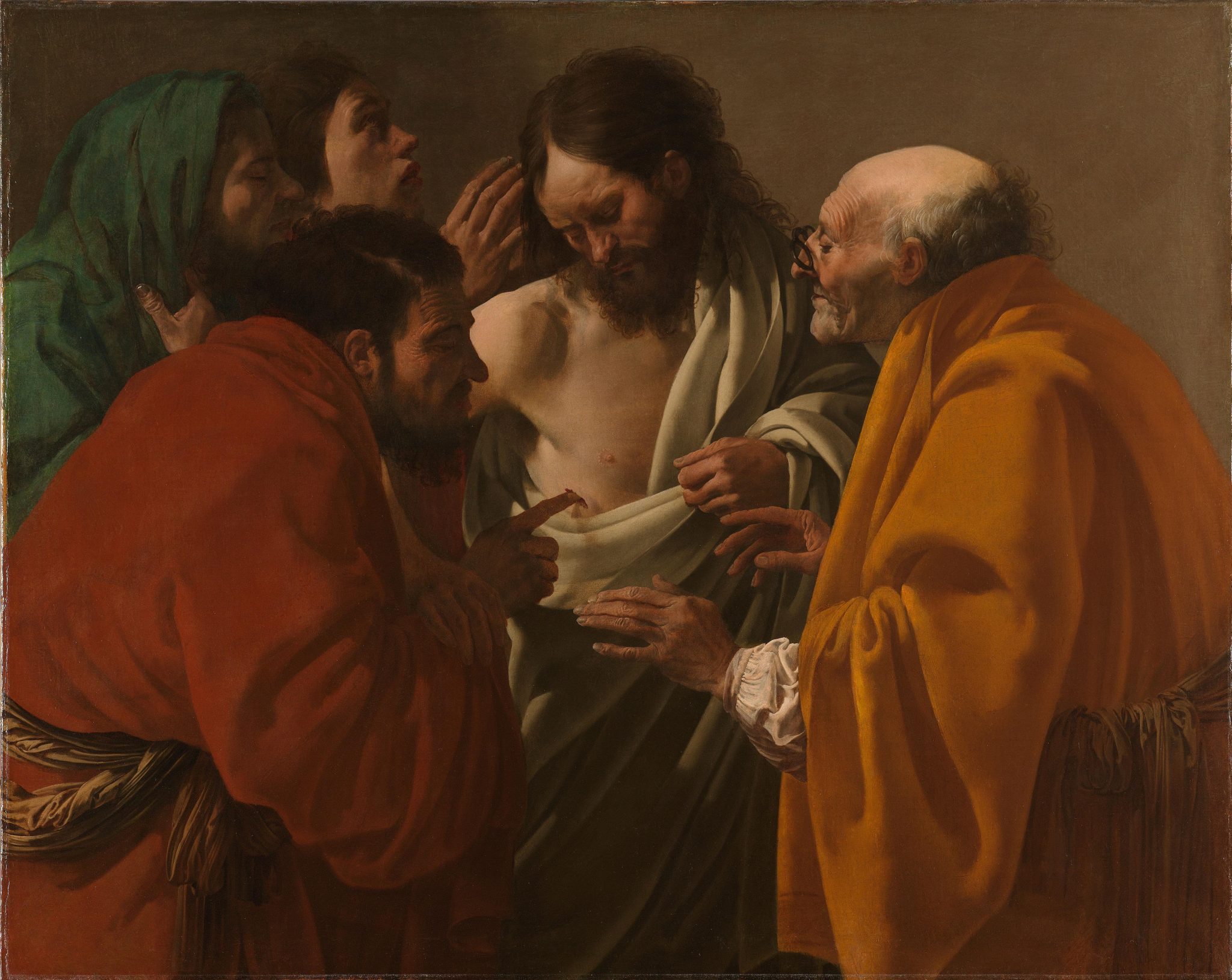
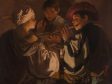
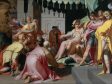
Hendrick ter Brugghen, The Incredulity of Thomas, ca. 1622, oil on canvas, Rijksmuseum, Amsterdam
Fig. 3 Hendrick ter Brugghen, The Incredulity of Thomas, ca. 1622, oil on canvas, 108.8 x 136.5 cm. Rijksmuseum, Amsterdam, SK-A-3908 (artwork in the public domain) [side-by-side viewer]
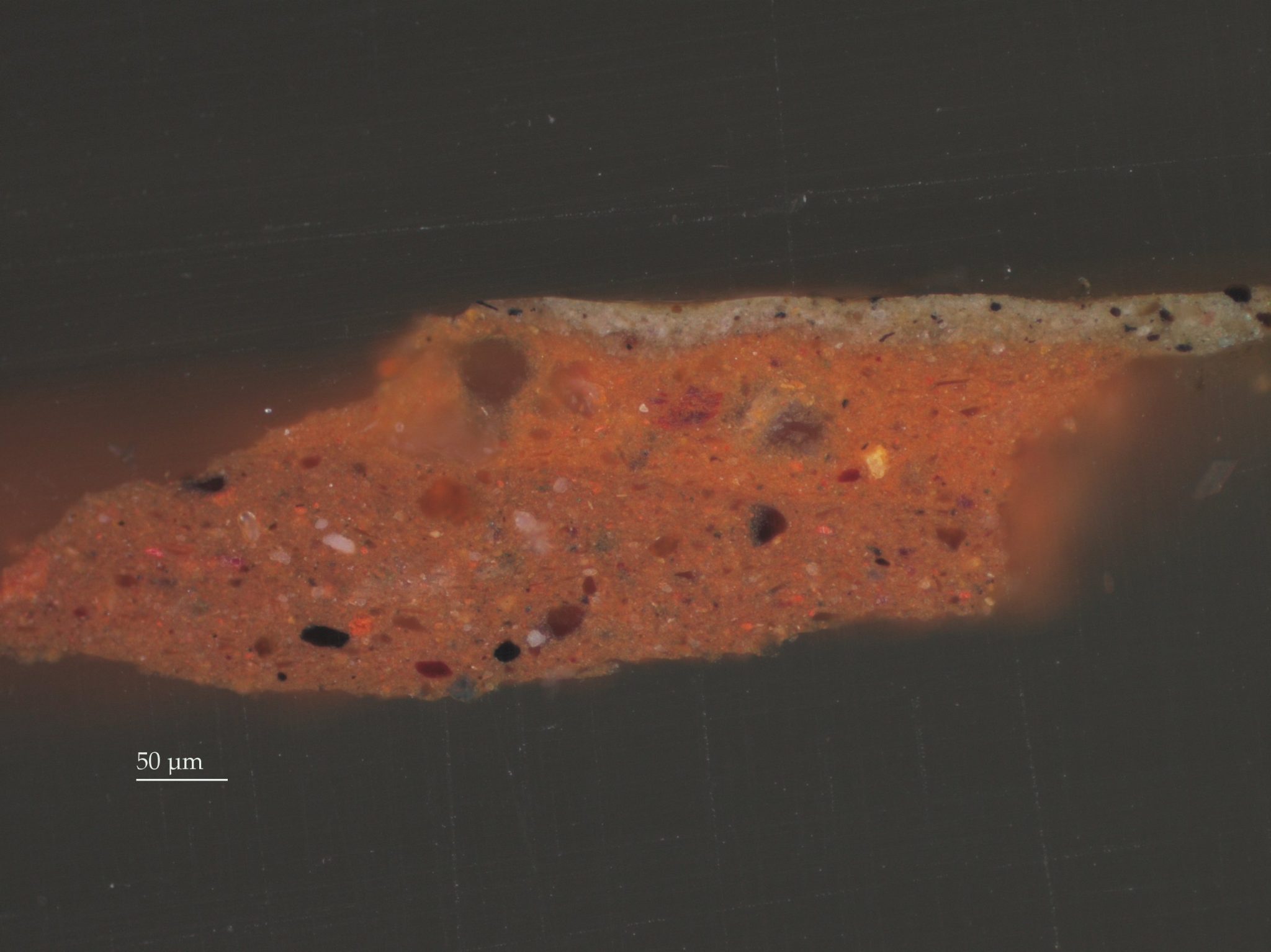
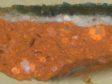
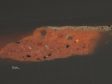
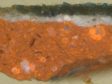
Cross-section, The Incredulity of Thomas (fig. 3), detail showing copper blue pigment in first ground (R60-3) (photo: Arie Wallert)
Fig. 4 Cross-section, The Incredulity of Thomas (fig. 3), detail showing copper blue pigment in first ground (R60-3) (photo: Arie Wallert) [side-by-side viewer]
Map of known (red) and proposed (orange) cities with professional primers. Author map based on John Lodge [I] and John Lodge [II], The Seven Provinces of the Netherlands, ca. 1780, hand-colored engraving, Rijksmuseum, Amsterdam
Fig. 5 Map of known (red) and proposed (orange) cities with professional primers. Author map based on John Lodge [I] and John Lodge [II], The Seven Provinces of the Netherlands, ca. 1780, hand-colored engraving, 45.3 x 54.1 cm, Rijksmuseum, Amsterdam, RP-P-AO-1-64 [side-by-side viewer]
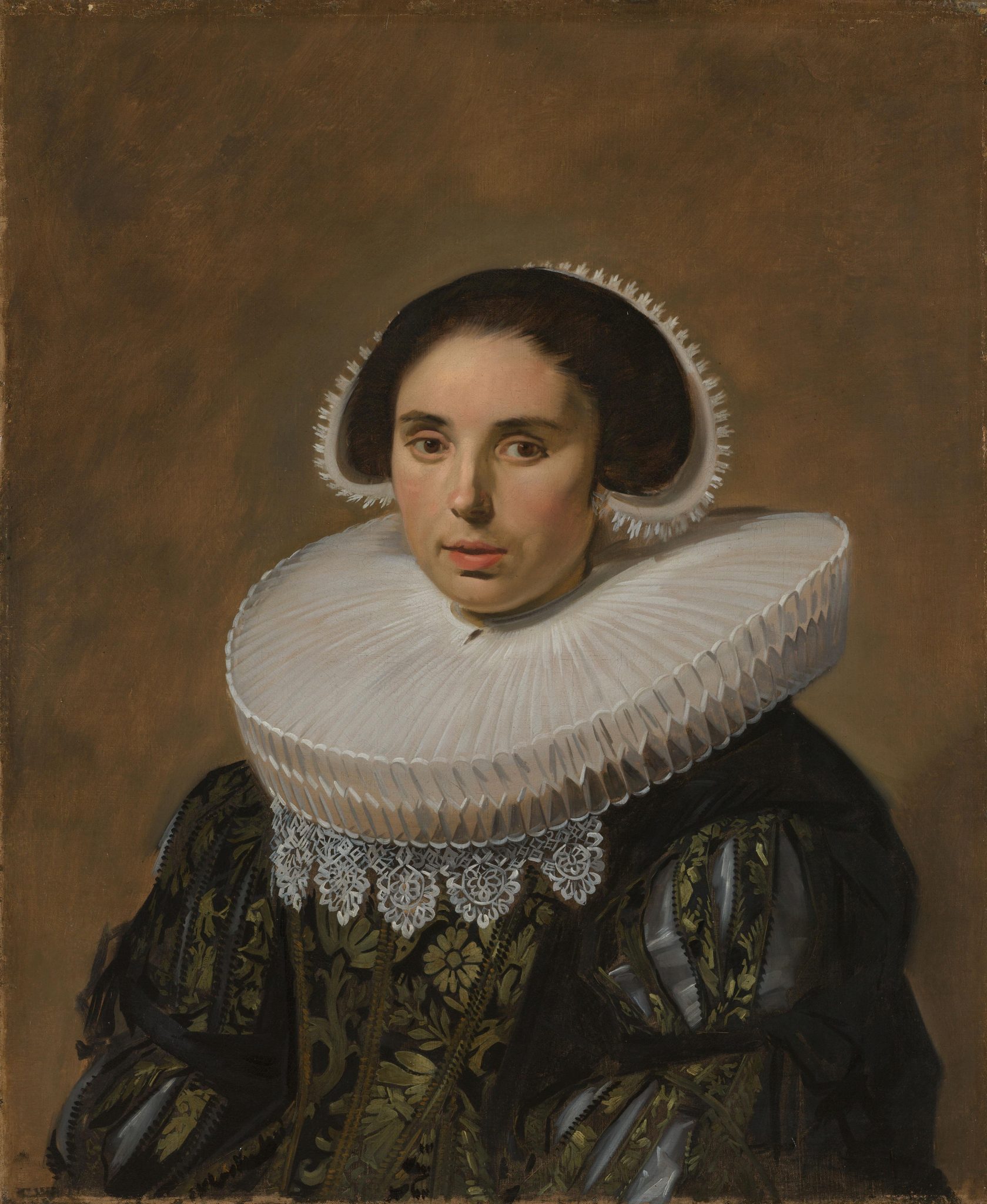
Frans Hals, Portrait of Duijfje van Gerwen (1618–1658), ca. 1637, oil on canvas, Rijksmuseum, Amsterdam
Fig. 6 Frans Hals, Portrait of Duijfje van Gerwen (1618–1658), ca. 1637, oil on canvas, 81.5 x 68 cm. Rijksmuseum, Amsterdam, SK-A-1247 (artwork in the public domain) [side-by-side viewer]
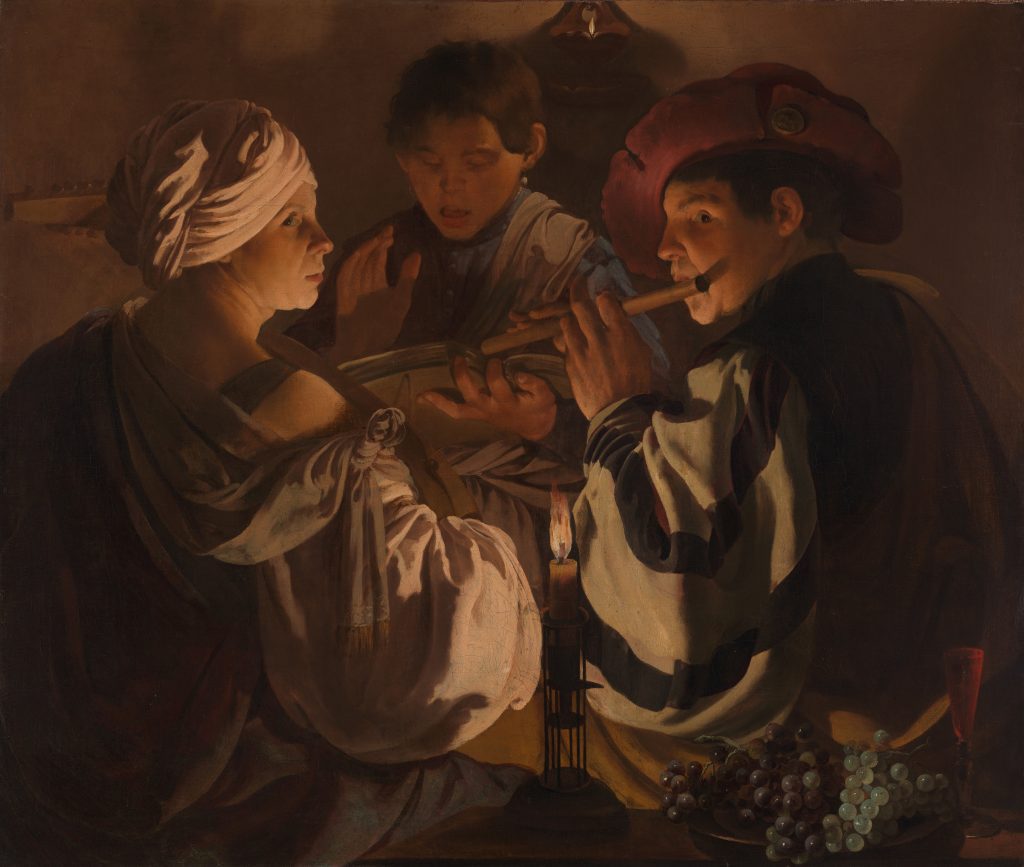
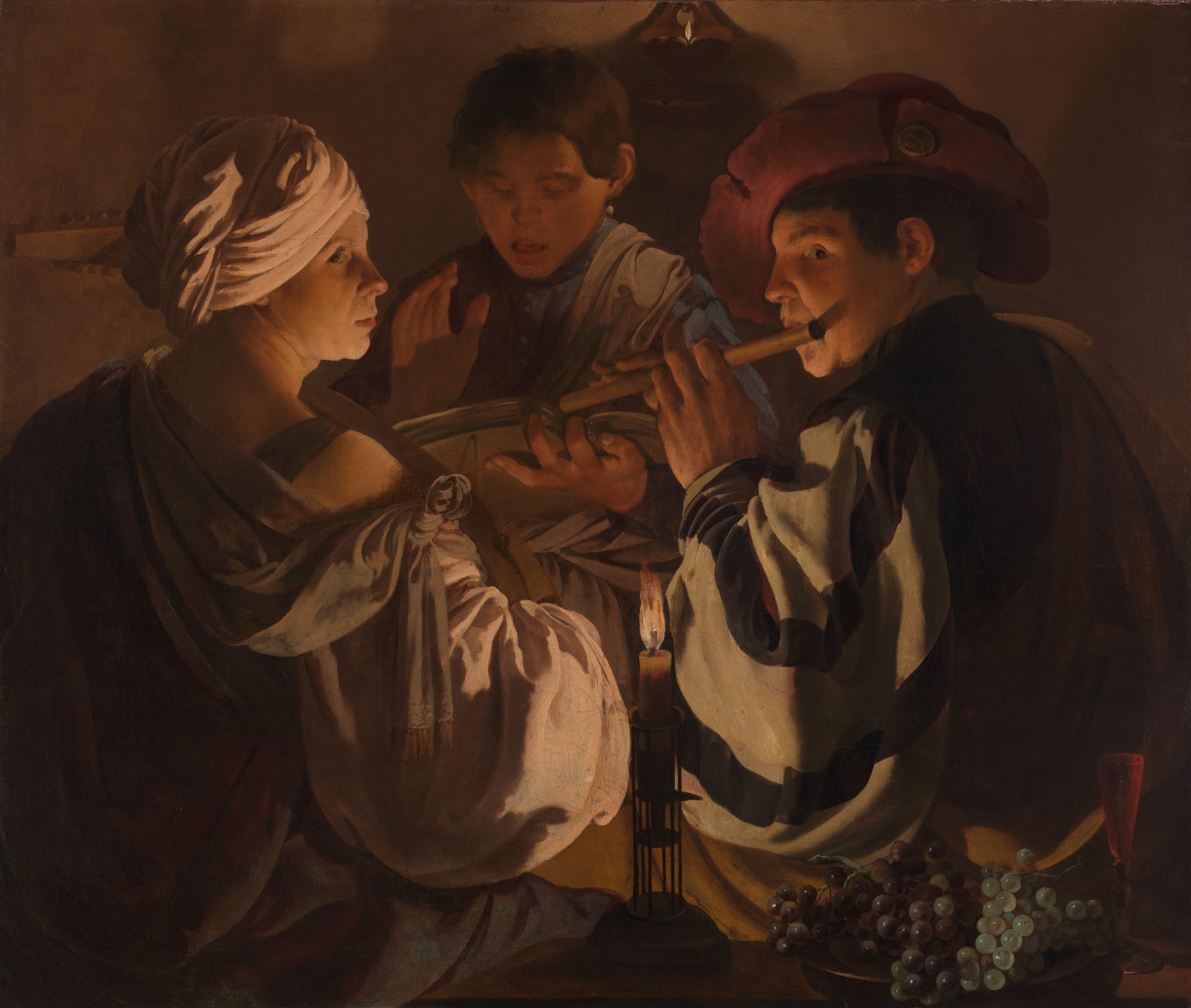
Hendrick ter Brugghen, The Concert, ca. 1626, oil on canvas, The National Gallery, London
Fig. 7 Hendrick ter Brugghen, The Concert, ca. 1626, oil on canvas, 99.1 x 116.8 cm. The National Gallery, London, NG6483 (artwork in the public domain) [side-by-side viewer]
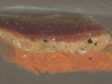
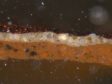
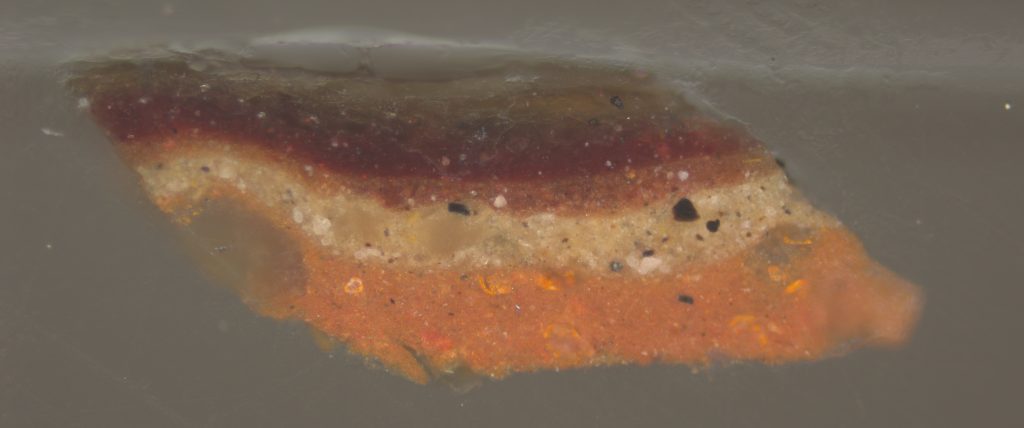
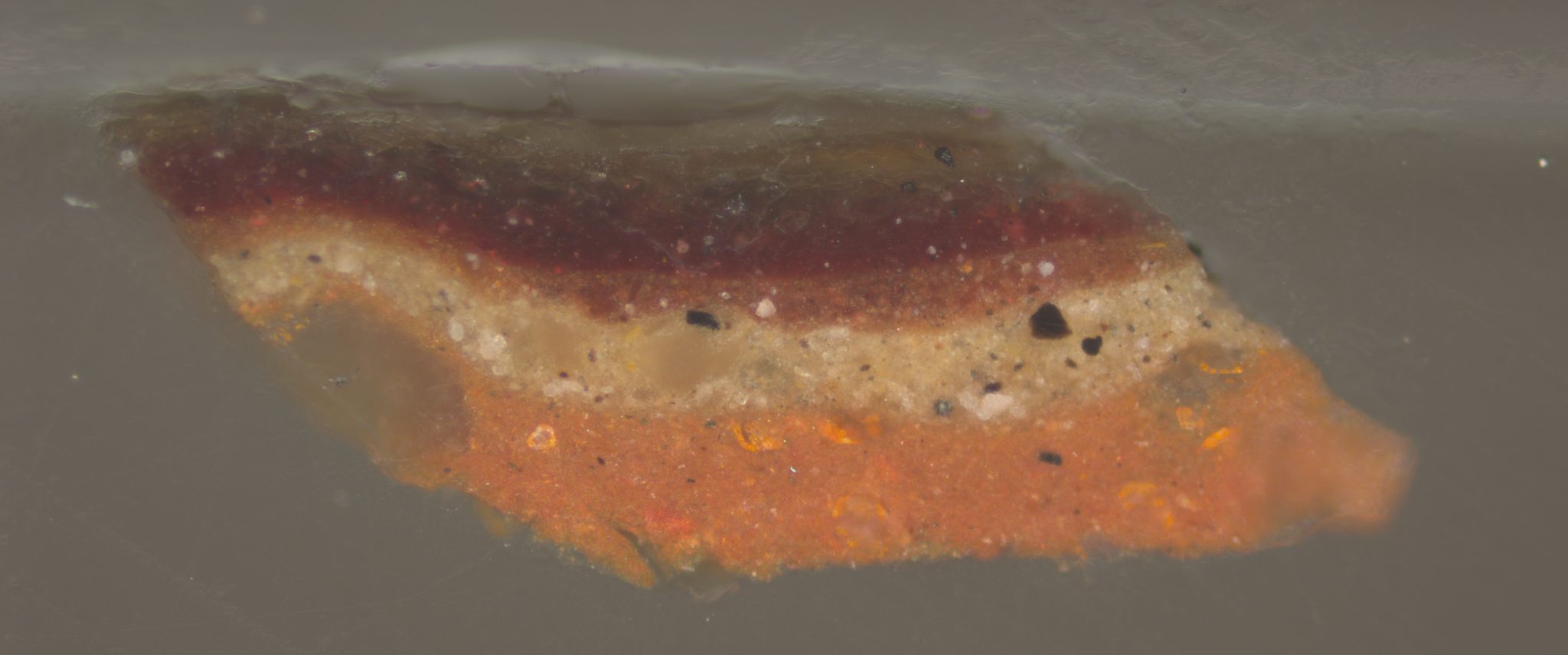
Cross-section from Ter Brugghen, The Concert (fig. 7)
Fig. 8 Cross-section from Ter Brugghen, The Concert (fig. 7) (photo: Marika Spring) [side-by-side viewer]
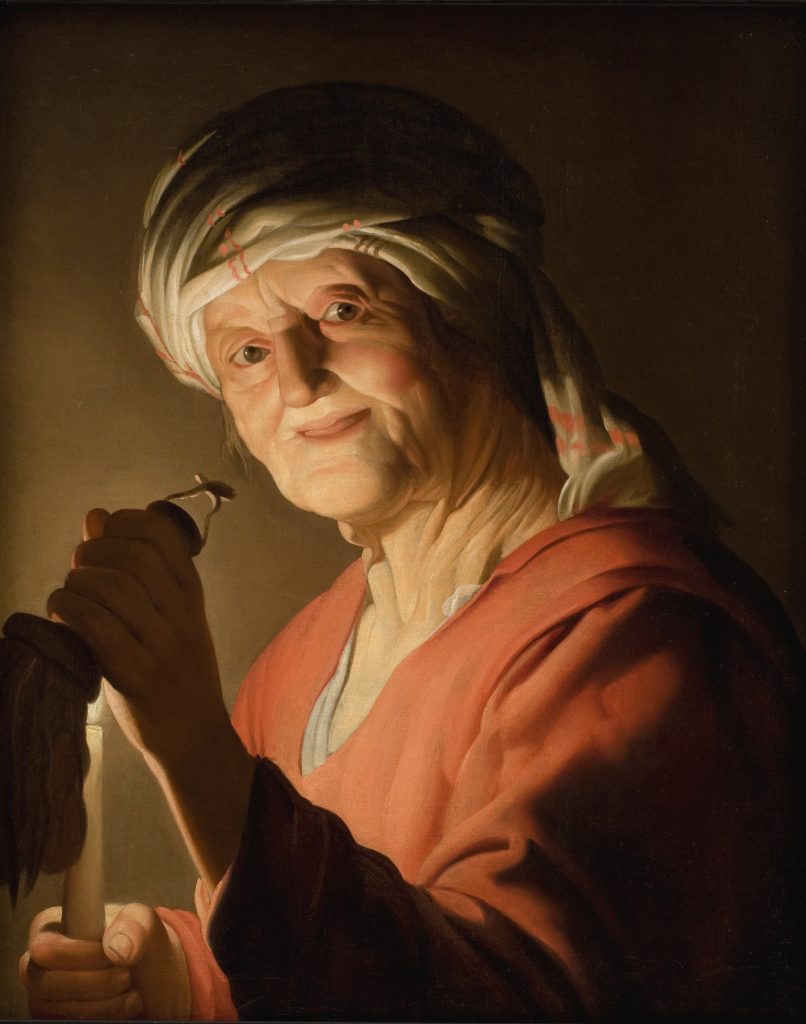
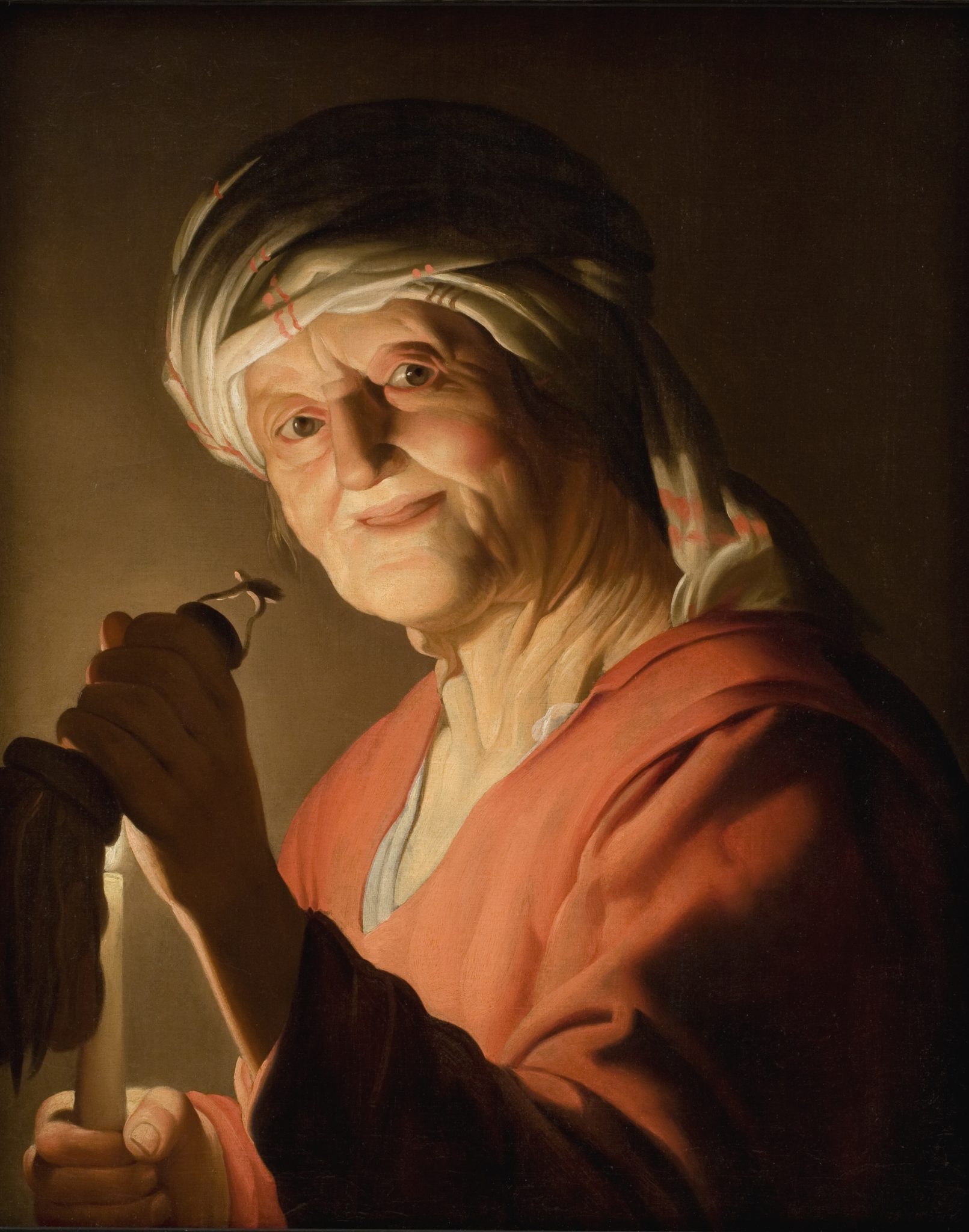
Gerard van Honthorst, An Old Woman, 1623, oil on canvas, Statens Museum for Kunst (SMK), Copenhagen
Fig. 9 Gerard van Honthorst, An Old Woman, 1623, oil on canvas, 69 x 56 cm. Statens Museum for Kunst (SMK), Copenhagen, KMSsp380 (artwork in the public domain) [side-by-side viewer]
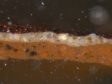
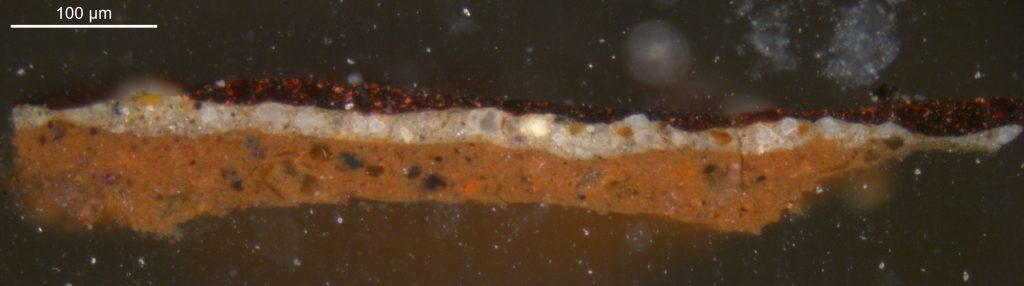
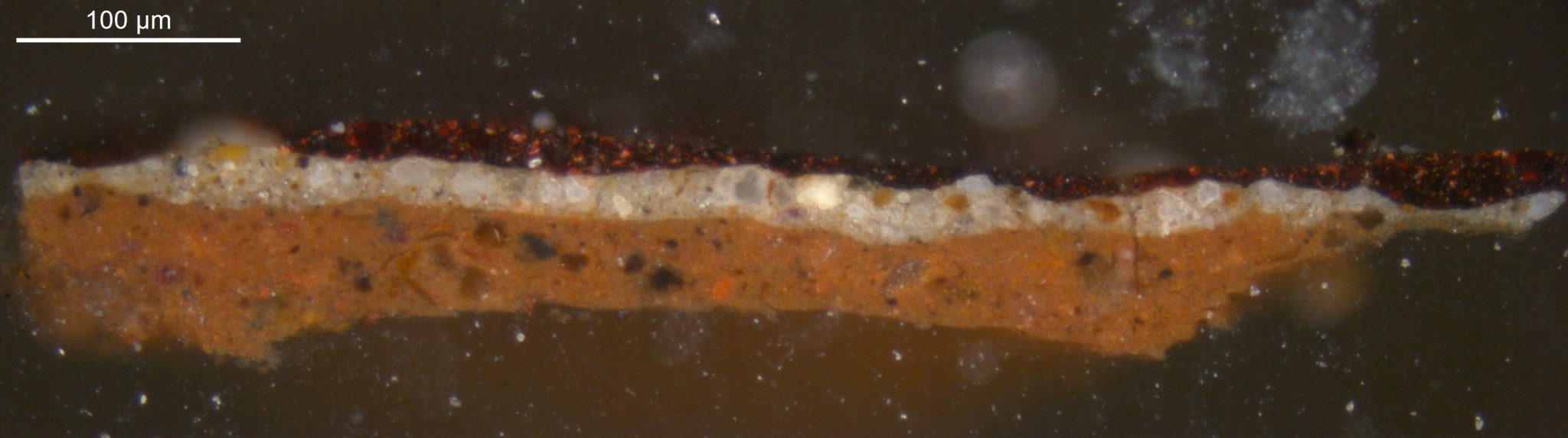
Cross-section from Hontorst, An Old Woman (fig. 9)
Fig. 10 Cross-section from Hontorst, An Old Woman (fig. 9) (photo: David Buti) [side-by-side viewer]
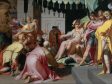
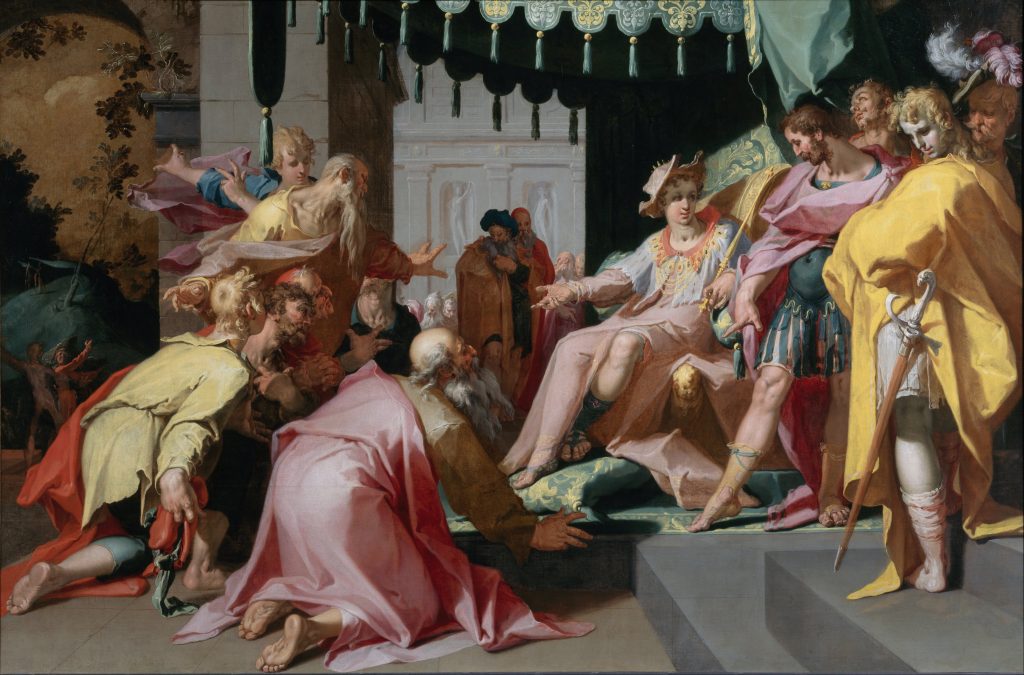
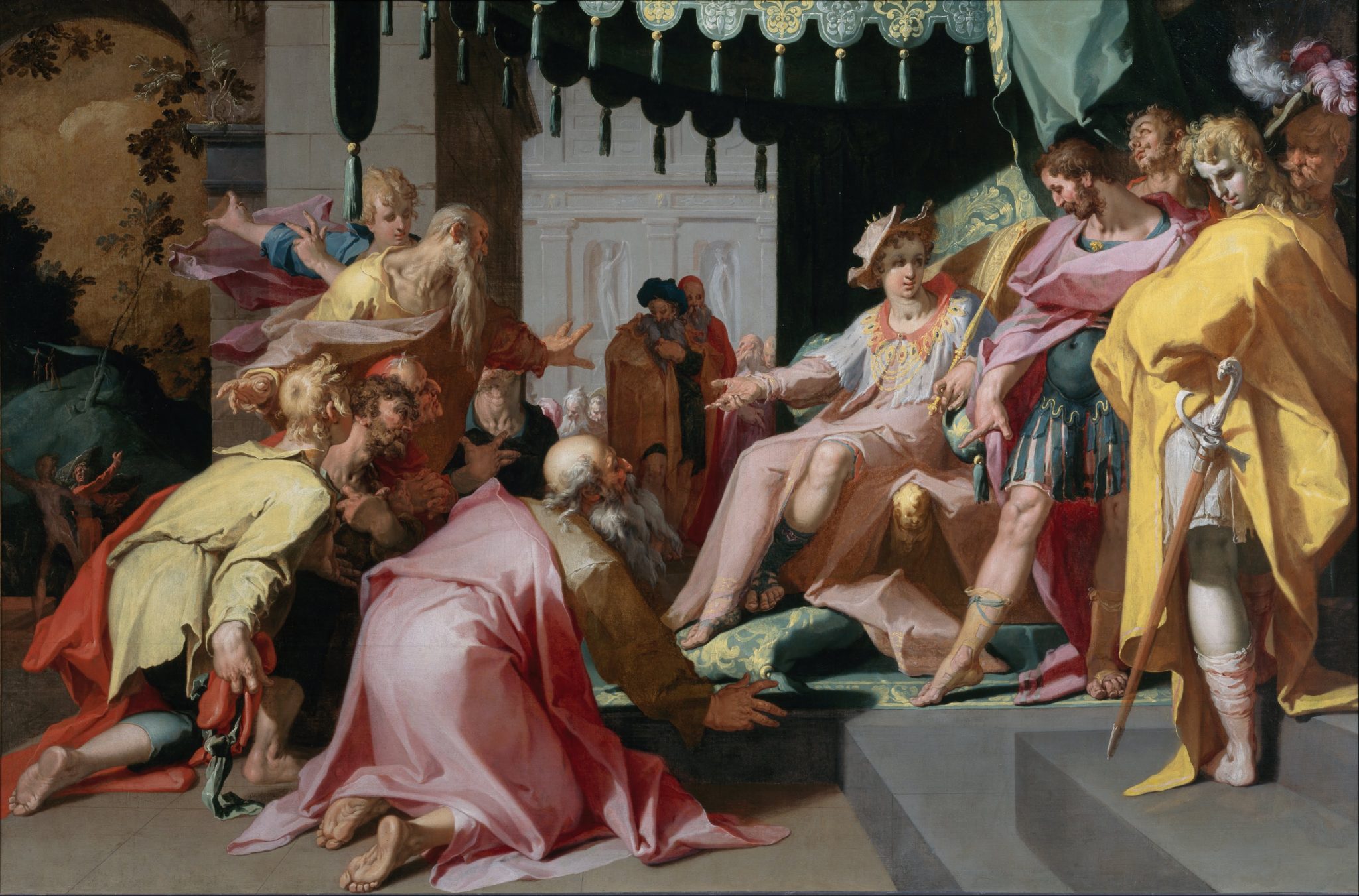
Abraham Bloemaert, Joseph and His Brothers, 1600, oil on canvas, Centraal Museum, Utrecht
Fig. 11 Abraham Bloemaert, Joseph and His Brothers, 1600, oil on canvas, 141.3 x 211 cm. Centraal Museum, Utrecht, inv. no. 8289 (photo Ernst Moritz, artwork in the public domain) [side-by-side viewer]
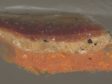
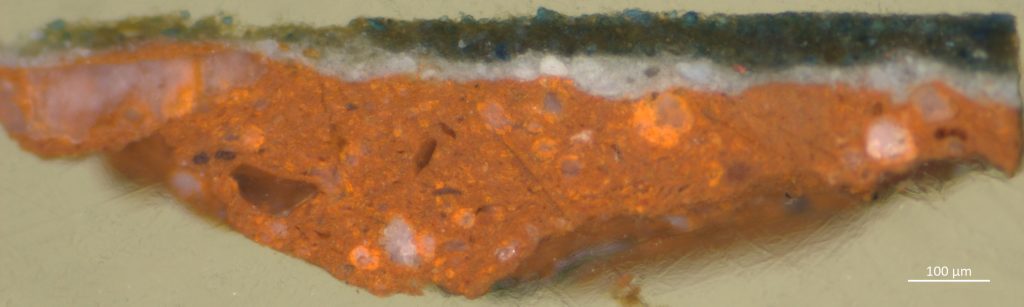
Cross-section from Bloemaert, Joseph and His Brothers (fig. 11)
Fig. 12 Cross-section from Bloemaert, Joseph and His Brothers (fig. 11) (photo: J. R. J. van Asperen de Boer and Moorea Hall-Aquitania) [side-by-side viewer]
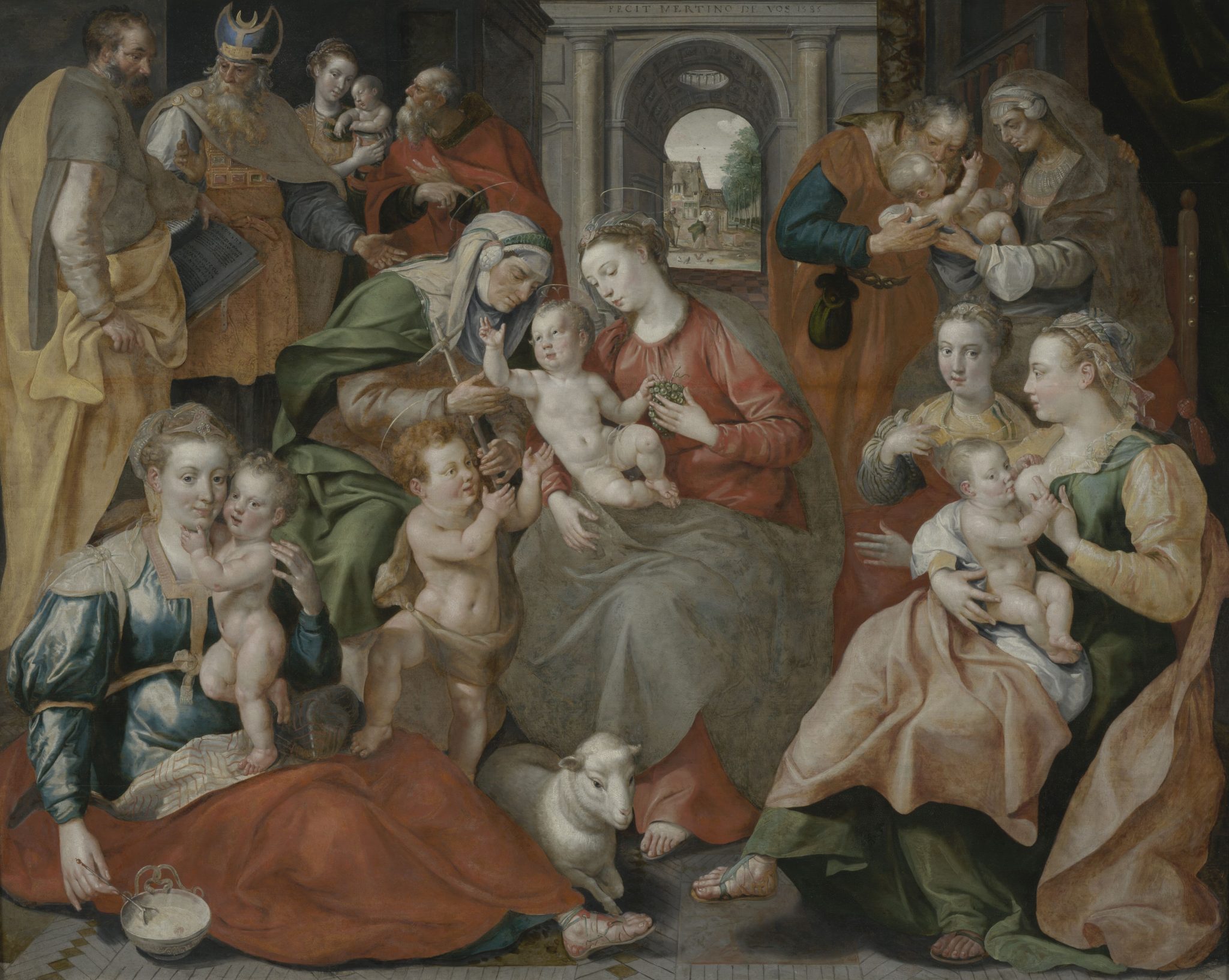
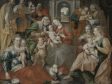
Maerten de Vos, The Family of Saint Anne, 1585, oil on panel, Museum of Fine Arts, Ghent
Fig. 13 Maerten de Vos, The Family of Saint Anne, 1585, oil on panel, 135.3 x 170 cm, Museum of Fine Arts, Ghent (artwork in the public domain) [side-by-side viewer]
  1. 1. For these terms, see Ph. Rombouts and Th. Van Lerius, De Liggeren en Andere Historische Archieven der Antwerpsche Sint-Lucasgilde (Antwerp: Julius de Koninck, 1874), 1:704–706; Hessel Miedema, De archiefbescheiden van het St. Lukasgilde te Haarlem 1497–1798 (Alphen aan den Rijn: Canaletto, 1980), 94–95; Michiel Francken, “Sixty Years of Thread Counting,” in Counting Vermeer: Using Weave Maps to Study Vermeer’s Canvases, RKD Studies (The Hague: RKD, 2017); Ernst van de Wetering, Rembrandt: The Painter at Work, 2nd rev. ed. (Berkeley: University of California Press, 2018), 22.

  2. 2. The profession of witter is first found in 1604 in the Antwerp guild records; see “Flips Debout” in Rombouts and Van Lerius, Leggeren, 427. The profession of primuurder was officially recognized by the Haarlem Guild of St. Luke in 1631. Professional primers have not yet been identified in guild records from other cities around this time.

  3. 3. Maartje Stols-Witlox, A Perfect Ground: Preparatory Layers for Oil Paintings 1550–1900 (London: Archetype, 2017), 142.

  4. 4. Nico Van Hout, “Meaning and Development of the Ground Layer in Seventeenth Century Painting,” in Looking Through Paintings: The Study of Painting Techniques and Materials in Support of Art Historical Research, edited by Erma Hermans (Baarn, Netherlands: De Prom, 1998), 204–205.

  5. 5. Jørgen Wadum, “Historical Overview of Panel-Making Techniques in the Northern Countries,” in The Structural Conservation of Panel Paintings, ed. by Kathleen Dardes and Andrea Rothe, proceedings of a symposium at the J. Paul Getty Museum, April 24–28, 1995 (Los Angeles: Getty Conservation Institute), 165–168.

  6. 6. For the DttG database, see the article by Moorea Hall-Aquitania and Paul J. C. van Laar in this issue of JHNA. Further secondary literature is presented in the following themed sections. Jo Kirby, Arie Wallert, and Beatrix Haaf have also referred to professional primers active during the seventeenth century; see Jo Kirby, “The Painter’s Trade in the Seventeenth Century: Theory and Practice,” National Gallery Technical Bulletin 20 (1999): 28; Arie Wallert, Still Lifes: Techniques and Style: An Examination of Paintings from the Rijksmuseum (Amsterdam: Rijksmuseum, 1999), 11; Beatrix Haaf, “Industriell Vorgrundierte Malleinen: Beiträge Zur Entwicklungs-, Handels- Und Materialgeschichte,” Zeitschrift Für Kunsttechnologie Und Konservierung 1, no. 2 (1987): 7. See also Wadum, “Historical Overview of Panel-Making Techniques,” 165–166.

  7. 7. See Anthony Hughes, “The Cave and the Stithy: Artists’ Studios and Intellectual Property in Early Modern Europe,” Oxford Art Journal 13, no. 1 (1990): 1; Weixuan Li, “The Hands Behind Lairesse’s Masterpieces: Gerard de Lairesse’s Workshop Practice,” Journal of Historians of Netherlandish Art 12, no. 1 (2020), https://doi.org/10.5092/jhna.2020.12.1.4; Walter Liedtke, “Rembrandt’s ‘Workshop’ Revisited,” Oud Holland 117, nos. 1–2 (2004): 48–73; Eric Jan Sluijter, “Determining Value on the Art Market in the Golden Age,” in Art Market and Connoisseurship: A Closer Look at Paintings by Rembrandt, Rubens and Their Contemporaries, ed. Anna Tummers and Koenraad Jonckheere (Amsterdam: Amsterdam University Press, 2008).

  8. 8. Because of this article’s focus on colored grounds, panel makers are only included briefly, when mentioned in the context of priming or witters, but panel makers could also be considered professional primers. For example, the Van Haecht and Gabron families were well-known panel maker families in Antwerp around 1600 who also provided supports with grounds. Wadum, “Historical Overview of Panel-Making Techniques,” 165.

  9. 9. Wadum, “Historical Overview of Panel-Making Techniques,” 165; Rombouts and Van Lerius, Liggeren en Andere Historische Archieven, 1:427.

  10. 10. Anna Koopstra has researched primed panels by Melchior de Bout with additional second ground layers. Anna Koopstra, “De Antwerpse ‘witter Ende Paneelmaker’ Melchior de Bout (Werkzaam 1625/26–1658): Leverancier van ‘Ready-Made’ Panelen Voor de Parijse Markt,” Oud Holland 123, no. 2 (2010): 108–124; Wadum, “Historical Overview of Panel-Making Techniques,” 166; Rombouts and Van Lerius, Liggeren en Andere Historische Archieven, 1:625–626.

  11. 11. Wadum, “Historical Overview of Panel-Making Techniques,” 171; Rombouts and Van Lerius, Liggeren en Andere Historische Archieven, 1:454.

  12. 12. Rombouts and Van Lerius, Liggeren en Andere Historische Archieven, 1:568, 624. Around 1622–1623, a witter was also recorded on the Schutterhofstraet; Van Hout, “Meaning and Development of the Ground Layer,” 204.

  13. 13. Kirby points out that “whiting” and “priming” (as in the application of an oil-based second ground layer) were considered separate stages by Henry Peacham and the author of MS Harley 6376. It is unclear whether the second ground layer would have been routinely applied by the witter or later in the artist’s studio. Kirby, “Painter’s Trade,” 27.

  14. 14. Wadum points out a fascinating detail in this ordinance, which states that both the panel maker and the primer (“den genen die de selve sonder voorgaende visitatie sal hebben doen witten” (the one who has had it whitened without prior inspection), would be fined twelve guilders whether or not the primer was a man or a woman (“ende den witter gelijcke tweelff guldens van wat qualiteijt hij oock soude mogen wesen, tsij man oft vrouwe” (and the whitener alike twelve guilders, whatever his or her quality may be, whether man or woman)). This suggests that women were active as primers at this time, although we have no further evidence of this at present. Jan Van Damme, “De Antwerpse Tafereelmakers En Hun Merken: Identificatie en Betekenis,” Jaarboek van Het Koninklijk Museum Voor Schone Künsten Antwerpen (1990): 235; Wadum, “Historical Overview of Panel-Making Techniques,” 165. All translations are mine unless otherwise indicated.

  15. 15. This includes panel makers who sold primed panels. It is rare to find evidence of a witter or a primuurder in guild records beyond a name and date. In ECARTICO (https://ecartico.org), the search “plamuurder” yields three more names from the Antwerp liggeren: a Jacques Raets (act. from 1645 until his death in 1660(; Jacques de Poorter (act. 1659–166; and Jan Raets (act. 1659–1679). See Rombouts and Van Lerius, De Liggeren en andere historische archieven der Antwerpsche Sint-Lucasgilde, vol 1. (Antwerp: Julius de Koninck, 1874) and Erik Duverger, Antwerpse Kunstinventarissen Uit de Zeventiende Eeuw, 11 vols. (Brussels: Koninklijke Academie voor Wetenschappen, Letteren en Schone Kunsten van België, 1984–2002; rev. ed., 2004).

  16. 16. “Dat hij wel twintich jaeren te huijse van de selven Sieur Thomas Willeborts heeft gefrequenteert ende voor denselven de doecken gepremuert” (That he had frequented the house of the same Sir Thomas Willeborts for about twenty years and had primed the canvases for him); Duverger, Antwerpse kunstinventarissen, 7:1654–1658; Brussels, Peeters Publishers, 1993, nos. 1964 and 1965, 85–86. See also Van Hout, “Meaning and Development of the Ground Layer,” 213; Lidwien Speleers et al., “The Effect of Ground Colour on the Appearance of Two Paintings by Thomas Willeboirts Bosschaert in the Oranjezaal, Huis Ten Bosch,” in Ground Layers in European Painting 1550–1750, ed. Anne Haack Christensen et al., proceedings from “Mobility Creates Masters: Discovering Artists’ Grounds 1550–1700,” international conference of the Centre for Art Technical Studies and Conservation, June 2019 (London: Archetype, 2019), 98.

  17. 17. Miedema, Archiefbescheiden van het St. Lukasgilde, 94–95.

  18. 18. J. G. Van Gelder, “De Schilders van de Oranjezaal,” Nederlands Kunsthistorisch Jaarboek / Netherlands Yearbook for History of Art 2 (1948): 155–156.

  19. 19. Wetering gives the frame maker’s name as Leendert van Es; Rembrandt: The Painter at Work, 22n29. Wetering cites a 1676 document from the archives of the Leiden town clerk’s office, 1575–1851. Many thanks to Elmer Kolfin for pointing out that this account has been reversed, as noted by Dominique Surh, Ilona van Tuinen, and John Twilley, “Insights from Technical Analysis on a Group of Paintings by Gerrit Dou in the Leiden Collection,” Journal of Historians of Netherlandish Art 6, no. 1 (2014), n. 36, DOI: 10.5092/jhna.2014.6.1.3. In fact, in 1676 Leendert van Nes was asking to take over from the deceased Dirck de Lorme (ca. 1635–ca. 1673), not the other way around, as Van de Wetering wrote.

  20. 20. While the responsibility for priming supports may have overlapped between professions, the presence of figures like François Oliviers suggests that professional primers did exist, even if they are only sporadically documented.

  21. 21. The 1627 inventory was made on the passing of Haecht’s wife, Antonette Wiael. It lists, among many paintings and sketches, “twee geplemuerde doecken op ramen bynaer elck 2 doecken groot” (two primed canvases on stretchers, each nearly the size of two canvases) as well as twelve separate entries of primed (geprimuert/geprumuert) panels, totaling 173 primed panels of various sizes. Duverger, Antwerpse kunstinventarissen, 2:39–41.

  22. 22. Inventory for Hendricx Volmarijn and Tryntge Pieters Hollaer, March 12, 1648, Stadsarchief Rotterdam, Archief van de Weeskamer 16, inv. no. 430, pp. 359–404 (fols. 174r–201r), translated by Angela Jager; Xenia Henny, “Hoe Kwamen de Rotterdamse Schilders Aan Hun Verf?,” in Rotterdamse Meesters Uit de Gouden Eeuw, edited by Nora Schadee (Zwolle: Waanders, 1994), 43–53.

  23. 23. Van Putten brought the shop to her second marriage to Bubbeson in 1653. She likely started it during her first marriage, to the painter Cornelis Symonsz Vermeulen (1606–1653). Marleen Puyenbroek, “Women Trading in Art Supplies: Unveiling the Role of Ermptgen van Putten and Other Dutch Painters’ Widows in the Seventeenth-Century Art Supplies Commerce,” paper presented at Historians of Netherlandish Art conference, Cambridge, UK, July 11, 2024 (Forthcoming in ArtMatters).

  24. 24. Bubbeson and Van Putten shop inventory, February 24, 1673, Stadsarchief Rotterdam, Archief van de Weeskamer 16, inv. no. 461, pp. 443–483 (fols. 220–40), translated by Angela Jager.

  25. 25. Jacob Abrahamsz van Koperen shop inventory, February 26, 1680, Stadsarchief Rotterdam, Oud Notarieel Archief 18 (Jan van der Hoeven, notary), inv. no. 1044, translated by Angela Jager. Puyenbroek, “Women Trading in Art Supplies.”

  26. 26. For a discussion of the pigments and materials listed in these inventories, see Moorea Hall-Aquitania, “Common Grounds: The Development, Spread, and Popularity of Colored Grounds in the Netherlands 1500–1650” (PhD diss., University of Amsterdam, 2025). The overlap between panel makers, art dealers, and paint dealers remains unclear, as many of these individuals sold primed supports and/or the materials needed to prime them. For example, Antwerp paint dealer Michiel Cock (act. 1580) sold a “wide variety of substances connected with the preparation of paints, canvases and wooden panels,” but it is not clear whether he also sold prepared supports; Filip Vermeylen, “The Colour of Money: Dealing in Pigments in Sixteenth-Century Antwerp,” in Trade in Artists’ Materials: Markets and Commerce in Europe to 1700, edited by Jo Kirby, Susie Nash, and Joanna Cannon (London: Archetype, 2010), 358.

  27. 27. “Allerleij geprepareerde en ongeprepareerde verwen, panelen doucken, pincelen ende alle andere gereetschappen tot de schilderconste dienstig.” W. Martin, “Een Kunsthandel in Een Klappermanswachthuis,” Oud Holland 19, no. 2 (1901): 86; Wetering, Rembrandt: The Painter at Work, 14–15.

  28. 28. Angela Jager, The Mass Market for History Paintings in Seventeenth-Century Amsterdam: Production, Distribution, and Consumption (Amsterdam: Amsterdam University Press, 2020), 107–110.

  29. 29. See fol. 377 of Simon Eikelenberg, Aantekeningen, reproduced in Stols-Witlox, Perfect Ground, 42.

  30. 30. Van Hout, “Meaning and Development of the Ground Layer,” 204.

  31. 31. Canvas grounds could be single- , double- , or multilayered, and the materials used for these layers were much broader than the chalk and glue traditionally used for panel. Oil layers were also used on panel as second ground layers. For ground recipes, see Stols-Witlox, Perfect Ground.

  32. 32. Ernst van de Wetering, “Studies in the Workshop Practice of the Early Rembrandt” (PhD diss., University of Amsterdam, 1986), 32–33.

  33. 33. Henny, “Hoe Kwamen de Rotterdamse Schilders Aan Hun Verf?,” 49–50.

  34. 34. Henny, “Hoe Kwamen de Rotterdamse Schilders Aan Hun Verf?,” 49–50.

  35. 35. From the Montias Database of 17th Century Art Inventories (https://research.frick.org/montias), we can see from notarial inventories drawn up on the deaths of painters that they often had plamuurde doekjes (primed canvases) among their possessions. See, for example, the 1657 inventory of Hendrick Gerritz Pot (inv. no. 418), https://research.frick.org/montias/details/418.

  36. 36. Abraham Bredius, Künstlerinventare (The Hague: M. Nijhoff, 1915), 1:114: Jacob Marell, “elf gepleumeerde penelen, drie gepluijmeerde doecken” (eleven primed panels, three primed canvases); and Bredius, Künstlerinventare, 1:291: Barent Theunis Drent, “elf bereyde pannelen, gegrondverwt, een grote bereyde doeck, gegrondverwt” (eleven prepared panels, primed/grounded, one large prepared canvas, primed/grounded). See also Bredius, Künstlerinventare, 1:5–7 (Jan Miense Molenaer); Bredius, Künstlerinventare, 1:350 (Cornelis Kleeneknecht); and Bredius, Künstlerinventare, 1:365 (Abraham Verhoeven).

  37. 37. Stols-Witlox, Perfect Ground, 120.

  38. 38. The presence of pre-primed, standard-size supports in dealer inventories of the seventeenth century indicates that dealers were also customers of professional primers and wanted to have a continuous stock of prepared supports available. For more on dealer inventories and standard sizes, see Jager, “Mass Market for History Paintings,” 107–111.

  39. 39. The Excellency of the Pen and Pencil, 92, cited in Stols-Witlox, Perfect Ground, 142.

  40. 40. Wadum, “Historical Overview of Panel-Making Techniques,” 167. For further discussion of the primuersel, see Abbie Vandivere, “From the Ground Up: Surface and Sub-Surface Effects in Fifteenth- and Sixteenth-Century Netherlandish Paintings” (PhD diss., University of Amsterdam, 2013).

  41. 41. “The sediment consisted of a mixture of all of the pigments that had been used (chiefly the much-employed lead white) and it dried rapidly because the oil in the pinceliere had long been exposed to the air. Investigation of paintings has confirmed that some painters made good use of the mostly gray or brown, rapidly drying ‘pinceliere’ paint for their grounds or underpaintings.” Margriet van Eikema Hommes, Changing Pictures: Discoloration in 15th–17th-Century Oil Paintings (London: Archetype, 2004), 37.

  42. 42. For recipes including kladpot oil or palette scrapings, see Stols-Witlox, Perfect Ground, 135.

  43. 43. Sample of SK-A-3908 taken and photographed by Arie Wallert; SEM-EDX performed by Moorea Hall-Aquitania.

  44. 44. Twenty-six paintings by Ter Brugghen were analyzed for the DttG project. See chap. 5 of Hall-Aquitania, “Common Grounds.”

  45. 45. Stols-Witlox has found evidence of nineteenth-century painters altering commercial supports, but no recipes from the preceding centuries. Stols-Witlox, Perfect Ground, 146–147.

  46. 46. Hendriks mentions the practice of buying primed panels from the joiner but applying the second ground in the studio. Ella Hendriks, “Haarlem Studio Practice,” in Painting in Haarlem 1500–1850: The Collection of the Frans Hals Museum (Amsterdam: Ludion, 2006), 77.

  47. 47. Hall-Aquitania, “Common Grounds,” 186–195.

  48. 48. Speleers et al. and Loon et al. provide some of the most in-depth research we have into a known primer in their studies of the Oranjezaal. Speleers et al., “Effect of Ground Colour”; Annelies van Loon et al., “The Relationship Between Preservation and Technique in Paintings in the Oranjezaal,” supplement, Studies in Conservation 51, no. 2 (2006): 217–223.

  49. 49. Lidwien Speleers, “Three Documents Concerning the Oranjezaal, Huis Ten Bosch (1648–1652): A New Find and Two More Precise Datings,” Oud Holland 136, no. 4 (2023): 195–210. See also Van Gelder, “Schilders van de Oranjezaal,” 121–122.

  50. 50. While primed canvases are listed in the inventories mentioned above, they do not have prices. In the Van Koperen inventory (see n. 25), two canvases (it is unclear whether they are primed) are listed for 16 stuivers each. Alan Chong’s breakdown of painting prices by genre shows that from 1626 to 1650 the average price for a history painting (which was the third highest after architectural and religious paintings) was 38.39 guilders. Alan Chong, “The Market for Landscape Painting in Seventeenth-Century Holland,” in Masters of Seventeenth-Century Dutch Landscape Painting, edited by Peter C. Sutton (Amsterdam: Rijksmuseum, 1987), 116.

  51. 51. Speleers et al., “Effect of Ground Colour,” 96.

  52. 52. Because this commission is connected to one known primer, this is helpful evidence that small differences were possible between batches from the same primer. This was suggested by Ella Hendriks for a group of paintings in Haarlem, where she believes a number of artists including Hendrick Gerritsz Pot and Johannes Verspronck bought their supports from the same (unidentified) professional primer. Hendriks writes that a slight variation in the grounds, even in closely dated works by the same artist, indicates that painters bought their supports in small, individually prepared batches. Hendriks, “Haarlem Studio Practice,” 77.

  53. 53. Loon et al., “The Relationship Between Preservation and Technique in Paintings in the Oranjezaal.”

  54. 54. Speleers et al., “Effect of Ground Colour,” 96.

  55. 55. “Deselve doecke moge zonder zorgh zoo voorder gesonde werde, want die heel wel besorght zijn” (The same canvases may be sent on without concern, as they are very well taken care of); Speleers, “Three Documents Concerning the Oranjezaal, Huis Ten Bosch (1648–1652),” 207.

  56. 56. Gaspar de Crayer (1584–1669) was originally chosen to paint Frederick Henry and Maurice as Generals with the Battle of Flanders in the Distance, which is now painted on the canvas that Oliviers primed and Van Campen sent to Willeboirts Bosschaert for Lord of the Seas. Lord of the Seas is on a brown-red double ground composed of a layer of chalk with a little red ocher, umber, and black, followed by a second ground layer of lead white and chalk with some charcoal black, red, and yellow ocher. Its canvas is a seamless piece, which would have been quite expensive and speaks to Bosschaert’s desire to buy something high quality for such an important commission. Speleers et al., “Effect of Ground Colour,” 98.

  57. 57. Speleers et al., “Effect of Ground Colour,” 102–103.

  58. 58. See Speleers et al., “Effect of Ground Colour”; and Loon et al., “Relationship Between Preservation and Technique,” for a nuanced discussion of the use and preservation of the Oranjezaal grounds.

  59. 59. Speleers, “Three Documents Concerning the Oranjezaal, Huis Ten Bosch (1648–1652),” 199.

  60. 60. Stols-Witlox gathers a number of recipes and sources that consider causes of degradation related to the ground. These were chiefly related to color and absorbency, with additional considerations of the size layer and the pigments used. Stols-Witlox, Perfect Ground, 153–172.

  61. 61. See Eric Jan Sluijter, “On Brabant Rubbish, Economic Competition, Artistic Rivalry and the Growth of the Market for Paintings in the First Decades of the Seventeenth Century,” Journal of Historians of Netherlandish Art 1, no. 2 (Summer 2009), https://doi.org/10.5092/jhna.2009.1.2.4; Hall-Aquitania, “Common Grounds,” chap. 3.

  62. 62. For a definition of product and process innovations in art, see John Michael Montias, “The Influence of Economic Factors on Style,” De Zeventiende Eeuw 6 (1990): 51–53.

  63. 63. Pigment prices in several seventeenth-century inventories indicate that lead white cost approximately seven times more than earth pigments used for grounds. See chap. 3 of Hall-Aquitania, “Common Grounds.” For a calculation of the pigment costs for a single painting, see the article by Maartje Stols-Witlox in this issue of JHNA.

  64. 64. This cost difference of approximately seven to one for lead white versus earth pigments is a convincing reason for the popularity of colored grounds with a lower layer of earth pigments. For a discussion of the spread of colored grounds in relation to the art market, see chap. 3 of Hall-Aquitania, “Common Grounds.”

  65. 65. Filip Vermeylen, Painting for the Market: Commercialization of Art in Antwerp’s Golden Age (Turnhout: Brepols, 2003). For the importance of spatial clustering, see Claartje Rasterhoff, Painting and Publishing as Cultural Industries: The Fabric of Creativity in the Dutch Republic, 1580–1800 (Amsterdam: Amsterdam University Press, 2016).

  66. 66. Henny, “Hoe Kwamen de Rotterdamse Schilders Aan Hun Verf?”

  67. 67. Hendriks, “Haarlem Studio Practice,” 94–95; E. C. Abraham, “Het Gebruik van Gekleurde Schildergronden Door Haarlemse Maniëristen” (master’s thesis, University of Amsterdam, 1989).

  68. 68. The recently re-dated 1649 letter from Oliviers to Huygens was sent from Haarlem, situating the former there, as later confirmed by the discovery of his name in the Haarlem archives. His identification in the Haarlem archives has revealed his birth and death dates and a few more facts about his life and work, to be published by Speleers and Franken in a forthcoming publication; see Speleers, “Three Documents Concerning the Oranjezaal, Huis Ten Bosch (1648–1652).”

  69. 69. Karin Groen and Ella Hendriks, “Frans Hals: A Technical Examination,” in Frans Hals, edited by Seymour Slive (Munich: Prestel, 1989), 116.

  70. 70. Groen and Hendriks, “Frans Hals,” 116.

  71. 71. See Gwen Tauber’s technical notes in Jonathan Bikker, “Frans Hals, Portrait of a Woman, c. 1637,” in Dutch Paintings of the Seventeenth Century in the Rijksmuseum, vol. 1, Artists Born Between 1570 and 1600, ed. Jonathan Bikker (Amsterdam: Rijksmuseum, 2007), no. 107, https://data.rijksmuseum.nl/200109345.

  72. 72. The composition of the “flesh-colored” grounds in Haarlem seems to be very similar to the light brown ones in Utrecht; that is, lead white and umber. It is unclear where they got the “pink” designation, as no red pigments are mentioned. If this is the case, then Olivier’s beige ground would be quite similar to what Hendriks and Groen call the Haarlem “light pink.” Groen and Hendriks, “Frans Hals” 116. For issues with color descriptions, see Moorea Hall-Aquitania and Lieve d’Hont, “Troubleshooting Colored Grounds: Developing a Methodology for Studying Netherlandish Ground Colors,” in Christensen, Jager, and Townsend, Ground Layers in European Painting, 1–9.

  73. 73. Marya Albrecht et al., “Jan Steen’s Ground Layers Analysed with Principal Component Analysis,” Heritage Science 7, no. 53 (2019): 53; Marya Albrecht et al., “Discovering Trends in Jan Steen’s Grounds Using Principal Component Analysis,” in Christensen, Jager, and Townsend, Ground Layers in European Painting, 118–131.

  74. 74. Albrecht et al., “Discovering Trends,” 118–131.

  75. 75. Ashok Roy, “The National Gallery Van Dycks: Technique and Development,” National Gallery Technical Bulletin 20 (1999): 50.

  76. 76. Kirby suggests that in general seventeenth-century painters would prime or buy their canvases locally, and “as with panels” may have applied a second ground in their studio. Kirby, “Painter’s Trade,” 28.

  77. 77. See, for example, Gerard van Honthorst, discussed below, or Samuel van Hoogstraten. Erma Hermens and Moorea Hall-Aquitania, “A Technical Art Historian Avant La Lettre,” in Samuel van Hoogstraten: The Illusionist, ed. Leonore van Sloten and David de Witt (Zwolle: WBOOKS, 2025).

  78. 78. Sample IS2 of NG6483. Photography and identification of pigments with SEM-EDX performed by Marika Spring during an ARCHLAB-funded visit by this author to the National Gallery, London in 2019. The increased translucence and brightness of this layer is associated with red lead around lead soap formation.

  79. 79. Sample 269a of KMSsp380. Photography and identification of pigments with SEM-EDX performed by David Buti at the Statens Museum for Kunst (SMK), Copenhagen. Data shared during the author’s visit to the SMK in 2022.

  80. 80. Wayne Franits, “Laboratorium Utrecht: Baburen, Honthorst und Terbrugghen im künstlerischen Austausch,” in Caravaggio in Holland: Musik und Genre bei Caravaggio und den Utrechter Caravaggisten, edited by Jochen Sander, Bastian Eclercy, and Gabriel Dette. (Frankfurt am Main: Städel Museum, 2009); Jasper Hillegers, “Dirck van Baburen: Violin Player with a Wine Glass,” in Old Masters: 2018 (Amsterdam: Salomon Lilian, 2018), Lot 3037.

  81. 81. Sample A306 of 8289. Photography and identification of pigments with SEM-EDX performed by author at the Rijksmuseum, Amsterdam, on cross section taken by J. R. J. van Asperen de Boer, held at the RKD Netherlands Institute for Art History, The Hague.

  82. 82. For Caravaggio’s grounds, see Marco Ciatti and Brunetto Giovanni Brunetti, eds., Caravaggio’s Painting Technique, proceedings of the CHARISMA workshop, University of Florence, September 17, 2010 (Florence: Nardini Editore, 2012); Rossella Vodret et al., eds., Caravaggio: Works in Rome, Technique and Style, vol. 2, Entries (Milan: Silvano, 2016), 557. For more on the “Netherlandish” gray over red grounds of the Utrecht Caravaggisti, see chap. 5 of Hall-Aquitania, “Common Grounds,” and the DttG database, search parameters: artist = Honthorst, Gerard van; Baburen, Dirck van; Brugghen; Hendrick ter. Optional to filter by top (grey; brown) and bottom (red; orange) ground colours in advanced search.

  83. 83. We still do not know who first introduced Bloemaert to this type of ground. He is one of the first to use the gray over red double ground that would become so popular later in the century. See chap. 5 of Hall-Aquitania, “Common Grounds.”

  84. 84. See, for example, his Christ Before the High Priest (ca. 1617; National Gallery, London). Samples taken by Ashok Roy in 2010 and analyzed with Marika Spring in 2019 on an ARCHLAB visit by the author to the National Gallery, London.

  85. 85. See Honthorst in the DttG database. Search parameters: artist = Gerard van Honthorst; sort by date. There are limited sampled examples of his later works, and the observation that these are on lighter grounds is based largely on surface analysis.

  86. 86. Petria Noble describes an “orangey ocherous” first ground with “two thick yellow ocher colored” layers of second ground. Internal documentation in Mauritshuis conservation department. For Utrecht ground layers, see the DttG database, search parameters: place of execution = Utrecht. See also chap. 5 of Hall-Aquitania, “Common Grounds.”

  87. 87. See chap. 2 of Hall-Aquitania, “Common Grounds.”

  88. 88. Vermeylen, “Colour of Money,” 358–359.

  89. 89. See chap. 2 of Hall-Aquitania, “Common Grounds.”

Abraham, E. C. “Het Gebruik van Gekleurde Schildergronden Door Haarlemse Maniëristen.” Master’s thesis, University of Amsterdam, 1989.

Albrecht, Marya, Onno De Noord, Sabrina Meloni, Annelies Van Loon, and Ralph Haswell. “Jan Steen’s Ground Layers Analysed with Principal Component Analysis.” Heritage Science 7, no. 53 (2019): 53.

Albrecht, Marya, Sabrina Meloni, Ralph Haswell, and Onno De Noord. “Discovering Trends in Jan Steen’s Grounds Using Principal Component Analysis.” In Ground Layers in European Painting 1550–1750, edited by Anne Haack Christensen, Angela Jager, and Joyce H. Townsend, 118–131. Proceedings from “Mobility Creates Masters: Discovering Artists’ Grounds 1550–1700,” international conference of the Centre for Art Technical Studies and Conservation, June 2019. London: Archetype Publications, 2020.

Amsterdam School for Heritage, Memory and Material Culture, University of Amsterdam. “Down to the Ground.” Accessed September 30, 2025. https://www.uva.nl/en/shared-content/subsites/amsterdam-school-for-heritage-memory-and-material-culture/en/projects/down-to-the-ground/down-to-the-ground.html

Bikker, Jonathan. “Frans Hals, Portrait of a Woman, c. 1637.” In Dutch Paintings of the Seventeenth Century in the Rijksmuseum. Vol. 1, Artists Born between 1570 and 1600, ed. Jonathan Bikker, no. 107. Amsterdam: Rijksmuseum, 2007. https://data.rijksmuseum.nl/200109345.

Bredius, Abraham. Künstlerinventare: Urkunden zur Geschichte der holländischen Kunst des XVIten, XVIIten und XVIIIten Jahrhunderts. Vol. 1. The Hague: M. Nijhoff, 1915. https://doi.org/10.11588/diglit.33476.

Chong, Alan. “The Market for Landscape Painting in Seventeenth-Century Holland.” In Masters of Seventeenth-Century Dutch Landscape Painting, edited by Peter C. Sutton. Amsterdam: Rijksmuseum, 1987.

Ciatti, Marco, and Brunetto Giovanni Brunetti, eds. Caravaggio’s Painting Technique. Proceedings of the CHARISMA workshop, University of Florence, September 17, 2010. Florence: Nardini Editore, 2012.

Van Damme, Jan. “De Antwerpse Tafereelmakers en Hun Merken: Identificatie en Betekenis.” Jaarboek van Het Koninklijk Museum Voor Schone Künsten Antwerpen (1990): 193–236.

Down to the Ground database. “Home.” Accessed September 30, 2025. https://downtotheground.rkdstudies.nl/

Duverger, Erik. Antwerpse Kunstinventarissen Uit de Zeventiende Eeuw. Rev. ed. Brussels: Koninklijke Academie voor Wetenschappen, Letteren en Schone Kunsten van België, 2004.

Ecartico: Linking Cultural Industries in the Early Modern Low Countries, ca. 1475–ca. 1725. Accessed September 30, 2025. https://ecartico.org

Eikema Hommes, Margriet van. Changing Pictures: Discoloration in 15th–17th-Century Oil Paintings. London: Archetype, 2004.

Francken, Michiel. “Sixty Years of Thread Counting.” In Counting Vermeer: Using Weave Maps to Study Vermeer’s Canvases, edited by C. Richard Johnson Jr. and William A. Sethares. RKD Studies. The Hague: RKD, 2017.

Franits, Wayne. “Laboratorium Utrecht: Baburen, Honthorst und Terbrugghen im künstlerischen Austausch.” In Caravaggio in Holland: Musik und Genre bei Caravaggio und den Utrechter Caravaggisten, edited by Jochen Sander, Bastian Eclercy, and Gabriel Dette. Frankfurt am Main: Städel Museum, 2009.

Van Gelder, J. G. “De Schilders van de Oranjezaal.” Nederlands Kunsthistorisch Jaarboek / Netherlands Yearbook for History of Art 2 (1948): 118–164.

Groen, Karin, and Ella Hendriks. “Frans Hals: A Technical Examination.” In Frans Hals, edited by Seymour Slive. Munich: Prestel, 1989.

Haaf, Beatrix. “Industriell Vorgrundierte Malleinen: Beiträge Zur Entwicklungs-, Handels- Und Materialgeschichte.” Zeitschrift Für Kunsttechnologie Und Konservierung 1, no. 2 (1987): 7–71.

Hall-Aquitania, Moorea. “Common Grounds: The Development, Spread, and Popularity of Coloured Grounds in the Netherlands 1500–1650.” PhD diss., University of Amsterdam, 2025.

Hall-Aquitania, Moorea, and Lieve d’Hont. “Troubleshooting Coloured Grounds: Developing a Methodology for Studying Netherlandish Ground Colours.” In Ground Layers in European Painting 1550–1750, edited by Anne Haack Christensen, Angela Jager, and Joyce H. Townsend, 1–9. Proceedings from “Mobility Creates Masters: Discovering Artists’ Grounds 1550–1700,” international conference of the Centre for Art Technical Studies and Conservation, June 2019. London: Archetype, 2020.

Hendriks, Ella. “Haarlem Studio Practice.” In Painting in Haarlem 1500–1850: The Collection of the Frans Hals Museum. Ghent: Ludion, 2006.

Henny, Xenia. “Hoe Kwamen de Rotterdamse Schilders Aan Hun Verf?” In Rotterdamse Meesters Uit de Gouden Eeuw, edited by Nora Schadee, 43–53. Zwolle: Waanders, 1994.

Hermens, Erma, and Moorea Hall-Aquitania. “A Technical Art Historian Avant La Lettre.” In Samuel van Hoogstraten: The Illusionist, edited by Leonore van Sloten and David de Witt. Zwolle: WBOOKS, 2025.

Van Hout, Nico. “Meaning and Development of the Ground Layer in Seventeenth Century Painting.” In Looking Through Paintings: The Study of Painting Techniques and Materials in Support of Art Historical Research, edited by Erma Hermans. Leids kunsthistorisch jaarboek 11. Baarn, Netherlands: De Prom, 1998.

Hillegers, Jasper. “Dirck van Baburen: Violin Player with a Wine Glass.” In Old Masters: 2018, Lot 3037. Amsterdam: Salomon Lilian, 2018.

Hughes, Anthony. “The Cave and the Stithy: Artists’ Studios and Intellectual Property in Early Modern Europe.” Oxford Art Journal 13, no. 1 (1990): 1.

Jager, Angela. The Mass Market for History Paintings in Seventeenth-Century Amsterdam: Production, Distribution, and Consumption. Amsterdam Studies in the Dutch Golden Age. Amsterdam: Amsterdam University Press, 2020.

Kirby, Jo. “The Painter’s Trade in the Seventeenth Century: Theory and Practice.” National Gallery Technical Bulletin 20 (1999): 5–49.

Koopstra, Anna. “De Antwerpse ‘witter Ende Paneelmaker’ Melchior de Bout (Werkzaam 1625/26–1658): Leverancier van ‘Ready-Made’ Panelen Voor de Parijse Markt.” Oud Holland 123, no. 2 (2010): 108–124.

Li, Weixuan. “The Hands Behind Lairesse’s Masterpieces: Gerard de Lairesse’s Workshop Practice.” Journal of Historians of Netherlandish Art 12, no. 1 (2020). https://doi.org/10.5092/jhna.2020.12.1.4.

Liedtke, Walter. “Rembrandt’s ‘Workshop’ Revisited.” Oud Holland 117, nos. 1–2 (2004): 48–73.

Loon, Annelies van, Lidwien Speleers, Ester Ferreira, Katrien Keune, and Jaap Boon. “The Relationship Between Preservation and Technique in Paintings in the Oranjezaal.” Supplement, Studies in Conservation 51, no. 2 (2006): 217–223.

Martin, W. “Een Kunsthandel in Een Klappermanswachthuis.” Oud Holland 19, no. 2 (1901): 86–88.

Miedema, Hessel. De archiefbescheiden van het St. Lukasgilde te Haarlem 1497–1798. Alphen aan den Rijn: Canaletto, 1980.

Montias, John Michael. “The Influence of Economic Factors on Style.” De Zeventiende Eeuw 6 (1990): 49–57.

Montias Database of 17th Century Dutch Art Inventories. The Frick Collection. Accessed September 30, 2025. https://research.frick.org/montias

Puyenbroek, Marleen. “Women Trading in Art Supplies: Unveiling the Role of Ermptgen van Putten and Other Dutch Painters’ Widows in the Seventeenth-Century Art Supplies Commerce.” Paper presented at the Historians of Netherlandish Art Conference, Cambridge, UK, July 11, 2024. [Forthcoming in ArtMatters: International Journal for Technical Art History.]

Rasterhoff, Claartje. Painting and Publishing as Cultural Industries: The Fabric of Creativity in the Dutch Republic, 1580–1800. Amsterdam Studies in the Dutch Golden Age. Amsterdam: Amsterdam University Press, 2016.

Rombouts, Ph., and Th. Van Lerius. De Liggeren en Andere Historische Archieven der Antwerpsche Sint-Lucasgilde. Vol. 1. Antwerp: Julius de Koninck, 1874.

Roy, Ashok. “The National Gallery Van Dycks: Technique and Development.” National Gallery Technical Bulletin 20 (1999): 50–83.

Sluijter, Eric Jan. “Determining Value on the Art Market in the Golden Age.” In Art Market and Connoisseurship: A Closer Look at Paintings by Rembrandt, Rubens and Their Contemporaries, edited by Anna Tummers and Koenraad Jonckheere. Amsterdam: Amsterdam University Press, 2008.

———. “On Brabant Rubbish, Economic Competition, Artistic Rivalry and the Growth of the Market for Paintings in the First Decades of the Seventeenth Century.” Journal of Historians of Netherlandish Art 1, no. 2 (Summer 2009). https://doi.org/10.5092/jhna.2009.1.2.4.

Speleers, Lidwien. “Three Documents Concerning the Oranjezaal, Huis Ten Bosch (1648–1652): A New Find and Two More Precise Datings.” Oud Holland 136, no. 4 (2023): 195–210.

Speleers, Lidwien, Margriet van Eikema Hommes, Ineke Joosten, Suzan De Groot, and Annelies Van Loon. “The Effect of Ground Colour on the Appearance of Two Paintings by Thomas Willeboirts Bosschaert in the Oranjezaal, Huis Ten Bosch.” In Ground Layers in European Painting 1550–1750, edited by Anne Haack Christensen, Angela Jager, and Joyce H. Townsend, 93–106. Proceedings from “Mobility Creates Masters: Discovering Artists’ Grounds 1550–1700,” international conference of the Centre for Art Technical Studies and Conservation, June 2019. London: Archetype Publications, 2020.

Stols-Witlox, Maartje. A Perfect Ground: Preparatory Layers for Oil Paintings 1550–1900. London: Archetype, 2017.

Surh, Dominique, Ilona van Tuinen, and John Twilley. “Insights from Technical Analysis on a Group of Paintings by Gerrit Dou in the Leiden Collection.” Journal of Historians of Netherlandish Art 6, no. 1 (2014). https://doi.org/10.5092/jhna.2014.6.1.

Vandivere, Abbie. “From the Ground Up: Surface and Sub-Surface Effects in Fifteenth- and Sixteenth-Century Netherlandish Paintings.” PhD dissertation, University of Amsterdam, 2013.

Vermeylen, Filip. Painting for the Market: Commercialization of Art in Antwerp’s Golden Age. Studies in European Urban History (1100–1800) 2. Turnhout: Brepols, 2003.

Vermeylen, Filip. “The Colour of Money: Dealing in Pigments in Sixteenth-Century Antwerp.” In Trade in Artists’ Materials: Markets and Commerce in Europe to 1700, edited by Jo Kirby, Susie Nash, and Joanna Cannon. London: Archetype, 2010.

Vodret, Rossella, Giorgio Leone, Marco Cardinali, Maria Beatrice De Ruggieri, and Giulia Silvia Ghia, eds. Caravaggio: Works in Rome, Technique and Style. Vol. 2, Entries. Milan: Silvano, 2016.

Wadum, Jørgen. “Historical Overview of Panel-Making Techniques in the Northern Countries.” In “The Structural Conservation of Panel Paintings,” edited by Kathleen Dardes and Andrea Rothe. Proceedings of a symposium at the J. Paul Getty Museum, April 24–28, 1995. Los Angeles: Getty Conservation Institute, 1998.

Wallert, Arie. Still Lifes: Techniques and Style, An Examination of Paintings from the Rijksmuseum. Amsterdam: Rijksmuseum, 1999.

Wetering, Ernst van de. Rembrandt: The Painter at Work. 2nd rev. ed. Oakland: University of California Press, 2018.

———. “Studies in the Workshop Practice of the Early Rembrandt.” PhD diss., University of Amsterdam, 1986.

List of Illustrations

Andries Both, A Painter and His Assistant in the Studio, ca. 1640. Pen, brown ink and gray wash on paper, Scottish National Gallery of Modern Art (Modern Two), Edinburgh, inv. No. D 4846
Fig. 1 Andries Both, A Painter and His Assistant in the Studio, ca. 1640. Pen, brown ink and gray wash on paper, 22.1 x 16.5 cm. Scottish National Gallery of Modern Art (Modern Two), Edinburgh, inv. No. D 4846 [side-by-side viewer]
David Ryckaert III, Paint Making in a Painter’s Studio, ca. 1635–1638, oil on panel, Stadtgeschichtliches Museum, Wismar
Fig. 2 David Ryckaert III, Paint Making in a Painter’s Studio, ca. 1635–1638, oil on panel, 42.8 x 31.7 cm, Stadtgeschichtliches Museum, Wismar [side-by-side viewer]
Hendrick ter Brugghen, The Incredulity of Thomas, ca. 1622, oil on canvas, Rijksmuseum, Amsterdam
Fig. 3 Hendrick ter Brugghen, The Incredulity of Thomas, ca. 1622, oil on canvas, 108.8 x 136.5 cm. Rijksmuseum, Amsterdam, SK-A-3908 (artwork in the public domain) [side-by-side viewer]
Cross-section, The Incredulity of Thomas (fig. 3), detail showing copper blue pigment in first ground (R60-3) (photo: Arie Wallert)
Fig. 4 Cross-section, The Incredulity of Thomas (fig. 3), detail showing copper blue pigment in first ground (R60-3) (photo: Arie Wallert) [side-by-side viewer]
Map of known (red) and proposed (orange) cities with professional primers. Author map based on John Lodge [I] and John Lodge [II], The Seven Provinces of the Netherlands, ca. 1780, hand-colored engraving, Rijksmuseum, Amsterdam
Fig. 5 Map of known (red) and proposed (orange) cities with professional primers. Author map based on John Lodge [I] and John Lodge [II], The Seven Provinces of the Netherlands, ca. 1780, hand-colored engraving, 45.3 x 54.1 cm, Rijksmuseum, Amsterdam, RP-P-AO-1-64 [side-by-side viewer]
Frans Hals, Portrait of Duijfje van Gerwen (1618–1658), ca. 1637, oil on canvas, Rijksmuseum, Amsterdam
Fig. 6 Frans Hals, Portrait of Duijfje van Gerwen (1618–1658), ca. 1637, oil on canvas, 81.5 x 68 cm. Rijksmuseum, Amsterdam, SK-A-1247 (artwork in the public domain) [side-by-side viewer]
Hendrick ter Brugghen, The Concert, ca. 1626, oil on canvas, The National Gallery, London
Fig. 7 Hendrick ter Brugghen, The Concert, ca. 1626, oil on canvas, 99.1 x 116.8 cm. The National Gallery, London, NG6483 (artwork in the public domain) [side-by-side viewer]
Cross-section from Ter Brugghen, The Concert (fig. 7)
Fig. 8 Cross-section from Ter Brugghen, The Concert (fig. 7) (photo: Marika Spring) [side-by-side viewer]
Gerard van Honthorst, An Old Woman, 1623, oil on canvas, Statens Museum for Kunst (SMK), Copenhagen
Fig. 9 Gerard van Honthorst, An Old Woman, 1623, oil on canvas, 69 x 56 cm. Statens Museum for Kunst (SMK), Copenhagen, KMSsp380 (artwork in the public domain) [side-by-side viewer]
Cross-section from Hontorst, An Old Woman (fig. 9)
Fig. 10 Cross-section from Hontorst, An Old Woman (fig. 9) (photo: David Buti) [side-by-side viewer]
Abraham Bloemaert, Joseph and His Brothers, 1600, oil on canvas, Centraal Museum, Utrecht
Fig. 11 Abraham Bloemaert, Joseph and His Brothers, 1600, oil on canvas, 141.3 x 211 cm. Centraal Museum, Utrecht, inv. no. 8289 (photo Ernst Moritz, artwork in the public domain) [side-by-side viewer]
Cross-section from Bloemaert, Joseph and His Brothers (fig. 11)
Fig. 12 Cross-section from Bloemaert, Joseph and His Brothers (fig. 11) (photo: J. R. J. van Asperen de Boer and Moorea Hall-Aquitania) [side-by-side viewer]
Maerten de Vos, The Family of Saint Anne, 1585, oil on panel, Museum of Fine Arts, Ghent
Fig. 13 Maerten de Vos, The Family of Saint Anne, 1585, oil on panel, 135.3 x 170 cm, Museum of Fine Arts, Ghent (artwork in the public domain) [side-by-side viewer]

Footnotes

  1. 1. For these terms, see Ph. Rombouts and Th. Van Lerius, De Liggeren en Andere Historische Archieven der Antwerpsche Sint-Lucasgilde (Antwerp: Julius de Koninck, 1874), 1:704–706; Hessel Miedema, De archiefbescheiden van het St. Lukasgilde te Haarlem 1497–1798 (Alphen aan den Rijn: Canaletto, 1980), 94–95; Michiel Francken, “Sixty Years of Thread Counting,” in Counting Vermeer: Using Weave Maps to Study Vermeer’s Canvases, RKD Studies (The Hague: RKD, 2017); Ernst van de Wetering, Rembrandt: The Painter at Work, 2nd rev. ed. (Berkeley: University of California Press, 2018), 22.

  2. 2. The profession of witter is first found in 1604 in the Antwerp guild records; see “Flips Debout” in Rombouts and Van Lerius, Leggeren, 427. The profession of primuurder was officially recognized by the Haarlem Guild of St. Luke in 1631. Professional primers have not yet been identified in guild records from other cities around this time.

  3. 3. Maartje Stols-Witlox, A Perfect Ground: Preparatory Layers for Oil Paintings 1550–1900 (London: Archetype, 2017), 142.

  4. 4. Nico Van Hout, “Meaning and Development of the Ground Layer in Seventeenth Century Painting,” in Looking Through Paintings: The Study of Painting Techniques and Materials in Support of Art Historical Research, edited by Erma Hermans (Baarn, Netherlands: De Prom, 1998), 204–205.

  5. 5. Jørgen Wadum, “Historical Overview of Panel-Making Techniques in the Northern Countries,” in The Structural Conservation of Panel Paintings, ed. by Kathleen Dardes and Andrea Rothe, proceedings of a symposium at the J. Paul Getty Museum, April 24–28, 1995 (Los Angeles: Getty Conservation Institute), 165–168.

  6. 6. For the DttG database, see the article by Moorea Hall-Aquitania and Paul J. C. van Laar in this issue of JHNA. Further secondary literature is presented in the following themed sections. Jo Kirby, Arie Wallert, and Beatrix Haaf have also referred to professional primers active during the seventeenth century; see Jo Kirby, “The Painter’s Trade in the Seventeenth Century: Theory and Practice,” National Gallery Technical Bulletin 20 (1999): 28; Arie Wallert, Still Lifes: Techniques and Style: An Examination of Paintings from the Rijksmuseum (Amsterdam: Rijksmuseum, 1999), 11; Beatrix Haaf, “Industriell Vorgrundierte Malleinen: Beiträge Zur Entwicklungs-, Handels- Und Materialgeschichte,” Zeitschrift Für Kunsttechnologie Und Konservierung 1, no. 2 (1987): 7. See also Wadum, “Historical Overview of Panel-Making Techniques,” 165–166.

  7. 7. See Anthony Hughes, “The Cave and the Stithy: Artists’ Studios and Intellectual Property in Early Modern Europe,” Oxford Art Journal 13, no. 1 (1990): 1; Weixuan Li, “The Hands Behind Lairesse’s Masterpieces: Gerard de Lairesse’s Workshop Practice,” Journal of Historians of Netherlandish Art 12, no. 1 (2020), https://doi.org/10.5092/jhna.2020.12.1.4; Walter Liedtke, “Rembrandt’s ‘Workshop’ Revisited,” Oud Holland 117, nos. 1–2 (2004): 48–73; Eric Jan Sluijter, “Determining Value on the Art Market in the Golden Age,” in Art Market and Connoisseurship: A Closer Look at Paintings by Rembrandt, Rubens and Their Contemporaries, ed. Anna Tummers and Koenraad Jonckheere (Amsterdam: Amsterdam University Press, 2008).

  8. 8. Because of this article’s focus on colored grounds, panel makers are only included briefly, when mentioned in the context of priming or witters, but panel makers could also be considered professional primers. For example, the Van Haecht and Gabron families were well-known panel maker families in Antwerp around 1600 who also provided supports with grounds. Wadum, “Historical Overview of Panel-Making Techniques,” 165.

  9. 9. Wadum, “Historical Overview of Panel-Making Techniques,” 165; Rombouts and Van Lerius, Liggeren en Andere Historische Archieven, 1:427.

  10. 10. Anna Koopstra has researched primed panels by Melchior de Bout with additional second ground layers. Anna Koopstra, “De Antwerpse ‘witter Ende Paneelmaker’ Melchior de Bout (Werkzaam 1625/26–1658): Leverancier van ‘Ready-Made’ Panelen Voor de Parijse Markt,” Oud Holland 123, no. 2 (2010): 108–124; Wadum, “Historical Overview of Panel-Making Techniques,” 166; Rombouts and Van Lerius, Liggeren en Andere Historische Archieven, 1:625–626.

  11. 11. Wadum, “Historical Overview of Panel-Making Techniques,” 171; Rombouts and Van Lerius, Liggeren en Andere Historische Archieven, 1:454.

  12. 12. Rombouts and Van Lerius, Liggeren en Andere Historische Archieven, 1:568, 624. Around 1622–1623, a witter was also recorded on the Schutterhofstraet; Van Hout, “Meaning and Development of the Ground Layer,” 204.

  13. 13. Kirby points out that “whiting” and “priming” (as in the application of an oil-based second ground layer) were considered separate stages by Henry Peacham and the author of MS Harley 6376. It is unclear whether the second ground layer would have been routinely applied by the witter or later in the artist’s studio. Kirby, “Painter’s Trade,” 27.

  14. 14. Wadum points out a fascinating detail in this ordinance, which states that both the panel maker and the primer (“den genen die de selve sonder voorgaende visitatie sal hebben doen witten” (the one who has had it whitened without prior inspection), would be fined twelve guilders whether or not the primer was a man or a woman (“ende den witter gelijcke tweelff guldens van wat qualiteijt hij oock soude mogen wesen, tsij man oft vrouwe” (and the whitener alike twelve guilders, whatever his or her quality may be, whether man or woman)). This suggests that women were active as primers at this time, although we have no further evidence of this at present. Jan Van Damme, “De Antwerpse Tafereelmakers En Hun Merken: Identificatie en Betekenis,” Jaarboek van Het Koninklijk Museum Voor Schone Künsten Antwerpen (1990): 235; Wadum, “Historical Overview of Panel-Making Techniques,” 165. All translations are mine unless otherwise indicated.

  15. 15. This includes panel makers who sold primed panels. It is rare to find evidence of a witter or a primuurder in guild records beyond a name and date. In ECARTICO (https://ecartico.org), the search “plamuurder” yields three more names from the Antwerp liggeren: a Jacques Raets (act. from 1645 until his death in 1660(; Jacques de Poorter (act. 1659–166; and Jan Raets (act. 1659–1679). See Rombouts and Van Lerius, De Liggeren en andere historische archieven der Antwerpsche Sint-Lucasgilde, vol 1. (Antwerp: Julius de Koninck, 1874) and Erik Duverger, Antwerpse Kunstinventarissen Uit de Zeventiende Eeuw, 11 vols. (Brussels: Koninklijke Academie voor Wetenschappen, Letteren en Schone Kunsten van België, 1984–2002; rev. ed., 2004).

  16. 16. “Dat hij wel twintich jaeren te huijse van de selven Sieur Thomas Willeborts heeft gefrequenteert ende voor denselven de doecken gepremuert” (That he had frequented the house of the same Sir Thomas Willeborts for about twenty years and had primed the canvases for him); Duverger, Antwerpse kunstinventarissen, 7:1654–1658; Brussels, Peeters Publishers, 1993, nos. 1964 and 1965, 85–86. See also Van Hout, “Meaning and Development of the Ground Layer,” 213; Lidwien Speleers et al., “The Effect of Ground Colour on the Appearance of Two Paintings by Thomas Willeboirts Bosschaert in the Oranjezaal, Huis Ten Bosch,” in Ground Layers in European Painting 1550–1750, ed. Anne Haack Christensen et al., proceedings from “Mobility Creates Masters: Discovering Artists’ Grounds 1550–1700,” international conference of the Centre for Art Technical Studies and Conservation, June 2019 (London: Archetype, 2019), 98.

  17. 17. Miedema, Archiefbescheiden van het St. Lukasgilde, 94–95.

  18. 18. J. G. Van Gelder, “De Schilders van de Oranjezaal,” Nederlands Kunsthistorisch Jaarboek / Netherlands Yearbook for History of Art 2 (1948): 155–156.

  19. 19. Wetering gives the frame maker’s name as Leendert van Es; Rembrandt: The Painter at Work, 22n29. Wetering cites a 1676 document from the archives of the Leiden town clerk’s office, 1575–1851. Many thanks to Elmer Kolfin for pointing out that this account has been reversed, as noted by Dominique Surh, Ilona van Tuinen, and John Twilley, “Insights from Technical Analysis on a Group of Paintings by Gerrit Dou in the Leiden Collection,” Journal of Historians of Netherlandish Art 6, no. 1 (2014), n. 36, DOI: 10.5092/jhna.2014.6.1.3. In fact, in 1676 Leendert van Nes was asking to take over from the deceased Dirck de Lorme (ca. 1635–ca. 1673), not the other way around, as Van de Wetering wrote.

  20. 20. While the responsibility for priming supports may have overlapped between professions, the presence of figures like François Oliviers suggests that professional primers did exist, even if they are only sporadically documented.

  21. 21. The 1627 inventory was made on the passing of Haecht’s wife, Antonette Wiael. It lists, among many paintings and sketches, “twee geplemuerde doecken op ramen bynaer elck 2 doecken groot” (two primed canvases on stretchers, each nearly the size of two canvases) as well as twelve separate entries of primed (geprimuert/geprumuert) panels, totaling 173 primed panels of various sizes. Duverger, Antwerpse kunstinventarissen, 2:39–41.

  22. 22. Inventory for Hendricx Volmarijn and Tryntge Pieters Hollaer, March 12, 1648, Stadsarchief Rotterdam, Archief van de Weeskamer 16, inv. no. 430, pp. 359–404 (fols. 174r–201r), translated by Angela Jager; Xenia Henny, “Hoe Kwamen de Rotterdamse Schilders Aan Hun Verf?,” in Rotterdamse Meesters Uit de Gouden Eeuw, edited by Nora Schadee (Zwolle: Waanders, 1994), 43–53.

  23. 23. Van Putten brought the shop to her second marriage to Bubbeson in 1653. She likely started it during her first marriage, to the painter Cornelis Symonsz Vermeulen (1606–1653). Marleen Puyenbroek, “Women Trading in Art Supplies: Unveiling the Role of Ermptgen van Putten and Other Dutch Painters’ Widows in the Seventeenth-Century Art Supplies Commerce,” paper presented at Historians of Netherlandish Art conference, Cambridge, UK, July 11, 2024 (Forthcoming in ArtMatters).

  24. 24. Bubbeson and Van Putten shop inventory, February 24, 1673, Stadsarchief Rotterdam, Archief van de Weeskamer 16, inv. no. 461, pp. 443–483 (fols. 220–40), translated by Angela Jager.

  25. 25. Jacob Abrahamsz van Koperen shop inventory, February 26, 1680, Stadsarchief Rotterdam, Oud Notarieel Archief 18 (Jan van der Hoeven, notary), inv. no. 1044, translated by Angela Jager. Puyenbroek, “Women Trading in Art Supplies.”

  26. 26. For a discussion of the pigments and materials listed in these inventories, see Moorea Hall-Aquitania, “Common Grounds: The Development, Spread, and Popularity of Colored Grounds in the Netherlands 1500–1650” (PhD diss., University of Amsterdam, 2025). The overlap between panel makers, art dealers, and paint dealers remains unclear, as many of these individuals sold primed supports and/or the materials needed to prime them. For example, Antwerp paint dealer Michiel Cock (act. 1580) sold a “wide variety of substances connected with the preparation of paints, canvases and wooden panels,” but it is not clear whether he also sold prepared supports; Filip Vermeylen, “The Colour of Money: Dealing in Pigments in Sixteenth-Century Antwerp,” in Trade in Artists’ Materials: Markets and Commerce in Europe to 1700, edited by Jo Kirby, Susie Nash, and Joanna Cannon (London: Archetype, 2010), 358.

  27. 27. “Allerleij geprepareerde en ongeprepareerde verwen, panelen doucken, pincelen ende alle andere gereetschappen tot de schilderconste dienstig.” W. Martin, “Een Kunsthandel in Een Klappermanswachthuis,” Oud Holland 19, no. 2 (1901): 86; Wetering, Rembrandt: The Painter at Work, 14–15.

  28. 28. Angela Jager, The Mass Market for History Paintings in Seventeenth-Century Amsterdam: Production, Distribution, and Consumption (Amsterdam: Amsterdam University Press, 2020), 107–110.

  29. 29. See fol. 377 of Simon Eikelenberg, Aantekeningen, reproduced in Stols-Witlox, Perfect Ground, 42.

  30. 30. Van Hout, “Meaning and Development of the Ground Layer,” 204.

  31. 31. Canvas grounds could be single- , double- , or multilayered, and the materials used for these layers were much broader than the chalk and glue traditionally used for panel. Oil layers were also used on panel as second ground layers. For ground recipes, see Stols-Witlox, Perfect Ground.

  32. 32. Ernst van de Wetering, “Studies in the Workshop Practice of the Early Rembrandt” (PhD diss., University of Amsterdam, 1986), 32–33.

  33. 33. Henny, “Hoe Kwamen de Rotterdamse Schilders Aan Hun Verf?,” 49–50.

  34. 34. Henny, “Hoe Kwamen de Rotterdamse Schilders Aan Hun Verf?,” 49–50.

  35. 35. From the Montias Database of 17th Century Art Inventories (https://research.frick.org/montias), we can see from notarial inventories drawn up on the deaths of painters that they often had plamuurde doekjes (primed canvases) among their possessions. See, for example, the 1657 inventory of Hendrick Gerritz Pot (inv. no. 418), https://research.frick.org/montias/details/418.

  36. 36. Abraham Bredius, Künstlerinventare (The Hague: M. Nijhoff, 1915), 1:114: Jacob Marell, “elf gepleumeerde penelen, drie gepluijmeerde doecken” (eleven primed panels, three primed canvases); and Bredius, Künstlerinventare, 1:291: Barent Theunis Drent, “elf bereyde pannelen, gegrondverwt, een grote bereyde doeck, gegrondverwt” (eleven prepared panels, primed/grounded, one large prepared canvas, primed/grounded). See also Bredius, Künstlerinventare, 1:5–7 (Jan Miense Molenaer); Bredius, Künstlerinventare, 1:350 (Cornelis Kleeneknecht); and Bredius, Künstlerinventare, 1:365 (Abraham Verhoeven).

  37. 37. Stols-Witlox, Perfect Ground, 120.

  38. 38. The presence of pre-primed, standard-size supports in dealer inventories of the seventeenth century indicates that dealers were also customers of professional primers and wanted to have a continuous stock of prepared supports available. For more on dealer inventories and standard sizes, see Jager, “Mass Market for History Paintings,” 107–111.

  39. 39. The Excellency of the Pen and Pencil, 92, cited in Stols-Witlox, Perfect Ground, 142.

  40. 40. Wadum, “Historical Overview of Panel-Making Techniques,” 167. For further discussion of the primuersel, see Abbie Vandivere, “From the Ground Up: Surface and Sub-Surface Effects in Fifteenth- and Sixteenth-Century Netherlandish Paintings” (PhD diss., University of Amsterdam, 2013).

  41. 41. “The sediment consisted of a mixture of all of the pigments that had been used (chiefly the much-employed lead white) and it dried rapidly because the oil in the pinceliere had long been exposed to the air. Investigation of paintings has confirmed that some painters made good use of the mostly gray or brown, rapidly drying ‘pinceliere’ paint for their grounds or underpaintings.” Margriet van Eikema Hommes, Changing Pictures: Discoloration in 15th–17th-Century Oil Paintings (London: Archetype, 2004), 37.

  42. 42. For recipes including kladpot oil or palette scrapings, see Stols-Witlox, Perfect Ground, 135.

  43. 43. Sample of SK-A-3908 taken and photographed by Arie Wallert; SEM-EDX performed by Moorea Hall-Aquitania.

  44. 44. Twenty-six paintings by Ter Brugghen were analyzed for the DttG project. See chap. 5 of Hall-Aquitania, “Common Grounds.”

  45. 45. Stols-Witlox has found evidence of nineteenth-century painters altering commercial supports, but no recipes from the preceding centuries. Stols-Witlox, Perfect Ground, 146–147.

  46. 46. Hendriks mentions the practice of buying primed panels from the joiner but applying the second ground in the studio. Ella Hendriks, “Haarlem Studio Practice,” in Painting in Haarlem 1500–1850: The Collection of the Frans Hals Museum (Amsterdam: Ludion, 2006), 77.

  47. 47. Hall-Aquitania, “Common Grounds,” 186–195.

  48. 48. Speleers et al. and Loon et al. provide some of the most in-depth research we have into a known primer in their studies of the Oranjezaal. Speleers et al., “Effect of Ground Colour”; Annelies van Loon et al., “The Relationship Between Preservation and Technique in Paintings in the Oranjezaal,” supplement, Studies in Conservation 51, no. 2 (2006): 217–223.

  49. 49. Lidwien Speleers, “Three Documents Concerning the Oranjezaal, Huis Ten Bosch (1648–1652): A New Find and Two More Precise Datings,” Oud Holland 136, no. 4 (2023): 195–210. See also Van Gelder, “Schilders van de Oranjezaal,” 121–122.

  50. 50. While primed canvases are listed in the inventories mentioned above, they do not have prices. In the Van Koperen inventory (see n. 25), two canvases (it is unclear whether they are primed) are listed for 16 stuivers each. Alan Chong’s breakdown of painting prices by genre shows that from 1626 to 1650 the average price for a history painting (which was the third highest after architectural and religious paintings) was 38.39 guilders. Alan Chong, “The Market for Landscape Painting in Seventeenth-Century Holland,” in Masters of Seventeenth-Century Dutch Landscape Painting, edited by Peter C. Sutton (Amsterdam: Rijksmuseum, 1987), 116.

  51. 51. Speleers et al., “Effect of Ground Colour,” 96.

  52. 52. Because this commission is connected to one known primer, this is helpful evidence that small differences were possible between batches from the same primer. This was suggested by Ella Hendriks for a group of paintings in Haarlem, where she believes a number of artists including Hendrick Gerritsz Pot and Johannes Verspronck bought their supports from the same (unidentified) professional primer. Hendriks writes that a slight variation in the grounds, even in closely dated works by the same artist, indicates that painters bought their supports in small, individually prepared batches. Hendriks, “Haarlem Studio Practice,” 77.

  53. 53. Loon et al., “The Relationship Between Preservation and Technique in Paintings in the Oranjezaal.”

  54. 54. Speleers et al., “Effect of Ground Colour,” 96.

  55. 55. “Deselve doecke moge zonder zorgh zoo voorder gesonde werde, want die heel wel besorght zijn” (The same canvases may be sent on without concern, as they are very well taken care of); Speleers, “Three Documents Concerning the Oranjezaal, Huis Ten Bosch (1648–1652),” 207.

  56. 56. Gaspar de Crayer (1584–1669) was originally chosen to paint Frederick Henry and Maurice as Generals with the Battle of Flanders in the Distance, which is now painted on the canvas that Oliviers primed and Van Campen sent to Willeboirts Bosschaert for Lord of the Seas. Lord of the Seas is on a brown-red double ground composed of a layer of chalk with a little red ocher, umber, and black, followed by a second ground layer of lead white and chalk with some charcoal black, red, and yellow ocher. Its canvas is a seamless piece, which would have been quite expensive and speaks to Bosschaert’s desire to buy something high quality for such an important commission. Speleers et al., “Effect of Ground Colour,” 98.

  57. 57. Speleers et al., “Effect of Ground Colour,” 102–103.

  58. 58. See Speleers et al., “Effect of Ground Colour”; and Loon et al., “Relationship Between Preservation and Technique,” for a nuanced discussion of the use and preservation of the Oranjezaal grounds.

  59. 59. Speleers, “Three Documents Concerning the Oranjezaal, Huis Ten Bosch (1648–1652),” 199.

  60. 60. Stols-Witlox gathers a number of recipes and sources that consider causes of degradation related to the ground. These were chiefly related to color and absorbency, with additional considerations of the size layer and the pigments used. Stols-Witlox, Perfect Ground, 153–172.

  61. 61. See Eric Jan Sluijter, “On Brabant Rubbish, Economic Competition, Artistic Rivalry and the Growth of the Market for Paintings in the First Decades of the Seventeenth Century,” Journal of Historians of Netherlandish Art 1, no. 2 (Summer 2009), https://doi.org/10.5092/jhna.2009.1.2.4; Hall-Aquitania, “Common Grounds,” chap. 3.

  62. 62. For a definition of product and process innovations in art, see John Michael Montias, “The Influence of Economic Factors on Style,” De Zeventiende Eeuw 6 (1990): 51–53.

  63. 63. Pigment prices in several seventeenth-century inventories indicate that lead white cost approximately seven times more than earth pigments used for grounds. See chap. 3 of Hall-Aquitania, “Common Grounds.” For a calculation of the pigment costs for a single painting, see the article by Maartje Stols-Witlox in this issue of JHNA.

  64. 64. This cost difference of approximately seven to one for lead white versus earth pigments is a convincing reason for the popularity of colored grounds with a lower layer of earth pigments. For a discussion of the spread of colored grounds in relation to the art market, see chap. 3 of Hall-Aquitania, “Common Grounds.”

  65. 65. Filip Vermeylen, Painting for the Market: Commercialization of Art in Antwerp’s Golden Age (Turnhout: Brepols, 2003). For the importance of spatial clustering, see Claartje Rasterhoff, Painting and Publishing as Cultural Industries: The Fabric of Creativity in the Dutch Republic, 1580–1800 (Amsterdam: Amsterdam University Press, 2016).

  66. 66. Henny, “Hoe Kwamen de Rotterdamse Schilders Aan Hun Verf?”

  67. 67. Hendriks, “Haarlem Studio Practice,” 94–95; E. C. Abraham, “Het Gebruik van Gekleurde Schildergronden Door Haarlemse Maniëristen” (master’s thesis, University of Amsterdam, 1989).

  68. 68. The recently re-dated 1649 letter from Oliviers to Huygens was sent from Haarlem, situating the former there, as later confirmed by the discovery of his name in the Haarlem archives. His identification in the Haarlem archives has revealed his birth and death dates and a few more facts about his life and work, to be published by Speleers and Franken in a forthcoming publication; see Speleers, “Three Documents Concerning the Oranjezaal, Huis Ten Bosch (1648–1652).”

  69. 69. Karin Groen and Ella Hendriks, “Frans Hals: A Technical Examination,” in Frans Hals, edited by Seymour Slive (Munich: Prestel, 1989), 116.

  70. 70. Groen and Hendriks, “Frans Hals,” 116.

  71. 71. See Gwen Tauber’s technical notes in Jonathan Bikker, “Frans Hals, Portrait of a Woman, c. 1637,” in Dutch Paintings of the Seventeenth Century in the Rijksmuseum, vol. 1, Artists Born Between 1570 and 1600, ed. Jonathan Bikker (Amsterdam: Rijksmuseum, 2007), no. 107, https://data.rijksmuseum.nl/200109345.

  72. 72. The composition of the “flesh-colored” grounds in Haarlem seems to be very similar to the light brown ones in Utrecht; that is, lead white and umber. It is unclear where they got the “pink” designation, as no red pigments are mentioned. If this is the case, then Olivier’s beige ground would be quite similar to what Hendriks and Groen call the Haarlem “light pink.” Groen and Hendriks, “Frans Hals” 116. For issues with color descriptions, see Moorea Hall-Aquitania and Lieve d’Hont, “Troubleshooting Colored Grounds: Developing a Methodology for Studying Netherlandish Ground Colors,” in Christensen, Jager, and Townsend, Ground Layers in European Painting, 1–9.

  73. 73. Marya Albrecht et al., “Jan Steen’s Ground Layers Analysed with Principal Component Analysis,” Heritage Science 7, no. 53 (2019): 53; Marya Albrecht et al., “Discovering Trends in Jan Steen’s Grounds Using Principal Component Analysis,” in Christensen, Jager, and Townsend, Ground Layers in European Painting, 118–131.

  74. 74. Albrecht et al., “Discovering Trends,” 118–131.

  75. 75. Ashok Roy, “The National Gallery Van Dycks: Technique and Development,” National Gallery Technical Bulletin 20 (1999): 50.

  76. 76. Kirby suggests that in general seventeenth-century painters would prime or buy their canvases locally, and “as with panels” may have applied a second ground in their studio. Kirby, “Painter’s Trade,” 28.

  77. 77. See, for example, Gerard van Honthorst, discussed below, or Samuel van Hoogstraten. Erma Hermens and Moorea Hall-Aquitania, “A Technical Art Historian Avant La Lettre,” in Samuel van Hoogstraten: The Illusionist, ed. Leonore van Sloten and David de Witt (Zwolle: WBOOKS, 2025).

  78. 78. Sample IS2 of NG6483. Photography and identification of pigments with SEM-EDX performed by Marika Spring during an ARCHLAB-funded visit by this author to the National Gallery, London in 2019. The increased translucence and brightness of this layer is associated with red lead around lead soap formation.

  79. 79. Sample 269a of KMSsp380. Photography and identification of pigments with SEM-EDX performed by David Buti at the Statens Museum for Kunst (SMK), Copenhagen. Data shared during the author’s visit to the SMK in 2022.

  80. 80. Wayne Franits, “Laboratorium Utrecht: Baburen, Honthorst und Terbrugghen im künstlerischen Austausch,” in Caravaggio in Holland: Musik und Genre bei Caravaggio und den Utrechter Caravaggisten, edited by Jochen Sander, Bastian Eclercy, and Gabriel Dette. (Frankfurt am Main: Städel Museum, 2009); Jasper Hillegers, “Dirck van Baburen: Violin Player with a Wine Glass,” in Old Masters: 2018 (Amsterdam: Salomon Lilian, 2018), Lot 3037.

  81. 81. Sample A306 of 8289. Photography and identification of pigments with SEM-EDX performed by author at the Rijksmuseum, Amsterdam, on cross section taken by J. R. J. van Asperen de Boer, held at the RKD Netherlands Institute for Art History, The Hague.

  82. 82. For Caravaggio’s grounds, see Marco Ciatti and Brunetto Giovanni Brunetti, eds., Caravaggio’s Painting Technique, proceedings of the CHARISMA workshop, University of Florence, September 17, 2010 (Florence: Nardini Editore, 2012); Rossella Vodret et al., eds., Caravaggio: Works in Rome, Technique and Style, vol. 2, Entries (Milan: Silvano, 2016), 557. For more on the “Netherlandish” gray over red grounds of the Utrecht Caravaggisti, see chap. 5 of Hall-Aquitania, “Common Grounds,” and the DttG database, search parameters: artist = Honthorst, Gerard van; Baburen, Dirck van; Brugghen; Hendrick ter. Optional to filter by top (grey; brown) and bottom (red; orange) ground colours in advanced search.

  83. 83. We still do not know who first introduced Bloemaert to this type of ground. He is one of the first to use the gray over red double ground that would become so popular later in the century. See chap. 5 of Hall-Aquitania, “Common Grounds.”

  84. 84. See, for example, his Christ Before the High Priest (ca. 1617; National Gallery, London). Samples taken by Ashok Roy in 2010 and analyzed with Marika Spring in 2019 on an ARCHLAB visit by the author to the National Gallery, London.

  85. 85. See Honthorst in the DttG database. Search parameters: artist = Gerard van Honthorst; sort by date. There are limited sampled examples of his later works, and the observation that these are on lighter grounds is based largely on surface analysis.

  86. 86. Petria Noble describes an “orangey ocherous” first ground with “two thick yellow ocher colored” layers of second ground. Internal documentation in Mauritshuis conservation department. For Utrecht ground layers, see the DttG database, search parameters: place of execution = Utrecht. See also chap. 5 of Hall-Aquitania, “Common Grounds.”

  87. 87. See chap. 2 of Hall-Aquitania, “Common Grounds.”

  88. 88. Vermeylen, “Colour of Money,” 358–359.

  89. 89. See chap. 2 of Hall-Aquitania, “Common Grounds.”

Bibliography

Abraham, E. C. “Het Gebruik van Gekleurde Schildergronden Door Haarlemse Maniëristen.” Master’s thesis, University of Amsterdam, 1989.

Albrecht, Marya, Onno De Noord, Sabrina Meloni, Annelies Van Loon, and Ralph Haswell. “Jan Steen’s Ground Layers Analysed with Principal Component Analysis.” Heritage Science 7, no. 53 (2019): 53.

Albrecht, Marya, Sabrina Meloni, Ralph Haswell, and Onno De Noord. “Discovering Trends in Jan Steen’s Grounds Using Principal Component Analysis.” In Ground Layers in European Painting 1550–1750, edited by Anne Haack Christensen, Angela Jager, and Joyce H. Townsend, 118–131. Proceedings from “Mobility Creates Masters: Discovering Artists’ Grounds 1550–1700,” international conference of the Centre for Art Technical Studies and Conservation, June 2019. London: Archetype Publications, 2020.

Amsterdam School for Heritage, Memory and Material Culture, University of Amsterdam. “Down to the Ground.” Accessed September 30, 2025. https://www.uva.nl/en/shared-content/subsites/amsterdam-school-for-heritage-memory-and-material-culture/en/projects/down-to-the-ground/down-to-the-ground.html

Bikker, Jonathan. “Frans Hals, Portrait of a Woman, c. 1637.” In Dutch Paintings of the Seventeenth Century in the Rijksmuseum. Vol. 1, Artists Born between 1570 and 1600, ed. Jonathan Bikker, no. 107. Amsterdam: Rijksmuseum, 2007. https://data.rijksmuseum.nl/200109345.

Bredius, Abraham. Künstlerinventare: Urkunden zur Geschichte der holländischen Kunst des XVIten, XVIIten und XVIIIten Jahrhunderts. Vol. 1. The Hague: M. Nijhoff, 1915. https://doi.org/10.11588/diglit.33476.

Chong, Alan. “The Market for Landscape Painting in Seventeenth-Century Holland.” In Masters of Seventeenth-Century Dutch Landscape Painting, edited by Peter C. Sutton. Amsterdam: Rijksmuseum, 1987.

Ciatti, Marco, and Brunetto Giovanni Brunetti, eds. Caravaggio’s Painting Technique. Proceedings of the CHARISMA workshop, University of Florence, September 17, 2010. Florence: Nardini Editore, 2012.

Van Damme, Jan. “De Antwerpse Tafereelmakers en Hun Merken: Identificatie en Betekenis.” Jaarboek van Het Koninklijk Museum Voor Schone Künsten Antwerpen (1990): 193–236.

Down to the Ground database. “Home.” Accessed September 30, 2025. https://downtotheground.rkdstudies.nl/

Duverger, Erik. Antwerpse Kunstinventarissen Uit de Zeventiende Eeuw. Rev. ed. Brussels: Koninklijke Academie voor Wetenschappen, Letteren en Schone Kunsten van België, 2004.

Ecartico: Linking Cultural Industries in the Early Modern Low Countries, ca. 1475–ca. 1725. Accessed September 30, 2025. https://ecartico.org

Eikema Hommes, Margriet van. Changing Pictures: Discoloration in 15th–17th-Century Oil Paintings. London: Archetype, 2004.

Francken, Michiel. “Sixty Years of Thread Counting.” In Counting Vermeer: Using Weave Maps to Study Vermeer’s Canvases, edited by C. Richard Johnson Jr. and William A. Sethares. RKD Studies. The Hague: RKD, 2017.

Franits, Wayne. “Laboratorium Utrecht: Baburen, Honthorst und Terbrugghen im künstlerischen Austausch.” In Caravaggio in Holland: Musik und Genre bei Caravaggio und den Utrechter Caravaggisten, edited by Jochen Sander, Bastian Eclercy, and Gabriel Dette. Frankfurt am Main: Städel Museum, 2009.

Van Gelder, J. G. “De Schilders van de Oranjezaal.” Nederlands Kunsthistorisch Jaarboek / Netherlands Yearbook for History of Art 2 (1948): 118–164.

Groen, Karin, and Ella Hendriks. “Frans Hals: A Technical Examination.” In Frans Hals, edited by Seymour Slive. Munich: Prestel, 1989.

Haaf, Beatrix. “Industriell Vorgrundierte Malleinen: Beiträge Zur Entwicklungs-, Handels- Und Materialgeschichte.” Zeitschrift Für Kunsttechnologie Und Konservierung 1, no. 2 (1987): 7–71.

Hall-Aquitania, Moorea. “Common Grounds: The Development, Spread, and Popularity of Coloured Grounds in the Netherlands 1500–1650.” PhD diss., University of Amsterdam, 2025.

Hall-Aquitania, Moorea, and Lieve d’Hont. “Troubleshooting Coloured Grounds: Developing a Methodology for Studying Netherlandish Ground Colours.” In Ground Layers in European Painting 1550–1750, edited by Anne Haack Christensen, Angela Jager, and Joyce H. Townsend, 1–9. Proceedings from “Mobility Creates Masters: Discovering Artists’ Grounds 1550–1700,” international conference of the Centre for Art Technical Studies and Conservation, June 2019. London: Archetype, 2020.

Hendriks, Ella. “Haarlem Studio Practice.” In Painting in Haarlem 1500–1850: The Collection of the Frans Hals Museum. Ghent: Ludion, 2006.

Henny, Xenia. “Hoe Kwamen de Rotterdamse Schilders Aan Hun Verf?” In Rotterdamse Meesters Uit de Gouden Eeuw, edited by Nora Schadee, 43–53. Zwolle: Waanders, 1994.

Hermens, Erma, and Moorea Hall-Aquitania. “A Technical Art Historian Avant La Lettre.” In Samuel van Hoogstraten: The Illusionist, edited by Leonore van Sloten and David de Witt. Zwolle: WBOOKS, 2025.

Van Hout, Nico. “Meaning and Development of the Ground Layer in Seventeenth Century Painting.” In Looking Through Paintings: The Study of Painting Techniques and Materials in Support of Art Historical Research, edited by Erma Hermans. Leids kunsthistorisch jaarboek 11. Baarn, Netherlands: De Prom, 1998.

Hillegers, Jasper. “Dirck van Baburen: Violin Player with a Wine Glass.” In Old Masters: 2018, Lot 3037. Amsterdam: Salomon Lilian, 2018.

Hughes, Anthony. “The Cave and the Stithy: Artists’ Studios and Intellectual Property in Early Modern Europe.” Oxford Art Journal 13, no. 1 (1990): 1.

Jager, Angela. The Mass Market for History Paintings in Seventeenth-Century Amsterdam: Production, Distribution, and Consumption. Amsterdam Studies in the Dutch Golden Age. Amsterdam: Amsterdam University Press, 2020.

Kirby, Jo. “The Painter’s Trade in the Seventeenth Century: Theory and Practice.” National Gallery Technical Bulletin 20 (1999): 5–49.

Koopstra, Anna. “De Antwerpse ‘witter Ende Paneelmaker’ Melchior de Bout (Werkzaam 1625/26–1658): Leverancier van ‘Ready-Made’ Panelen Voor de Parijse Markt.” Oud Holland 123, no. 2 (2010): 108–124.

Li, Weixuan. “The Hands Behind Lairesse’s Masterpieces: Gerard de Lairesse’s Workshop Practice.” Journal of Historians of Netherlandish Art 12, no. 1 (2020). https://doi.org/10.5092/jhna.2020.12.1.4.

Liedtke, Walter. “Rembrandt’s ‘Workshop’ Revisited.” Oud Holland 117, nos. 1–2 (2004): 48–73.

Loon, Annelies van, Lidwien Speleers, Ester Ferreira, Katrien Keune, and Jaap Boon. “The Relationship Between Preservation and Technique in Paintings in the Oranjezaal.” Supplement, Studies in Conservation 51, no. 2 (2006): 217–223.

Martin, W. “Een Kunsthandel in Een Klappermanswachthuis.” Oud Holland 19, no. 2 (1901): 86–88.

Miedema, Hessel. De archiefbescheiden van het St. Lukasgilde te Haarlem 1497–1798. Alphen aan den Rijn: Canaletto, 1980.

Montias, John Michael. “The Influence of Economic Factors on Style.” De Zeventiende Eeuw 6 (1990): 49–57.

Montias Database of 17th Century Dutch Art Inventories. The Frick Collection. Accessed September 30, 2025. https://research.frick.org/montias

Puyenbroek, Marleen. “Women Trading in Art Supplies: Unveiling the Role of Ermptgen van Putten and Other Dutch Painters’ Widows in the Seventeenth-Century Art Supplies Commerce.” Paper presented at the Historians of Netherlandish Art Conference, Cambridge, UK, July 11, 2024. [Forthcoming in ArtMatters: International Journal for Technical Art History.]

Rasterhoff, Claartje. Painting and Publishing as Cultural Industries: The Fabric of Creativity in the Dutch Republic, 1580–1800. Amsterdam Studies in the Dutch Golden Age. Amsterdam: Amsterdam University Press, 2016.

Rombouts, Ph., and Th. Van Lerius. De Liggeren en Andere Historische Archieven der Antwerpsche Sint-Lucasgilde. Vol. 1. Antwerp: Julius de Koninck, 1874.

Roy, Ashok. “The National Gallery Van Dycks: Technique and Development.” National Gallery Technical Bulletin 20 (1999): 50–83.

Sluijter, Eric Jan. “Determining Value on the Art Market in the Golden Age.” In Art Market and Connoisseurship: A Closer Look at Paintings by Rembrandt, Rubens and Their Contemporaries, edited by Anna Tummers and Koenraad Jonckheere. Amsterdam: Amsterdam University Press, 2008.

———. “On Brabant Rubbish, Economic Competition, Artistic Rivalry and the Growth of the Market for Paintings in the First Decades of the Seventeenth Century.” Journal of Historians of Netherlandish Art 1, no. 2 (Summer 2009). https://doi.org/10.5092/jhna.2009.1.2.4.

Speleers, Lidwien. “Three Documents Concerning the Oranjezaal, Huis Ten Bosch (1648–1652): A New Find and Two More Precise Datings.” Oud Holland 136, no. 4 (2023): 195–210.

Speleers, Lidwien, Margriet van Eikema Hommes, Ineke Joosten, Suzan De Groot, and Annelies Van Loon. “The Effect of Ground Colour on the Appearance of Two Paintings by Thomas Willeboirts Bosschaert in the Oranjezaal, Huis Ten Bosch.” In Ground Layers in European Painting 1550–1750, edited by Anne Haack Christensen, Angela Jager, and Joyce H. Townsend, 93–106. Proceedings from “Mobility Creates Masters: Discovering Artists’ Grounds 1550–1700,” international conference of the Centre for Art Technical Studies and Conservation, June 2019. London: Archetype Publications, 2020.

Stols-Witlox, Maartje. A Perfect Ground: Preparatory Layers for Oil Paintings 1550–1900. London: Archetype, 2017.

Surh, Dominique, Ilona van Tuinen, and John Twilley. “Insights from Technical Analysis on a Group of Paintings by Gerrit Dou in the Leiden Collection.” Journal of Historians of Netherlandish Art 6, no. 1 (2014). https://doi.org/10.5092/jhna.2014.6.1.

Vandivere, Abbie. “From the Ground Up: Surface and Sub-Surface Effects in Fifteenth- and Sixteenth-Century Netherlandish Paintings.” PhD dissertation, University of Amsterdam, 2013.

Vermeylen, Filip. Painting for the Market: Commercialization of Art in Antwerp’s Golden Age. Studies in European Urban History (1100–1800) 2. Turnhout: Brepols, 2003.

Vermeylen, Filip. “The Colour of Money: Dealing in Pigments in Sixteenth-Century Antwerp.” In Trade in Artists’ Materials: Markets and Commerce in Europe to 1700, edited by Jo Kirby, Susie Nash, and Joanna Cannon. London: Archetype, 2010.

Vodret, Rossella, Giorgio Leone, Marco Cardinali, Maria Beatrice De Ruggieri, and Giulia Silvia Ghia, eds. Caravaggio: Works in Rome, Technique and Style. Vol. 2, Entries. Milan: Silvano, 2016.

Wadum, Jørgen. “Historical Overview of Panel-Making Techniques in the Northern Countries.” In “The Structural Conservation of Panel Paintings,” edited by Kathleen Dardes and Andrea Rothe. Proceedings of a symposium at the J. Paul Getty Museum, April 24–28, 1995. Los Angeles: Getty Conservation Institute, 1998.

Wallert, Arie. Still Lifes: Techniques and Style, An Examination of Paintings from the Rijksmuseum. Amsterdam: Rijksmuseum, 1999.

Wetering, Ernst van de. Rembrandt: The Painter at Work. 2nd rev. ed. Oakland: University of California Press, 2018.

———. “Studies in the Workshop Practice of the Early Rembrandt.” PhD diss., University of Amsterdam, 1986.